
- Catalogs
- Integra LifeSciences
- Integra® Bilayer Wound Matrix for the Management of Transverse Fingertip Injuries

Integra® Bilayer Wound Matrix for the Management of Transverse Fingertip Injuries

Integra® Bilayer Wound Matrix for the Management of Transverse Fingertip Injuries
Introduction: Fingertip injuries require maintaining digital length, nail preservation, and functional improvement. Classifications like Tamai and Allen categorize these injuries. Traditional treatments include conservative methods, specialized dressings, and surgeries. The Integra Bilayer Wound Matrix, made of bovine collagen and silicone, provides a scaffold for tissue regeneration.
Case Studies:
- Case One: A 39-year-old female with a transverse fingertip injury from a mandolin. Initial treatment included silver nitrate and antibiotics, followed by debridement and application of the Integra Bilayer Wound Matrix.
- Case Two: A 51-year-old female with a similar injury from a kitchen accident. Treatment mirrored Case One, with successful application of the Integra Bilayer Wound Matrix.
Surgical Technique: Both patients underwent irrigation, debridement, and application of the Integra Bilayer Wound Matrix, secured with sutures and a sterile dressing. Follow-ups showed intact matrices with no drainage and satisfactory cosmetic results.
Discussion: The study demonstrates the effectiveness of the Integra Bilayer Wound Matrix in treating transverse fingertip injuries, suggesting it as a preferable alternative to skin grafts due to faster healing and reduced morbidity. Further research with larger samples is recommended.
Conclusion: The Integra Bilayer Wound Matrix is promising for managing transverse fingertip injuries, providing satisfactory cosmetic and functional outcomes. It is advocated as an initial treatment following proper wound debridement.
About the Author: Dr. Michael Kessler is a hand and elbow surgeon specializing in minimally invasive procedures and hand conditions.
Indications and Contraindications: The Integra Bilayer Wound Matrix is indicated for various wounds but contraindicated in patients with bovine collagen sensitivity and third-degree burns.
Product Specifications and Handling:
- The Integra Bilayer Matrix Wound Dressing is sterile if unopened and undamaged. Do not use if the seal is broken.
- Discard if mishandling causes possible damage or contamination.
Application Guidelines:
- Control excessive exudate, bleeding, acute swelling, and infection before application.
- Thorough debridement or excision is necessary to remove necrotic tissue that may cause infection.
Potential Complications:
- Possible complications include infection, chronic inflammation, allergic reactions, excessive redness, pain, or swelling. Remove the device if any occur.
Manufacturer Information:
- Integra LifeSciences, 311 Enterprise Drive, Plainsboro, NJ, USA.
- Product availability may vary by country or region due to local regulatory requirements.
- Refer to appropriate instructions for complete clinical guidelines.
- This is a non-contractual document; the manufacturer may modify products to improve quality without prior notice.
- Warning: Sale is restricted to or on the order of a physician as per applicable laws.
Catalog excerpts
Bilayer Wound Matrix for the Management of Transverse Fingertip Injuries CASE STUDY
Open the catalog to page 1
The Use of Integra® Bilayer Wound Matrix for the Management of Transverse Fingertip Injuries Michael W. Kessler, MD, MPH Assistant Professor Center for Hand & Elbow, Department of Orthopaedic Surgery Medstar Georgetown University Hospital Abstract: Fingertip soft tissue injuries are the result of a sharp amputation or crush injury and can be challenging to treat. For transverse fingertip injuries up to the distal phalanx, multiple treatment methods have been described to allow the wounds to heal by secondary intention. However, only one study has documented the effectiveness of an acellular dermal...
Open the catalog to page 2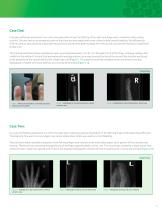
Case One: A 39-year old female presented to our clinic one week after slicing the distal tip of her right long finger with a mandolin while cutting zucchini. She was seen in an emergency room at that time and was treated with silver nitrate to help control bleeding. She followed up with her primary care physician 5 days later because she noticed some green exudate from the wound and was then started on Augmentin at that time. The initial physical examination revealed an open wound approximately 2 cm by 1 cm through the tip of the finger, obliquely radially, with a deficit in the nail bed. Purulent...
Open the catalog to page 3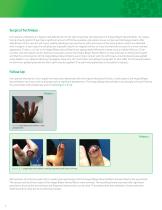
Surgical Technique : Each patient underwent an irrigation and debridement of the right long finger with placement of Integra Bilayer Wound Matrix . At surgery, the tip of each patient’s finger had a significant amount of fibrinous exudate, granulation tissue, and purulent discharge present. After debridement of the necrotic soft tissue, healthy bleeding tissue was found, with prominence of the distal phalanx, which was debrided with a rongeur. In each case, the nail plate was originally sliced in an irregular fashion so it was trimmed with scissors for a more cosmetic appearance. Finally, a 2...
Open the catalog to page 4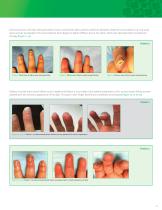
Each wound was still clean with granulation tissue 2 weeks later. Both patients were then allowed to keep the wound open to air and to go about activity as tolerated. The second patient had a degree of digital stiffness due to the splint, which was alleviated with occupational therapy [Figure 11-13]. Patient 2 Figure 11. Dorsal view of digit 4 weeks postoperatively. Figure 12. Palmer view of digit 4 weeks postoperatively. Figure 13. Close up view of digit 4 weeks postoperatively. Patient 1 had the most recent follow-up at 12 weeks and Patient 2 at 10 weeks. Each patient presented to clinic at...
Open the catalog to page 5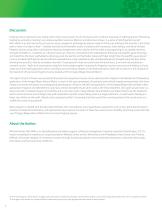
Discussion: Fingertip injury treatments vary widely when these injuries have loss of soft tissue with or without exposure of underlying bone. Promoting healing by secondary intention can produce excellent results as Mennen and Wise have shown in a series of 200 fingertip injuries8. Both Halim et al and Lee et al found success using a Hyphecan (a biological polymer made of chitin) cap, although the wounds in this study took a mean of 32 days to heal4, 6. Buckley and Das found favorable results in patients with transverse, volar oblique, and dorsal oblique fingertip injuries using silver sulphadiazine...
Open the catalog to page 6
1. Allen MJ. Conservative management of finger tip injuries in adults. Hand 1980;12:257-65 2. Aydin U, Ozbek S, Akin S, et al. Custom Subatmospheric Dressing for Fingertip Injuries. Techniques in hand & Upper Extremity Surgery. 2011;15(2):104-5 3. Buckley SC, Scott S, Das K. Late review of the use of silver sulphadiazine dressings for the treatment of fingertip injuries. Int. J. Care Injured. 200031: 301-304 4. halim, A. S., Stone, C. A., and Devaraj, v. S. The hyphecan cap: A biological fingertip dressing. Injury 29: 261, 1998 6. Lee, L. P., Lau, P. Y., and Chan, C....
Open the catalog to page 7
Integra Bilayer Wound Matrix Reference Size Quantity 10 cm x 12.5 cm (4 inch x 5 inch) 1 unit/box 10 cm x 12.5 cm (4 inch x 5 inch) 5 unit/box Indications: Integra Bilayer Wound Matrix is indicated for the management of wounds including: partial and full-thickness wounds, pressure ulcers, venous ulcers, diabetic ulcers, chronic vascular ulcers, surgical wounds (donor sites/grafts, post-Moh’s surgery, post-laser surgery, podiatric, wound dehiscence), trauma wounds (abrasions, lacerations, second-degree burns, and skin tears) and draining wounds. The device is intended for one-time...
Open the catalog to page 8All Integra LifeSciences catalogs and technical brochures
 capture high-torque surgical
12 Pages
 cadence
4 Pages
 DuraGen® Secure
8 Pages
 transducer
2 Pages
 MAYFIELD®
12 Pages
 SurgiMend® Hernia Brochure
8 Pages
 AmnioExcel® OR Sell Sheet
2 Pages
 PyroCarbon Implants
8 Pages
 Wrist Solutions
6 Pages
 Lower Extremity Reconstruction
28 Pages
 Integra® Lighting Solutions
4 Pages
 Integra® CUSA® Excel+
1 Page
 CUSA® Excel+ System
4 Pages
 DuraGen® matrix
2 Pages
 SurgiMend®
6 Pages
 Integra® Tissue Technologies
8 Pages
 DIABETIC SKIN ULCER
16 Pages
 Auragen™ Cortical Electrodes
4 Pages
 DuraGen XS
2 Pages
 Suturable DuraGen™
4 Pages


Archived catalogs
 MAYFIELD® 2
3 Pages
 DuraGen Plus
4 Pages
 Hermetic Plus™
2 Pages
 AccuDrain™
4 Pages
 Oral Surgery
107 Pages
 Catalog - Endodontics
110 Pages
 Catalog - Cassette
36 Pages
 Brochure - Liberator
6 Pages
 Integra® Licox®
2 Pages
 CUSA Excel+
8 Pages
 Pain Management Procedure Trays
26 Pages
 Jarit Sterilization System
11 Pages
 Integra® Camino® Flex
6 Pages
 Camino
10 Pages
 Catalog - Precision Dental
28 Pages
 LICOX
LICOX4 Pages
 Integra Miltex
663 Pages
 Integra VATS
28 Pages
 Cardiovascular
285 Pages
 Padgett
322 Pages
 Integra Podiatry
130 Pages
 Integra Jarit
916 Pages
 Integra Laparoscopic
90 Pages
 Extremity-Reconstructive Surgery
87 Pages
 Integra Ruggles Redmond
242 Pages
 Stereotaxy
28 Pages
 CUSA NXT/Selector
8 Pages
 Neuro Operating Room
177 Pages
 CUSA EXcel
12 Pages
 Neuromonitoring
76 Pages
 MediHoney® Brochure
9 Pages


- Surgery forceps
- Grasping forceps
- Stainless steel forceps
- Retractor
- Reusable forceps
- Electrosurgical forceps
- Surgical retractor
- Tissue grasping forceps
- Curette
- Bipolar forceps
- Ablation forceps
- Headrest
- Stainless steel retractor
- Bayonet forceps
- Veterinary instrument kit
- Operating table headrest
- Micro forceps
- Grasping micro forceps
- Surgery micro forceps
- Spinal retractor