
- Catalogs
- Ivoclar Vivadent
- Ceramic-Alloys


Ceramic-Alloys
Ceramic-Alloys
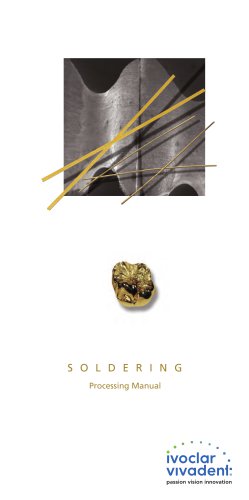
Soldering is a vital technique in dental laboratory procedures for joining metal components, particularly before and after ceramic firing to improve dental restorations.
Historical Context
Soldering has ancient origins, with evidence from Egyptian gold artifacts, and remains widely used in modern dental labs.
Joining Technique
Soldering involves using a molten metal with a lower processing temperature than the alloys being joined. Success depends on bond strength and corrosion resistance.
Solders
Dental labs utilize hard solders, categorized as high-fusing (950–1,200 °C) and low-fusing (700–900 °C). Compatibility with the alloy and similar thermal expansion coefficients are crucial.
Surface Tension and Diffusion
Effective soldering requires optimal wetting and diffusion, with a soldering gap of 0.05 to 0.2 mm for capillary action.
Oxidation
Oxidation during soldering is managed by using flux to dissolve oxides and protect the alloy. Immediate soldering after flux application is advised.
Soldering Accessories
Essential tools include torches with controlled gas flow, as flame characteristics significantly impact the process.
Surface Preparation
Surfaces should be cleaned and roughened using grinding or sandblasting for optimal wetting.
Pre-Soldering (Before Ceramic Firing)
Components should be stress-free and the soldering gap accessible for even heating during preparation.
Post-Soldering (After Ceramic Firing)
Components are secured with wax for furnace soldering, avoiding ceramic contamination.
Alloy and Solder Compatibility
Refer to the alloy table for recommended solder/alloy combinations to ensure compatibility and successful joints.
Catalog excerpts
SOLDERING Processing Manual passion vision innovation
Open the catalog to page 1
In the past, present, and also in the future, "soldering" as a joining technique has been and will be an important part of dental-lab procedures. Soldering is the most frequently used joining technique for metals. In order to obtain a soldering joint, the necessary materials must be processed with utmost care. It also involves thorough knowledge of the materials and their correct technical application. This Manual will provide you with the most important information about soldering before and after ceramic firing. In this way, you will be able to fabricate even more successful restorations for...
Open the catalog to page 2
Past / Present / Future Joining Technique "Soldering" 4 Surface Tension / Diffusion Solder Joint Soldering Accessories Torch and Flame Control Surface Preparation Pre-Soldering (Before Ceramic Firing) Post-Soldering (After Ceramic Firing) 1 Alloy Table Solder Table Trouble Shooting Short Instructions: Pre-Soldering Short Instructions: Post-Soldering
Open the catalog to page 3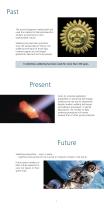
Past The ancient Egyptians melted gold and used the material to fabricate beautiful artifacts as testimony to their sophisticated culture. Soldering has also been practiced since the earliest days of history. The soldering technique of those days involved copper ore and helped goldsmiths fabricate the finest jewelly. In dentistry, soldering has been used for more than 100 years. Present Given its universal application possibilities in dental-lab technology, soldering has not lost its importance despite modern welding techniques and adhesive procedures. In dental laboratories, the number of daily...
Open the catalog to page 4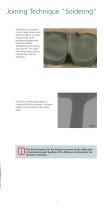
Soldering is a procedure to join metal components with the help of a molten joining metal with a processing temperature below the solidus temperature of the alloys to be joined. The solder wets these alloys without melting them during soldering. During the soldering procedure a reciprocal diffusion between the liquid solder and the solid-hot alloy takes place. mThe decisive factors for the long-term success of the solder joint is the bond strength (quality of the diffusion structure) and the corrosion resistance.
Open the catalog to page 5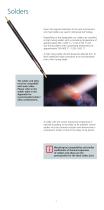
Solders Given the required resistance to the oral environment, only hard solders are used in dental-lab technology. Depending on the designated use, solders are classified as high-fusing solders with a processing temperature of approximately 950–1,200 °C / 1742–2192 °F and low-fusing solders with a processing temperature of approximately 700–900 °C / 1292–1652 °F. A high fusing solder should always be selected first. To allow additional repair procedure to be accomplished with a flow fusing solder. The solder and alloy must be compatible with each other. Please refer to the solder table in the...
Open the catalog to page 6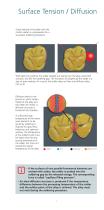
Surface Tension / Diffusion Good wetting of the alloy with the molten solder is a prerequisite for a successful soldering procedure. With optimum wetting, the solder spreads out evenly over the alloy, wets both surfaces, and fills the soldering gap. The formation of droplets by the solder is a sign of poor wetting. As a result, the solder does not flow and diffusion does not occur. Diffusion refers to the process in which certain metals of the alloy and the solder are mixed. A diffusion structure is formed at the interface. A sufficiently high temperature of the framework elements to be joined...
Open the catalog to page 7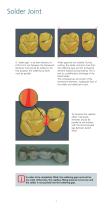
A "solder gap" is an even distance of 0.05 to 0.2 mm between the framework elements to be joined by soldering. For that purpose, the soldering surfaces must be parallel. Wider gaps are not suitable. During cooling, the solder contracts more than the soldering base and the framework element expand during heating. This is due to a solidification shrinkage of the liquid solder. The consequences are torsion of the framework elements, inadequate flow of the solder and solder joint crack. To maximize the capillary effect, framework elements should be parallel to one another with the recommended gap...
Open the catalog to page 8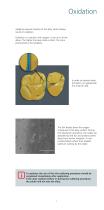
Oxidation Soldering requires heating of the alloy, which always results in oxidation. Oxidation is a reaction with oxygen. It occurs in all the alloys. The higher the base metal content, the more pronounced is the oxidation. In order to prevent oxide formation, an appropriate flux may be used. The flux breaks down the oxygen compound of the alloy surface. During this dissolution procedure, the oxides are absorbed by the flux and protect parent alloys from further oxidation. A non contaminated surface then enables optimum wetting by the solder. To optimize the use of flux the soldering procedure...
Open the catalog to page 9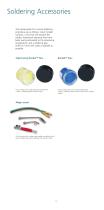
Soldering Accessories The prerequisites for a sound soldering procedure are as follows: clean metallic surfaces, a flux that will dissolve the oxides, framework elements that have been evenly preheated to the processing temperature, and a soldering gap (0.05–0.2 mm) with walls as parallel as possible. High-fusing Bondal™ Flux Bondal™ Flux Flux for solder with a high processing temperature: > 960 °C (soldering before ceramic firing) Flux for solder with a low working temperature: < 900 °C (soldering after ceramic firing and for universal solders) Magic wand A torch system with a safety valve enables...
Open the catalog to page 10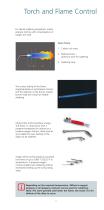
Torch and Flame Control For dental soldering procedures, mainly propane torches with compressed air or oxygen are used. Open flame Carbon rich zone Reduced zone – optimum zone for soldering Oxidizing zone The correct setting of the flame, oxygen/propane or air/propane mixture, and the selection of the burner nozzle/ burner head are critical for reliable soldering. Multi-orifice torches produce a large, soft flame. In conjunction with a propane-compressed air mixture or a propane-oxygen mixture, these torches are suitable for even heating of the object to be soldered. Single-orifice torches produce...
Open the catalog to page 11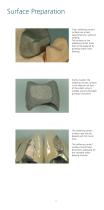
Clean soldering contact surfaces are a basic requirement for optimum wetting. The surfaces of the soldering contact areas have to be prepared by grinding and/or sand blasting. Evenly roughen the soldering contact surfaces in the direction of flow of the solder using a suitable (ceramic-bonded) grinding instrument. The soldering contact surfaces may also be blasted with 50 micron AhOs. The soldering contact surfaces should have dimensions adequate for the intended stressbearing situation.
Open the catalog to page 12All Ivoclar Vivadent catalogs and technical brochures
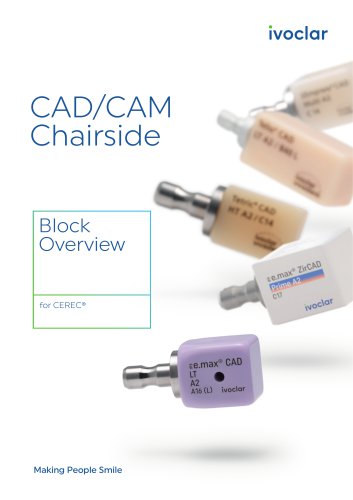 Block Overview CEREC
6 Pages
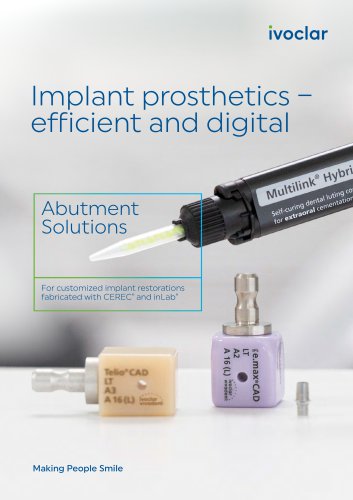 Abutment Solutions
7 Pages
 Dental Future
14 Pages
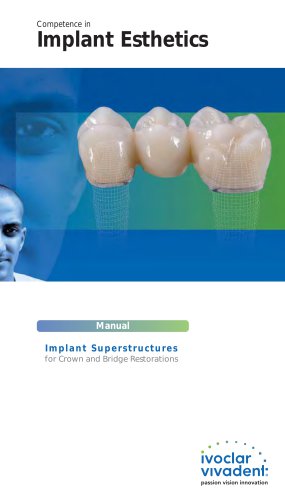 Implant Esthetics
72 Pages
Archived catalogs
 Prime
Prime16 Pages
 IPS Empress®Direct
14 Pages
 3s PowerCure
12 Pages
 FRC Postec Plus
8 Pages
 Programat
18 Pages
 PrograMill
9 Pages
 Bluephase® Style
12 Pages
 Fluor Protector S
8 Pages
 Bluephase G2
6 Pages
 Variolink Esthetic
10 Pages
 Skyce
Skyce4 Pages
 Valiant Family
4 Pages
 Tetric Evo-Family
20 Pages
 Virtual
12 Pages
 Zenotec select
8 Pages
 Zenotec mini
6 Pages
 Astropol
2 Pages
 Total Etch
2 Pages
 Vivaglass
6 Pages
 Telio System
8 Pages
 CAD-CAM Chairside - CEREC
24 Pages
 Evetric
6 Pages
 Bluephase G2 and 20i
6 Pages
 40 Years Programat
18 Pages
 Brochure Service+
16 Pages
 IPS Style
12 Pages
 IPS Empress CAD - Dentist
8 Pages
 Plaque Test
2 Pages
 ProBase Hot & Cold
2 Pages
 Ortho Care
16 Pages
 Centric Tray
2 Pages
 IPS e.max CAD - Block Range
6 Pages
 IPS Ivocolor
10 Pages
 Implant Care
28 Pages
 IPS e.max Press Multi
12 Pages
 IPS d.SIGN Opaquer F
2 Pages
 Ivostar - Gnathostar
2 Pages
 Cervitec Gel
2 Pages
 Digital Denture
16 Pages
 Heliosit
2 Pages
 Multilink Automix
8 Pages
 Multilink Hybrid Abutment
4 Pages
 Helioseal®
6 Pages
 OptraFine
2 Pages
 10 years CaseBook
20 Pages
 OptraLine
10 Pages
 bluephase 20i
4 Pages
 bluephase
6 Pages
 Programat® P710
10 Pages
 PrograBase X10
2 Pages
 Cervitec F
8 Pages
 Bluephase Style Line
12 Pages
 Competence Implant Esthetics
12 Pages
 Direct Restoratives
6 Pages
 IPS Classic
2 Pages
 i-Kids - Seal + Fill
4 Pages
 CRT bacteria
6 Pages
 Monobond Etch & Prime
4 Pages
 Light-curing - special feature
32 Pages
 Luting materials
12 Pages
 IPS e.max Ceram
12 Pages
 A ll-Ceramics Chairside
2 Pages
 Light-curing
32 Pages
 Programat CS3
8 Pages
 Syntac
4 Pages
 Stratos 100 200 300
14 Pages
 CRT buffer
6 Pages
 All-Ceramics chairside
2 Pages
 Adhese Universal
6 Pages
 Bluephase Style Family
10 Pages
 Scanners at a glance
4 Pages
 Programat S1
8 Pages
 Overview of Zenotec materials
22 Pages
 Programat EP 5010
8 Pages
 Programat P510
8 Pages
 Programat P310
6 Pages
 Programat P700-G2
10 Pages
 SR Phonares II
8 Pages
 Bluephase Meter
2 Pages
 Bluephase Family
8 Pages
 Cervitec
2 Pages
 Colado CC
4 Pages
 Callisto CP+
4 Pages
 BlueLine Plus
2 Pages
 Competence in Implant Esthetics
12 Pages
 Apexit Plus - ApexCal
6 Pages
 Alloy Catalog 2014
44 Pages
 Astropol - Astrobrush
4 Pages
 ExciTE F - ExciTE F DSC
6 Pages
 Fluor Protector
8 Pages
 Heliomolar Family
6 Pages
 Heliosit Orthodontic
2 Pages
 Ivoclean
2 Pages
 Accu-Dent System 1
4 Pages
 UTS 3D
2 Pages
 Ivomix
2 Pages
 IvoBase System
6 Pages
 Programat EP 3010
6 Pages
 Lumamat 100
4 Pages
 Programat® CS2
6 Pages
 Monobond Plus
4 Pages
 Monobond Plus
2 Pages
 IvoBase Injector
6 Pages
 Programat CS
2 Pages
 Prograbase 3
2 Pages
 AdheSE
5 Pages
 Silamat S6
56 Pages
 Bluephase Style
8 Pages
 Helioseal
6 Pages
 Bluephase Family
8 Pages
 Programat P500-G2
8 Pages
 Programat EP3000-G2
10 Pages
 bluephase C8
4 Pages


- Ivoclar dental material
- Anatomy model
- Ivoclar dental restoration material
- Implant abutment
- Dental burr
- Resin dental material
- Retractor
- Dental prosthesis dental material
- Laboratory oven
- Dental crown material
- Dental bridge material
- Biocompatible dental material
- Dental bond
- Dental model
- Dental care model
- Intracranial anatomical model
- Ceramic dental material
- Metal burr
- Mouth anatomical model
- Wax dental material