
- Catalogs
- Ivoclar Vivadent
- Implant Esthetics


Implant Esthetics
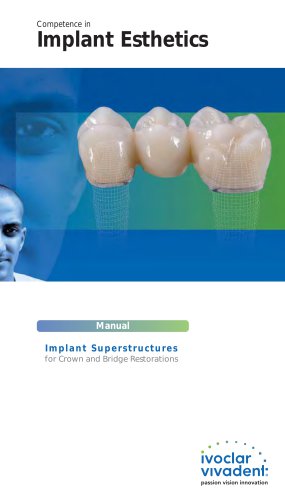
Implant Esthetics
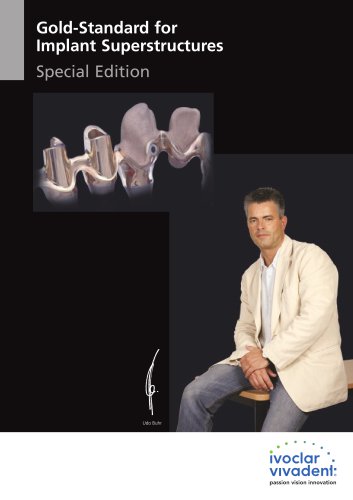
Dental implantology involves using alloplastic materials to replace missing teeth, functioning as artificial roots implanted into the jawbone. The manual provides an overview of implantology, focusing on planning and executing prosthetic treatments, with step-by-step instructions for fabricating implant superstructures.
The manual classifies structural elements into primary (implant), secondary (abutment), and tertiary (superstructure) components. The implant acts as the artificial tooth root, the abutment connects the implant to the superstructure, which is the visible prosthetic restoration.
Successful implant-retained restorations require precise planning and execution. The manual emphasizes a prosthetics-oriented implantation plan, including clinical and laboratory procedures such as impression taking, bite registration, and model fabrication. Backward planning is recommended, starting with the desired prosthetic outcome to determine implant placement.
Key factors include patient selection, bone quality and quantity, implant material and surface, and careful implantation planning. Pre-operative planning tools such as radiographic examinations and diagnostic casts are essential.
The manual details the fabrication process for both metal-supported and all-ceramic implant-retained restorations, including single-tooth and bridge restorations. It covers abutment selection and processing, framework construction, and veneering techniques.
The manual outlines a comprehensive procedure for fabricating implant superstructures, involving both clinical and laboratory steps, including planning, impression taking, temporary restorations, and final incorporation of the superstructure.
A diagnostic wax-up is essential before any prosthetic restoration to plan the optimal functional and aesthetic tooth position. It helps identify atrophied jaw bones and determine augmentative measures for implant-retained prosthetic restoration.
Radiographs provide crucial information about bone structure and anatomical landmarks for implantation. A planning template with radiopaque markers is used to determine implant positions, number, diameters, and lengths, considering the enlargement factor.
A planning template is fabricated post-diagnostic wax-up using a silicone matrix. It can be extended to a radiographic and drill template, aiding in determining the planned implant position.
Drill templates assist in implant placement during surgery, ensuring the planned location and axial position are transferred to the bone. Stability and fixation in the dental or gingival area are crucial.
Impression taking aims to accurately reproduce the oral situation, including implant position. Methods include closed-tray and open-tray impressions, each suitable for different implant scenarios. Precise insertion or screwing of impression caps and posts is vital.
Accurate model fabrication is crucial for prosthetic restoration. It requires precise processing of materials and coordinated clinic-laboratory cooperation to achieve the zero position of implants.
Bite registration determines the maxillo-mandibular relationship, using auxiliaries provided by implant manufacturers. It is performed with standard materials and articulated in an adjustable articulator.
A removable gingival mask is fabricated for implant-retained restorations, offering advantages like unimpeded view and precise gingiva reproduction. It can be fabricated directly or indirectly.
Gingiva formers aid in controlled healing of the peri-implant mucous membrane, improving the aesthetic starting position. They can be prefabricated or custom-made.
During the healing phase, temporary restorations are crucial. They can be fabricated in the clinic or laboratory and are used for planning the final restoration. Temporaries should not transmit occlusal force to the healing implant.
The function and aesthetics of restorations are influenced by implant position and diameter. Superstructures should consider functional, aesthetic, and hygiene aspects. Abutment selection is crucial and should be done in the laboratory based on the intended superstructure.
The document outlines the importance of maintaining a correct length relation between the superstructure and the implant, emphasizing that the superstructure should be smaller. If longer, interlocking is necessary. The implant type and manufacturer guidelines must be observed. The cement border should not exceed 2.0 mm subgingival for hygiene reasons.
Prefabricated abutments are available in titanium or zirconium oxide, with options for customization. Titanium abutments come in various gingiva heights and angles, while zirconium oxide abutments are CAD/CAM-fabricated. Custom-fabricated abutments can be made from precious metal alloys and resin.
Superstructures can be screw-retained or cemented. Screw-retained options allow for removability and repair access but may have aesthetic and accessibility drawbacks. Cemented superstructures offer better aesthetics and ease of handling but pose challenges in excess cement removal.
Abutments should be prepared like natural tooth cores, with customization possible. The preparation involves checking vertical dimensions, circumference, and preparation angles. Titanium abutments require careful grinding to prevent overheating.
Examples include single-tooth restorations and bridges using various materials and techniques, such as metal-ceramic veneers and CAD/CAM-fabricated zirconium oxide frameworks.
Manufacturer instructions must be strictly followed during fabrication. The document highlights the importance of maintaining a clean and precise casting process to ensure the accuracy and fit of the superstructures.
The document outlines the process of fabricating frameworks for cemented superstructures using IPS d.SIGN® 98 alloy. The screw cavity is blocked with wax or resin, and the framework is shaped using a silicone key. The framework design must adhere to metal-ceramic restoration guidelines, with a minimum thickness of 0.3 mm for single-tooth frameworks. After examination under a stereo microscope, the framework is invested, cast, and finished using tungsten carbide metal burs, maintaining a circular metal margin.
Using IPS InLine® leucite metal-ceramic, frameworks are cleaned with aluminum oxide and prepared for oxidation. Opaquer application begins once an even oxidized surface is achieved. The veneering material layers should be between 0.8 mm and 2.0 mm, with specific thicknesses for different ceramic areas. The final product is checked for fit, occlusion, shade, and hygiene capability.
Transfer aids are used to ensure the correct positioning of secondary elements from the model to the patient. Prefabricated or custom-fabricated aids are used depending on the implant manufacturer, ensuring the occlusal screw cavity remains unobstructed.
Zirconium oxide abutments offer a metal-free option for implant-retained restorations. Techniques include press, CAD/CAM, and layering. Customized zirconium oxide mesostructures are designed and milled using CAD/CAM technology. The document emphasizes careful adherence to processing instructions to avoid damage.
For metal-supported bridge restorations, precision is crucial to ensure a tension-free fit. The document highlights the importance of using materials with adequate strength and ensuring a precise fit to avoid biological and technical failures.
Using Callisto® Implant 78 alloy, the document describes the process of fabricating titanium abutments and alloy frameworks. It emphasizes the importance of checking parallelism and maintaining a minimum framework thickness of 0.3 mm. The document also provides tips for handling framework copings and ensuring a precise fit.
The document details the press and layering technique using IPS InLine® PoM and leucite glass-ceramic ingots. It describes the process of fabricating a fully anatomical wax on the opaquerized framework, checking margins, and investing the superstructure. The importance of coordinating CTE values of the alloy and ceramic ingot is highlighted.
The document outlines the procedures for creating metal-ceramic and all-ceramic dental superstructures. Key steps include blasting crown margins, separating superstructures with a diamond wheel, and checking the accuracy of fit. The stain and glaze firing process is crucial for achieving the desired aesthetic and functional results.
Metal-ceramic veneers can be applied using press or layering techniques. The document emphasizes the importance of using appropriate materials like IPS InLine and IPS e.max systems for different types of superstructures. The use of zirconium oxide frameworks and CAD/CAM procedures is highlighted for all-ceramic superstructures.
It is recommended to ensure the implant is longer than the superstructure and to follow the manufacturer's instructions carefully. Cantilever units should be attached to interconnected superstructures and have a reduced shape.
The document stresses the importance of adhering to the manufacturer's processing instructions, particularly those from Ivoclar Vivadent, to ensure compatibility and optimal results.
A comprehensive list of Ivoclar Vivadent products and alloys is provided, detailing their applications and compatibility with various dental procedures. The document also includes contact information for Ivoclar Vivadent offices worldwide.
The document serves as a detailed guide for dental professionals on the fabrication and application of dental superstructures, emphasizing precision, material compatibility, and adherence to procedural guidelines.
Catalog excerpts
ManualImplant Superstructures for Crown and Bridge Restorations passion vision innovation
Open the catalog to page 1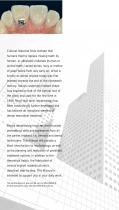
Cultural historical finds indicate that humans tried to replace missing teeth by homeo- or alloplastic materials (human or animal teeth, carved bones, ivory or mother of pearl items) from very early on. What is known as dental implant today was first inserted towards the end of the nineteenth century. Today's customary implant shape was inspired by that of the natural root of the tooth and used for the first time in 1939. Since that time, implantology has been continuously further developed and has become an important element of dental restorative treatment. Dental implantology requires well-founded...
Open the catalog to page 2
NavigationImplantology - Introduction to dental implantology - Factors of successful osseo-integration - Clinical and laboratory procedures - Impression taking methods - Bite registration - Model fabrication - Gingival mask - Gingiva former - Temporary restorations - Abutment selection - Abutment processing - Individual mesostructures (abutment/secondary element) - Framework for the cemented superstructure - Metal-ceramic veneers - Transfer auxiliaries All-ceramic - Zirconium oxide abutment / all-ceramics Overview of Ivoclar Vivadent products
Open the catalog to page 3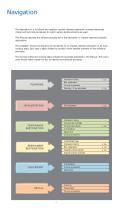
Navigation The fabrication of a functional and aesthetic implant-retained restoration involves interwoven clinical and technical procedures for which various dental products are used. This Manual describes the different procedures for the fabrication of implant-retained prosthetic restorations. The navigation shows the sequence of procedures for an implant-retained restoration in six main working steps. Each step is again divided to provide a more detailed overview of the individual processes. The red ticks within the working steps indicate the processes explained in this Manual. The colour code...
Open the catalog to page 4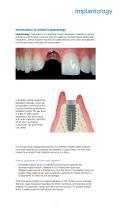
Implantology Introduction to dental implantology Implantology is the science of implanting foreign (alloplastic) materials to replace endogenous (lost) organ functions with the objective of tissue-friendly setting (biointegration). Dental implants may also be called artificial roots which are implanted into the jaw bone in the place of missing teeth. In dentistry, dental implants are alloplastic materials, which are incorporated in the area of the mucous membrane-periosteum epithelium and/or the jaw bone in order to retain dental restorations. We are working with open implants in dentistry, which...
Open the catalog to page 5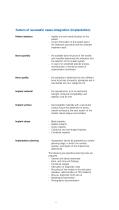
Patient selection - healthy oral and overall situation of the patient - correct information of the patient about the treatment procedure and the intended treatment result Bone quantity - the available bone structure of the maxilla and mandible determines the indication and the selection of the implant system - in case of an atrophied alveolar process, reconstruction of bones by means of augmentation techniques Bone quality - the suitability is determined by two different bone structures (compacta, spongiosa) and is sub-divided into four categories I-IV Implant material - the requirements, such...
Open the catalog to page 6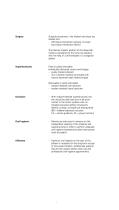
Surgical procedures in the implant technique are divided into: - soft tissue intervention (gingiva, mucosa) - hard tissue intervention (bone) The planned implant position of the diagnostic model is transferred to the intra-oral situation with the help of a drill template or a navigation system. Superstructures Fixed or partly removable: Individually fabricated crowns and bridges - purely implant-retained - one or several implants connected with natural abutment teeth (hybrid bridge) Removable or partly removable: - implant-retained over dentures - implant-retained hybrid dentures Occlusion -...
Open the catalog to page 7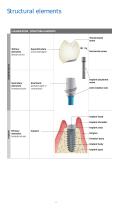
Structural elements CLASSIFICATION STRUCTURAL ELEMENTS Transocclusal screw Superstructure (crowns/bridges) Horizontal screw Tertiary elements (exostructure) Secondary elements (mesostructure) Implant abutment screw Abutment (prefabricated or customized) Anti-rotation lock Implant head Implant shoulder Implant neck Primary elements (endostructure) Implant Gingiva Alveolar bone Implant body Implant apex
Open the catalog to page 8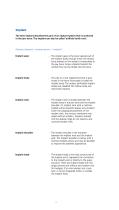
Implant The term implant describes the part of an implant system that is anchored in the jaw bone. The implant can also be called 'artificial tooth root'. Primary element / endostructure = "Implant" Implant apex – The implant apex is the lower (apical) part of the implant body, through which the vertical force exerted on the implant is transmitted to the jaw bone. Screw implants transmit the vertical force via the thread into the bone. Implant body – The part of a root replacement that is positioned in the bone (intra-ossal) is called the implant body. The coated, perforated implant bodies are...
Open the catalog to page 9
Superstructures A superstructure comprises everything that is retained by the implant and protrudes into the oral cavity, i.e. secondary and tertiary elements. Secondary element / mesostructure = «Abutment» Abutment – The abutment is the part of a one- or twophase implant system which is connected to the implant or fixed to it. It is the build-up that protrudes into the oral cavity, which is either directly included into the superstructure or which serves as a connection element between the implant and the superstructure. Implant abutment screw – The implant screw, also called abutment screw,...
Open the catalog to page 10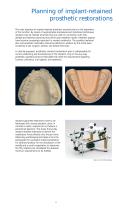
Planning of implant-retained prosthetic restorations The main objective of implant-retained prosthetic reconstructions is the restoration of the function. By means of augmentative procedures and membrane techniques, implants may be inserted wherever they are useful in connection with interdisciplinary treatment planning and permit good aesthetic results. Aesthetic aspects have become increasingly important in implant prosthetics. The possible treatment plan and prosthetic restoration should be defined in advance by the entire team consisting of jaw surgeon, dentist, and dental technician. A carefully...
Open the catalog to page 11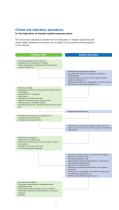
Clinical and laboratory procedures for the fabrication of implant-retained superstructures The clinical and laboratory procedure for the fabrication of implant superstructures shown below represents one option and is related to the superstructures presented in this Manual. Practice, Clinic – – – – Dental Laboratory Planning / analysis / patient selection Impression of the maxilla and mandible Centric registration to determine the TMJ relations Facebow registration – – – – Fabricating the preoperative models Articulating by means of the facebow registration Model analysis Anatomical wax-up / set-up...
Open the catalog to page 12All Ivoclar Vivadent catalogs and technical brochures
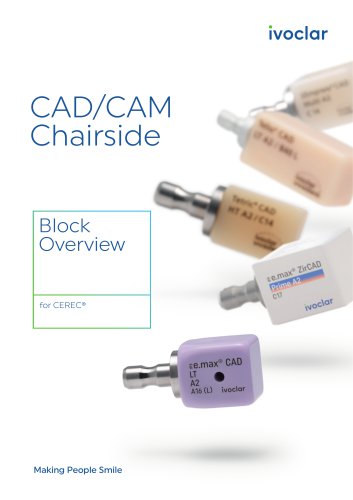 Block Overview CEREC
6 Pages
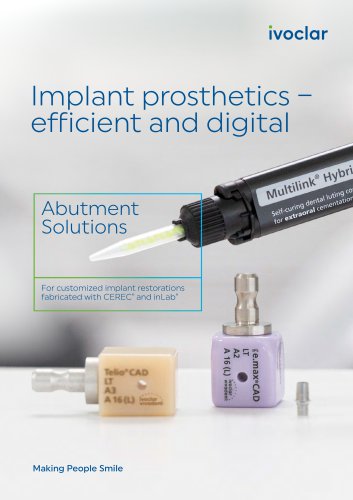 Abutment Solutions
7 Pages
 Dental Future
14 Pages
 Ceramic-Alloys
25 Pages
Archived catalogs
 Prime
Prime16 Pages
 IPS Empress®Direct
14 Pages
 3s PowerCure
12 Pages
 FRC Postec Plus
8 Pages
 Programat
18 Pages
 PrograMill
9 Pages
 Bluephase® Style
12 Pages
 Fluor Protector S
8 Pages
 Bluephase G2
6 Pages
 Variolink Esthetic
10 Pages
 Skyce
Skyce4 Pages
 Valiant Family
4 Pages
 Tetric Evo-Family
20 Pages
 Virtual
12 Pages
 Zenotec select
8 Pages
 Zenotec mini
6 Pages
 Astropol
2 Pages
 Total Etch
2 Pages
 Vivaglass
6 Pages
 Telio System
8 Pages
 CAD-CAM Chairside - CEREC
24 Pages
 Evetric
6 Pages
 Bluephase G2 and 20i
6 Pages
 40 Years Programat
18 Pages
 Brochure Service+
16 Pages
 IPS Style
12 Pages
 IPS Empress CAD - Dentist
8 Pages
 Plaque Test
2 Pages
 ProBase Hot & Cold
2 Pages
 Ortho Care
16 Pages
 Centric Tray
2 Pages
 IPS e.max CAD - Block Range
6 Pages
 IPS Ivocolor
10 Pages
 Implant Care
28 Pages
 IPS e.max Press Multi
12 Pages
 IPS d.SIGN Opaquer F
2 Pages
 Ivostar - Gnathostar
2 Pages
 Cervitec Gel
2 Pages
 Digital Denture
16 Pages
 Heliosit
2 Pages
 Multilink Automix
8 Pages
 Multilink Hybrid Abutment
4 Pages
 Helioseal®
6 Pages
 OptraFine
2 Pages
 10 years CaseBook
20 Pages
 OptraLine
10 Pages
 bluephase 20i
4 Pages
 bluephase
6 Pages
 Programat® P710
10 Pages
 PrograBase X10
2 Pages
 Cervitec F
8 Pages
 Bluephase Style Line
12 Pages
 Competence Implant Esthetics
12 Pages
 Direct Restoratives
6 Pages
 IPS Classic
2 Pages
 i-Kids - Seal + Fill
4 Pages
 CRT bacteria
6 Pages
 Monobond Etch & Prime
4 Pages
 Light-curing - special feature
32 Pages
 Luting materials
12 Pages
 IPS e.max Ceram
12 Pages
 A ll-Ceramics Chairside
2 Pages
 Light-curing
32 Pages
 Programat CS3
8 Pages
 Syntac
4 Pages
 Stratos 100 200 300
14 Pages
 CRT buffer
6 Pages
 All-Ceramics chairside
2 Pages
 Adhese Universal
6 Pages
 Bluephase Style Family
10 Pages
 Scanners at a glance
4 Pages
 Programat S1
8 Pages
 Overview of Zenotec materials
22 Pages
 Programat EP 5010
8 Pages
 Programat P510
8 Pages
 Programat P310
6 Pages
 Programat P700-G2
10 Pages
 SR Phonares II
8 Pages
 Bluephase Meter
2 Pages
 Bluephase Family
8 Pages
 Cervitec
2 Pages
 Colado CC
4 Pages
 Callisto CP+
4 Pages
 BlueLine Plus
2 Pages
 Competence in Implant Esthetics
12 Pages
 Apexit Plus - ApexCal
6 Pages
 Alloy Catalog 2014
44 Pages
 Astropol - Astrobrush
4 Pages
 ExciTE F - ExciTE F DSC
6 Pages
 Fluor Protector
8 Pages
 Heliomolar Family
6 Pages
 Heliosit Orthodontic
2 Pages
 Ivoclean
2 Pages
 Accu-Dent System 1
4 Pages
 UTS 3D
2 Pages
 Ivomix
2 Pages
 IvoBase System
6 Pages
 Programat EP 3010
6 Pages
 Lumamat 100
4 Pages
 Programat® CS2
6 Pages
 Monobond Plus
4 Pages
 Monobond Plus
2 Pages
 IvoBase Injector
6 Pages
 Programat CS
2 Pages
 Prograbase 3
2 Pages
 AdheSE
5 Pages
 Silamat S6
56 Pages
 Bluephase Style
8 Pages
 Helioseal
6 Pages
 Bluephase Family
8 Pages
 Programat P500-G2
8 Pages
 Programat EP3000-G2
10 Pages
 bluephase C8
4 Pages


- Ivoclar dental material
- Anatomy model
- Ivoclar dental restoration material
- Dental burr
- Resin dental material
- Retractor
- Dental prosthesis dental material
- Laboratory oven
- Dental crown material
- Dental bridge material
- Biocompatible dental material
- Dental bond
- Dental model
- Dental care model
- Intracranial anatomical model
- Ceramic dental material
- Metal burr
- Mouth anatomical model
- Wax dental material