- Catalogs
- Johnson Matthey
- Transition to net zero: steps to decarbonize the oil refining industry


Transition to net zero: steps to decarbonize the oil refining industry
Transition to net zero: steps to decarbonize the oil refining industry
The document reviews strategies for oil refineries to reduce Scope 1, 2, and 3 greenhouse gas emissions as part of the transition to net zero. It emphasizes the increasing demand for chemicals as a stabilizing factor for refineries amidst declining fuel demand due to climate change efforts.
Refineries are enhancing energy efficiency and using advanced catalyst performance monitoring to extend cycle lengths. Hydrogen production through Steam Methane Reforming (SMR) is being revamped to capture CO₂ emissions, reducing them by up to 95%. Alternatives like blue and green hydrogen are explored, with blue hydrogen capturing CO₂ for storage or utilization, and green hydrogen using renewable electricity for production.
Refineries can replace imported electricity with low-carbon hydrogen, potentially creating hydrogen hubs like HyNet North West in the UK. Green hydrogen, produced via electrolysis using renewable energy, is being adopted despite higher costs, with expectations of cost reductions as renewable energy becomes more prevalent.
Technologies are available to use bio- and waste streams for decarbonizing fuels and increasing chemical production. Bioethanol and biodiesel processes are examples, with refineries co-processing bio-components to produce partially green fuels. Advanced technologies like Fischer-Tropsch and waste-to-methanol processes are also being implemented to convert waste into low-carbon fuels and chemicals.
Refineries are transitioning to increase high-value chemicals production, using technologies like LP OXO for alcohol production and DAVY BDO for upgrading butane. These processes enhance refinery margins and support the production of biodegradable plastics and other valuable chemicals.
The document outlines a comprehensive approach for oil refineries to transition towards net zero by adopting innovative technologies and processes to reduce emissions and increase chemical production, ensuring sustainability and profitability in the future.
The document lists several chemicals such as butylacrylate, solvents, valeraldehyde, and various alcohols and aldehydes. It also mentions hydrogenation as a key process.
To address climate change and improve environmental health, oil refineries must adapt by decarbonizing processes and utilities. This involves using expertise, catalysts, and technologies to reduce carbon emissions. Additionally, incorporating bio- and waste feeds and green blending components can further decarbonize fuel production. Increasing chemical production can enhance refinery margins and reduce Scope 3 emissions, making decarbonization a valuable strategy for the industry.
The authors express gratitude to Johnson Matthey colleagues for their contributions and examples.
The document provides several references to online resources accessed in December 2021, related to renewable energy and low-carbon fuel production.
For more information, readers are directed to contact Johnson Matthey or visit their website.
Catalog excerpts
A review of the solutions being employed by oil refineries to reduce their Scope 1, 2, and 3 greenhouse gas emissions Marie Goret-Rana and Carl Keeley Reprint from Digital Refining 2022 enhancing life
Open the catalog to page 1
Information contained in this publication or as otherwise supplied to Users is believed to be accurate and correct at time ºF going to press, and is given in good faith, but it is for the User to satisfy itself ºF the suitability ºF the Product for its own particular purpose. Johnson Matthey plc (JM) gives no warranty as the fitness ºF the Product for any particular purpose and any implied warranty or condition (statutory or otherwise) is excluded except to the extent that exclusion is prevented by law. JM accepts no liability for loss or damage (other than that arising from death or personal...
Open the catalog to page 2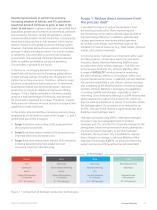
Despite improvements in vehicle fuel economy, increasing adoption of hybrids, and EVs, petroleumbased fuel demand continues to grow, at least in the short- to mid-term! In general, demand is generated from population growth and increased car ownership, and both are increasing. However, during the pandemic, people concerned about health moved around less. Consequently, there was a sharp decline in fuel demand, which had an adverse impact on the global oil and oil refining system. However, chemicals demand was sustained, as chemicals are used in many everyday products. For a small number of refineries,...
Open the catalog to page 3
(gas‑heated reformer) is combined with carbon capture. Green hydrogen uses renewable electricity to produce hydrogen without producing any CO₂. Hydrogen produced via blue and green routes can be used to decarbonize existing fuels and chemicals production. For more information, see Figure 1. Scope 2: Reduce emissions associated with imported electricity and steam An oil refinery can replace imported electricity with lowcarbon hydrogen that is used to decarbonize its energy requirements, and excess low-carbon energy can be exported to nearby industry. When several industries are co-located, there...
Open the catalog to page 4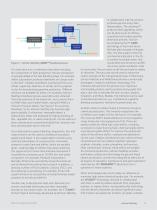
in collaboration with bp converts synthesis gas into long-chain DAVY biodiesel process hydrocarbons. The resulting FT methanol products need upgrading, which recovery can be done by an oil refinery, fatty water to produce low-carbon gasoline, acid steam effluent oil hydrolysis esterification diesel and jet fuels. Fulcrum pre-treatment oil are employing the FT CANS methanol technology in their new Sierra methanol removal glycerol/water BioFuels plant located in Nevada, USA. The Sierra plant is the first biodiesel commercial scale plant in the US to convert municipal waste, that would otherwise...
Open the catalog to page 5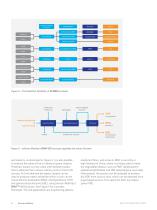
n-butanol (n-BuOH) propylene butyraldehyde syngas i-butanol (i-BuOH) butene valeraldehyde dimerized butenes syngas mixed FT olefins detergents Figure 4 – The feedstock flexibility of LP OXO processes methanol make-up intermediate recycle succinic acid methanol recycle co-product (optional) Figure 5 – Johnson Matthey’s DAVY BDO process upgrades the value of butane and solvents, as illustrated in Figure 4. It is also possible to improve the value of the oil refinery butane streams. Presently, butane is a low-value intermediate product that is obtained from various refinery units or from LNG sources....
Open the catalog to page 6
To fight climate change, and make the world cleaner and healthier today, and for future generations, oil refineries must adapt. Carbon taxes are being implemented, and these will significantly erode refinery margins. This creates urgency for action. An obvious first step is to use available expertise, catalysts, technologies, and services to decarbonise processes and utilities. In addition, increasing the capability to use bio- and waste feeds and green blending components will further decarbonise fuels production. Finally, increasing the percentage of chemicals production will significantly...
Open the catalog to page 7
Designed and produced by www.houseoftype.co.uk For further information on Johnson Matthey, please contact your local sales representative or visit our website. KATALCO, DAVY, CANS, PURAVOC, LP OXO and PURASPEC are trademarks of the Johnson Matthey group of companies. © 2022 Johnson Matthey group 1867JM/0422/0/ENR IKA Johnson MattheyI lr I Inspiring science, enhancing life
Open the catalog to page 8All Johnson Matthey catalogs and technical brochures
 Oleochemicals
12 Pages
 Edible oils catalysts
12 Pages
 Ammonia
24 Pages
 Purification solutions
12 Pages
 Fuel cells
8 Pages