
- Catalogs
- JZ Biotech
- FPV/FCV/FHV


- Company
- Products
- Catalogs
- News & Trends
- Exhibitions
FPV/FCV/FHV
FPV/FCV/FHV
Catalog excerpts
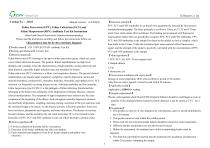
【Detection principle】 FPV, FCV and FHV antibodies in cat blood were quantitatively detected by fluorescence immunochromatography. The basic principle is as follows: There are T1,T2 and T3 lines Feline Parvovirus (FPV), Feline Calicivirus (FCV) and Feline Herpesvirus-(FHV) Antibody Test Kit Instruction and C lines on the nitrate fiber membrane. The binding pad is sprayed with fluorescent (Rare Earth Nano-Fluorescence Immunochromatography) nanomaterial marker that can specifically recognize FPV, FCV and FHV antibodies. FPV, Please read the instructions carefully and follow the instructions before use. This product is only for in vitro veterinary diagnosis FCV and FHV antibodies in the sample first binds to the marker to form a complex, which then binds to the T-lines. Under the excitation light, nano-material reflect fluorescence 【Product name】 3 IN 1 FPV/FCV/FHV Antibody Test Kit signal, and the strength of the signal is positively correlated with the concentration of FPV, 【Packing specifications】 10 tests/ box 【Detection purpose】 【Main ingredients】 Feline Parvovirus (FPV) belongs to the parvoviridae parvovirus genus, which can cause 1. FPV/ FCV Ab, FHV Ab test reagent card severe feline infectious diseases. The general clinical manifestations are high fever, diarrhea, and vomiting. It has the characteristics of high mortality, strong infectivity and short duration, especially higher infection rates and mortality for kittens. Feline calicivirus (FCV) infection is a feline viral respiratory diseases. The general clinical 【Preservation conditions and expiry date】 manifestations are mainly upper respiratory symptoms, namely depression, serous and Storage at room temperature (RT) with an effective period of 36 months; After the test card is opened, it must be used within 20 minutes. 【Applicable model】 mucous rhinorrhea, conjunctivitis, stomatitis, tracheitis, bronchitis, and biphasic fever. FCV infection is a frequently-occurring disease in cats, with high morbidity and low mortality. Feline herpesvirus type I (FHV-1) is the pathogen of feline infectious rhinobronchitis, belonging to the herpesvirus subfamily of the Department of Herpes Diseases. General 【Sample requirements】 clinical manifestations: The symptoms of upper respiratory tract infection are the main Plasma: anticoagulant whole blood (EDTA/heparin lithium) should be centrifuged as soon as symptoms at the beginning of the illness. Sick cats appear mentally depressed, anorexia, possible. If the obtained plasma cannot be timely detected, it can be stored at 2-8℃ for 2 elevated body temperature, coughing, sneezing, tearing, secretions in the eyes and nose, and the secretions begin to be serous. As the disease worsens, it becomes purulent. Some cats 【Precautions】 1. This product is only for in vitro diagnosis by veterinarians, and it is strictly prohibited to have oral ulcers, pneumonia and vaginitis, and some skin ulcers. The disease is a serious hazard to kittens, and the mortality rate can reach more than 50 % if not treated in time. Detection of FPV, FCV and FHV antibody in cats can reflect the body's immune status. 2. This product must be used within the validity period. 【Clinical significance】 3. When used, the test card and sample diluent should be restored to room temperature. 1) For the evaluation of the body before vaccination; 2) Detection of the body's antibody titer after vaccination; 3) Early detection and diagnosis of cat fever, herpes simplex and goblet virus infection. 4. Different batches and products are not allowed to be mixed. 5. Before the experiment, the standard curve of the corresponding batchs must be imported. 6. The detection card shall be inserted into the instrument for incubation and detection
Open the catalog to page 1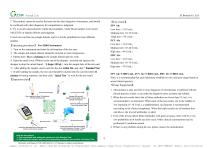
/A v^zsw Animal Care 7. This product cannot be used as the basis for the final diagnosis of immunity, and should be combined with other diagnoses for comprehensive judgment. 8. Try to avoid using hemolytic whole blood samples, whole blood samples were stored with EDTA or heparin lithium anticoagulant. 9. Each test card has one sample diluent, and it is strictly prohibited to reuse different samples. [ Operating procedures ] For JZ001 Instrument 1. Turn on the instrument,and enter the information of the test case. 2. The sample and sample diluent should be restored to room temperature; 3. Pipette...
Open the catalog to page 2All JZ Biotech catalogs and technical brochures
 RB02
RB022 Pages
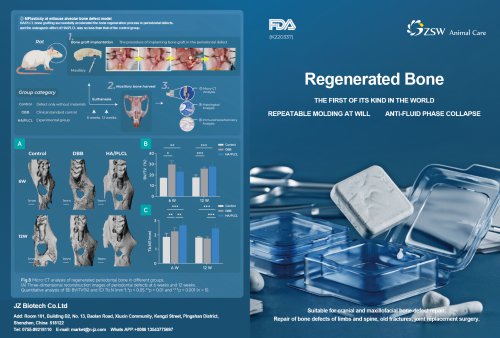 Paw veterinary splint RB01
2 Pages
 JZ-FIAS7
25 Pages
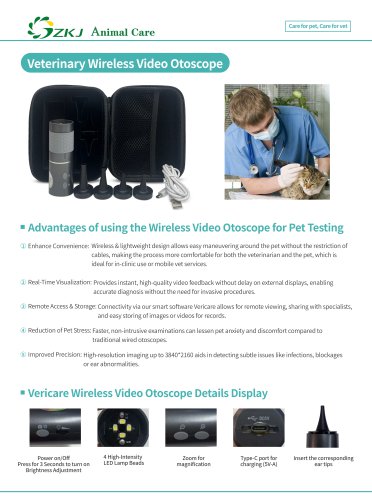 JZVET-OT01
2 Pages
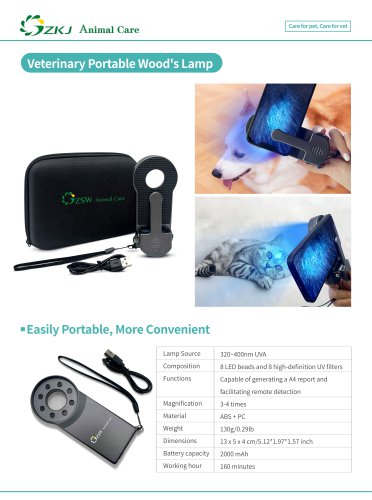 JZVET-WL01
3 Pages
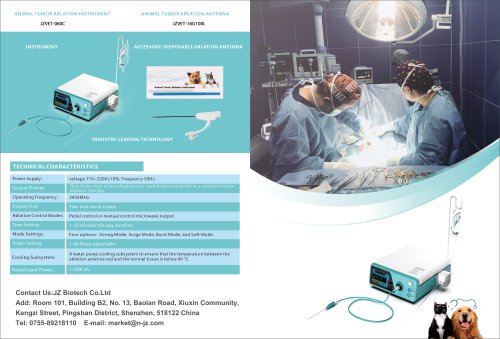 JZVET-060C
2 Pages
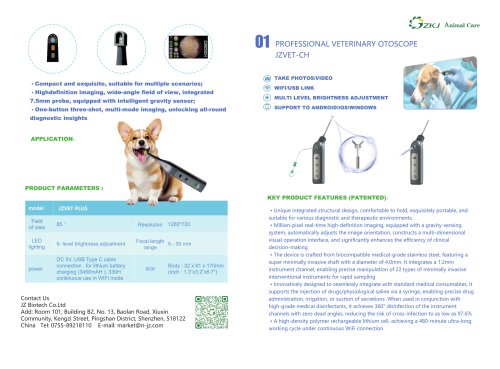 JZVet-EX01
2 Pages
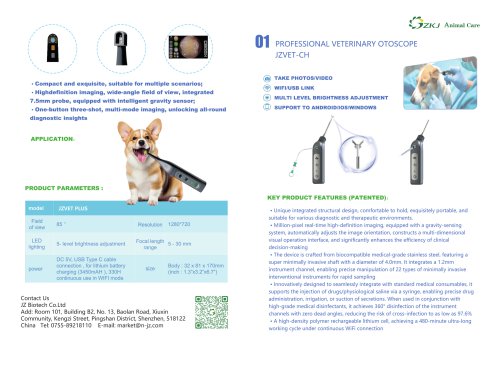 JZVet-CH02
2 Pages
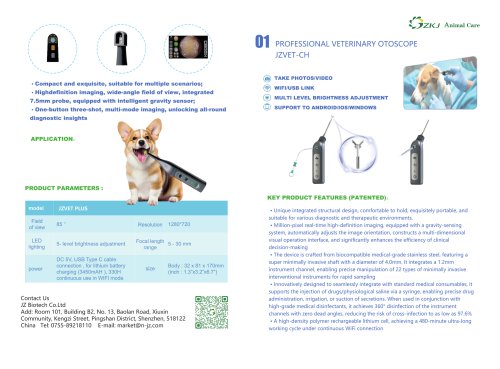 Veterinary micro forceps
2 Pages
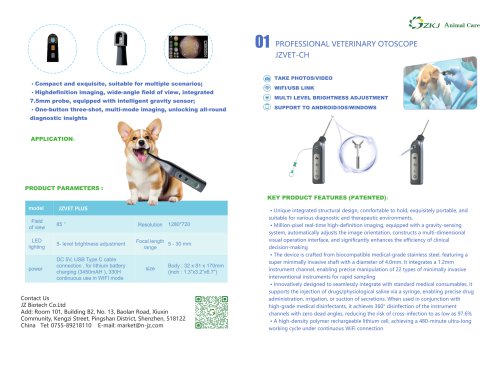 JZVET-EX02
2 Pages
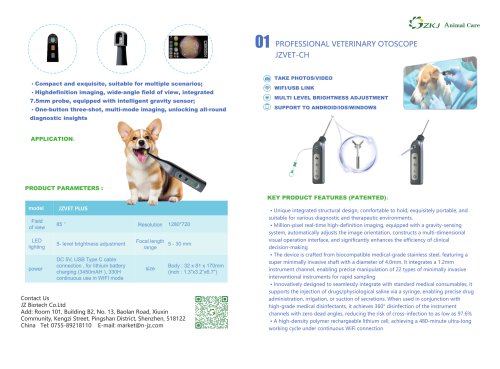 JZVET-CX01
2 Pages
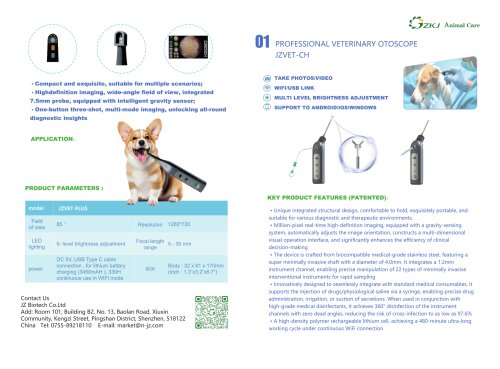 Animal Ear Mirror Brochure
2 Pages
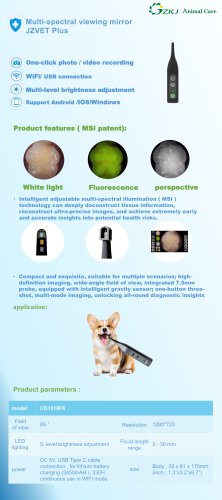 JZVETDK
1 Page
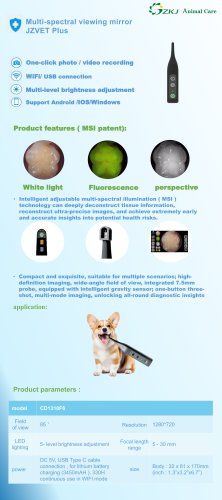 Animal Stomatoscopy
1 Page
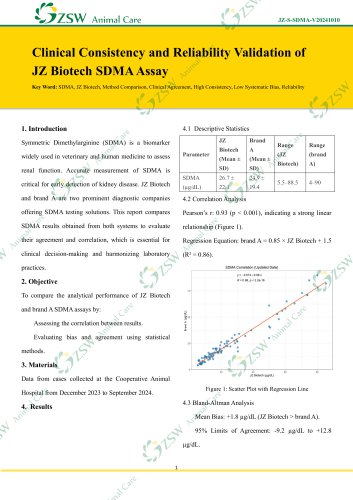 SDMA
SDMA2 Pages
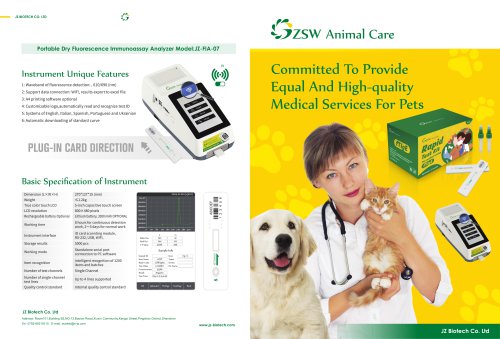 test kit
2 Pages
 JZVet-EX
1 Page
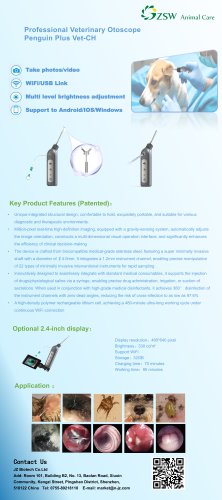 JZVet-CH
1 Page
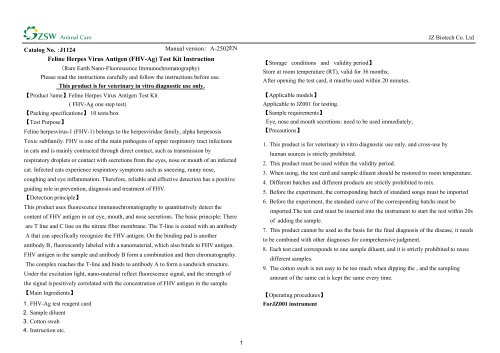 FHV AG
2 Pages
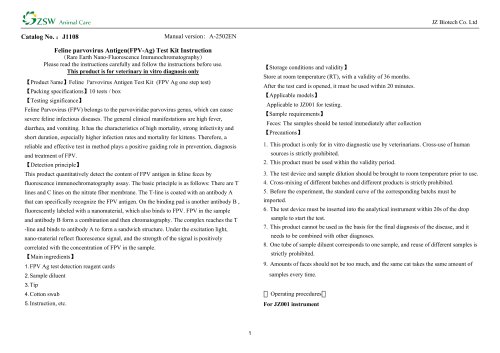 FPV AG
2 Pages
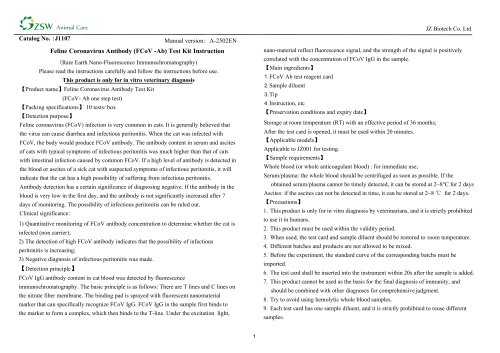 FCoV AB
2 Pages
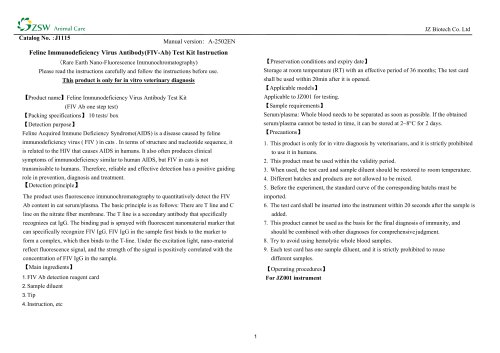 FIV AB
2 Pages
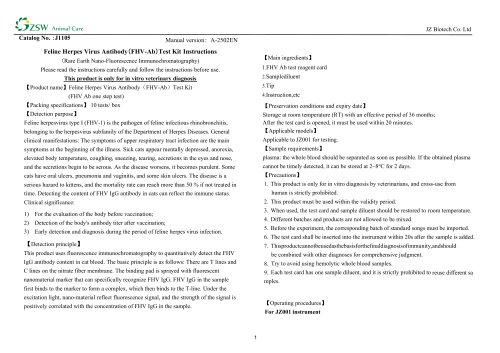 FHV AB
2 Pages
 FCV AB
2 Pages
 FPV AB
2 Pages
 FSAA
FSAA2 Pages
 FPL
FPL2 Pages
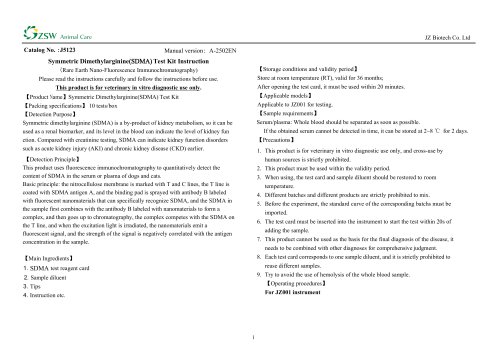 SDMA
SDMA2 Pages
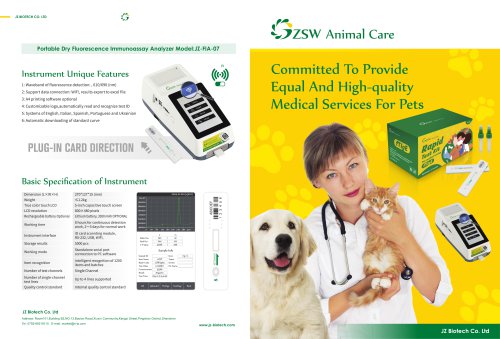 JZ-FIA
2 Pages
 SEISSOR-SHAPE 09
1 Page
 SEISSOR-SHAPE 17
1 Page
 PAG TEST
1 Page
 JZGGD003 Laser Physiotherapy
88 Pages
 JZGGD002 Laser Physiotherapy
4 Pages




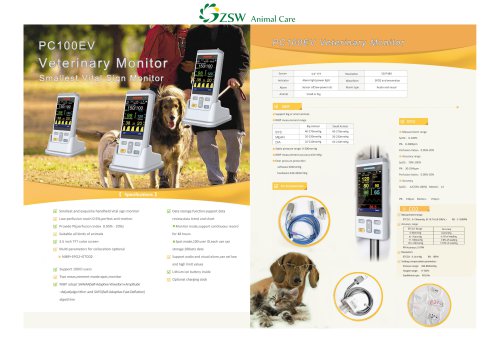





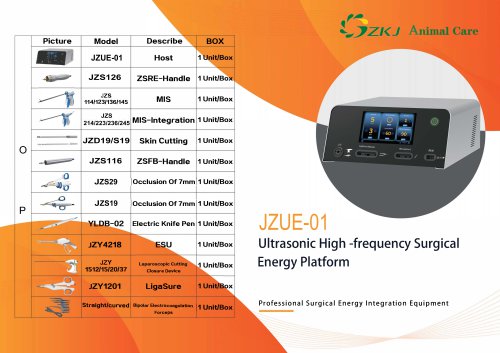
Archived catalogs
 JZVET-100B
2 Pages
- Blood detection kit
- Serum detection kit
- Immunoassay detection kit
- Plasma detection kit
- Infectious disease detection kit
- Molecular detection kit
- Whole blood detection kit
- Respiratory disease assay kit
- Stainless steel forceps
- Surgical system
- Straight forceps
- Optical test kit
- Clinical detection kit
- Reusable forceps
- Cutting electrosurgical system
- Cassette detection kit
- Chromatographic immunoassay test kit
- Coagulation surgical system
- Fluorescence detection kit