
- Catalogs
- JZ Biotech
- JZGGD003 Laser Physiotherapy


- Company
- Products
- Catalogs
- News & Trends
- Exhibitions
JZGGD003 Laser Physiotherapy

JZGGD003 Laser Physiotherapy
Laser therapy, also known as photobiomodulation therapy (PBMT), has been utilized in equine practice for over 35 years. It has evolved significantly, with modern equipment offering greater power and broader applications. This document discusses dosages, application techniques, and the holistic use of PBMT for consistent clinical responses.
Effective communication with the horse owner and trainer is crucial to set realistic expectations. The treatment environment should be calm and enclosed to comply with safety standards. The horse's skin must be clean, and safety measures, including eye protection, should be strictly followed.
Proper dosing involves applying the correct amount of energy to the target tissue. Dosages have increased with research advancements, and modern lasers often include software to assist in determining the appropriate dosage based on various factors. Accurate diagnosis is essential before starting PBMT, with digital thermal imaging helping to identify areas needing treatment and monitor progress.
PBMT treatment typically progresses through induction, transition, and maintenance phases. The frequency of sessions depends on the individual case, patient response, and client compliance.
The document provides detailed case studies, such as treating Cunean Tendonitis/Bursitis, and discusses the importance of treating not only the primary area of concern but also secondary and tertiary involvements. Specific dosages and techniques are outlined for various conditions, including shoulder disorders, carpal disorders, and hoof issues.
PBMT significantly stimulates wound healing by influencing each phase of the healing process. It enhances cellular metabolism, supports collagen synthesis, and aids in vasodilation. The document outlines specific dosages and techniques for treating different types of wounds, including chronic wounds and burns.
The document discusses the integration of PBMT with other therapeutic modalities, such as hyperbaric oxygen therapy (HBOT) and targeted pulsed electromagnetic field therapy (tPEMF), to enhance recovery and rehabilitation outcomes. It emphasizes the importance of a multimodal rehabilitation approach tailored to each horse's needs.
PBMT is a versatile therapy for equine patients, addressing various anatomical areas and conditions. It is crucial to consider holistic treatment, including acupuncture points and compensatory areas, for optimal results. Ongoing research will continue to refine its applications and effectiveness.
Catalog excerpts

Part VIII Clinical Applications of Laser Therapy in Equine Practice
Open the catalog to page 1
31 Fundamentals of Equine Laser Therapy Ronald J. Riegel American Institute of Medical Laser Applications, Marysville, OH, USA Introduction Therapeutic lasers have been utilized in the equine industry for over 35 years. This modality has evolved from the first 1 mW laser of the late 1970’s to the ≥30 W equipment available today. New information is being discovered weekly providing a greater insight into broader clinical and regenerative medical applications of laser therapy, or as it now commonly known, photobiomodulation therapy (PBMT). This chapter will address dosages and general application...
Open the catalog to page 3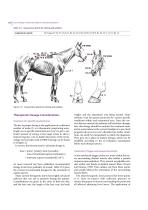
Laser Therapy in Veterinary Medicine: Photobiomodulation Table 31.1 Acupuncture points for calming and sedation. Acupuncture points Figure 31.1 Acupuncture points for calming and sedation. Therapeutic Dosage Considerations Treatment of a Specific Localized Area The key to proper dosing is the application of a sufficient number of joules (J) at a therapeutic penetrating wavelength over a specific anatomical area (cm2) to give a sufficient amount of energy at the target tissue to elicit a clinical response. (An in‐depth discussion of the terminology and concepts used in PBMT dosing can be found...
Open the catalog to page 4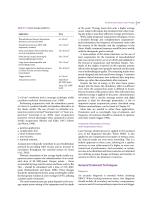
Fundamentals of Equine Laser Therapy Table 31.2 Equine dosage guidelines. Application Wounds/dermal lesions (lacerations, abrasions, post‐op incisions) Superficial structures (DDF, SDF, suspensory tendons) Deep musculature (thoracolumbar spine, cervical and gluteal muscles) Joints (tarsal, carpal, metacarpal, metatarsalphalangeal joints) Large joints (femoropatellar and femorotibial joints) Unique applications (lumbosacral area, L/S joint, SI joint, and surrounding musculature) Trigger points Acupuncture points Superficial 80–200 J/point Deep 125–200 J/ point 2–6 J/cm2 combined with a massage...
Open the catalog to page 5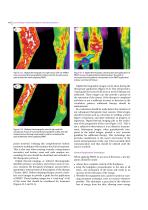
Laser Therapy in Veterinary Medicine: Photobiomodulation Figure 31.2 Digital thermograph of a right tarsus with an APMLO view. Increased thermal gradients (white and red) should receive special attention while applying PBMT. Figure 31.3 Oblique thermographic view of right and left metatarsals. Areas of increased thermal gradient (white and red) should receive thorough examination and be considered for special attention when applying PBMT. points involved. Utilizing this comprehensive holistic treatment technique will maximize the clinical response. This is also true when treating wounds: compensatory...
Open the catalog to page 6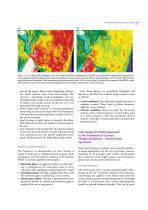
Fundamentals of Equine Laser Therapy Figure 31.5 (a) Oblique thermographic view of the left stifle before the application of PBMT. Increased thermal gradients throughout the femoropatellar and femoraltibial joints and surrounding soft tissues are present. (b) Oblique thermographic view of the left stifle 24 hours after the last laser treatment. Three treatments were administered: initial, at ~24 hours, and at ~48 hours. The progress of the PBMT can be objectively measured. The increased thermal gradients have resolved and the horse is clinically sound. to enter the tissues. There is also a blanching...
Open the catalog to page 7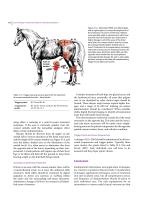
Laser Therapy in Veterinary Medicine: Photobiomodulation Area of cunean tendon Figure 31.6 Administer PBMT circumferentially and at right angles on‐contact throughout all of the anatomical structures of the hock. Address every possible angle to saturate each soft‐tissue structure and intra‐articular area. Administer a higher dosage to all of the areas of the distal tarsal joint, the cunean tendon, and the cunean bursa lying beneath (darker shaded area on insert). Treatment of all compensatory secondary and tertiary structures, the lumbosacral area, the sacroliliac areas, both hips, both stifles,...
Open the catalog to page 8
Fundamentals of Equine Laser Therapy the diagnosis was incorrect, all secondary and tertiary compensatory areas were not identified and included in the treatment, the photonic energy did not reach the target tissues with a significant therapeutic dose, or the therapy was not administered frequently enough. References Airaksinen, O. et al. (1989) Effects of infra‐red laser irradiation on the treated and non‐treated trigger points. Acupunct Electrother Res. 14:9. Fuchtenbusch, A. and Rosin, P. (2006) Laser Therapy and Acupuncture on Horses: Treatment Protocols. Fuchtenbusch. Jagger, D.H. (1984)....
Open the catalog to page 9
32 Administering Laser Therapy to the Equine Patient Ronald J. Riegel American Institute of Medical Laser Applications, Marysville, OH, USA Introduction The application of laser therapy (or photobiomodulation therapy, PBMT) to the equine patient has evolved into both a scientific and clinical evidence‐based therapy since its early use in the 1970’s. This evolution has occurred with the development of new therapeutic laser equipment capable of delivering photonic energy deep into target tissues, the development of new software providing consistent therapy and current suggested dosages, and better...
Open the catalog to page 10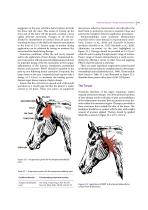
Administering Laser Therapy to the Equine Patient suppleness in this area will allow better balance for both the horse and the rider. This assists in freeing up the front end of the horse off the ground, creating a more uphill, airborne movement. Dosages of 10–12 J/cm2 should be administered on‐contact from all areas surrounding the base of the skull and adjacent musculature to the level of C2–3. Passive range of motion during application can be achieved by having an assistant flex and extend the head during therapy. Numerous conditions within the oral cavity respond well to the application of...
Open the catalog to page 11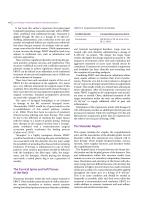
Laser Therapy in Veterinary Medicine: Photobiomodulation It has been this author’s experience that pharyngeal lymphoid hyperplasia responds extremely well to PBMT when combined with traditional therapy. Treatment is applied through the skin at a dosage of 15–20 J/cm2. Swelling, inflammation, and a reduction in the size and number of lymphoid follicles are usually seen within the first three therapy sessions. Re‐evaluate with an endoscopic exam after the third session. If little improvement is seen, increase the dosage. PBMT should be used as an adjunct to traditional care, such as nebulization...
Open the catalog to page 12All JZ Biotech catalogs and technical brochures
 RB02
RB022 Pages
 Paw veterinary splint RB01
2 Pages
 JZ-FIAS7
25 Pages
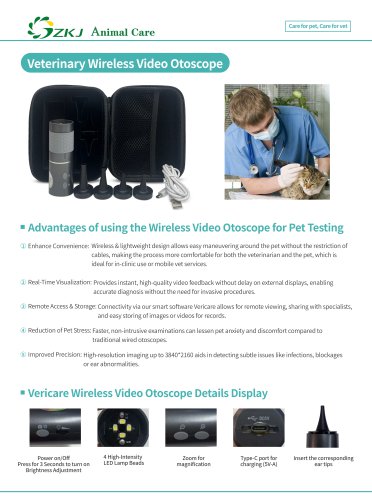 JZVET-OT01
2 Pages
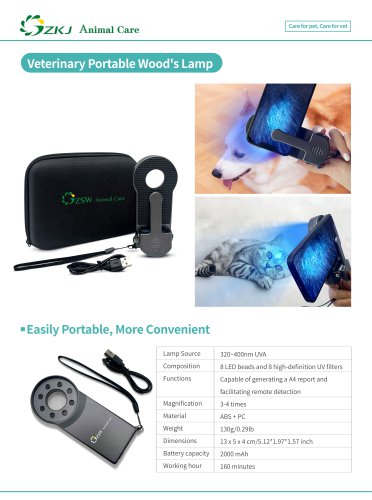 JZVET-WL01
3 Pages
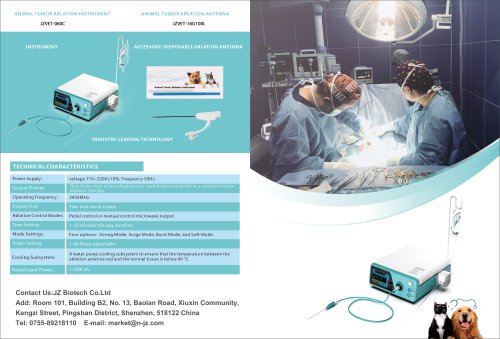 JZVET-060C
2 Pages
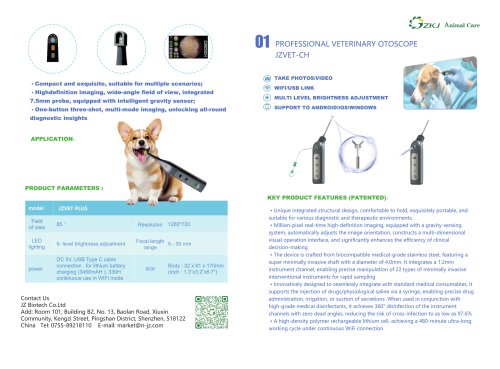 JZVet-EX01
2 Pages
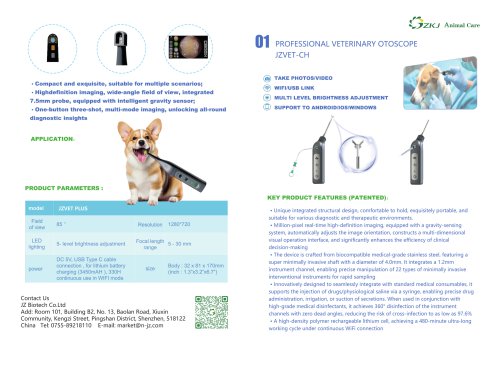 JZVet-CH02
2 Pages
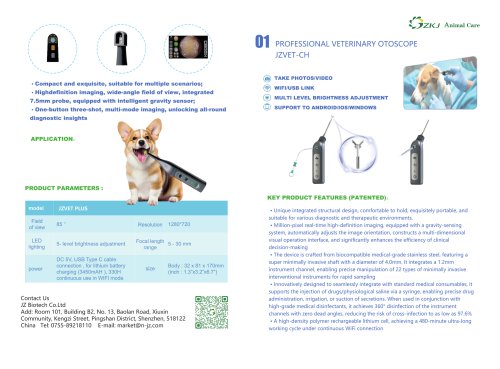 Veterinary micro forceps
2 Pages
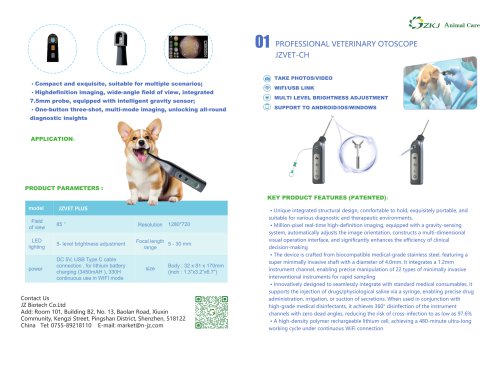 JZVET-EX02
2 Pages
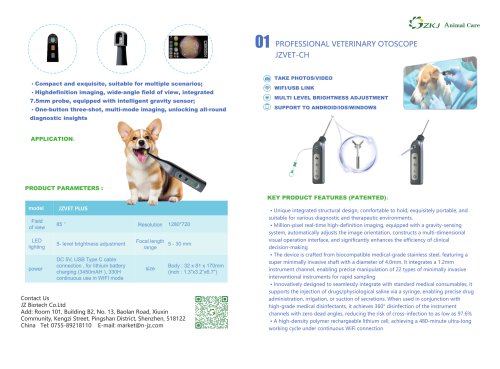 JZVET-CX01
2 Pages
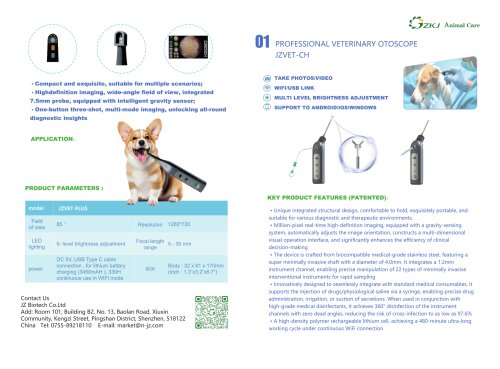 Animal Ear Mirror Brochure
2 Pages
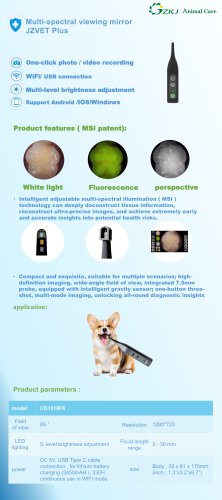 JZVETDK
1 Page
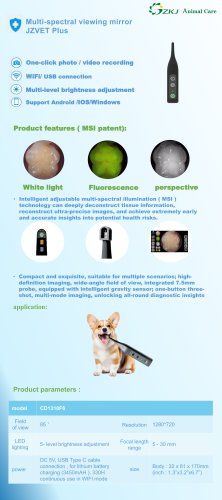 Animal Stomatoscopy
1 Page
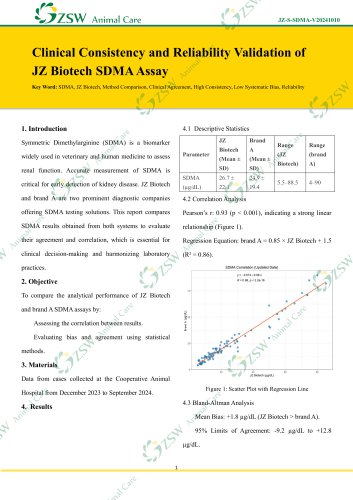 SDMA
SDMA2 Pages
 test kit
2 Pages
 JZVet-EX
1 Page
 JZVet-CH
1 Page
 FHV AG
2 Pages
 FPV AG
2 Pages
 FCoV AB
2 Pages
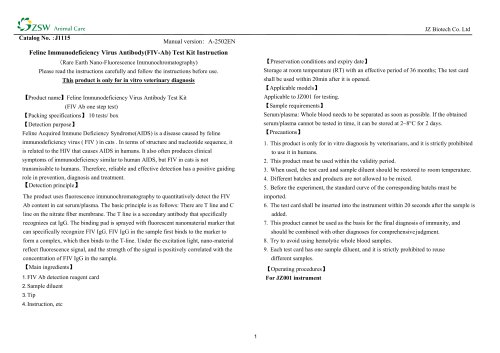 FIV AB
2 Pages
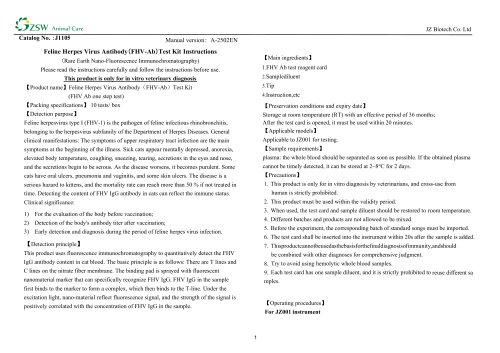 FHV AB
2 Pages
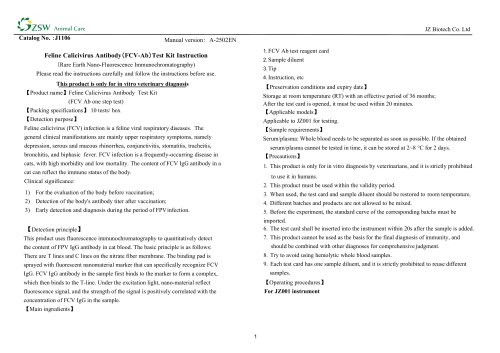 FCV AB
2 Pages
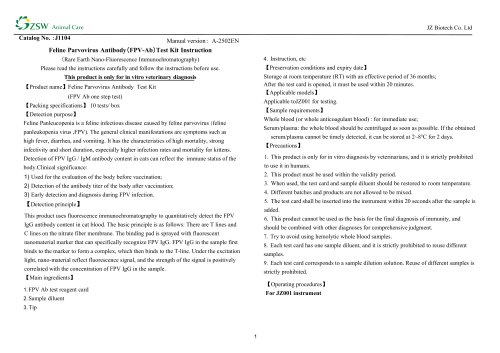 FPV AB
2 Pages
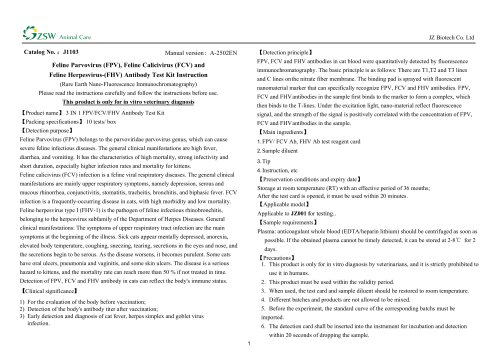 FPV/FCV/FHV
2 Pages
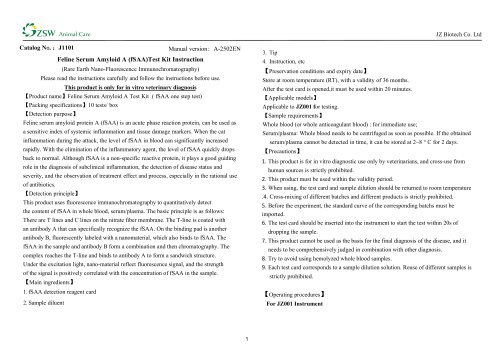 FSAA
FSAA2 Pages
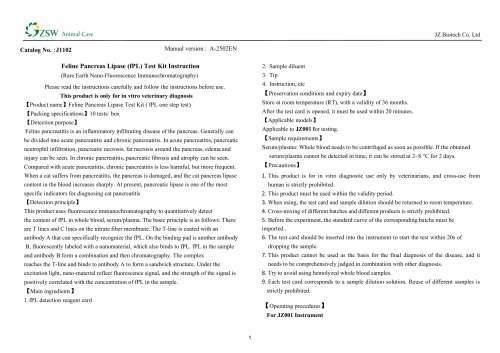 FPL
FPL2 Pages
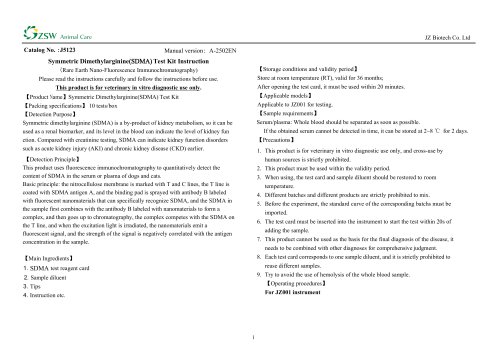 SDMA
SDMA2 Pages
 JZ-FIA
2 Pages
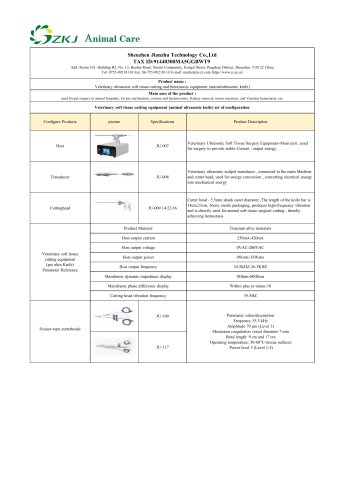 SEISSOR-SHAPE 09
1 Page
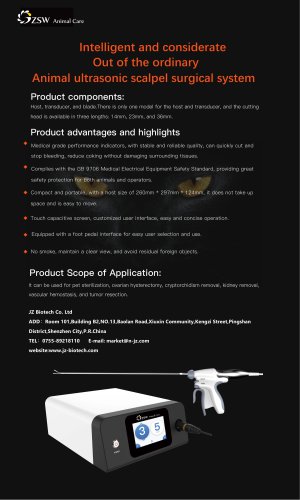 SEISSOR-SHAPE 17
1 Page
 PAG TEST
1 Page
 JZGGD002 Laser Physiotherapy
4 Pages










Archived catalogs
 JZVET-100B
2 Pages
- Detection kit
- Blood detection kit
- Serum detection kit
- Immunoassay detection kit
- Plasma detection kit
- Infectious disease detection kit
- Molecular detection kit
- Whole blood detection kit
- Respiratory disease assay kit
- Stainless steel forceps
- Surgical system
- Straight forceps
- Optical test kit
- Clinical detection kit
- Reusable forceps
- Cutting electrosurgical system
- Cassette detection kit
- Chromatographic immunoassay test kit
- Coagulation surgical system
- Fluorescence detection kit