
- Catalogs
- Kartell S.p.A.
- KartellLABWARE Catalogue (ITA-ENG-FRA) 2022-2023

- Products
- Catalogs
- News & Trends
- Exhibitions
KartellLABWARE Catalogue (ITA-ENG-FRA) 2022-2023

KartellLABWARE Catalogue (ITA-ENG-FRA) 2022-2023
Kartell, established in 1949, is a leader in using plastic materials for design furniture and accessories, integrating technological, industrial, cultural, and aesthetic values. The company is renowned in industrial design both in Italy and globally.
Founded in the late 1950s, Kartell's Labware Division focuses on laboratory technical articles, using materials like polypropylene and polystyrene as alternatives to glass. The division's success is due to innovative designs by Gino Colombini and Centrokappa, enhancing functionality.
Kartell uses over forty different plastic materials, chosen based on application needs, considering factors like chemical contact, aging, thermal stress, and environmental effects. This focus on quality and technology has made Kartell a globally recognized brand.
Since 1996, Kartell's Quality Management System has been certified according to ISO standards, updated to ISO 9001:2015 in 2017, supported by the Italian Institute of Plastics and recognized internationally through IQNET.
Kartell emphasizes recyclability and environmental sustainability, designing products for easy separation and recycling, with clear identification marks according to DIN 6120 standards. In 2011, Kartell achieved ISO 14001:2004 certification for environmental management.
- Material: PVC hoses are transparent, phthalates-free, and autoclavable, supplied in 20-meter rolls.
- Color and Properties: Clear color, no odor, no taste, no aging, and no oxidation.
- Chemical Resistance: Good resistance to strong acids and bases, excellent resistance to weak acids and bases, and fair resistance to organic solvents.
- Hoses: Available in various dimensions, suitable for medical, industrial, and hospital use, conforming to PhEur 3.1.1.1 / USP XXXII 2009 standards, DEHP free.
- Temperature Range: -15°C to +60°C for general hoses, -60°C to +200°C for specific medical device components, and up to +260°C for high resistance hoses.
- HDPE Scoop: Designed for heavy industrial use, suitable for foodstuff, with a round shape for easy material transfer.
- Stopcocks: Made of HDPE and PP, suitable for low-pressure liquids and gases, with a smooth turning action.
- Timers: Available in mechanical and electronic models, with features like portability, one-hand operation, and a digital display.
- Conical Stoppers: Made of red rubber, autoclavable, and pierceable, suitable for general laboratory use.
- Safety Shields: Made of clear acrylic, available in different thicknesses, designed to protect against hazardous substances and beta-emitting isotopes.
- Flexible Hoses: Suitable for air, water, medium concentration acids, and alkaline solutions. Resistant to abrasive products and oxygenated solvents.
- Conical Stoppers: Ensure perfect sealing with a standard taper of 1:10.
- Gas Sampling Balloons: Made of latex, available in volumes from 1,000 cc to 8,000 cc.
- All products are designed for specific industrial, medical, and laboratory applications.
- Compliance with various international standards ensures safety and reliability.
- Products are designed to be user-friendly, durable, and suitable for a wide range of applications.
The document provides detailed specifications for various laboratory equipment and containers, including agitators, trays, bowls, and safety boxes. Each item is described with dimensions, materials, and capacities. For example, agitators are made of PVC with specific cavity dimensions, while trays are available in materials like HDPE and PVC, with features such as stackability and resistance to acids.
The document outlines the usage of these items in laboratory settings. Trays and bowls are designed for general laboratory use, with features like ribbed bases for stability and stackability for efficient storage. Safety boxes are made of polycarbonate, fully autoclavable, and designed for secure transport of sensitive materials, ensuring airtight seals and easy inspection for leaks.
The equipment complies with relevant standards, such as ISO 11140/2005 for sterilization indicators. The document specifies that certain items, like sterilization tapes, are lead-free and suitable for food contact according to EC Regulation 10/2011.
Recommendations include using specific items for particular applications, such as using safety boxes for transporting antiblastic drugs and using sterilization tapes to distinguish between processed and unprocessed units. The document emphasizes the importance of proper storage to maintain the usability of items like sterilization tapes for up to three years.
- Agitators and trays are available in various sizes and materials, suitable for different laboratory applications.
- Safety boxes provide high security for transporting hazardous materials, with features like hermetic seals and safety locks.
- Sterilization indicators change color to confirm sterilization, with specific conditions outlined for effective use.
- All items are designed to be robust, easy to clean, and suitable for repeated use in laboratory environments.
The document provides detailed specifications and descriptions of various types of bottles and accessories, focusing on their suitability for food contact, compliance with regulations, and specific design features.
- Materials: Bottles are made from PE (Polyethylene) and PP (Polypropylene), ensuring durability and suitability for food contact.
- Design: Includes graduated square and narrow neck bottles, with features like wide necks for easy filling, sloping shoulders to reduce residue, and tamper-evident caps for security.
- Capacity and Dimensions: Various capacities ranging from 25 ml to 2000 ml, with detailed dimensions provided for each model.
- Food Contact Suitability: All bottles are suitable for foodstuff contact, complying with EC Regulation 10/2011.
- DIN Standards: Bottles conform to DIN 13316 and 168 standards, ensuring standardized neck and thread dimensions.
- Space Efficiency: Designed for space-saving storage, ideal for long-term sample storage.
- Security Features: Equipped with tamper-evident caps and sealing options to prevent unauthorized access.
- Autoclavable Options: Some bottles are autoclavable, suitable for transporting toxic samples for laboratory analysis.
- Screw Caps: Standardized screw caps available for different bottle types, ensuring secure closure and compatibility.
- Spray Bottles: Equipped with adjustable atomizers, suitable for food contact.
- Wash Bottles: Designed for distilled water, with adjustable flow control.
- Graduations: Allow for approximate volume measurement and reproducible filling.
- Opaque Options: Available for photosensitive materials, preventing light exposure.
- Easy Handling: Bottles feature easy-grip caps and ergonomic designs for user convenience.
The document outlines various types of bottles and accessories suitable for dispensing liquids, including dispensing bottles, wash bottles, and dropping bottles. These products are made from materials like HDPE and PE, and are designed for single or continuous dispensing. They comply with food contact regulations such as EC 10/2011.
The dispensing mechanism involves applying pressure to the bottle or blowing through a tube to control the liquid stream. Some bottles feature an integral molded tube to prevent leaks, and others have adjustable volume dispensers for precise liquid measurement.
The products are suitable for foodstuff contact and adhere to specific European regulations. They are designed for easy handling, stability, and efficient storage. The document also mentions the use of color-coded caps for content identification and the availability of transparent adhesive labels for safety compliance.
- Bottles are available in various capacities and dimensions, with features like wide mouths for easy filling and ergonomic designs for stability.
- Eye wash stations are equipped with features to ensure safe and effective eye cleaning, including automatic air-vent valves and perforated spray plates.
- Heavy-duty carboy bottles are designed for prolonged use and can withstand low temperatures, featuring robust construction and secure sealing mechanisms.
The document describes various containers and accessories made from high-density polyethylene (HDPE) and polypropylene (PP), suitable for food contact. These include heavy-walled carboy bottles, industrial tanks, and graduated measuring cylinders. The products are designed for durability, with features such as wide necks for easy filling, O-ring seals for leakproof performance, and carrying handles for convenience.
It is recommended to lubricate threads with a few drops of vaseline to facilitate assembly and ensure a better seal. The products are autoclavable, meaning they can be sterilized at high temperatures, and are resistant to chemical interactions.
The products conform to ISO 6706 - 1981 (E) standards and are suitable for foodstuff according to EC Regulation 10/2011. They are also compliant with UN regulations for the transportation of dangerous and toxic liquids, suitable for road, sea, and air transport.
For optimal use, ensure proper lubrication of threads before assembly. The products are designed for long-term use, even in sub-zero temperatures, and are chemically cleaner than glass, offering excellent chemical resistance.
The tables provide detailed specifications for various products, including capacity, dimensions, and thread sizes. For example, the heavy-walled carboy bottles come in capacities ranging from 5 to 50 liters, with specific dimensions for each size. The graduated measuring cylinders are available in capacities from 10 ml to 2000 ml, with precise graduation and tolerance details.
The document describes various laboratory equipment made from high-quality plastic materials such as PMP, FEP, PMMA, and PTFE. These materials provide excellent chemical resistance and durability. The equipment includes funnels, burettes, and Imhoff cones, all designed for precise measurements and easy cleaning. The funnels have permanent graduations and are autoclavable, while the burettes comply with DIN 12.700 standards, ensuring high precision and chemical resistance.
The equipment is designed for routine laboratory work, with features like needle control for precise flow in funnels and drop-by-drop delivery in burettes. The Imhoff cones are used for sedimentation and are easy to clean due to their screw plug design.
The products conform to various DIN standards, ensuring reliability and accuracy in laboratory settings. For example, the burettes adhere to DIN 12.700 standards, Class B, and the Imhoff cones conform to DIN 12672.
It is recommended to use the provided covers to protect slides from dust and other contaminants. The slide storing systems are designed for easy access and organization, with numbered cavities and transparent lids for quick content checks.
The document includes tables listing product specifications such as capacity, graduation, and dimensions. For instance, Schilling burettes are available in capacities of 10, 25, and 50 ml with a minimum division of 0.1 mm. Imhoff cones have a capacity of 1000 ml with various graduation levels.
All equipment is designed for ease of use and maintenance, with features like detachable valves and autoclavable materials. The combination of different plastics ensures both chemical resistance and durability, making these products suitable for various laboratory applications.
The document describes various laboratory equipment made primarily from polymethylmethacrylate (PMMA) and other materials like PP and PVC. The bench pipette holder is made of clear PMMA, featuring high-quality finishes and four tilted support shelves. It is suitable for plastic or glass serologic pipettes ranging from 1 ml to 50 ml. The rods are 25 cm in length and can be combined for greater height.
It is recommended not to expose the PMMA pipette holder to ultraviolet light. The document also details the use of an automatic pipette/burette rinsing set, which is essential for laboratories handling radioactive, caustic, or toxic materials. The system allows for continuous water exchange and minimizes breakage risks.
The equipment is designed to withstand certain conditions, such as supporting round-bottomed flasks up to 10 liters and temperatures up to 100°C (120°C for short periods). The pipette holders and accessories are autoclavable, ensuring they meet laboratory hygiene standards.
The pipette holders can accommodate various pipette sizes, with specific models designed for different capacities. The document highlights the versatility of the equipment, such as the ability to adjust the height of pipette stands and the use of safety pipette bulbs for handling hazardous liquids.
For optimal use, the document suggests using specific sets of pipettes and burettes with the rinsing system. It also advises on the proper assembly and use of the pipette holders to ensure stability and prevent damage.
- The document describes various laboratory and hospital equipment made from materials like PMMA (Plexiglas), expanded PUR, stainless steel, and polycarbonate. These materials are chosen for their durability, resistance to temperature, and chemical stability.
- PMMA and expanded PUR are used for items like test tube racks and ice buckets, which are lightweight and stackable.
- Polycarbonate is used for safety boxes, which are fully autoclavable and designed for secure transport of medical supplies, ensuring airtight seals and preventing accidental spills.
- Test Tube Racks: Available in various sizes and configurations, designed to hold different numbers of tubes with specific hole diameters and depths.
- Safety Box: Made of polycarbonate, features a hermetic silicone seal, stainless steel handle, and is designed for transporting hazardous materials safely.
- Hospital Wares: Includes items like urine sampling bottles, bed pans, and kidney dishes, made from PP and PE, which are autoclavable and designed for easy handling and storage.
- PTFE Laboratory Articles: Highlighted for their chemical, electrical, and thermal properties, PTFE is used for its high resistance to chemicals, exceptional thermal stability, and non-stick properties.
- PTFE is suitable for use in corrosive environments and is approved for contact with food by certain authorities.
- The document outlines the use of these materials and products in various settings, including hospitals and laboratories, emphasizing their safety, durability, and ease of use.
- Specific products like agitators for balloon flasks are designed for effective stirring and are suitable for food contact.
- Many products are designed with user-friendly features such as ergonomic handles, secure locking mechanisms, and easy-to-clean surfaces.
- The document emphasizes the importance of safety and reliability in the design of these products, particularly for transporting hazardous materials.
The document outlines strict quality controls for products, ensuring correct positioning of the magnetic core, quality of the external surface, breakage resistance, and consistency in the thickness of the external covering.
PTFE is a high molecular weight polymer known for its excellent chemical, electrical, and thermal properties. It has a very low coefficient of friction and is chemically inert, making it suitable for use in highly corrosive environments without contaminating sensitive materials. It offers high thermal stability, with a working temperature range from -200°C to +300°C, and does not degrade thermally until +400°C. PTFE also has exceptional electrical properties, including high electrical resistance and low dielectric constant.
PTFE is used in various industries due to its chemical resistance to acids, alkalis, and solvents. It is suitable for chemical and petrochemical components, food contact applications due to its physiological inertness, and electrical applications due to its dielectric properties and weather stability. Mechanically, its low friction coefficient allows for use in low-load applications.
The document describes magnetic bars with internal Alnico V magnets encapsulated in high-quality PTFE coatings. These bars are designed for various applications, ensuring economic efficiency and increased turbulence at low speeds. They are suitable for food contact and come in various shapes and sizes, including cylindrical, double-ended, crosshead, spherical, and oval.
The document provides detailed dimensions for various products, with tolerances of ±5% for length and ±10% for diameter. These products are designed for a wide range of applications and are suitable for food contact.
The document lists additional products such as tapered stoppers, test tubes, tape, and lining for glass tapers, all made from PTFE and suitable for food contact. These products offer exceptional chemical, mechanical, and heat resistance, withstanding temperatures up to 250°C continuously and up to 300°C for short periods.
The document highlights the versatility and superior properties of PTFE in various industrial applications, emphasizing its suitability for food contact and its resistance to extreme temperatures and corrosive environments.
- Temperature Stability: PFA labware maintains stability from -200°C to +260°C, making it suitable for a wide range of thermal conditions.
- Metal-Free Composition: Manufactured without leachable metals such as calcium, aluminum, and zinc, reducing contamination risks.
- Chemical Resistance: Inert to most reagents, including nitric and hydrochloric acid, minimizing cross-contamination.
- Long-Term Stability: Extends the stability of low concentration standards, reducing renewal time and costs.
- Translucency: Important for accurate volumetric measurements.
- Simplified Cleaning: Hydrophobic and anti-adhesive properties ease cleaning processes.
- Wide Neck Bottles: Made of transparent fluorinated resin, resistant to chemicals and temperatures from -250°C to +270°C, with leakproof closures.
- Volumetric Flasks and Beakers: Made of PFA, offering high chemical and thermal resistance, calibrated according to DIN EN ISO 1042 standards.
- Sample Containers: PFA containers with screw caps for secure sample collection and storage.
- Disposable Cuvettes: Available in optical PS and UV grade PMMA, suitable for spectrophotometry in visible and UV ranges, ensuring reproducibility with minimal absorption variation.
- Cuvettes are packaged in dust-proof containers, available in macro and semi-micro versions, compatible with most spectrophotometers.
The document provides detailed specifications and descriptions of various disposable laboratory items, including test tubes, specimen containers, and urine cups. These items are primarily made from polystyrene (PS) and polypropylene (PP) and are designed for laboratory use, including centrifugation and specimen collection.
- Types: Available in cylindrical and conical shapes, with or without rims.
- Materials: Made from PS or PP, suitable for centrifuge use.
- Specifications: Various sizes and capacities are listed, with specific resistance to centrifugal force (RCF) values.
- Features: Supplied with tight screw caps, available in sterile versions with red caps.
- Temperature Resistance: Withstand temperatures from -80°C to +121°C.
- Graduations: 15 ml tubes have 0.5 ml increments; 50 ml tubes have 2.5 ml increments.
- Design: Transparent PS with PE lids, waterproof closure.
- Usage: Ideal for storage, collection, and transportation of specimens.
- Design: Made of transparent PS with a PP stopper and spoon for sample handling.
- Features: Autoclavable PP with leakproof lid, suitable for specimen storage and transport.
- Design: Available in 60 ml, 150 ml, and 200 ml capacities with screw caps.
- Versions: Non-sterile with blue caps, sterile with red caps, and individually wrapped.
- Components: Includes a PP tube with sodium citrate and a PS pipette with a graduated scale.
- Procedure: Detailed steps for conducting the ESR test using the system.
These pipette tips are made from polypropylene (PP) and include a filter. They are free from DNase, RNase, DNA, ATP, metals, and cadmium, and are apyrogenic and free from PCR inhibitors. Sterilized by gamma radiation, they can be autoclaved at 121°C for 20 minutes. They are ideal for use in molecular biology, cell cultures, bacteriology, virology, immunology, and radioimmunology. The hydrophobic polyethylene (PE) filters act as a barrier against aerosol contamination, preventing cross-contamination of samples and micropipettes. The tips are designed to ensure complete emptying in case of over-aspiration. They are recommended for use with Kartell automatic micropipettes but are compatible with most micropipette brands.
The document provides a detailed compatibility chart for various micropipette models, including brands like Gilson, Eppendorf, Biohit, Brand, Socorex, HTL, Nichiryo, Finnpipette, and Thermo. Compatibility may vary over time due to structural changes in micropipette models by manufacturers.
These are 96-well plates made from clear polystyrene (PS), available in flat, U, and V bottom shapes. They are aseptic, single-wrapped, and available in a sterile version. PS covers are sold separately.
Made from polyethylene (PE), these pipettes come with a bulb and graduations for precise sample transfer. They are available in non-sterile multi-packs and individually wrapped sterile versions. They can replace traditional glass Pasteur pipettes and rubber teats.
Sterile inoculating loops are available in polybags of 20 pieces. The neutral type has a 1 μL loop, and the blue type has a 10 μL loop, with a needle at the opposite end for inoculation.
The document provides detailed specifications and descriptions of various laboratory disposable items and equipment, including Petri dishes, L-shaped spreaders, metal trays for histology, tissue embedding sponges and cassettes, weighing boats, and liquid handling devices.
- Designed for dosing polar and non-polar organic solvents, halogenated solvents, and concentrated mineral acids.
- Components in contact with reagents are made of PTFE and borosilicate glass, ensuring chemical resistance.
- Models include Dosipet S-10, S-25, and S-50, with capacities ranging from 1.0 ml to 50.0 ml.
- Specifically designed for use with hydrofluoric acid solutions.
- Internal components are made of PTFE and platinum-iridium, ensuring inertness to hydrofluoric acid.
- Models include Dosipet HF-10 and HF-25, with capacities ranging from 1.0 ml to 25.0 ml.
- Adjustable volume bottle top dispensers for precise and safe chemical dispensing.
- Compatible with all reagents except hydrofluoric acid, with components made of PTFE, FEP, and borosilicate glass.
- Models range from 0.25 ml to 100 ml, calibrated according to ISO 8655 standards.
- Features include a 360° rotation capability, easy recalibration, and autoclavability without disassembly.
- Ideal for precise titrations directly from bottles, both in the laboratory and in the field.
- Features a large LCD for continuous volume display and allows dosage volumes up to 50 ml with 0.01 ml increments.
- Equipped with a rechargeable battery, auto-off function, and precision mechanism for air elimination.
- Comes with various threaded adaptors and PTFE tubes for aspiration, discharge, and recirculation.
- All devices are designed to ensure high precision and accuracy, with compliance to relevant ISO standards.
- Materials used provide excellent chemical resistance and compatibility with a wide range of reagents.
- Devices are easy to use, maintain, and recalibrate, ensuring long-term reliability and safety for operators.
- Models range from FX 50 to FX 1000 with varying capacities and precision levels.
- Specifications include accuracy and repeatability percentages, with compatibility for specific Kartell tips.
- Designed for precise liquid handling in laboratory settings.
- Includes spare parts set with cones, PTFE seals, O-rings, and cone nuts.
- Bench holders available for 3 to 6 micropipettes, made from transparent plastic for stability and easy cleaning.
- Sterilizable by radiation.
- Available in 8 and 12 channel models, suitable for ELISA, molecular biology, and DNA amplification.
- Features include air cushion, lightweight PP/PVDF structure, and easy volume adjustment.
- Autoclavable at 121°C for 20 minutes, compliant with EN ISO 8655 standards.
- Designed for fixed volume applications in clinical diagnostics and analytical chemistry.
- Made from high-quality plastic with stainless steel pistons, ensuring durability and comfort.
- Autoclavable and individually calibrated according to ISO8655 standards.
- Eight models with air displacement and coaxial ejector, covering 0.2 μl to 10,000 μl capacities.
- Ideal for molecular biology, microbiology, and immunology applications.
- Features include easy volume setting, large display, and robust structure for mechanical and chemical resistance.
- Plastic Types and Temperature Ranges: The document lists different types of plastics such as Acrylonitrile Butadiene Styrene (ABS), High-Density Polyethylene (HDPE), Low-Density Polyethylene (LDPE), Polyamide (PA), Polycarbonate (PC), and others. Each type is associated with a specific temperature range, indicating the operational limits and short-term tolerance.
- Chemical Resistance: A detailed table outlines the chemical resistance of various plastics against different chemical groups at specific temperatures. The resistance is categorized as high, good, marginal, or non-resistant, providing guidance on the suitability of each plastic type for different chemical exposures.
- Standards and Compliance: The document highlights the compliance of Kartell Labware plastics with several international standards, including food contact suitability (CE 1935/2004, US FDA CFR 170/199), RoHS, BSE/TSE, and Atex directives. It also mentions the absence or limitation of harmful substances like heavy metals, biphenyls, and phthalates.
- Eco-compatibility and Innovation: Kartell Labware emphasizes its commitment to eco-friendly practices and innovation in plastic materials. The materials are described as recyclable, provided they are not chemically contaminated, and the company actively engages in research and collaboration with leading manufacturers to enhance material properties.
Catalog excerpts

Kartell, da oltre 70 anni leader nel design industriale Kartell, more than 70 years as leader in industrial design Kartell, dépuis plus de 70 ans leader dans le design industriel
Open the catalog to page 2
KARTELL® DIVISIONE LABWARE KARTELL® LABWARE DIVISION KARTELL® DIVISION LABWARE Kartell, fondata nel 1949, è tra le prime aziende in Europa ad utilizzare le materie plastiche per la produzione di mobili di design, complementi d’arredo e accessori per la casa. La linea guida che ha caratterizzato questi oltre sessant'anni di attività è l’idea di unire l’aspetto tecnologico e industriale, necessario per rispondere a specifiche esigenze economiche e sociali, a quello culturale ed estetico. In questo senso Kartell è una delle principali interpreti del design industriale nel panorama delle aziende...
Open the catalog to page 4
LE CERTIFICAZIONI DELLA QUALITÀ AZIENDALE: ISO 9001:2015 COMPANY QUALITY CERTIFICATION: ISO 9001:2015 LES CERTIFICATIONS DE QUALITÉ D’ENTREPRISE: ISO 9001:2015 Nel 1996 Kartell decide di certificare il proprio Sistema di Gestione della Qualità Aziendale secondo le norme UNI EN ISO 9001:1994. In 1996, Kartell decided to certify its Corporate Quality Management System in compliance with UNI EN ISO 9001:1994 standards. En 1996, Kartell a décidé de faire certifier son Système de Gestion de la Qualité d’Entreprise conformément aux normes UNI EN ISO 9001 : 1994. Nel 2005 l’Azienda adegua il proprio...
Open the catalog to page 5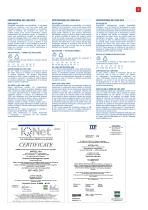
RICICLABILITÀ Riciclabilità, sostenibilità, eco-compatibilità - in una parola rispetto per l’ambiente - sono temi molto sentiti dalla comunità mondiale. E forse può sembrare un controsenso parlare di ambiente per produzioni che hanno nei materiali plastici il loro comune denominatore. Tuttavia, contrariamente alla percezione comune, le produzioni di Kartell sono perfettamente riciclabili: per semplificare il processo di riciclaggio, infatti, i vari componenti dei prodotti Kartell sono facilmente separabili tra loro e riconducibili ad elementi monomaterici; le parti in plastica di ogni prodotto...
Open the catalog to page 6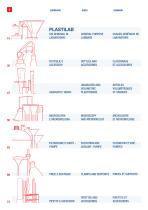
GENERAL PURPOSE LABWARE USAGES GÉNÉRAUX DE LABORATOIRE GRADUATED AND VOLUMETRIC PLASTICWARE ARTICLES VOLUMÉTRIQUES ET GRADUÉS FILTRAZIONE E VUOTO POMPE FILTRATION AND VACUUM - PUMPS FILTRATION ET VIDE POMPES
Open the catalog to page 7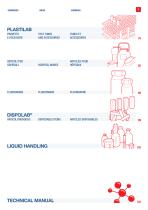
PLASTILAB TEST TUBES AND ACCESSORIES HOSPITAL WARES ARTICLES POUR HÔPITAUX DISPOSABLE ITEMS ARTICLES DISPOSABLES DISPOLAB® ARTICOLI MONOUSO LIQUID HANDLING TECHNICAL MANUAL
Open the catalog to page 8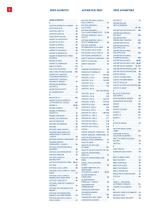
INDICE ALFABETICO ALPHABETICAL INDEX INDICE ALFABETICO INDEX ALPHABÉTIQUE BOTTIGLIE CON TAPPO A SIGILLO (COLLO STRETTO) A AGITATORE MAGNETICO A TURBINA ANCORETTA SFERICA ANCORETTE A CROCE ANCORETTE CON ANELLO ANCORETTE MAGNETICHE BOTTIGLIE GRADUATE A COLLO LARGO PER PIPETTE CONTENITORE CON TAPPO A PRESSIONE CONTENITORE CON TAPPO A VITE CONTENITORE MONOUSO PER SALIVA CONTENITORE PER CONTAGLOBULI COULTER® BOTTIGLIE GRADUATE RETTANGOLARI A COLLO LARGO CONTENITORE PER FECI CON TAPPO A VITE BOTTIGLIONI A COLLO LARGO BOTTIGLIONI A COLLO STRETTO CONTENITORE PER URINA CON TAPPO A VITE BOTTIGLIE GRADUATE...
Open the catalog to page 9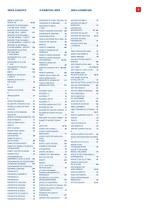
INDICE ALFABETICO MATRACCI TARATI CON TAPPO A VITE ALPHABETICAL INDEX MICROPIPETTE AUTOCLAVABILI A VOLUME FISSO - FIXOPET MICROPIPETTE AUTOCLAVABILI A VOLUME FISSO - LABOFIX MICROPIPETTE AUTOCLAVABILI A VOLUME VARIABILE - PLURIPET MICROPIPETTE AUTOCLAVABILI A VOLUME VARIABILE - PLURIPET II 138 MICROPIPETTE MULTICANALE A VOLUME VARIABILE - MULTIPET MICROPROVETTA CON TAPPO PER COBAS-BIO® E COBAS MIRA® PORTAPROVETTE COMPONIBILI SUPPORTO PER IMBUTO SEPARATORE PROVETTE MONOUSO CON BORDO 106 PRESA DI PROTEZIONE PER LE MANI 26 98 PROVETTE CILINDRICHE PROVETTE CILINDRICHE PER CENTRIFUGA PROVETTE CONICHE...
Open the catalog to page 10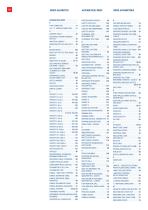
INDICE ALFABETICO ALPHABETICAL INDEX INDEX ALPHABÉTIQUE ALPHABETICAL INDEX CRYSTALLISATION VESSELS GENERAL PURPOSE FUNNELS GLASS FIBER SPATULAS CUVETTES HOLDER GRADUATED BEAKERS LOW FORM ADJUSTABLE VOLUME DISPENSER BOTTLES CYLINDRICAL JARS WITH RIBBED CAP CYLINDRICAL TEST TUBES GRADUATED BOTTLE ANALYTICAL FUNNELS GRADUATED BURETTES ASPIRATOR BOTTLES, HEAVY DUTY DEEP TRAY, HIGH FORM, STACKABLE GRADUATED CONICAL CENTRIFUGE TUBES 107 DEEP TRAY, LOW FORM, STACKABLE DEEP TRAY, LOW FORM WITH HANDLES AND DRAINING HOLES GRADUATED MEASURING CYLINDERS, SHORT FORM GRADUATED MICRO TEST TUBES DEEP TRAYS DESICCATOR...
Open the catalog to page 11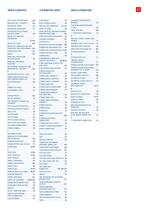
INDICE ALFABETICO ALPHABETICAL INDEX METAL TRAYS FOR HISTOLOGY SLIDE MAILER SLIDE STORING SYSTEM MICROSCOPE COVER SNAP-ON LIDS CONTAINERS MICROSCOPE SLIDE BOXES MICROSCOPE SLIDE STORAGE AND DUST COVER SPARE PARTS SET AND MICROCHANNEL MICROPIPETTES STAND 135 MICRO TEST TUBE RACK PREPARATION SPARE VACUUM RETENTION VALVE 81-103 102 MICRO TEST TUBES MICRO TEST TUBES WITH CAPS FOR COBAS-BIO® AND COBAS MIRA® 102 MICROTITRE PLATES SPECIMEN CONTAINER SPRAY BOTTLE SPUTUM COLLECTION CONTAINER 108 STAINING JAR HELLENDHAL TYPE STAINING JAR SCHIFFERDECKER TYPE59 STAINING JAR WITH 2 LIDS STAINING RACK MONO-BALL...
Open the catalog to page 12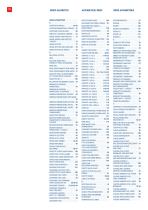
INDICE ALFABETICO ALPHABETICAL INDEX INDEX ALPHABÉTIQUE INDEX ALPHABÉTIQUE BOUCHONS POUR TUBES À ESSAIS 28-29 AGITATEUR MAGNÉTIQUE À TURBINE 27 BOUCHONS POUR TUBES À USAGE UNIQUE POUR MICROSCOPIE DOSIPET ACCESSORIES AGITATEURS POUR BALLONS BOUCHONS RENVERSABLES AMPOULE À DÉCANTER, GRADUÉE ASPIRE-DOSEUR POUR PIPETTES BURETTE DIGITALE TECHNOTRATE 133 ASPIRE-DOSEUR POUR PIPETTES “VADOSA” BURETTES GRADUÉES BURETTES SCHILLING ASPIRE-PIPETTES AVEC ADAPTEUR CADRES D'INCLUSION EMBOUTS À USAGE UNIQUE POUR MICROPIPETTES AUTOMATIQUES EMBOUTS STÉRILISÉS À USAGE UNIQUE AVEC FILTRE ENSEMENCEURS STÉRILES ENTONNOIRS...
Open the catalog to page 13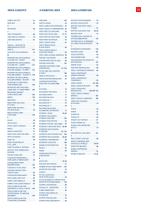
INDICE ALFABETICO ALPHABETICAL INDEX INDEX ALPHABÉTIQUE SUPPORT POUR ENTONNOIRS SUPPORT POUR PIPETTES PORTE-LAMES POUR EXPÉDITIONS SUPPORT POUR PORTE-TUBES À ESSAIS PORTE-PIPETTES CIRCULAIRE JOINT D’ÉTANCHÉITÉ PORTE-PIPETTES POUR TIROIR JONCTIONS SOUPLES PORTE-PIPETTES VERTICAL LABOFILL - DISPOSITIF DE REMPLISSAGE DE PIPETTE SANS FIL PORTE-TUBES À ESSAIS À DEUX ÉTAGES LAVE-PIPETTES AUTOMATIQUE PORTE-TUBES À ESSAIS À DEUX/TROIS ÉTAGES SUPPORT POUR SAFETY BOX SUPPORT STATIF SYSTÈME POUR LA VITESSE DE ERYTROSÉDIMENTATION SYSTÉME POUR LE CLASSEMENT DES LAMES POUR MICROSCOPE TIGE POUR CUVES TIGES...
Open the catalog to page 14All Kartell S.p.A. catalogs and technical brochures


Archived catalogs
 catalog
170 Pages
 catalogue 2017
170 Pages
