
- Catalogs
- Kartell S.p.A.
- KartellLABWARE Catalogue (SPA-ENG-POR)

- Products
- Catalogs
- News & Trends
- Exhibitions
KartellLABWARE Catalogue (SPA-ENG-POR)

KartellLABWARE Catalogue (SPA-ENG-POR)
Kartell, established in 1949, is a leading European company known for its innovative use of plastic materials in design furniture, home accessories, and laboratory equipment. Over its 60-year history, Kartell has integrated technological advancements with cultural and aesthetic values, becoming a leader in industrial design.
In the late 1950s, Kartell launched the Labware Division, focusing on laboratory equipment made from advanced materials like polypropylene, polystyrene, and polyethylene. These materials offer benefits over glass, such as being lightweight, strong, and safe. The division's success is due to innovative designs by Gino Colombini and Centrokappa, which enhanced functionality and introduced modular solutions.
Kartell utilizes over 40 different plastic materials, chosen based on application needs, considering factors like chemical resistance, aging, thermal stress, and environmental effects. This focus on quality and advanced technology has established Kartell as a globally recognized brand.
Since 1996, Kartell has maintained a certified Quality Management System, evolving through various ISO standards, currently holding the UNI EN ISO 9001:2015 certification, reflecting its commitment to high-quality management processes.
Kartell emphasizes recyclability and sustainability, designing products for easy disassembly and recycling, complying with DIN 6120 standards. In 2011, Kartell achieved the UNI EN ISO 14001:2004 certification for its effective environmental management system, underscoring its dedication to eco-friendly practices.
- Color: Colorless
- Odor: Odorless
- Taste: None
- Toxicity: Non-toxic
- Aging: Absent
- Oxidation: Absent
- Strong Acids: Good
- Weak Acids: Excellent
- Strong Alkali: Good
- Weak Alkali: Excellent
- Organic Solvents: Weak
The scoop is made of HDPE, designed for heavy industrial use, featuring a round shape to facilitate complete transfer of sampling material. It is suitable for food contact.
- Flexible and transparent hoses made from non-toxic materials, suitable for medical, industrial, and hospital use. DEHP free, with temperature ranges from -15°C to +60°C, conforming to PhEur 3.1.1.1 / USP XXXII 2009.
- Other hoses are suitable for temperatures up to +260°C, resistant to acids, bases, and solvents, and are autoclavable.
Various dimensions and packaging options are available for general laboratory use, including vacuum hoses and selectors for tube diameters.
- Stopcocks are ideal for low-pressure liquids and gases, made from HDPE and PP, requiring no lubricants.
- Timers are available in mechanical and electronic versions, with features such as portability, battery operation, and alarms.
Standard taper stoppers ensure perfect sealing, suitable for laboratory use, and are autoclavable.
Made from high-quality acrylic, these shields provide protection from hazardous substances and are available in different thicknesses.
Includes items like gas sampling balloons and adapters for filters, suitable for food contact and autoclavable.
The document provides detailed specifications for various laboratory containers and accessories, including dimensions, materials, and capacities. It lists items such as agitator rods, trays, bowls, and safety boxes made from materials like PVC, PP, HDPE, and polycarbonate. Each item is described with its internal and external dimensions, volume, and specific features like stackability and resistance to chemicals.
The document outlines the general uses of the labware, emphasizing their suitability for laboratory and food-related applications. It highlights features such as autoclavability, resistance to acids, and stackability, which are crucial for laboratory settings.
The labware complies with specific standards, such as ISO 11140/2005 for sterilization indicator tapes. The document also mentions compliance with EC Regulation 10/2011 for food contact suitability.
- Safety boxes are designed for secure transport of hazardous materials, featuring hermetic seals and safety locks.
- Sterilization indicator tapes change color to confirm sterilization, with specific conditions for steam and dry heat methods.
- Graduated bottles are designed to withstand pressure and are suitable for food contact.
- The document emphasizes the importance of proper storage and handling to maintain the integrity and functionality of the labware.
- It provides detailed instructions for the use and maintenance of safety boxes, including the presence of a biological hazard symbol for safety assurance.
This document serves as a comprehensive guide for selecting and using laboratory containers and accessories, ensuring compliance with safety and quality standards.
The document provides detailed specifications for various types of graduated bottles, including square bottles with wide necks, narrow neck bottles, and standardized bottles. These bottles are made from materials such as PE (Polyethylene) for the body and PP (Polypropylene) for the cap. They are designed for space-saving storage, long-term sample storage, and are suitable for food contact according to EC Regulation 10/2011.
The bottles feature easy-grip caps that can be secured for safety, and some have tamper-evident caps with safety rings. The bottles are designed to prevent leaks and residue deposits, with sloping shoulders and double sealing for tightness. They are also autoclavable, making them suitable for transporting toxic samples.
The bottles conform to DIN standards 13316 and 168, ensuring they meet food and drug regulations. They are suitable for contact with foodstuffs, as per EC Regulation 10/2011.
The document recommends removing caps before autoclaving and highlights the suitability of these bottles for storing photosensitive materials, both liquid and solid. The bottles are also ideal for use with distilled water, with dispensing tips that can be adjusted for flow.
The tables provide detailed measurements for each bottle type, including volume (ml), graduation (ml), dimensions (mm), and mouth diameter (mm). For example, a 250 ml bottle has a graduation of 25 ml, dimensions of 60x131 mm, and a mouth diameter of 23 mm.
The document also lists accessories such as standardized screw caps for different bottle types, including wash bottle screw caps and spray bottle caps, which are suitable for food contact.
The document outlines various types of bottles and accessories suitable for dispensing liquids, including dispensing bottles, wash bottles, and dropping bottles. These products are made from materials like HDPE and PE, ensuring they are suitable for contact with food. The document provides detailed specifications for each product, including capacity, dimensions, and material composition.
The document describes the operation of different bottle types. For example, wash bottles operate by applying slight air pressure to dispense liquid, and the direction of the stream can be controlled manually. The document also explains the use of adjustable volume dispenser bottles, where the volume is controlled by the position of a graduated measuring cup.
All products are deemed suitable for contact with food, complying with relevant regulations such as the EC Regulation 10/2011. The document emphasizes the importance of using these products in accordance with safety standards, particularly when handling hazardous materials.
The document highlights features such as color-coded caps for easy identification, ergonomic designs for ease of use, and specific designs for stability and storage. It recommends using transparent, punched labels for proper identification and risk assessment, following NFPA guidelines.
Other products include cylindrical jars with ribbed caps, suitable for storing various substances, and emergency eye wash stations designed for quick and effective eye cleaning. The document also mentions heavy-walled carboy bottles with narrow necks for secure storage and transport.
The document provides comprehensive information on a range of bottles and accessories, emphasizing their suitability for food contact and compliance with safety standards. It offers detailed specifications and operational guidance to ensure proper use and handling.
This section describes various pipette holders and accessories designed for laboratory use. The holders can accommodate different types and sizes of pipettes, including both glass and plastic. They are made from materials like ABS, PP, and PMMA, which offer resistance to chemicals and high temperatures. The holders are designed to be versatile, allowing for easy storage and organization of pipettes.
Pipette pumps are available for safe and efficient liquid handling. They feature mechanisms for suction and dispensing, such as rotating wheels and pressure levers, to ensure precise control. These pumps are suitable for handling hazardous liquids and are made from materials resistant to acids and alkalis.
The document details various types of centrifuge tubes, including cylindrical and conical designs. These tubes are autoclavable and can withstand temperatures up to 120°C or 170°C, depending on the model. They offer high chemical resistance and are suitable for use in various laboratory applications.
Test tube racks are designed for organizing and storing test tubes. They are available in different configurations, including modular and universal designs. The racks are autoclavable and can be used in water baths or freezers without deforming. They feature alphanumeric references for easy sample identification and are available in multiple colors for coding purposes.
- Pipette holders can accommodate pipettes up to 50 ml.
- Pipette pumps are compatible with pipettes ranging from 0.1 ml to 25 ml.
- Centrifuge tubes can withstand up to 4000 RPM and 3000 RCF x G.
- Test tube racks can hold up to 100 tubes of 1.5 ml each.
PTFE (Polytetrafluoroethylene) is a high molecular weight polymer known for its excellent chemical, electrical, and thermal properties. It is widely used due to its low friction coefficient and several key characteristics:
- Chemical Inertia: PTFE is almost completely inert to reagents and solvents, making it suitable for corrosive environments and ultra-pure applications.
- Thermal Stability: It can be used between -200°C and +300°C, with thermal degradation not occurring until +400°C.
- Electrical Properties: PTFE has high electrical resistance, a low dielectric constant, and a low dielectric loss factor.
- Non-Stick Properties: It is self-lubricating, shockproof, tough, and flexible even at low temperatures.
- Chemical: PTFE's high resistance to acids, alkalis, and solvents makes it ideal for petrochemical and food industry components. It is physiologically inert and approved for food contact by some authorities.
- Electrical: Its dielectric properties and stability in adverse weather conditions make it increasingly used in electrical applications.
- Mechanical: The low friction coefficient allows for use in low-load applications.
- Magnetic Stir Bars: These bars contain Alnico V magnets encapsulated in high-quality PTFE, ensuring durability and power. They undergo strict quality controls for magnetic core positioning, surface quality, breakage resistance, and coating thickness consistency.
- Watch Glasses and Connectors: Designed for universal use, these products are suitable for food contact and conform to DIN 12242 standards.
- Stirring Bars: Available in various shapes (cylindrical, crosshead, oval, triangular) and sizes, these bars are designed for diverse applications, ensuring effective stirring even at low speeds. They are suitable for food contact.
- Tapered Stoppers and Test Tubes: These items offer exceptional chemical and thermal resistance, suitable for continuous use up to 250°C and short intervals up to 300°C. They are self-lubricating and conform to DIN standards.
- Tape: White PTFE tape is useful for protecting screw threads and preventing leaks, suitable for food contact.
The document details various types of cuvettes and micro test tubes used in spectrophotometry and sample analysis. Cuvettes are available in optical PS (340 to 800 nm) and UV grade PMMA (280 to 800 nm), with macro (4.5 ml), low-form semi-micro (1.5 ml), and high-form semi-micro (2.5 ml) versions. They come with 2 or 4 optical faces, with the two-face version featuring grooves for better grip. The cuvettes are compatible with most spectrophotometers and photometers, with absorption changes kept within ±1% for reproducibility.
Cuvette code 1961, with 4 optical faces, is suitable for UV field and spectrofluorimetry techniques, recommended for biological and biotechnological applications. They are packaged in dust-proof PS foam containers.
- Art. 1937 to Art. 1961: 10 boxes of 100 cuvettes each (total 1000 cuvettes) with Kartell brand.
- Art. 81937 to Art. 81961: 60 boxes of 100 cuvettes each (total 6000 cuvettes) without Kartell brand.
Micro test tubes are made of clear PP/PE, ideal for sample analysis and shipping, withstanding centrifugal force up to RCF 11,000 x g. Some models are autoclavable at 121°C for 20 minutes with open cap. Available in various colors.
Sample cups for various analyzers like Cobas Mira®, Boehringer ES 300®, and ES 600® are detailed, with options for anti-evaporation and push-in stoppers. Scintillation vials are compatible with all liquid scintillation counters, featuring heavy walls to minimize solvent loss.
Use cuvette code 1961 for UV and spectrofluorimetry applications. Ensure compatibility with spectrophotometers and photometers for accurate results. Follow packaging instructions for optimal storage and handling.
1. Autoclavable PP Sputum Collection Container: Designed for saliva samples, featuring a leakproof lid, suitable for storage, collection, and transportation.
2. Urine Cups: Available in 60 ml, 150 ml, and 200 ml capacities, made from polypropylene with screw caps. Non-sterile versions have blue caps and are sold in multi-packs, while sterile versions have red caps and are individually wrapped.
3. Test Tubes: Made from polystyrene with polyethylene screw caps, available in 12 ml and 25 ml sizes, with options for sterile individual wrapping.
4. Containers for Biological Specimens: Made from polystyrene with screw caps, available in 60 ml and 200 ml sizes, with aseptic individual wrapping options.
1. Erythrocyte Sedimentation Rate System: Utilizes a polypropylene tube with a pink cap containing sodium citrate. The procedure involves filling the tube with blood, mixing, inserting a pipette, and reading after 60 minutes.
1. Disposable Tips for Micropipettes: Made from high-purity polypropylene, these tips are recommended for use with Kartell automatic micropipettes but are compatible with most brands. Available in bulk, rack, and refill packaging.
1. Dimensions and Capacities: Detailed measurements and capacities for various containers and test tubes are provided, including height, diameter, and volume specifications.
2. Compatibility: Kartell tips are compatible with a wide range of micropipette brands, ensuring versatility in laboratory settings.
- Versions: Three versions are available - DOSIPET B for universal use with medium aggressiveness reagents, DOSIPET S for concentrated acids and solvents, and DOSIPET HF specifically for hydrofluoric acid.
- Technical Specifications: Common features include precise volume adjustment, a graduated scale for reproducibility, no reagent loss during air elimination or filling, bubble-free dispensing, complete liquid transfer with each piston movement, and total liquid recovery by rotating the delivery tip 180°. They are autoclavable at +121°C for 20 minutes and conform to EC standards.
- Materials: Equipped with a borosilicate glass cylinder and PTFE piston, ensuring compatibility with all aqueous solutions except those containing hydrofluoric acid.
- Features: Adjustable volume bottle top dispensers for precise and cost-effective chemical dosing. Safe for operators and the environment, with six models ranging from 0.25 ml to 100 ml.
- Construction: Made from PTFE, FEP, and borosilicate glass, ensuring excellent compatibility with all reagents except hydrofluoric acid. The body is made of glass fiber polypropylene for increased accuracy and robustness.
- Functionality: Features a precise and quick volume adjustment knob with a locking system to prevent accidental displacement. Allows 360° rotation on the bottle.
- Compliance: Each device is individually calibrated according to ISO 8655 standards and comes with a calibration certificate. Includes five adaptors for common reagent bottles and a device for easy recalibration in the laboratory.
- Volume range from 0.25 ml to 100 ml.
- Autoclavable without disassembly.
- Components made from PTFE, FEP, and borosilicate glass.
- Individual calibration according to ISO 8655 with a calibration certificate.
- Five adapters for common reagent bottles and a recalibration device.
- Volume capacity up to 50 ml with 0.01 ml increments.
- Simple calibration and preselection of titration volumes.
- Components made of high-resistance plastic.
- Auto-off function and rechargeable battery.
- Autoclavable at +121°C for 20 minutes.
- Robust PVDF body for high mechanical and chemical resistance.
- Individual calibration with certificates included.
Catalog excerpts
Kartell, más de 60 años líder en el diseño industrial. Kartell, more than 60 years as leader in industrial design Kartell, líder há mais de 60 anos no design industr
Open the catalog to page 2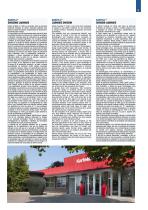
3 KARTELL® DIVISIONE LABWARE KARTELL® LABWARE DIVISION KARTELL® DIVISION LABWARE Kartell, fundada en 1949, se encuentra entre las primeras empresas europeas en utilizar materiales plásticos para fabricar muebles de diseño, complementos de decoración y accesorios para el hogar. La línea directriz que ha caracterizado estos más de 60 años de actividad se basa en la idea de unir el aspecto tecnológico e industrial, necesario para dar respuesta a las exigencias económicas y sociales específicas, con el aspecto cultural y estético. En este sentido, Kartell es uno de los principales agentes en el sector...
Open the catalog to page 4
LOS CERTIFICADOS DE CALIDAD IMPRESARIAL: ISO 9001:2015 En 1996, Kartell decide certificar su propio Sistema de gestion de calidad empresarial segun las normas UNI EN ISO 9001:1994. En 2005, la empresa adapta su propio Sistema de gestion de calidad empresarial a la norma UNI EN ISO 9001:2000. En 2008, la empresa renueva el certificado ISO 9001:2000. En 2010, Kartell actualiza el nivel de certificado y pasa a la UNI EN ISO 9001:2008. La entidad encargada de garantizar dicho proceso de certificacion es el I.I.P. (ISTITUTO ITALIANO DEI PLASTICI), organismo acreditado por el SINCERT y el CISQ, la...
Open the catalog to page 5
RECICLABILIDAD La reciclabilidad, la sostenibilidad y la ecocompatibilidad, en una palabra el respeto por el medio ambiente, son temas de los que se habla mucho en la comunidad mundial. Tal vez pueda parecer un contrasentido hablar de medio ambiente para producciones donde los materiales plásticos son el denominador común, pero, contrariamente a la percepción común, las producciones de Kartell son perfectamente reciclables: para simplificar el proceso de reciclaje, los distintos componentes de los productos Kartell se pueden separar fácilmente entre sí y se pueden atribuir a elementos de un solo...
Open the catalog to page 6
USOS GENERALES DE LABORATORIO GENERAL PURPOSE LABWARE ARTÍCULOS GRADUADOS Y VOLUMÉTRICOS GRADUATED AND VOLUMETRIC PLASTICWARE ARTIGOS GRADUADOS E VOLUMÉTRICOS FILTRACIÓN Y VACÍO - BOMBAS FILTRATION AND VACUUM - PUMPS FILTRAÇÃO E VÁCUO - BOMBAS
Open the catalog to page 7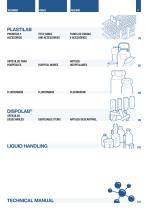
PLASTILAB TEST TUBES AND ACCESSORIES TUBOS DE ENSAIO E ACESSÓRIOS ARTÍCULOS PARA HOSPITALES HOSPITAL WARES ARTIGOS HOSPITALARES DISPOSABLE ITEMS ARTIGOS DESCARTÁVEL DISPOLAB® ARTÍCULOS DESECHABLES LIQUID HANDLING TECHNICAL MANUAL
Open the catalog to page 8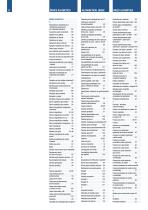
INDICE ALFABETICO ALPHABETICAL INDEX INDEX ALFABETICA INDICE ALFABETICO A Abreviaturas, temperatures y resistencias quimicas de los materiales plasticos 144 Accesorios para technotrate 133 Agitador de espatula 29 Agitadores para matraces 90 Agitador magnetico de turbina 27 Anillos para inclusion 127 Aros esteriles para inoculaciOn 125 Articulos de laboratorio de pfa 96 Articulos de ptfe para laboratorio 90 Asa de protecciOn 26 Aspirador-dosificador, para pipetas “vadosa" 77 Aspiradores para pipetas 77 Aspirador universal para pipetas 76 Aspirador y dosificador de seguridad para pipetas 77 B Bandeja...
Open the catalog to page 9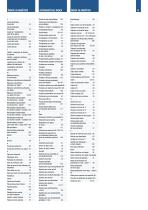
Indice alfabetico de volumen variable - pluripet ii138 Micropipetas multicanal de volumen variable - multipet 136 Microprobeta con tapon para cobas-bio® y cobas mira® 102 T Tapon conico con dos boquillas 23 Tapones con boquilla corta 39 Tapones con boquilla larga 39 Tapones conicos 23-24-52-94 Tapones conicos con 1 y 2 orificios23 Tapones con solapa para probetas j Jarras graduadas, forma alta 51 Jarras graduadas, forma baja 51 Juego de 7 adaptadores para filtros (guko) 24 Juego de piezas de recambio y soportes para micropipetas de un solo canal 135 L Labofill - dispositivo de llenado de pipetas...
Open the catalog to page 10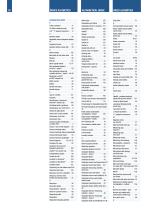
INDICE ALFABETICO ALPHABETICAL INDEX INDEX ALFABETICA Finned plugs for disposable tubes106 First eyd emergency eye wash station H Hand operated vacuum pump 66 Heavy-walled carboy bottles, ALPHABETICAL INDEX # 4 Way connector 17 25 Slides staining trough 59 120° “Y” tapered connectors 17 A Adhesive labels 42 Adjustable volume dispenser bottles 43 Analytical funnels 67 Aspirator bottles, heavy duty 45 B Balance boats 128 Base plate for test tube racks 81 Beakers 95 Bench pipette holder 72-77 Blue graduated beakers, low form - class b 50 Blue graduated measuring cylinders tall form - class b 48-49...
Open the catalog to page 11
Indice alfabetico ALPHABETICAL INDEX INDEX ALFABETICA 11 Pipette/burette rinsing set, automatic 74 Pipette filler with adapter 76 Pipette filler with plunger 77 Pipette stand, vertical 75 Pipette tray for drawer 76 Policemen stirring rods 29 Rods for clot detachment and extraction 125 Round bottom flask 98 Round bottom flask holder 72 Sampling bottle for urine 86-87 Sedimentation imhoff cone 54 Semitransparent empty boxes for refills 119 Separating funnel holder 70 Short spout dropping bottle screw caps 39 Slide storing system 56 Snap-on lids containers 110 Spare parts set and microchannel micropipettes...
Open the catalog to page 12
INDICE ALFABETICO ALPHABETICAL INDEX INDEX ALFABETICA Caixas para laminas de microscopio 57 Caixas vazias para ponteiras INDEX ALFABETICA A Abaixador de lingua 86 Abreviagoes, temperaturas e resistencias qufmicas dos materiais plasticos 144 Acessorios para technotrate 133 Agitadores para baloes 90 Agitador magnetico de turbina 27 A granel em saco plastico 111 Ansa esteril para inoculagao 125 Armario para laminas 56 Artigos de laboratorio em ptfe 90 Artigos em pfa para laboratorio 96 Aspirador-dosador para pipetas “vadosa” 77 Aspirador e dosador de seguranga para pipetas 77 Aspiradores para pipetas...
Open the catalog to page 13
Indice alfabetico ALPHABETICAL INDEX INDEX ALFABETICA 13 Suporte para conectar as estantes Frascos para amostras 97-107 Frascos para conta-globulos coulter® 103 Frascos para evaporagao 98 Frascos para fezes 108 Frascos para urina com tampa de rosca 108-109 Frascos para urina e amostras biologicas 109 Frascos volumetricos com tampa 52 Funis de cano longo 67 Funis para analises 67 Funis para transference 28 G Garrafao para acidos de paredes espessas, gargalo grande 45 Garrafa para coleta de urina 87 Graduado, funil de separagao 53 J Jarras graduadas, forma baixa 51 Jarras graduadas, formato alto...
Open the catalog to page 14All Kartell S.p.A. catalogs and technical brochures


Archived catalogs
 catalog
170 Pages
 catalogue 2017
170 Pages

- Laboratory test tube
- Sample container
- Pipette tip
- Laboratory rack
- Polypropylene test tube
- Laboratory tube rack
- V-bottom test tube
- Digital thermoregulator
- Laboratory bottle
- Laboratory thermostat
- Storage sample container
- Sample container with cap
- Transport sample container
- Polypropylene sample container
- Mechanical micropipette
- Bedpan