

Best Papers 2009-2016

Best Papers 2009-2016
The document emphasizes the importance of accurate mapping in transrectal ultrasonographic (TRUS) prostate biopsies for diagnosing and treating prostate cancer. It highlights that using a registration algorithm enhances biopsy localization, with improved operator dexterity over time. The Urostation 3D TRUS system shows high accuracy in targeting lesions with less than 3 mm error, favoring elastic image fusion over rigid techniques.
Studies compare different biopsy techniques, showing that MRI and TRUS soft image fusion techniques have higher success rates in targeted biopsies, improving cancer detection compared to random biopsies. Elastic registration systems are superior to rigid systems as they account for prostate deformation, enhancing biopsy accuracy.
Multiparametric MRI is validated in prostate cancer management, improving tumor localization. Integrating MRI with TRUS for image registration enhances targeted biopsy accuracy, reducing microfocal cancer detection and increasing high-grade cancer detection.
Targeted biopsy techniques improve prostate cancer detection efficiency by reducing the number of cores needed and enhancing significant cancer detection. MRI-TRUS fusion techniques offer more precise targeting.
MRI-TRUS fusion targeted biopsy techniques effectively detect the index tumor, crucial for accurate diagnosis and treatment planning.
3D mapping techniques improve biopsy accuracy and aid in developing personalized treatment strategies in prostate cancer management.
Advancements in imaging and biopsy techniques, particularly MRI and TRUS fusion, significantly improve prostate cancer diagnosis and management accuracy and efficiency. These technologies support personalized treatment strategies and better cost control.
Materials and Methods: A prospective study involving 129 biopsy-naïve men with suspected prostate cancer. Participants underwent prebiopsy mpMRI, followed by standard (STD) systematic biopsies and targeted (TAR) biopsies if lesions were detected.
Results: The cancer detection rate for MRI-targeted biopsies was 62.7%, significantly higher than the STD protocol. TAR biopsies showed a higher detection rate of clinically significant cancer (28.9% vs. 9.8% for STD, P < 0.001).
Conclusions: mpMRI-targeted biopsies improve the detection rate of clinically significant prostate cancer with less tissue sampling and higher Gleason scores.
Purpose: To assess the accuracy of MRI/transrectal ultrasound fusion biopsies in diagnosing prostate cancer based on gland size.
Materials and Methods: A study of 232 men undergoing first-round biopsies with mpMRI and a Likert score of 2 or greater.
Results: The detection rate of clinically significant prostate cancer was 44%. MRI-transrectal ultrasound fusion guided biopsy detection rates varied with prostate size, being highest in smaller glands.
Conclusions: MRI-transrectal ultrasound fusion biopsies increase the yield of first-round prostate biopsies in larger prostate volumes.
Objective: To compare detection rates of clinically significant disease in MRI-targeted biopsies versus 3D TRUS-guided biopsies based on prostate size.
Methods: Comparison of 120 men undergoing 3D TRUS-guided biopsy to 120 men undergoing MRI-targeted biopsy.
Results: MRI-targeted biopsies had higher detection rates of clinically significant cancer, especially in larger prostates (volume > 50 cm3).
Conclusion: MRI-targeted biopsies are more effective in detecting significant prostate cancer in enlarged prostates compared to 3D TRUS.
Purpose: To determine the accuracy of MR-TRUS image-fusion biopsy in characterizing index tumors.
Results: High concordance between biopsy and radical prostatectomy specimens for tumor location and Gleason pattern, but limited prediction of cancer volume.
Conclusion: MR-TRUS image fusion reliably identifies the location and aggressiveness of the index tumor.
Objective: To compare detection rates of clinically significant prostate cancer between MRI/TRUS-guided and random biopsies.
Results: Detection rates for clinically significant prostate cancer were similar between the two methods.
Conclusion: MRI/TRUS-targeted biopsy may replace traditional 12-core random biopsy for prostate cancer detection.
Catalog excerpts

KOELIS BEST PAPERS 1st Edition - 2009-2016
Open the catalog to page 1
Over the past years KOELIS has been featured in many clinical publications reviewed and accepted by international journals. Within the next document you will find abstracts of the best published results. The consequences of these studies include the potential use of multiparametric MRI exams as first-line diagnostic methods, the implementation of targeted, or at least adapted, biopsies, perhaps as a firstline approach but definitely as a second-line approach, as well as active surveillance protocols based on imaging and mapping. Although the effects are still to be measured, these new practices...
Open the catalog to page 3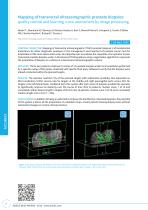
Mapping of transrectal ultrasonographic prostate biopsies: quality control and learning curve assessment by image processing Mozer P1, Baumann M, Chevreau G, Moreau-Gaudry A, Bart S, Renard-Penna R, Comperat E, Conort P, Bitker MO, Chartier-Kastler E, Richard F, Troccaz J. 1Department of Urology, Assistance Publique-Hôpitaux de Paris, Paris, France J US Med. 2009 PURPOSE: OBJECTIVE: Mapping of transrectal ultrasonographic (TRUS) prostate biopsies is of fundamental importance for either diagnostic purposes or the management and treatment of prostate cancer, but the localization of the cores seems...
Open the catalog to page 4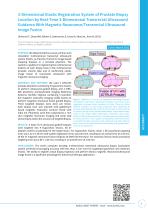
3-Dimensional Elastic Registration System of Prostate Biopsy Location by Real-Time 3-Dimensional Transrectal Ultrasound Guidance With Magnetic Resonance/Transrectal Ultrasound Image Fusion Ukimura O1, Desai MM, Palmer S, Valencerina S, Gross M, Abreu AL, Aron M, Gill IS 1From the Center for Image-Guided Therapy, University of Southern California Institute of Urology, Keck School of Medicine, University of Southern California, Los Angeles, California MATERIALS AND METHODS: We used 3 CIRS-053 prostate phantoms containing 3 hypoechoic lesions to perform ultrasound guided biopsy and 3 CIRS066 phantoms...
Open the catalog to page 5
MRI and ultrasound-guided prostate biopsy using soft image fusion Rud E1, Baco E, Eggesbø HB. 1Division of Diagnostics and Intervention, Department of Radiology and Nuclear Medicine, Oslo University Hospital Anti cancer. 2012 OBJECTIVES: Transrectal ultrasound (TRUS)-guided random biopsies is the gold standard when diagnosing prostate cancer. A new 3D system with organ tracking, allows accurate targeted biopsies using magnetic resonance imaging (MRI) and TRUS soft image fusion. The aim of the study was to evaluate the accuracy of targeted biopsies. MATERIALS AND METHODS: Retrospective study of...
Open the catalog to page 6
Prebiopsy Magnetic Resonance Imaging and Prostate Cancer Detection: Comparison of Random and Targeted Biopsies Nicolas Barry Delongchamps,* Michaël Peyromaure, Alexandre Schull, Frédéric Beuvon, Naïm Bouazza, Thierry Flam, Marc Zerbib, Naira Muradyan, Paul Legman and François Cornud From the Departments of Urology (NBD, MP, TF, MZ), Radiology (AS, PL, FC) and Pathology (FB), Assistance Publique-Hôpitaux de Paris, Cochin Hospital and Department of Clinical Research, Assistance Publique-Hôpitaux de Paris, Tarnier Hospital (NB), Paris Descartes University, Sorbonne Paris Cité and Tourville Imaging...
Open the catalog to page 7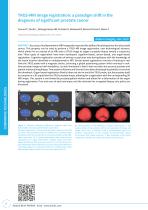
TRUS-MRI image registration: a paradigm shift in the diagnosis of significant prostate cancer Cornud F1, Brolis L, Delongchamps NB, Portalez D, Malavaud B, Renard-Penna R, Mozer P. 1Department of Radiology, Hôpital Cochin, Paris, France COMPARING TECHNOLOGIES ABSTRACT: Accuracy of multiparametric MRI has greatly improved the ability of localizing tumor foci of prostate cancer. This property can be used to perform a TRUS–MR image registration, new technological advance, which allows for an overlay of an MRI onto a TRUS image to target a prostate biopsy toward a suspicious area Three types of registration...
Open the catalog to page 8
Prospective randomized trial comparing magnetic resonance imaging (MRI)-guided in-bore biopsy to MRI-ultrasound fusion and transrectal ultrasound-guided prostate biopsy in patients with prior negative biopsies Arsov C1, Rabenalt R, Blondin D, Quentin M, Hiester A, Godehardt E, Gabbert HE, Becker N, Antoch G, Albers P, Schimmöller L. 1Department of Urology, Heinrich-Heine University, Düsseldorf, Germany. Eur Urol. 2015 BACKGROUND: A significant proportion of prostate cancers (PCas) are missed by conventional transrectal ultrasound-guided biopsy (TRUS-GB). It remains unclear whether the combined...
Open the catalog to page 9
Value of multiparametric MRI in the work-up of prostate cancer Cornud F¹, Delongchamps NB, Mozer P, Beuvon F, Schull A, Muradyan N, Peyromaure M. ¹Service de Radiologie, Hôpital Cochin, Paris, France. Curr Urol. 2011 ABSTRACT: The role of magnetic resonance imaging (MRI) in prostate cancer evaluation is controversial and likely underestimated. Technological advances over the past 5 years have demonstrated that multiparametric MRI, including diffusion-weighted imaging (DWI) and dynamic contrast-enhanced MRI, can evaluate the actual tumor burden of a newly diagnosed prostate cancer more accurately...
Open the catalog to page 10
Targeted MRI-guided prostate biopsies for the detection of prostate cancer: initial clinical experience with real-time 3-dimensional transrectal ultrasound guidance and magnetic resonance/transrectal ultrasound image fusion Fiard G¹, Hohn N, Descotes JL, Rambeaud JJ, Troccaz J, Long JA. ¹Urology Department, Grenoble University Hospital, Grenoble, France. METHODS: We prospectively included 30 patients for suspicion of prostate cancer from November 2011 to August 2012. All patients were previously evaluated by a multiparametric MRI, interpreted by a single radiologist who attributed a Prostate...
Open the catalog to page 11
Validation of the European Society of Urogenital Radiology scoring system for prostate cancer diagnosis on multiparametric magnetic resonance imaging in a cohort of repeat biopsy patients Portalez D¹, Mozer P, Cornud F, Renard-Penna R, Misrai V, Thoulouzan M, Malavaud B. ¹Department of Radiology, Clinique Pasteur, Toulouse, France. Eur Urol. 2012 BACKGROUND: Wide variations in acquisition protocols and the lack of robust diagnostic criteria make magnetic resonance imaging (MRI) detection of prostate cancer (PCa) one of the most challenging fields in radiology and urology. OBJECTIVE: To validate...
Open the catalog to page 12All Koelis catalogs and technical brochures
 TRINITY®
6 Pages
 TRINITY® PERINE
4 Pages
 Brochure Steady Pro
2 Pages

Archived catalogs
 Urostation Touch®
8 Pages
- Ultrasound system
- Ultrasound probe
- On-platform ultrasound system
- Computer workstation
- Medical computer workstation
- 3D/4D ultrasound system
- Linear-array ultrasound transducer
- Urology ultrasound imaging system
- Abdominal ultrasound transducer
- Convex-array ultrasound transducer
- Needle guidance ultrasound system
- Small parts ultrasound transducer
- Instrument holding arm
- Endocavitary ultrasound transducer
- Articulated instrument holding arm
- Medical imaging computer workstation
- Rail-mounted instrument holding arm
- Needle guide
- Transrectal ultrasound transducer
- Ultrasound probe needle guide