


eBook Food

eBook Food
LECO Corporation, founded in 1936, specializes in elemental and thermal analysis equipment, mass spectrometers, and chromatographs. Headquartered in Michigan, USA, with over 25 subsidiaries globally, LECO ensures quality through vertical integration.
LECO serves sectors such as energy, environment, agriculture, food safety, life sciences, pharmaceuticals, metabolomics, and metallurgy, providing instruments for carbon/sulfur testing, environmental monitoring, and food safety analysis.
GC×GC enhances separation capacity with two columns of orthogonal selectivity, improving sensitivity and structured chromatograms. TOFMS is suitable for complex samples, offering full mass range collection without compromising speed or sensitivity.
The StayClean® ion source minimizes maintenance by reducing cleaning needs. The Multi-Mode Source™ allows comprehensive analysis with multiple ionization modes without hardware changes.
LECO provides thermal and flow-based modulators for GC×GC, enhancing chromatographic resolution based on application needs.
ChromaTOF software processes large data volumes from TOF instruments, featuring automated peak finding, target analyte quantification, and enhanced graphics for GC×GC data.
LECO's products include the PEGASUS® BT GC-TOFMS and PEGASUS® BT 4D GC×GC-TOFMS, known for sensitivity and reliability. The PEGASUS® GC-HRT+ series offers high-resolution capabilities for complex sample analysis.
LECO's systems are used for pesticide detection in tomatoes, fats analysis in food, and olive oil differentiation, providing qualitative and quantitative analysis for food safety.
This document analyzes applications of gas chromatography (GC) and time-of-flight mass spectrometry (TOFMS) technologies, focusing on LECO PEGASUS® BT and BT 4D instruments for detecting pesticides, terpene profiling, aroma profiling, and more.
Using QuEChERS extraction and GC×GC technology, pesticides in peeled tomatoes are detected with enhanced separation efficiency and sensitivity.
GC-TOFMS and GC×GC-TOFMS analyze terpenes in cannabis, increasing detected peaks and identified terpenes, enhancing understanding of the "entourage effect."
GC-TOFMS tracks American IPA beer aging through aroma profile characterization, complemented by sensory analysis for freshness and quality scores.
GC-TOFMS identifies volatiles in celery, with ChromaTOF® software aiding data analysis.
GC-TOFMS analyzes fats in food, offering better analyte distinction and identification compared to FID.
A benchtop GC-TOFMS enhances sample throughput in pesticide residue analysis, maintaining performance while reducing runtime.
GC×GC technology addresses matrix interference challenges in pesticide quantitation, meeting regulatory detection limits.
GC×GC and TOFMS differentiate coffee roast levels, providing insights into flavor and aroma variations.
GC×GC-TOFMS with flow modulation profiles honey aromas, demonstrating system robustness and ease of use.
GC-HRT and GC×GC-HRT profile yeast metabolites, emphasizing high-resolution mass spectrometry's role in metabolomics research.
GC-HRT and ChromaTOF-HRT software identify unique analytes in olive oils for quality control and authentication.
High-resolution mass spectrometry minimizes false positives and negatives in pesticide identification in tobacco.
LECO's PEGASUS® systems play a critical role in food safety testing, offering precise methods for detecting contaminants and ensuring compliance with safety standards.
Using QuEChERS and GC-HRT, LECO's system identifies pesticide residues in tobacco, resolving isobaric interferences.
LECO's PEGASUS® GC-HRT analyzes PCBs in fish oil supplements, providing resolving power and sensitivity for trace components.
LECO's PEGASUS® BT 4D GC×GC-TOFMS system separates and identifies MOSH/MOAH fractions in food samples.
LECO's advanced systems are essential for food safety testing, offering reliable methods for contaminant detection and compliance with safety standards.
Catalog excerpts

FOOD TESTING APPLICATIONS eBook ECO Corporation – L company facts C- and GC×GC-TOFMS G instrumentation pecific LECO GC-TOFMS S instrument features eparation Science S product portfolio election of LECO SepSci S App Notes ECO Food Testing L Bibliography Next Page
Open the catalog to page 1
LECO CORPORATION SOME COMPANY FACTS
Open the catalog to page 2
SOME COMPANY FACTS LECO CORPORATION Established in 1936 by Carl Schultz, the Laboratory Equipment Company introduced what would be the first rapid carbon determinator to the American iron and steel industry. Today, over 80 years later, LECO continues to be a family-owned company in its third generation of leadership and is recognised globally as a leader in the development of high-quality elemental and thermal analysis equipment, mass spectrometers and chromatographs, metallography and optical equipment, and consumables. Our headquarters in St. Joseph, Michigan, USA, is comprised of several facilities...
Open the catalog to page 3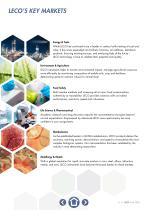
Energy & Fuels While LECO has continued to be a leader in carbon/sulfur testing of coal and coke, it has since expanded into biofuels, biomass, oil additives, petroleum products. Ensuring existing sources, and analysing fuels of the future – LECO technology is here to validate their potential and quality. Environment & Agriculture LECO instruments helps to monitor environmental impact, manage agricultural resources more efficiently by monitoring composition of arable soils, crop and fertilisers; determining optimum nutrition values for animal feed. Food Safety Multi residue methods and screening...
Open the catalog to page 4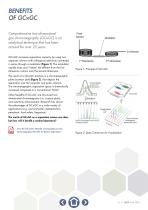
BENEFITS OF GC×GC Comprehensive two-dimensional gas chromatography (GC×GC) is an analytical technique that has been around for over 25 years. GC×GC increases separation capacity by using two separate columns with orthogonal selectivity connected in series through a modulator (Figure 1). The modulator rapidly traps and "injects" the effluent from the first dimension column onto the second dimension. Figure 1: Principle of GC×GC The result of a GC×GC analysis is a chromatographic plane (contour plot) (Figure 2), that depicts the separation over the nonpolar and polar columns. The chromatographic...
Open the catalog to page 6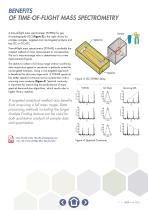
BENEFITS OF TIME-OF-FLIGHT MASS SPECTROMETRY A time-of-ight mass spectrometer (TOFMS) for gas chromatography (GC) (Figure 3) is the right choice for complex samples, targeted and non-targeted analysis and fast GC or GC×GC. Time-of-flight mass spectrometry (TOF-MS) is probably the simplest method of mass measurement to conceptualise. The ion’s mass-to-charge ratio is determined via a time measurement (Figure). The ability to collect a full mass range without sacricing data acquisition speed or sensitivity is perfectly suited for non-targeted analyses. Using a non-targeted approach is benecial...
Open the catalog to page 7
SPECIFIC LECO GC-TOFMS INSTRUMENT FEATURES
Open the catalog to page 8
STAY CLEAN® ION SOURCE STABILITY Fouled ion sources and related issues are often time consuming to diagnosis and resolve. A definitive diagnosis can only be achieved after other preventative maintenance steps (inlet maintenance, column trimming, etc.) have been tried and tested. Once the source has been pinpointed as the issue, users have to clean the source before proceeding. Even routine, scheduled preventative cleaning leads to system downtime In less controlled environments the incremental contamination of an ion source may not be noticed until long past the point of compromised results or...
Open the catalog to page 9
LECO MULTI-MODE SOURCE ™ IONIZATION SOURCE FOR GAS CHROMATOGRAPHY MASS SPECTROMETRY The innovative Multi-Mode Source™ (MMS™) takes all of the advantages of the three most common ionization modes – Electron Ionization (EI), Positive Chemical Ionization (PCI), and Negative Chemical Ionization (NCI/ECNI) – and combines them into one easy-to-use source. No more hardware switching, no more alignment issues: with the MMS, changing ionization modes is as easy as a click of a button. The new MMS has great mass accuracy and high resolution on pseudo-molecular ions, which complements the traditional Electron...
Open the catalog to page 10
LECO MODULATOR PORTFOLIO GC×GC offers dramatic improvements over traditional GC for the analysis of complex mixtures. This is due to significantly increased chromatographic resolution. The modulator, considered the heart of the GC×GC system, is a device which injects the effluent from the primary column to the secondary column. There are two primary forms of modulators in GC×GC; thermal- and flow-based. These techniques are described in general terms, but with focus on flow modulation. Thermal-based modulators (Figure 6) rely on a cooling mechanism to trap eluent from the first column, followed...
Open the catalog to page 11
LECO ChromaTOF ® SOFTWARE LECO‘s ChromaTOF software is uniquely designed to process and analyse the large amounts of data that are acquired with our time-of-flight instruments. ChromaTOF offers seamless control of both the instrument and its accessories, as well as an intuitive interface with highly integrated data processing. ChromaTOF is the first mass spectrometry data system to fully accommodate multidimensional chromatographic data (GC×GC). Benefits of LECO ChromaTOF • Single software platform • Automatic tuning within user-defined Quality Control methods • Intuitive Acquisition Method Setup...
Open the catalog to page 12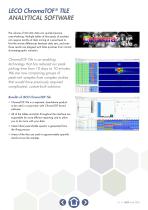
LECO ChromaTOF ® TILE ANALYTICAL SOFTWARE The volume of GC×GC data can quickly become overwhelming. Multiple tables of thousands of analytes can require months of data mining at a pixel level to find the minute differences between data sets, and even those results are plagued with false positives from normal chromatographic variation. ChromaTOF Tile is an enabling technology that has reduced our peak picking time from 10 days to 10 minutes. We are now comparing groups of peak-rich samples from complex studies that would have previously required complicated, custom-built solutions. Benefits of...
Open the catalog to page 13
SEPARATION SCIENCE PRODUCT PORTFOLIO
Open the catalog to page 14All LECO catalogs and technical brochures
 Cornerstone Mobile
2 Pages
 RHEN602
2 Pages
 928 Series
6 Pages
 CS844 Series
6 Pages
 832 Series
6 Pages
 GDS900
8 Pages
 Pegasus BT 4D
6 Pages
 PR36 Mounting Press
2 Pages
 Organic Supplies – Catalog
28 Pages
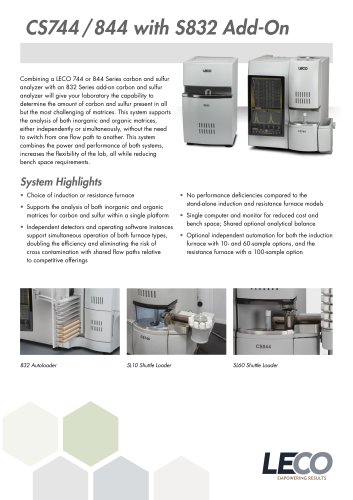 CHN828 with S832 Add-On
2 Pages
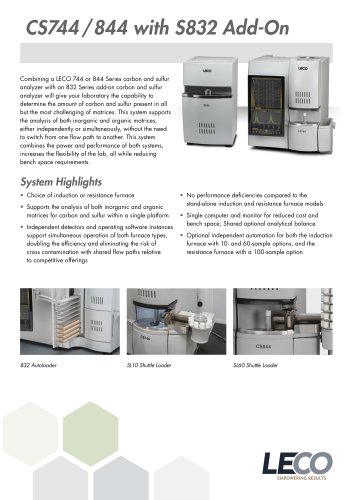 CS744/844 with S832 Add-On
2 Pages
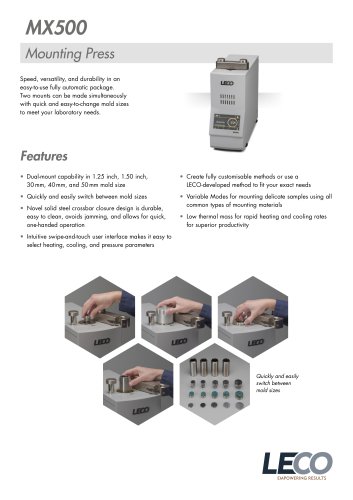 MX500
MX5002 Pages
 MX400
MX4002 Pages
 PAX-it 2
2 Pages
 SX100M
2 Pages
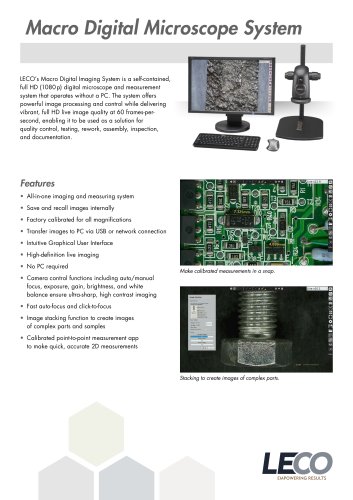 Macro Digital Microscope
2 Pages
 LCB3100
2 Pages
 L-PAL3
2 Pages
 Sectioning Machines (EU)
18 Pages
 MSX205 M-Series
2 Pages
 MSX255 M-Series
2 Pages
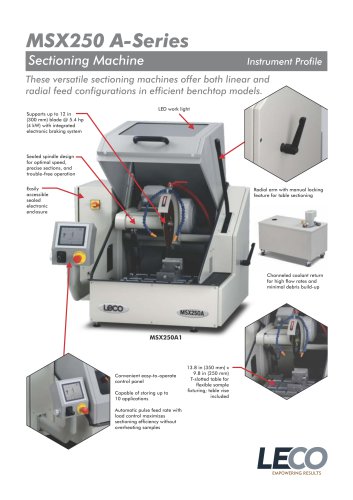 MSX250 A-Series
2 Pages
 MSX432 A-Series
2 Pages
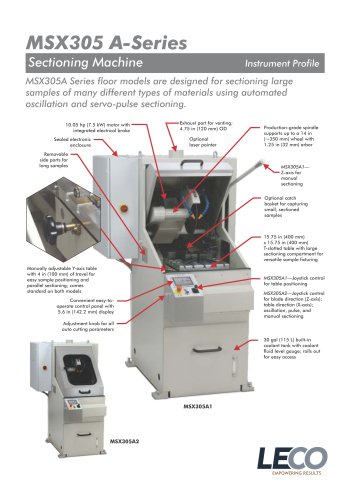 MSX305 A-Series
2 Pages
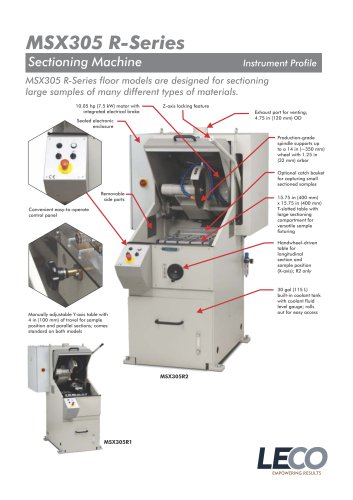 MSX305 R-Series
2 Pages
 Solution for Cement Analysis
4 Pages
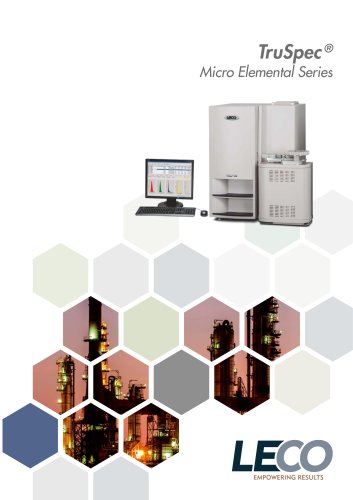 TruSpec Micro
4 Pages
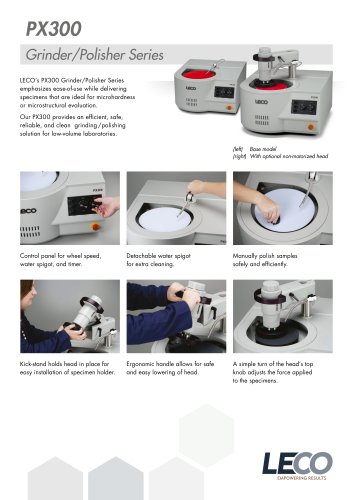 PX300 Grinder/Polisher
2 Pages
 DH603
DH6034 Pages
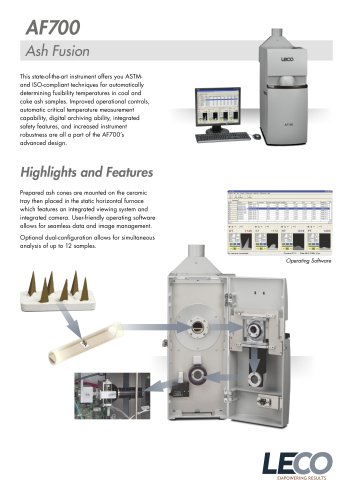 AF700
AF7002 Pages
 AC500
AC5002 Pages
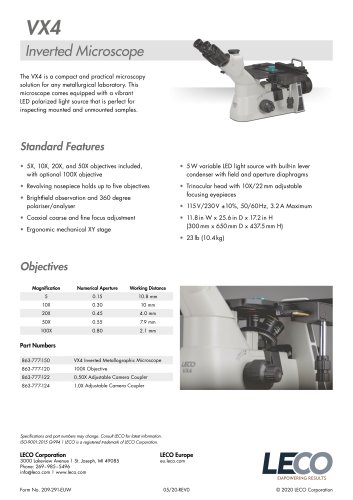 VX4
VX41 Page
 AMH55
AMH556 Pages
 EATC Berlin
8 Pages
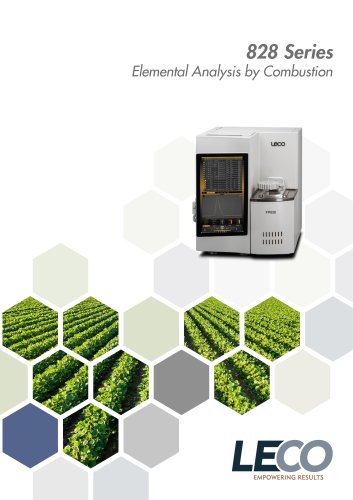 828 Series
6 Pages
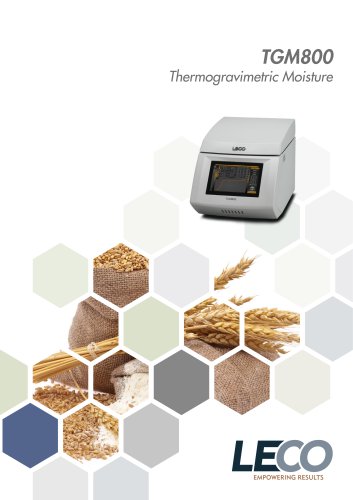 TGM800
6 Pages
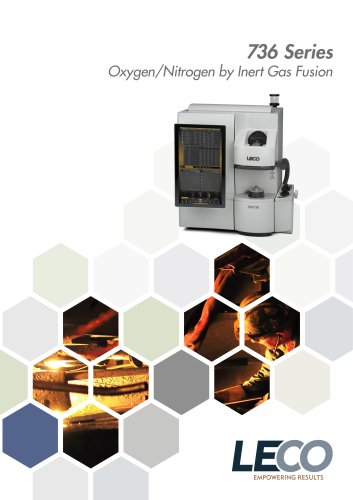 736 Series
6 Pages
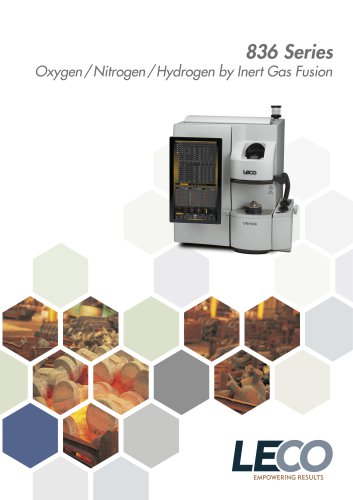 836 Series
6 Pages
 RC612
RC6124 Pages
 CS744
CS7446 Pages
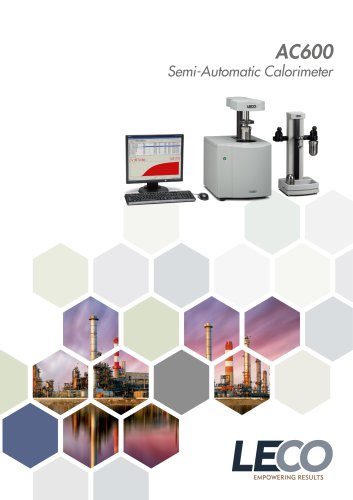 AC600
AC6004 Pages
 TGA801
6 Pages
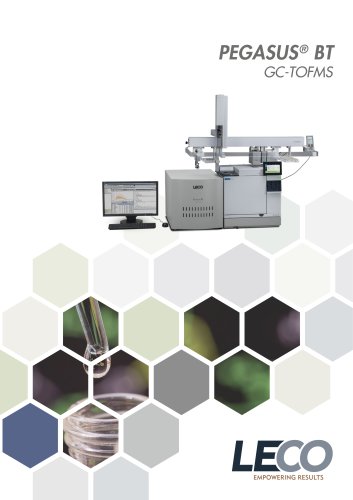 Pegasus BT
6 Pages
 Pegasus GC-HRT+ 4D
8 Pages
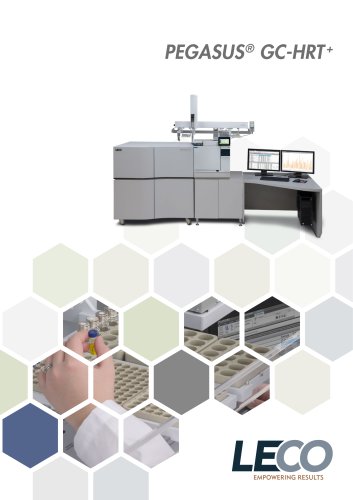 Pegasus GC-HRT+
8 Pages
 Solutions for Food Analysis
4 Pages






- Analysis software
- Laboratory testing system
- Laboratory software
- Acquisition software
- Analyser for the pharmaceutical industry
- Benchtop spectrometer
- O2 analyzer
- Testing system with touchscreen
- Compact spectrometer
- Analyser for the food industry
- Autosampler
- Diagnostic spectrometer
- High-resolution spectrometer
- Environmental analysis spectrometer
- Protein tester
- Nitrogen tester
- Thermal analyzer
- Spectrometer for the food industry