
- Catalogs
- Maltron International
- COVID -19 Challenges

COVID -19 Challenges
COVID -19 Challenges
The document addresses the challenges and strategies in managing intensive care units (ICUs) during the COVID-19 pandemic, with a focus on fluid management as a critical aspect of patient care. It emphasizes the evolving treatment guidelines and the importance of learning from early experiences in countries like China and Italy.
Fluid therapy is essential in managing COVID-19 patients, with risks associated with both overhydration and dehydration. Initially, a negative fluid balance was recommended, but the occurrence of acute kidney injury has led to more liberal fluid strategies. Individualized patient assessment is crucial, considering symptoms such as fever, tachypnea, and gastrointestinal issues.
- Surviving Sepsis Campaign: Recommends measuring dynamic parameters for fluid responsiveness, using conservative fluid strategies, and preferring crystalloids over colloids.
- World Health Organization: Advises cautious fluid management in respiratory failure and specific resuscitation strategies for septic shock.
- UK Joint Anaesthetic and Intensive Care Guidelines: Emphasizes conservative fluid management in ARDS and balanced electrolyte solutions.
Best practices include assessing fluid balance on admission and daily, using balanced crystalloids for resuscitation, and avoiding starch solutions. Maintenance fluids should be carefully managed, and fluid creep should be documented.
Ultrasound is highlighted as a versatile tool for assessing cardiovascular, respiratory, and renal systems, providing a holistic approach to patient care during the pandemic.
The document underscores the importance of fluid stewardship, akin to antibiotic stewardship, to improve clinical care quality. It advocates for a stepwise approach in assessing and managing fluid therapy in critically ill COVID-19 patients.
Fluid administration is a fundamental practice in intensive care. The document highlights the need for an IV fluid management plan tailored to each patient, considering clinical and laboratory findings. The 'Rules of Fours' are mentioned as a guideline for fluid management.
The pandemic has led to significant changes in clinical practice, including the redeployment of healthcare professionals and the conversion of new areas for critical care. Despite the challenges, accurate data collection is crucial for understanding patient outcomes and optimizing resource utilization.
Collecting data during the pandemic is essential for visualizing patient care on a larger scale and refining treatment plans for future waves of infection. The document argues against the notion that data collection is inconvenient during a pandemic.
The IFA was founded to promote education and research on fluid management in critically ill patients. It aims to improve patient outcomes through collaborative research, guideline development, and international exchange.
- Fluid management principles are foundational for COVID-19 therapy.
- Initial advice favored a negative fluid balance, but a more liberal strategy is now considered.
- Individualized therapy based on patient history and clinical assessment is crucial.
- Guidelines from various organizations provide frameworks for managing COVID-19 patients.
- Ultrasound is a versatile tool for fluid therapy diagnostics and monitoring.
- Lessons learned can refine future epidemic responses.
The document concludes that fluid stewardship is vital during the pandemic, presenting an opportunity to enhance care quality for current and future health crises. Embracing modern tools and collaboration is essential for effective pandemic management.
The document cites various studies and guidelines related to fluid management and COVID-19, emphasizing the importance of evidence-based practices.
Catalog excerpts
MANAGEMENT & PRACTICE INTENSIVE CARE - EMERGENCY MEDICINE - ANAESTHESIOLOGY Challenges and Management in Italy and Lessons Learned, M. Cecconi The Calm Before the Storm, K. Naidoo, D. Kloeck, L. Mathivha From Hydroxychloroquine and Remdesivir to Plasma Administration, JL Vincent Masks in Intensive Care Units, A. Cornejo, A. Cunha Adaptive Strategies for Intensive Care: The Brussels Experience, E. De Waele et al. What COVID-19 Has Taught Me, A. Wong History of Pandemics, J. Poole Tracheal Intubation in the ICU, A. Higgs, M. Udberg, G. Hopkin Intensive Care in the Coronavirus Era: Collective Intelligence, H. Ksouri, S. Doll, G. Carrel, L. Hergafi, G. Sridharan An Adaptive Response, J. Nosta Thoughts on COVID-19, M. Malbrain, S. Ho, A. Wong Ultrasound in Times of COVID-19, A. Wong, O. Olusanya, J. Wilkinson, C. McDermott Overview of Nurse Assessment, C. Nicole Personal Experience: 66 days in Wuhan, C. Wang Immersive Virtual Reality in the Intensive Care Unit, C. Lynch, G. Jones Nutrition for Critically Ill Patients with COVID-19, L. Chapple, K. Fetterplace, E. Ridley icu-management.org
Open the catalog to page 1
80 COVER STORY: COVID-19 CHALLENGES Manu L.N.G. Malbrain Intensive Care Unit University Hospital Brussel (UZB) Jette, Belgium Faculty of Medicine and Pharmacy Vrije Universiteit Brussel (VUB) Brussels, Belgium [email protected] @manu_malbrain Serene Ho Cavendish Clinic London, UK Thoughts on COVID-19 from the International Fluid Academy An overview of what has been published on fluid strategies in COVID-19, guidelines available and reflections on personal practice. Adrian Wong Consultant Intensive Care Medicine and Anaesthesia King’s College Hospital London, UK [email protected] by frontline...
Open the catalog to page 2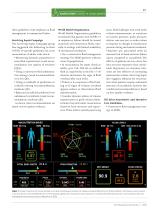
81 COVER STORY: COVID-19 CHALLENGES these guidelines with emphasis on fluid management is summarised below. Surviving Sepsis Campaign The Surviving Sepsis Campaign group has suggested the following in their COVID-19 specific guidelines for acute resuscitation of adults with shock: • Measuring dynamic parameters to assess fluid responsiveness (weak recommendation; low quality of evidence [QE]), • Using a conservative fluid administration strategy (weak recommendation; very low QE), • Using crystalloids in preference to colloids (strong recommendation; moderate QE), • Balanced crystalloids preferred...
Open the catalog to page 3
82 COVER STORY: COVID-19 CHALLENGES Identifiable structures Measurable parameters Tracheal rings Cricothyroid membrane Thyroid cartilage Hyoid bone Distance to structures Diameter of trachea Presence of oedema or external compression Plan for difficult intubation and extubation A-lines B-lines Consolidation Collapse Effusion Diaphragm Number of B-lines Volume of effusion, depth to effusion Extent of pneumothorax (lung sliding, lung-point) Diaphragmatic function Assess degree of lung involvement Diagnose any concurrent conditions Right atrium and ventricle Left atrium and ventricle AV valves Pulmonary...
Open the catalog to page 4
83 COVER STORY: COVID-19 CHALLENGES When to start IV fluids? When to stop IV fluids? When to start removing fluids? When to stop removing fluids? Resuscitation Maintenance Replacement Nutrition Drug Dose Duration De-escalation Resuscitation Optimisation Stabilisation Evacuation (de-escalation) 1st HIT: initial insult (e.g. COVID with sepsis) 2nd HIT: ischaemia and reperfusion 3rd HIT: fluid accumulation and GIPS (global increased permeability syndrome) 4th HIT: hypoperfusion during de-resuscitation Table 2. Rules of Fours patients too dry’ in an effort to spare the lungs, as there are increased...
Open the catalog to page 5
84 COVER STORY: COVID-19 CHALLENGES basic maintenance need of 1ml/kg/ hr e.g. nutrition and fluid creep (see below). Fluid creep • All sources of fluids administered need to be detailed: crystalloids, colloids, blood products, enteral and parenteral nutritional products, intravenous medication and oral intake (water, tea, soup, etc.) • Precise data on the concentrated electrolytes added to these fluids or administered separately need to be documented. • Fluid creep is defined as the sum of the volumes of these electrolytes, the small volumes to keep venous lines open (saline or glucose 5%) and...
Open the catalog to page 6
85 COVER STORY: COVID-19 CHALLENGES technology and the ability to swiftly disseminate information on our side. Whether we handle it ‘the old way’ or embrace all the tools and collaborative opportunities available to us may well decide how this pandemic goes down in history. We firmly believe in the latter approach. Key Points • The general principles of fluid management in critical care provides the foundation for fluid therapy in COVID-19. • During the early stages of the COVID-19 pandemic, it was common advice to aim for a negative fluid balance but more recently there have been calls for a...
Open the catalog to page 7- Analysis software
- Automatic balance
- Reporting software
- Body composition analyzer
- Bio-impedancemetry body composition analyzer
- Body composition analyzer with BMI calculation
- Body composition analyzer with digital display
- Portable body composition analyzer
- Segmental body composition analyzer
- Body composition analyzer with LED display
- Automatic body composition analyzer
- Pediatric body composition analyzer