

1" Water Softener Systems 1 to 25 USPGM

1" Water Softener Systems 1 to 25 USPGM
- Pressure: 20-100 psi (138 - 690 KPA)
- Temperature: 33-120º F (2-38º C)
- Electrical: 115/60Hz, single phase
- Inlet/Outlet: 1.0 inch
- Drain: 0.75 inch
- Media Tank: FRP - HDPE lined
- Control Valve: Glass filled Noryl®
- Media: Virgin cation resin
- Distributor Piping: PVC
- Brine Tank: Polyethylene
- Automatic regeneration
- Hardness removal: 30,000 to 150,000 grains
- Flow rates: Single unit up to 25 USgpm, Parallel up to 50 USgpm
- Durable cation resin and non-corroding fiberglass tank
- Electronic timer and brine tank for salt storage
- Configurations: Single, duplex twin alternating, or parallel
- Installation: Free standing or skid-mounted
- Custom installations and valve nests
- Reverse osmosis system pretreatment
- Boiler feedwater
- Reagent grade lab water systems
- USP purified water systems
- Hemodialysis & Life Sciences water systems
- Space: 18” recommended, 12” minimum around the system
- Firm, level surface installation
- Properly sized inlet piping and drain for backwash flow
- Installation of isolation valves, pressure gauges, sample ports, vacuum breaker, and relief valve
| Model Number | Capacity (Kgr) | Flow Design (USgpm) | Resin Volume (Ft.3) | Backwash Flow (USgpm) | Pressure Drop @ Peek (psig) | Salt Per Regen (Lbs.) | Brine Capacity (Lbs.) | Media Tank W x H (In.) | Brine Tank W x H (In.) | Shipping Weight (Lbs.) | Space Required W x D x H |
|---|---|---|---|---|---|---|---|---|---|---|---|
| TAFS-30P | 30 | 1 - 5 | 1 | 2.5 | 5 | 10 | 450 | 10x47 | 18x40 | 150 | 28x18x57 |
| TAFS-45P | 45 | 1.5 - 7.5 | 1.5 | 4 | 7.5 | 15 | 450 | 12x42 | 18x40 | 195 | 30x18x52 |
| TAFS-60P | 60 | 2 - 10 | 2 | 4 | 10 | 20 | 450 | 12x52 | 18x40 | 245 | 30x18x62 |
| TAFS-90P | 90 | 3 - 15 | 3 | 5 | 15 | 30 | 700 | 14x65 | 24x40 | 350 | 38x24x75 |
| TAFS-120P | 120 | 4 - 20 | 4 | 7 | 20 | 40 | 700 | 16x65 | 24x40 | 485 | 40x24x75 |
| TAFS-150P | 150 | 5 - 25 | 5 | 9 | 25 | 50 | 700 | 18x65 | 24x40 | 565 | 42x24x75 |
Catalog excerpts
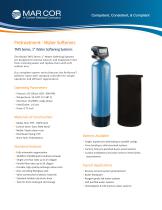
Competent, Consistent, & Compliant Pretreatment - Water Softeners TAFS Series, 1” Water Softening Systems The Biolab TAFS Series 1” Water Softening Systems are designed to remove calcium and magnesium ions from incoming water and replace them with soft sodium ions. Our complete system series features the Performa™ Softener Valve with standard controller for simple operation and efficient regeneration. Operating Parameters • Pressure: 20-100 psi (138 - 690 KPA) • Temperature: 33-120º F (2-38º C) • Electrical: 115/60Hz, single phase • Inlet/Outlet: 1.0 inch • Drain: 0.75 inch Materials of Construction • Media Tank: FRP - HDPE lined • Control Valve: Glass filled Noryl® • Media: Virgin cation resin • Distributor Piping: PVC • Brine Tank: Polyethylene Options Available • Single, duplex twin alternating or parallel configs Standard Features • Free standing or skid-mounted systems • Fully automatic regeneration • Custom installations and valve nests to meet facility • 30,000 to 150,000 grains hardness removal • SIngle unit flow rates up to 25 USgpm • Parallel flow rates up to 50 USgpm • Durable, high quality exchange cation resin • Factory, fully pre-plumbed & pre-wired systems Typical Applications • Non-corroding fiberglass tank • Reverse osmosis system pretreatment • Valve constructed of plastic materials • Boiler feedwater • Standard reliable electronic timer • Reagent grade lab water systems • Tank for brine making & salt storage • USP purified water systems • Hemodialysis & Life Sciences water systems
Open the catalog to page 1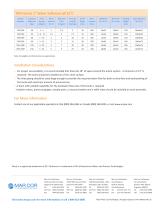
TAFS Series 1” Water Softeners @ 25 C Model Number Flow Design (USgpm) Backwash Flow (USgpm) Pressure Drop @ Peek (psig) Space Required WxDxH Note: All weights and dimensions are approximate. Installation Considerations For proper serviceability, it is recommended that there be 18” of space around the entire system. A minimum of 12” is required. The tanks should be installed on a firm, level surface. • The inlet piping should be sized large enough to provide the required water flow for both service flow and backwashing of the tanks with minimum amount of pressure loss. • A drain with suitable...
Open the catalog to page 2All Mar Cor catalogs and technical brochures
 SDS
SDS4 Pages
 Minncare® Mini Fog
2 Pages
 Minncare Dry Fog® 2
2 Pages
 MINNCARE HD
2 Pages
 Minncare
2 Pages
 Automatic Water Softeners
2 Pages
 Lightweight CIP Tank
2 Pages
 Ergonomic Transport System
2 Pages
 WRO 300 H Brochure
2 Pages
 Millenium HX Brochure
2 Pages
 2200 RO System 2,200 GPD
2 Pages
 Posiclear Capsule
2 Pages
 On Demand System
2 Pages
 Minncare Dry Fog
6 Pages
 VPure 4400H USP Water System
4 Pages
 WRO 300 H
2 Pages
 Millenium HX
2 Pages
 Water for Dialysis
2 Pages
 23G Series RO
2 Pages
 BioPure HX2
2 Pages
 CWP
CWP2 Pages
 f
f2 Pages


- Medical dolly
- Hospital trolley
- Treatment cart
- Medical device trolley
- Anodized aluminum trolley
- Equipment trolley
- Agitator
- Disinfectant
- Gas filter
- Test strip
- Compact trolley
- Floors and surface disinfectant
- Mixer
- Transparent tubing
- Membrane filter
- Strip test strip
- Sample preparation mixer
- Water filter
- PVC tubing
- Reverse osmosis water treatment system