
- Catalogs
- Master Bond
- EP42HT-2Med


- Company
- Products
- Catalogs
- News & Trends
- Exhibitions
EP42HT-2Med
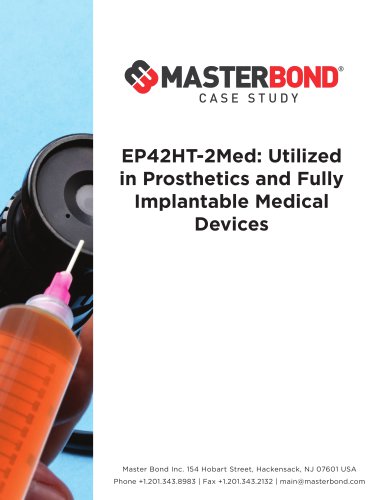
EP42HT-2Med
Master Bond EP42HT-2Med is a two-component epoxy designed for medical applications, particularly in prosthetics and fully implantable devices. It withstands sterilization, offers biocompatibility, and maintains performance in contact with bodily fluids.
Specifications
EP42HT-2Med can endure repeated sterilizations and offers excellent bonding, sealing, and coating capabilities. It is resistant to acids, bases, solvents, and fuels, and provides electrical insulation. It cures at room temperature or faster at elevated temperatures.
Applications
- Implantable Multi-panel Sensors: Used in biocompatible packaging for sensors monitoring metabolites. EP42HT-2Med was used as an adhesive and in forming a biocompatible outer membrane, showing good biocompatibility in tests.
- Tibial Implant: Utilized in a patented design for a limited motion tibial implant, enhancing stability and reducing dislocation risks.
- Transradial Socket for Arm Prosthesis: Selected for joining materials in a breathable, comfortable socket design, meeting requirements for skin safety and material compatibility.
Conclusion
EP42HT-2Med and its variant EP42HT-2ND2Med Black are crucial in assembling and protecting medical devices, ensuring patient safety and device reliability.
Catalog excerpts
<8> M ASTERBONDCASE STUDY EP42HT-2Med: Utilized in Prosthetics and Fully Implantable Medical Devices Master Bond Inc. 154 Hobart Street, Hackensack, NJ 07601 USA Phone +1.201.343.8983 | Fax +1.201.343.2132 | [email protected]
Open the catalog to page 1
CASE STUDY EP42HT-2Med: Utilized in Prosthetics and Fully Implantable Medical Devices Among the most challenging medical applications for an epoxy compound are prosthetics and fully implantable medical devices. Not only must the material be capable of withstanding sterilization procedures, it must also exhibit biocompatibility over an extended period of time. Prosthetics and implantable devices must be able to maintain performance levels even when in direct contact with tissue and bodily fluids, and must not introduce toxins or cause injury, a physiological reaction, or immunological rejection....
Open the catalog to page 2
bonds that connect the electronics with the pads of the sensing platform. The outer membrane, which consisted of a mixture of EP42HT-2Med and polyurethane (PU), was applied by dip-coating the device three times at intervals of one hour. To ensure biocompatibility, the coated device was kept overnight at room temperature and then subjected to a temperature of 80°C for two hours to complete the cure process. After curing, the device was kept at room temperature overnight and then stored in phosphate-buffered saline (PBS) for an additional 24 hours. Results All three prototypes were implanted in...
Open the catalog to page 3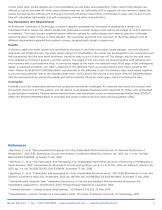
humid, while open socket designs are more breathable, but are bulky and unaesthetic. Many close-fitting designs are difficult to put on and take off, while looser designs may not be sufficiently stiff to support the arm remnant. Ideally, the socket connecting the artificial arm to the arm remnant should be close-fitting, comfortable to wear, easy to put on and take off, adjustable, lightweight, and self-suspending, among other characteristics. Key Parameters and Requirements At Eindhoven University of Technology, a master’s degree candidate was interested in developing a design for a transradial...
Open the catalog to page 4All Master Bond catalogs and technical brochures
 Master_Bond-Adhesives-Sensors
10 Pages

Archived catalogs
- Curing light
- LED curing light
- MasterBond medical adhesive
- MasterBond plastic medical adhesive
- MasterBond medical device medical adhesive
- MasterBond biocompatible medical adhesive
- MasterBond metal medical adhesive
- Low-viscosity medical adhesive
- MasterBond glass medical adhesive
- Rubber medical adhesive
- Ceramic medical adhesive
- MasterBond medical industry medical adhesive
- Silicone medical adhesive
- Epoxy resin medical adhesive