
- Catalogs
- Mawi DNA Technologies
- ISWAB-DNA-1200, ISWAB-DNA-250

ISWAB-DNA-1200, ISWAB-DNA-250
ISWAB-DNA-1200, ISWAB-DNA-250
Catalog excerpts

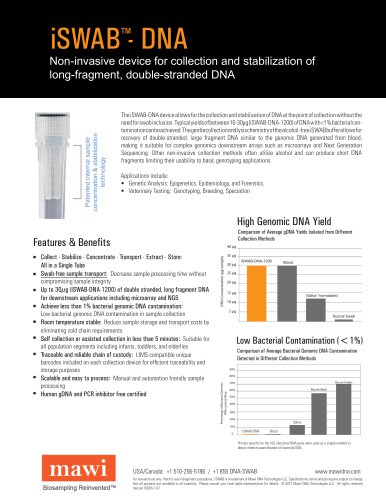
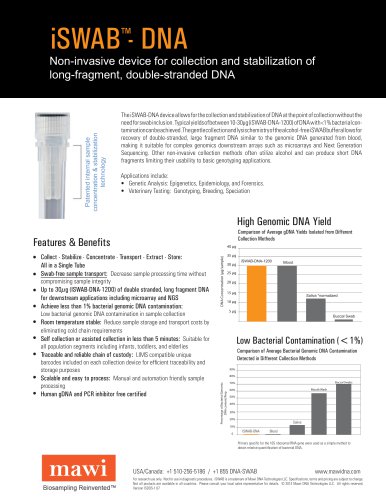
Patented internal sample concentration & stabilization technology Non-invasive device for collection and stabilization of long-fragment, double-stranded DNA The iSWAB-DNA device allows for the collection and stabilization of DNA at the point of collection without the need for swab inclusion. Typical yields of between 10-30μg (iSWAB-DNA-1200) of DNA with <1% bacterial contamination can be achieved. The gentle collection and lysis chemistry of the alcohol-free iSWAB buffer allows for recovery of double-stranded, large fragment DNA similar to the genomic DNA generated from blood, making it suitable for complex genomics downstream arrays such as microarrays and Next Generation Sequencing. Other non-invasive collection methods often utilize alcohol and can produce short DNA fragments limiting their usability to basic genotyping applications. Applications include: • Genetic Analysis: Epigenetics, Epidemiology, and Forensics. • Veterinary Testing: Genotyping, Breeding, Speciation High Genomic DNA Yield Comparison of Average gDNA Yields Isolated from Different Collection Methods Features & Benefits compromising sample integrity Up to 30μg (ISWAB-DNA-1200) of double stranded, long fragment DNA for downstream applications including microarray and NGS Achieve less than 1% bacterial genomic DNA contamination: Low bacterial genomic DNA contamination in sample collection Room temperature stable: Reduce sample storage and transport costs by eliminating cold chain requirements Self collection or assisted collection in less than 5 minutes: Suitable for all population segments including infants, toddlers, and elderlies Traceable and reliable chain of custody: LIMS compatible unique barcodes included on each collection device for efficient traceability and storage purposes Scalable and easy to process: Manual and automation friendly sample processing Human gDNA and PCR inhibitor free certified Saliva *normalized Low Bacterial Contamination (<1%) Comparison of Average Bacterial Genomic DNA Contamination Detected in Different Collection Methods 90% 80% Percentage of Bacterial Genomic DNA content/Prep Collect - Stabilize - Concentrate - Transport - Extract - Store: All in a Single Tube Swab-free sample transport: Decrease sample processing time without Buccal Swabs Primers specific for the 16S ribosomal RNA gene were used as a simple method to obtain relative quantiification of bacterial DNA. For research use only. Not for use in diagnostic procedures. iSWAB is a trademark of Mawi DNA Technologies LLC. Specifications, terms and pricing are subject to change. Not all products are available in all countries. Please consult your local sales representative for details. © 2013 Mawi DNA Technologies LLC. All rights reser
Open the catalog to page 1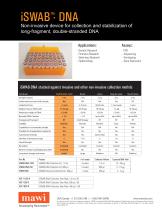
Assays: - PCR - Sequencing - Genotyping - Gene Expression Applications: - Genetic Research - Forensics Research - Veterinary Research - Epidemiology Biosampling Reinvented™ USA/Canada: +1 510-256-5186 / +1 855 DNA-SWAB www.mawidna.com For research use only. Not for use in diagnostic procedures. iSWAB is a trademark of Mawi DNA Technologies LLC. Specifications, terms and pricing are subject to change. Not all products are available in all countries. Please consult your local sales representative for details. © 2013 Mawi DNA Technologies LLC. All rights reserved. Version ISDDS-1.07
Open the catalog to page 2All Mawi DNA Technologies catalogs and technical brochures
 iSWAB-Blood
2 Pages
 iSWAB - Protein
2 Pages
 iSWAB - Cells
3 Pages
 iSWAB - Microbiome ™
4 Pages
 iSWAB - RNA v2 ™
1 Page
 iSWAB - DNA
2 Pages
 ISWAB-DSC
2 Pages
 ISWAB-RNA-v2
1 Page
 ISWAB-ANML-250
1 Page
 ISWAB-ID-250
2 Pages
- Collection tube
- Cylindrical collection tube
- Laboratory rack
- Blood collection tube
- Laboratory tube rack
- Blood collection kit
- Nucleic acid collection kit
- Whole blood collection tube
- DNA collection kit
- Veterinary collection kit
- RNA collection kit
- Sampling tube laboratory rack
- Stool collection tube
- DNA purification collection tube