
- Catalogs
- MCQ Instruments
- Dynamic mixtures applied on Deposition techniques


Dynamic mixtures applied on Deposition techniques

Dynamic mixtures applied on Deposition techniques
The document discusses the significance of Chemical Vapor Deposition (CVD) processes in advanced manufacturing over the past 20 years. CVD is crucial for producing high-purity solid materials using gaseous precursors. The process involves thermal activation in a CVD chamber, leading to chemical reactions and product deposition on substrates. Various heat sources like plasma and lasers are used, and the process can occur at atmospheric pressure. Precise control of gas mixtures is essential, and the MCQ Gas Blender 100 Series is designed for this purpose.
CVD Applications
CVD techniques are versatile and used in various fields, including thin and thick film applications, powder treatments, and carbon nanotube research.
- Thin Films: These coatings, ranging from nanometers to micrometers, enhance base material performance. CVD diamond is a notable example, used for its hardness and chemical inertness in applications like cutting tools and electronics.
- Thick Films: These coatings, up to millimeters thick, improve material performance or create standalone items. CVD diamond and ceramic coatings are used for cutting tools and thermal barriers, with silicon being a focus for solar cells and microprocessors.
- Powder Treatment: Fluidized Bed CVD (FBCVD) is efficient for coating individual powder particles, used in anti-wear applications, catalyst synthesis, and more.
- Carbon Nanotubes: A promising CVD application, carbon nanotubes are strong and adaptable for mechanical, textile, and electronic applications.
CVD Apparatus
Despite different hardware configurations, all CVD techniques share basic features: a reactor chamber, energy source, vacuum system, exhaust system, substrate loading mechanism, gas delivery system, and process control equipment.
MCQ Gas Blender 100 Series
The MCQ Gas Blender 100 Series is a high-precision, three-channel gas mixing device for non-aggressive gases. It offers the advantages of multiple mass flow controllers in a compact, user-friendly design. The system allows dynamic gas mixture adjustments via the MCQ Gas Mixer Manager software, compatible with Windows XP and later.
Hardware Configuration
The Gas Blender 100 Series uses dry, non-aggressive gases, connected via 6 mm tubes with check valves. Each gas is controlled by a dedicated channel, and the system connects to a CVD reactor chamber.
Gas Blending: MCQ Solution
Traditional gas blending systems require multiple mass flow controllers and an external control unit, which are space-consuming and inflexible. The MCQ Gas Blender 100 Series addresses these issues, offering a compact and versatile solution for advanced CVD applications.
Catalog excerpts

High Performance Gas flow Dilutor & Gas flow Mixing System with User Interface Application Note MCQ Gas Blender 100 Series Application Dynamic mixtures applied on Deposition techniques Introduction Over the last 20 years, Chemical Vapor Deposition (CVD) processes has taken a key-role in a wide range of technological advanced manufacturing. Today the industrial processes for anti-wear cutting tools coating and microprocessor production share the same deposition techniques, proving a constant self-developing process that is extremely useful and versatile. CVD is a generic name for a huge family of processes that involves the use of gaseous precursors in order to produce high-purity and high performance solid materials. The gaseous phase usually is thermally activated inside the CVD chamber by an adequate heat source to produce a chemical reaction that leads to the desired products formation, and subsequently to the products deposition on the target-substrate. CVD involves the use of hot filaments to activate reactions (HFCVD) and it also requires extremely low working pressures. Different type of heat sources (e.g. plasma, laser) have proved to be useful and now plasma-enhanced deposition (PECVD) and Laser CVD (LCVD) are of common use. Pressure is not a problem anymore since, in some applications, the deposition can be performed in atmospheric pressure (APCVD). The deposition results strongly depend on process parameters and hardware configuration settings. This strong dependence requires a fine control and a fine regulation for each step of this technique. A particularly precise care on the gas phase composed by the reactants must be exercised. An instrument capable of producing gas mixtures with high precision and designed to be versatile and easily manageable is thus required for this kind of applications. The MCQ Instruments offers it all with its Gas Blender 100 Series, a product specifically built for 3 components gas mixture. CVD applications The versatility of CVD technique(s) is proven by its use in a wide array of different research and application fields. The experimentation fields can be summarized in four main categories: thin and thick film applications, powder treatments (fluidized bed CVD) and carbon nanotubes research. Thin films A CVD chamber during the deposition process This term refers to nanometers in coatings up to a few micrometers thickness, made to improve the specific performance of a base material. The synthetic diamond (CVD diamond), due to its unique chemical and physical properties, is a perfect example of thin film application. The hardness and chemical inertness of micro- and nano-crystal diamond films are generally used to increase the wear resistance of metallic/ceramic components [1,2] while single crystal diamonds take a crucial role in the making of cutting tools [3,4]. In the last 20 years CVD diamond has proved itself to be a versatile material studied nowadays for electronic applications in the radiotherapy [5] and in the Gas Blender 100 Series Application Note
Open the catalog to page 1
High Performance Gas flow Dilutor & Gas flow Mixing System with User Interface spintronics field [6]. On the other hand increasing the anti-wear resistance can be achieved throughout ceramic coatings based on Ti, Cr and Zr [7,8]. Over recent years such coatings have also become an interesting research field for their antibacterial applications [9]. A thick films technology application: Solar Panel Thick films This term refers to micrometers in coatings up to millimeters in thickness, made to improve specific performance of base materials or to create free standing items with desired features....
Open the catalog to page 2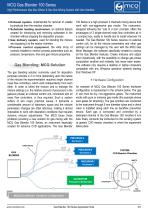
High Performance Gas flow Dilutor & Gas flow Mixing System with User Interface Exhaust system, implemented for removal of volatile by-products from the reaction chamber. Substrate loading mechanism, an optional feature created for introducing and removing substrates in the chamber without stopping the deposition process. Gas delivery system, used for blending the mixture and supplying it to the reactor chamber. Process control equipment, the wide array of controls installed to monitor process parameters such as pressure, temperature, time and gas mixture properties. Gas Blending: MCQ Solution...
Open the catalog to page 3
High Performance Gas flow Dilutor & Gas flow Mixing System with User Interface References [1] E. Uhlmann and J. Koenig, CVD diamond coatings on geometrically complex cutting tools – CIRP Ann Manuf Technol 58, 1 (2009) 65-68. [2] F.A. Almeida, J. Sacramento, F.J. Oliveira and R.F. Silva, Micro- and nano-crystalline CVD diamond coated tools in the turning of EDM graphite – Surf Coat Technol 203, 3-4 (2008) 271-276. [3] Y.A. Mankelevich and P.W. May, New insights into the mechanism of CVD diamond growth: Single crystal diamond in MW PECVD reactors – Diamond Relat Mater 17, 7-10 (2008) 1021-1028....
Open the catalog to page 4All MCQ Instruments catalogs and technical brochures
 GB NANO 3
4 Pages
 GB 15k
2 Pages
 GB 2000
4 Pages
 GB 3000
4 Pages
 GB 4000
4 Pages
 GB 6000
4 Pages
 GB 100
4 Pages
 GB 100 plus
4 Pages
 SensorModule
7 Pages
 Sensor Module
7 Pages
 Gas Blender Advantages
4 Pages




Archived catalogs
 Gas Blender 106 Series
4 Pages
 Data acquisition board
4 Pages
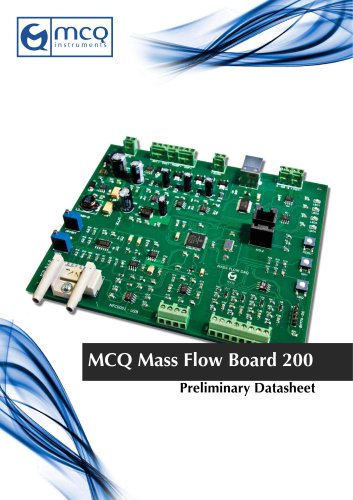 Flow Board
11 Pages

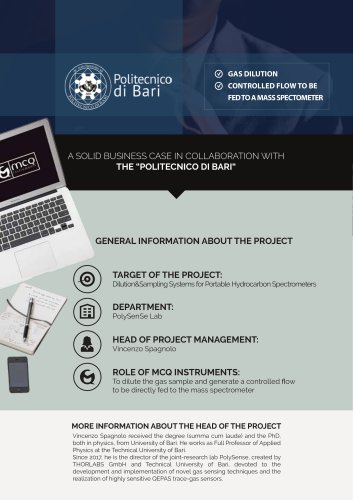


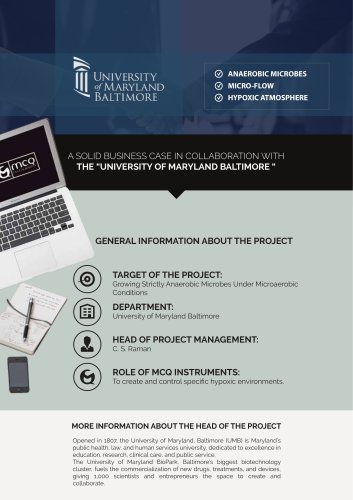
- Control software
- Automated software
- Oxygen gas mixer
- Air gas blender
- Communication software
- Digital gas blender
- Laboratory gas blender
- CO2 gas blender
- 3-channel gas blender
- Gas blender with touchscreen
- USB gas blender
- Dinitrogen gas blender
- Carbon dioxide gas blender
- Medical gas control and monitoring system
- Continuous control and monitoring system
- Helium gas blender
- Laboratory control and monitoring system