

Hear Your Best
Hear Your Best
This guide provides an overview of cochlear implant rehabilitation, emphasizing the importance of practice to maximize the benefits of the implant. It introduces the concept of rehabilitation, the specialists involved, and activities to improve hearing.
Rehabilitation Overview
Rehabilitation is essential for connecting past sound memories with new sounds from the cochlear implant. It involves structured activities and daily life practices to enhance listening and communication skills.
Professional Support Network
Various specialists assist in the rehabilitation process:
- ENT Specialist: Treats ear, nose, and throat conditions.
- Audiologist: Conducts assessments and programs the audio processor.
- Hearing Therapist: Provides pre- and post-implantation training.
- Speech & Language Pathologist: Assesses and develops communication skills.
- Psychologist/Counsellor: Offers emotional support if needed.
- Family and Friends: Form the core support network.
Rehabilitation Areas
Key areas include:
- Audition: Developing sound awareness and understanding.
- Speech: Re-learning voice sounds and pronunciation.
- Language Development: Using speaking skills in conversation.
- Practical Guidance: Operating and caring for the implant.
- Compensatory Strategies: Managing communication challenges.
Pre- and Post-Implantation
Preparation involves understanding the implant and available resources. Consistent use of the audio processor post-activation is crucial for effective rehabilitation.
Optimal Hearing Environments
Minimizing background noise is essential for effective communication. Strategies include adjusting environments at home, work, and social settings to enhance hearing.
Rehabilitation Expectations
Success varies based on the duration of hearing loss. Continuous communication with specialists helps tailor the rehabilitation program.
Resources
MED-EL offers a range of rehabilitation resources, including print materials, apps, and online content, to support personalized rehabilitation programs.
Glossary
The guide includes a glossary of common rehabilitation terms to aid understanding.
Catalog excerpts
Hear Your Best A Guide to Cochlear Implant Rehabilitation
Open the catalog to page 1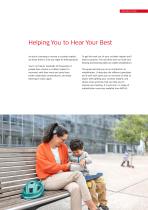
Helping You to Hear Your Best As you’re choosing to receive a cochlear implant, To get the most out of your cochlear implant you’ll we know there is a lot you might be thinking about. need to practice. The activities that can build your hearing and listening skills are called rehabilitation. You‘re not alone. Hundreds of thousands of people have chosen a cochlear implant to This guide will help you as an introduction to reconnect with their work and social lives, rehabilitation. It describes the different specialists better understand conversations, and enjoy you’ll work with, gives you an overview...
Open the catalog to page 3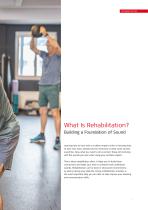
What Is Rehabilitation? Building a Foundation of Sound Learning how to hear with a cochlear implant is like re-learning how to hear. Your brain already has the memories of what some sounds sound like. Now, what you need to do is connect these old memories with the sounds you hear when using your cochlear implant. This is what rehabilitation does. It helps you to build these connections and helps your brain to interpret and understand sounds. Rehabilitation can be done in structured environments, as well as during your daily life. Doing rehabilitation activities is the most important step you...
Open the catalog to page 5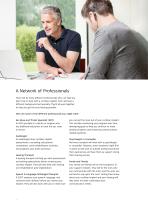
A Network of Professionals There will be many different professionals who can help you learn how to hear with a cochlear implant. Each will have a different background and specialty. They’ll all work together to help you get the best hearing possible. Here are some of the different professionals you might meet: Ear, Nose, and Throat Specialist (ENT) you can get the most out of your cochlear implant. An ENT specialist is a doctor or surgeon who This includes monitoring your progress over time, has additional education to treat the ear, nose, developing goals to help you continue to make positive...
Open the catalog to page 6
Areas of Rehabilitation Generally speaking, rehabilitation activities will cover several categories that have an impact on your communication. Your rehabilitation might include additional areas, but these are the main ones: Audition conversation. You’ll also learn how to manage Auditory rehabilitation is one of the most difficulties understanding others during important parts of cochlear implant rehabilitation. It focuses on developing your awareness of sounds, and building an understanding of what Practical and Technical Guidance these sounds mean. This means using your cochlear implant’s components....
Open the catalog to page 7
Rehabilitation Before and After Implantation You can prepare for the next stage of your hearing journey even before receiving your cochlear implant. Talk with your cochlear implant team, because After your audio processor is activated, you should they can give you the right support and answers be wearing it whenever you’re awake. Even if your for your unique hearing. It might help to share this cochlear implant is not the only way you hear information with friends and family so that they sounds, it’s important that you are wearing it can support you as best they can. consistently. Wearing it...
Open the catalog to page 9
The Best Environment for Hearing The trick is separating the sounds that you want to hear from the sounds that you don‘t. If there is too much noise around you, you may not be able to hear what others are saying and therefore not understand them properly. It’s important to hear spoken words, without background noise, as you begin to develop your listening skills. The best way to do this is by making the important sounds, or the sounds of speech, easy for you to hear.
Open the catalog to page 10
At Work, School, and Social Environments There are times when you might not be able to At home, the best listening environment is one control your environment like you can at home. where there’s minimal background noise. Poor lighting or background noise can all make it Background noise is any sound that isn‘t who or more difficult to communicate. In times like these, what you are communicating with. This could let others know when you’re having trouble hearing them. outside noises like traffic. If you can, take it upon yourself to make To create a more effective listening environment in your...
Open the catalog to page 11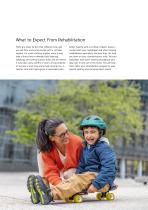
What to Expect From Rehabilitation There are many factors that influence how well better hearing with a cochlear implant. Keep in you will hear and communicate with a cochlear contact with your audiologist and other hearing implant. For some cochlear implant users it may rehabilitation specialists, because they can help take a short time to develop their listening, you work on your communication skills. Tell your speaking, and communication skills, and for others specialists how you’re hearing throughout your it may take many months or years. A key predictor day, both in and out of the home....
Open the catalog to page 12
The Best Rehabilitation Resources for You At MED-EL, we don’t believe one size fits all. We believe that every recipient deserves a customized rehabilitation program based on their individual needs. That's why we've developed the most comprehensive collection of rehabilitation resources for cochlear implant recipients. With print materials, listening exercises, interactive games, videos, and mobile apps, you'll find countless hours of rehabilitation material to help you develop your listening skills. Our resources are designed to be mixed and matched. You and your rehabilitation specialists can...
Open the catalog to page 13
Glossary of Common Rehabilitation Terms Articulation: The pronunciation of sounds Gesture: Moving a part of the body to communicate. Pointing at an object is a gesture. Assessment: Procedures and tests that identify Goals: The measureable outcomes of therapy someone’s skill level, strengths, weaknesses, and needs for rehabilitation. Assistive Listening Devices: Technological devices that can help enhance your hearing in different listening environments. Audition: Being able to perceive sound. Hearing loss: A partial or complete inability to hear sound. Implicit or Incidental learning: Learning...
Open the catalog to page 14All MED-EL catalogs and technical brochures
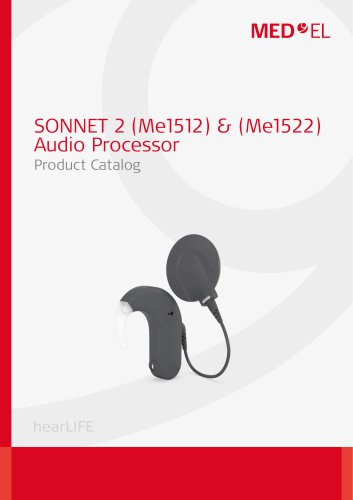
 SONNET 2 Audio Processor
40 Pages
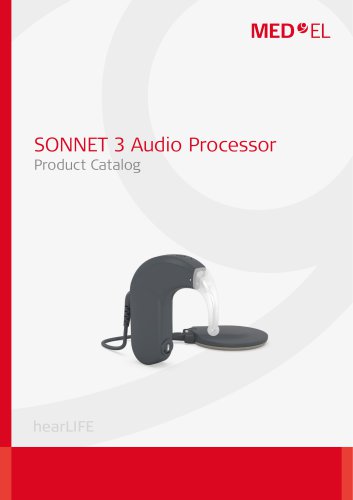 SONNET 3 Audio Processor
36 Pages

- Hearing implant
- Behind-the-ear processor cochlear implant
- Internal component cochlear implant
- Wireless cochlear implant
- Bone conduction implant
- Adult bone conduction implant
- Waterproof cochlear implant
- Pediatric cochlear implant
- Remote-controlled cochlear implant
- Internal component bone conduction implant
- Rechargeable cochlear implant