Hearing Implants and the Classroom

Hearing Implants and the Classroom
This guide provides strategies for teachers to support students with hearing implants, such as cochlear or bone conduction implants, by explaining how these systems work and how to create optimal learning conditions.
Hearing implants are devices for individuals with significant hearing loss who cannot benefit from hearing aids. They consist of an external audio processor and an internal implant, enabling many children to access mainstream education despite differences from natural hearing.
Teachers can support students by understanding factors like the type of hearing loss, age at implantation, and language mode. Collaboration with parents and therapists is crucial for language development and academic success.
Teachers should learn to operate audio processors, minimize distractions, and maintain communication with parents and therapists. Strategies include speaking clearly, using visual aids, and managing classroom acoustics.
Enhancing acoustics can be achieved by using rugs, curtains, and felt on chair legs to absorb sound and reduce noise.
Regular communication with audiologists and speech therapists helps integrate therapy goals with classroom objectives.
ALDs like neckloops and FM systems help students focus on specific sounds. Teachers should familiarize themselves with these devices to enhance the listening experience.
Implementing these strategies and maintaining open communication with stakeholders can create a positive learning environment for students with hearing implants.
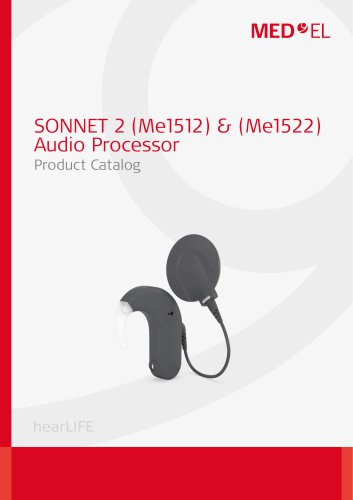
The AudioLink device functions as a remote microphone, transmitting sound directly to audio processors like SONNET, SONNET 2, and RONDO 3. It can stream sound from phones and TVs and is activated by pressing the mic button.
Setting high expectations and providing necessary tools and support are crucial for pupils with hearing implants. Educators play a key role in minimizing classroom noise and supporting learning experiences.
Hearing implants improve access to sound and speech, enabling children to participate in mainstream education and social activities. Educators are vital in the academic and personal growth of these pupils.
The document cites studies on the education and rehabilitation of deaf children with cochlear implants, emphasizing a multidisciplinary approach.
Contact details for MED-EL offices worldwide are provided, offering support and educational materials for educators.
Catalog excerpts

Hearing Implants and the Classroom A Guide for Teachers
Open the catalog to page 1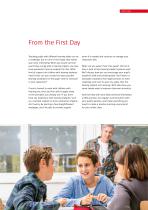
From the First Day Teaching pupils with different learning styles can be when it’s needed and continue to manage your a challenge, but it’s one of the things that makes classroom well. your work interesting. When you found out that you’d have a pupil with a hearing implant, you may What can you expect from this guide? First we’ll have wondered if you’re prepared for this. What have a look at how hearing implant systems work. kind of support do children with hearing implants We’ll discuss how you can encourage your pupil’s need? How can you create the best possible academic skills and overall...
Open the catalog to page 3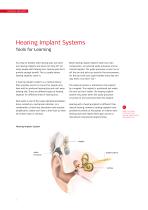
HEARING IMPLANTS Hearing Implant Systems Tools for Learning You may be familiar with hearing aids, but what Most hearing implant systems have two main are hearing implants and what can they do? For components—an external audio processor and an many people with hearing loss, hearing aids don’t internal implant. The audio processor is worn on or provide enough benefit. This is usually where off the ear and picks up sound in the environment. hearing implants come in. It’s the part that your pupil handles every day and may think of as their “ear.” A hearing implant system is a medical device that...
Open the catalog to page 4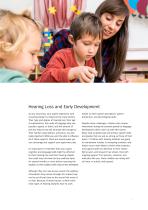
Hearing Loss and Early Development As you may know, your pupil’s experience with harder on their speech perception, speech a hearing implant is influenced by many factors. production, and phonological skills. Their type and degree of hearing loss, their age at implantation, the mode of language they use Despite these challenges, children who receive (spoken, signed, or both), and the amount of intervention during the sensitive period for language practice they‘ve had will all shape their progress.1 development often catch up with their peers. Their family’s expectations, and yours, are also Many...
Open the catalog to page 5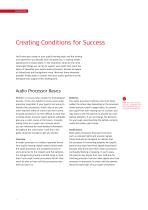
Creating Conditions for Success You’ll soon get a sense of your pupil’s learning style, and the training and experience you already have will guide you in making simple adjustments to lesson plans. In the meantime, what are the most meaningful things you can do to support your pupil? First, learn the basics of operating your pupil’s audio processors. Second, be aware of distractions and background noise. Minimize them whenever possible. Finally, keep in contact with your pupil’s parents and the therapists who support their development. Audio Processor Basics Whether or not you have a knack for...
Open the catalog to page 6
Daily check Especially if you have a young pupil, you may want If you teach preschool and your pupils take a nap to check the audio processors daily and learn how at school, you’ll want to help them with one extra to spot signs that the devices aren’t working. If step. To prevent damage to their processors, help your pupil seems less attentive than usual or isn’t remove them before he lies down. Store the responding to instructions or questions, empty processors in a safe place. Note that if your pupil batteries may be the culprit. If they ever resists has bilateral hearing loss (hearing loss...
Open the catalog to page 7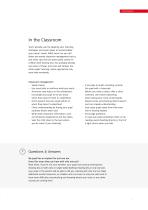
In the Classroom You're already used to adapting your teaching strategies and lesson plans to accommodate your pupils' needs. What more can you do? Below are several classroom management tactics and other tips that are particularly suited for children with hearing loss. You probably already use some of these, and none will hamper the other pupils’ learning. Some approaches may even help everybody. Classroom management: - Speak clearly. - Use visual aids to reinforce what you teach. - Announce new topics on the whiteboard. - Encourage your pupil to let you know when they haven't heard or understood....
Open the catalog to page 9
Improving Acoustics: - Attach felt or rubber to the bottom of chair legs to muffle the scrape of chairs being moved around. Place rugs around the room to absorb sound. Hang curtains to absorb sound and minimize reverberations. Close the classroom door to block noise from the corridor and other rooms.
Open the catalog to page 11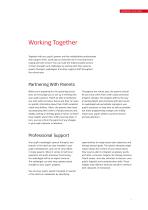
WORKING TOGETHER Working Together Together with your pupil’s parents and the rehabilitation professionals who support them, you’ll play an essential role in ensuring they‘re coping well with school.3 You can build the fullest possible picture of their strengths and challenges by working with their parents, speech therapist, audiologist, and other support staff throughout the school year. Partnering With Parents While you’re preparing for the upcoming school Throughout the school year, the parents should year, we encourage you to set up a meeting with let you know when their child’s audio processor...
Open the catalog to page 13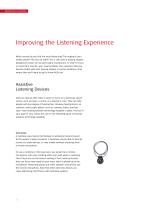
IMPROVING LISTENING Improving the Listening Experience Which sounds do you find the most distracting? The ringing of your mobile phone? The hum of traffic? For a child with a hearing implant, background noises can be particularly troublesome. In order to focus on important sounds, your pupil probably uses assistive listening devices (ALDs) with their hearing implant in certain situations. That means that you’ll want to get to know ALDs too. Assistive Listening Devices ALDs are devices that make it easier to focus on a particular sound source, such as music, a movie, or a teacher’s voice. They...
Open the catalog to page 14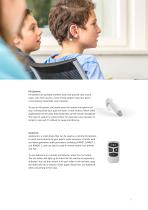
FM Systems FM systems are portable wireless ALDs that provide clear sound input, even from across a room. These systems have two parts— a microphone transmitter and a receiver. To use an FM system, you would wear the remote microphone on your clothing while your pupil will wear a small receiver. When other pupils present to the class, they should also use the remote microphone. This type of system is a good choice for classroom use, because it’s simple to use and it’s unlikely to cause interference. AudioLink AudioLink is a small device that can be used as a remote microphone to send sound directly...
Open the catalog to page 15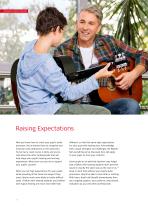
RAISING EXPECTATIONS Raising Expectations Now you know how to check your pupil's audio processor. You've learned how to recognize and minimize noisy distractions in the classroom. You've had a crash course in ALDs and you've read about the other professionals that will help shape your pupil's hearing and learning experiences. What more can you do to support your pupil's success? When you set high expectations for your pupils while providing all the tools and support they need, they're much more likely to tackle difficult tasks. Children with hearing implants and children with typical hearing...
Open the catalog to page 16All MED-EL catalogs and technical brochures
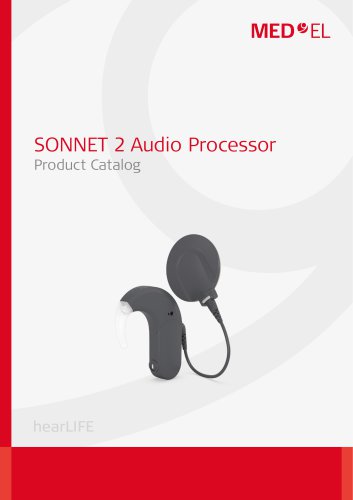 SONNET 2 Audio Processor
40 Pages
 Hear Your Best
16 Pages
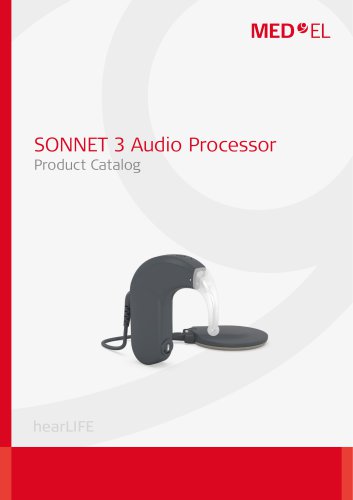 SONNET 3 Audio Processor
36 Pages