

exosome
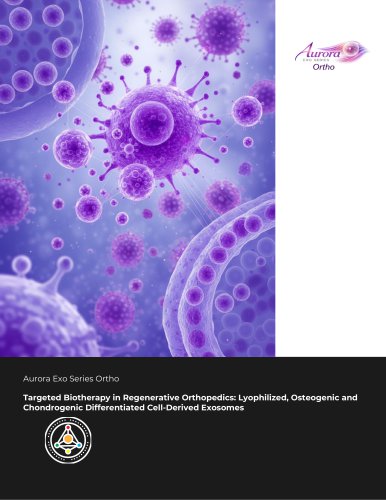
exosome
In the field of musculoskeletal system regeneration, exosomes are pivotal in the "cell-free therapy" paradigm. These nanovesicles, derived from mesenchymal stem cells, facilitate bone and cartilage repair through paracrine secretions, carrying specific microRNAs and growth factors that manage repair programs in target cells.
The Aurora Exo Series Ortho® offers several advantages due to its lyophilized form:
- Superior Thermal Stability: Eliminates the need for -80°C storage, with a long shelf life at +4°C, simplifying logistics and storage.
- Preservation of Bioactivity: The drying process maintains therapeutic efficacy by preserving vesicle integrity and biological content.
- Practicality in Clinical Use: Comes with an activator for easy preparation in clinical settings.
- Precise and Standardized Dose: Each vial contains 5 billion exosome particles, ensuring reliability in clinical studies.
The product utilizes content engineering to enhance targeting potential by enriching exosome cargo for specific tissues:
- Osteogenic Exosomes: Enriched with bone morphogenetic proteins and microRNAs for bone formation.
- Chondrogenic Exosomes: Contains factors supporting cartilage synthesis and inhibiting inflammation.
The product is applicable in various scenarios:
- Osteoarthritis: Used as an intra-articular injection for treatment.
- Critical Bone Defects: Applied locally with bone grafts or scaffolds.
- Osteochondral Lesions: Synchronizes cartilage and bone repair.
- Spinal Fusion and Arthrodesis: Enhances graft material for better fusion.
- Meniscus and Labrum Injuries: Supports tissue repair through minimally invasive injections.
Catalog excerpts
Aurora Exo Series Ortho Targeted Biotherapy in Regenerative Orthopedics: Lyophilized, Osteogenic and Chondrogenic Differentiated Cell-Derived Exosomes
Open the catalog to page 1
Aurora Exo Series Ortho® Advantages Content Engineering: Targeted Differentiation Clinical and Surgical Application Scenarios
Open the catalog to page 2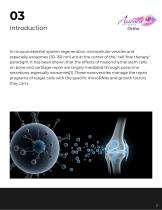
In musculoskeletal system regeneration, extracellular vesicles and especially exosomes (30-150 nm) are at the center of the "cell-free therapy" paradigm. It has been shown that the effects of mesenchymal stem cells on bone and cartilage repair are largely mediated through paracrine secretions, especially exosomes[1]. These nanovesicles manage the repair programs of target cells with the specific microRNAs and growth factors they carry.
Open the catalog to page 3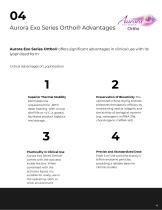
04 Aurora Exo Series Ortho® Advantages Aurora Exo Series Ortho® offers significant advantages in clinical use with its lyophilized form: Critical Advantages of Lyophilization optimized critical drying process preserves therapeutic efficacy by maintaining vesicle integrity and the activity of biological content (e.g., osteogenic miRNA-29ar chondrogenic miRNA-140). 1Superior Thermal Stability Eliminates the requirement for -80°C deep freezing. With a long shelf life at +4°C, it greatly facilitates product logistics and storage. Precise and Standardized Dose Each 5 ml vial contains exactly 5 billion...
Open the catalog to page 4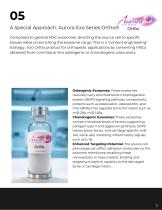
05 A Special Approach: Aurora Exo Series Ortho® Compared to general MSC exosomes, directing the source cell to specific tissues relies on enriching the exosome cargo. This is a "content engineering" strategy. Exo Ortho product for orthopedic applications by converting MSCs obtained from cord tissue into osteogenic or chondrogenic precursors. Osteogenic Exosomes: These exosomes naturally carry enriched bone morphogenetic protein (BMP) signaling pathway components, proteins such as osteocalcin, osteopontin, and microRNAs that regulate bone formation such as miR-29a, miR-148a . Chondrogenic Exosomes:...
Open the catalog to page 5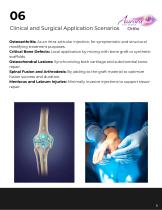
06 Clinical and Surgical Application Scenarios Osteoarthritis: As an intra-articular injection, for symptomatic and structural modifying treatment purposes. Critical Bone Defects: Local application by mixing with bone graft or synthetic scaffolds. Osteochondral Lesions: Synchronizing both cartilage and subchondral bone repair. Spinal Fusion and Arthrodesis: By adding to the graft material to optimize fusion success and duration. Meniscus and Labrum Injuries: Minimally invasive injections to support tissue repair.
Open the catalog to page 6
07 References [1] Robbins, P. D., & Morelli, A. E. (2014). Regulation of immune responses by extracellular vesicles. Nature Reviews Immunology. DOI: 10.1038/nri3622 [2] Charoenviriyakul, C., Takahashi, Y., et al. (2018). Preservation of exosomes in an ambient temperature for a long term storage. Scientific Reports. DOI: 10.1038/s41598-018-19985-9 [3] Bosch, S., de Beaurepaire, L., et al. (2016). Trehalose prevents aggregation of exosomes during cryopreservation. Biochemical and Biophysical Research Communications. DOI: 10.1016/j.bbrc.2016.05.146 [4] Qin, Y., Wang, L., et al. (2016). Bone marrow...
Open the catalog to page 7All NeoSys Medical Solutions catalogs and technical brochures
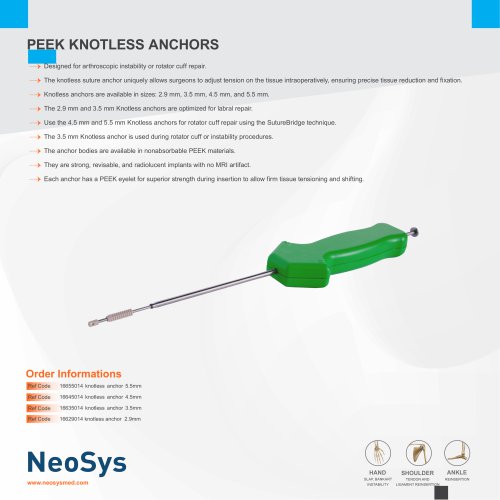 PEEK KNOTLESS ANCHORS
1 Page
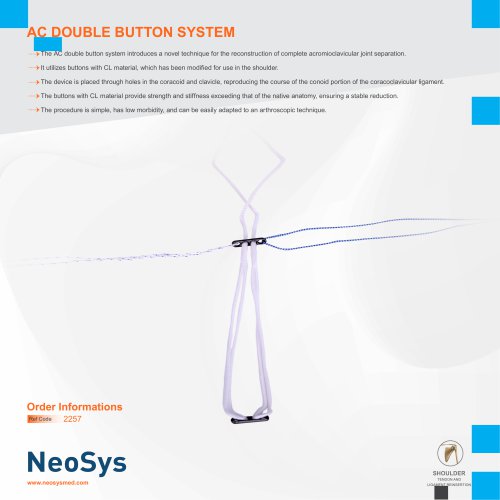 AC DOUBLE BUTTON SYSTEM
1 Page
 general catalog
63 Pages
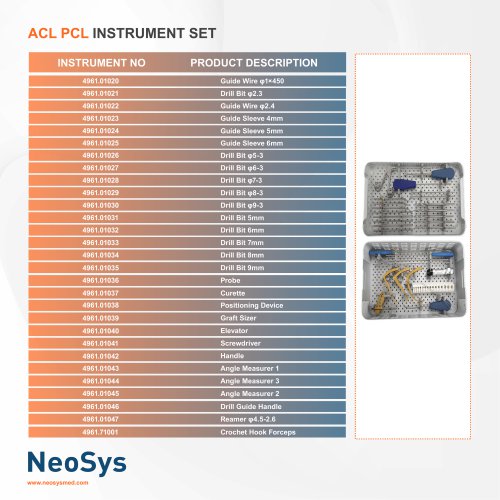 acl set
6 Pages
 suture lasso
1 Page
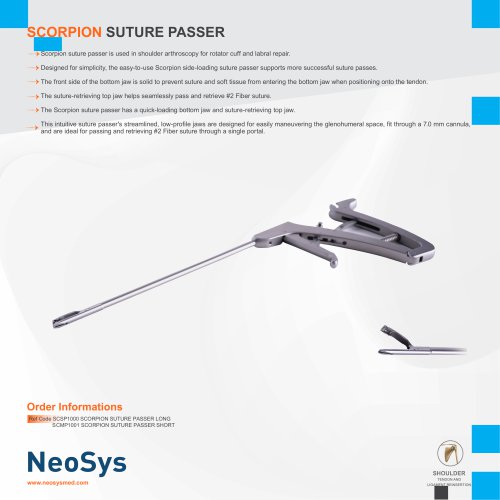 SCORPION SUTURE PASSER
1 Page
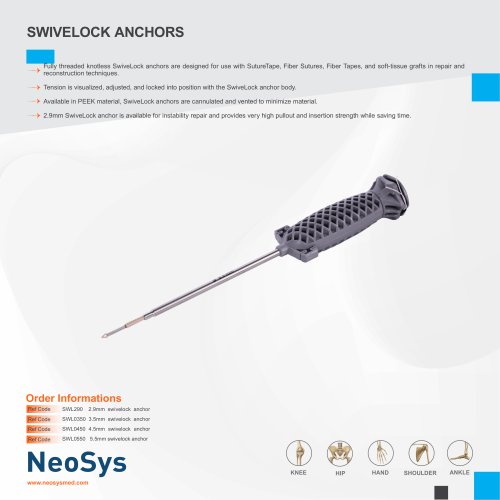 SWIVELOCK ANCHORS
1 Page
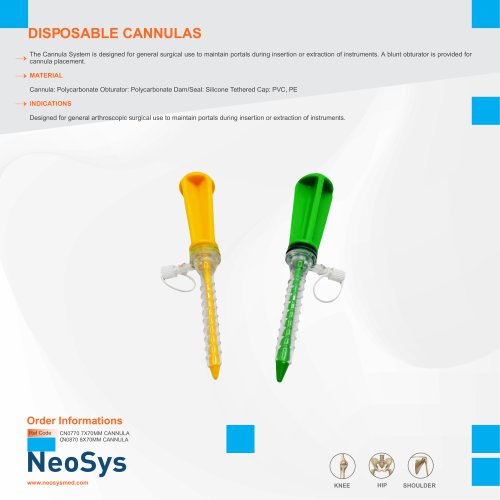 DISPOSABLE CANNULAS
1 Page
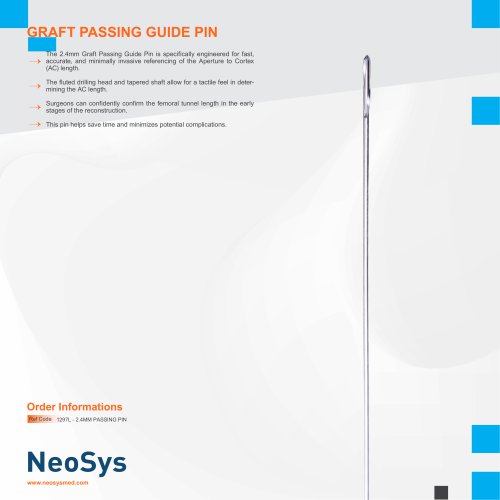 GRAFT PASSING GUIDE PIN
1 Page
 RF ABLATION PROBES
1 Page
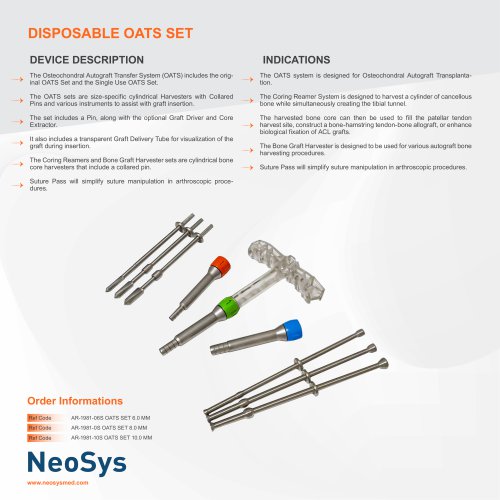 mosaic plasty kit
1 Page
 FIBERTAPE SUTURE
1 Page
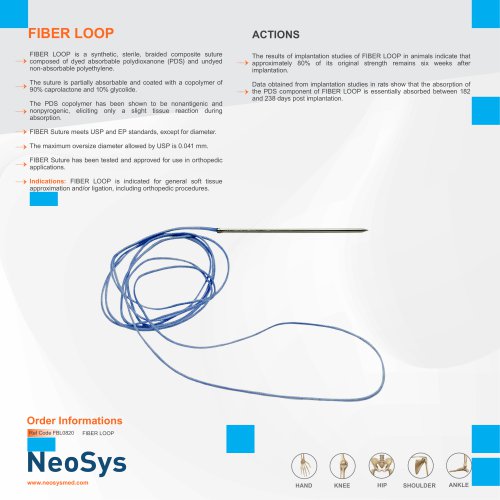 fiber loop
1 Page
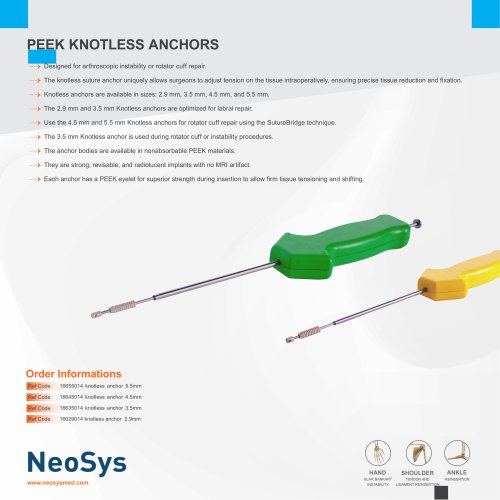 PEEK KNOTLESS ANCHORS
1 Page
 TITANIUM SUTURE ANCHOR
1 Page
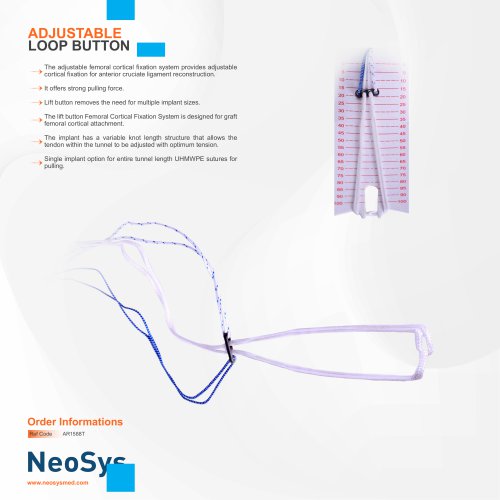 adjustable loop button
1 Page
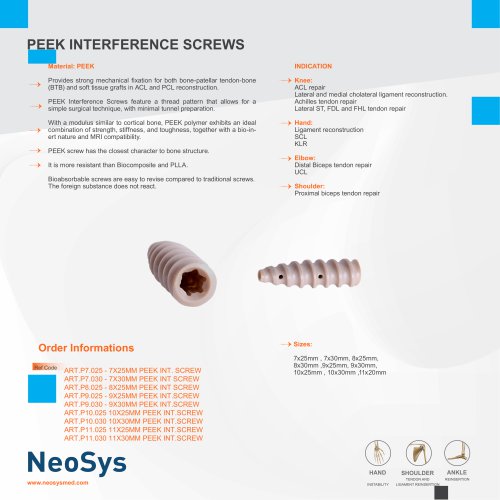 PEEK INTERFERENCE SCREWS
1 Page
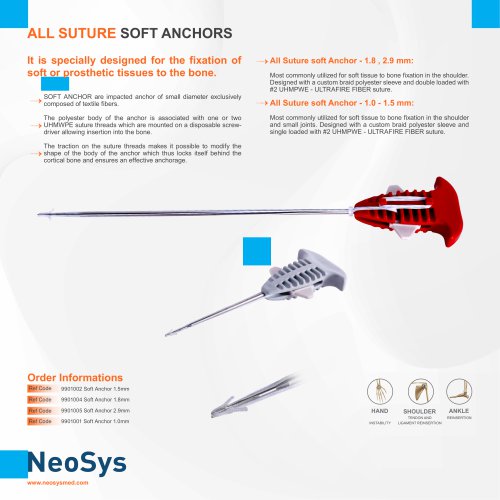 ALL SUTURE SOFT ANCHORS
1 Page
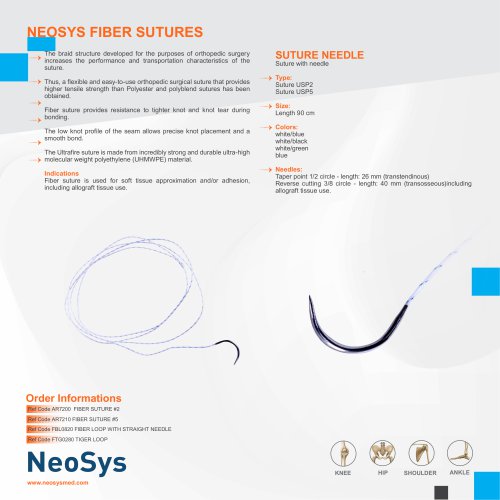 NEOSYS FIBER SUTURES
1 Page
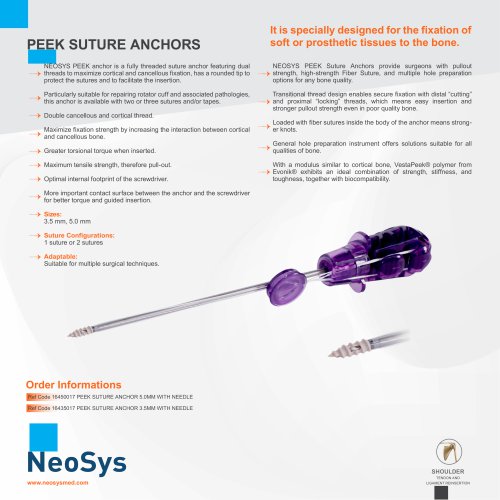 PEEK SUTURE ANCHORS
1 Page
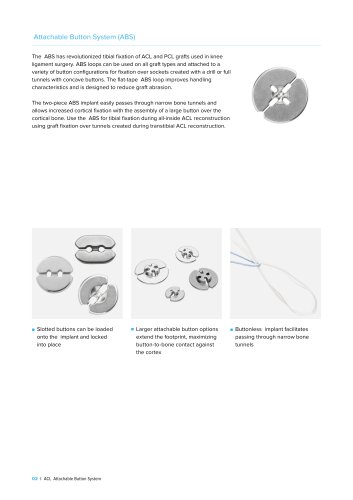
 ACL Attachable Button System
9 Pages

Archived catalogs
 meniscal repair all inside
9 Pages
- Bone plate
- Grasping forceps
- Surgery electrode
- Cannula
- Histology reagent
- Electrosurgical electrode
- Orthopedic surgery instrument kit
- HF electrode
- Endoscopy forceps
- Monopolar electrode
- Interbody fusion cage
- Sealing forceps
- Disposable electrode
- Tissue grasping forceps
- Freeze-dried reagent kit
- Bone substitute
- Suture thread
- PEEK interbody fusion cage
- Anterior interbody fusion cage
- Lumbar interbody fusion cage