
- Catalogs
- Neuronetrix
- Neuro-electrophysilogical Biomarkers for CNS Drug Development

Neuro-electrophysilogical Biomarkers for CNS Drug Development
Neuro-electrophysilogical Biomarkers for CNS Drug Development
Overview of Cognitive Disorders and Treatment Challenges
Cognitive disorders such as Alzheimer's disease, schizophrenia, and ADHD significantly impair cognitive functions including attention, memory, and decision-making. Current pharmacological treatments offer moderate symptom relief but are hindered by the absence of sensitive and reliable biomarkers to accurately measure cognitive function and drug effects.
Pharmacological Treatments for Cognitive Disorders
- Alzheimer's disease: Cholinesterase inhibitors and glutamate regulators.
- Schizophrenia: Dopaminergic and serotonergic receptor antagonists.
- ADHD: Psychostimulants.
Additional therapeutic targets focusing on neuronal modulation and neurotransmitter regulation are under development.
The Need for New Cognitive Biomarkers
Traditional biochemical markers and molecular imaging provide disease pathology insights but fail to directly measure cognitive processing. Psychometric and behavioral tests lack sufficient sensitivity, reliability, and repeatability for early drug development and dosing studies.
An ideal cognitive biomarker should:
- Directly reflect brain synaptic activity related to cognition.
- Be sensitive to pharmacodynamic effects and dose-response relationships.
- Be applicable consistently across animal models and humans.
- Correlate with cognitive dysfunction measures.
- Provide stable longitudinal data with low variability.
- Be robust against site/user variability and communication difficulties.
- Be easy and cost-effective to implement in clinical trials.
Neuro-Electrophysiology as a Solution
Electroencephalography (EEG), including quantitative EEG (QEEG) and Event-Related Potentials (ERPs), offers millisecond-level temporal resolution of brain synaptic activity and cognitive processing. EEG measures brain oscillations across frequency bands and assesses synchrony between brain regions. ERP components (e.g., P50, P100, N100, P200, P300) are linked to sensory gating, attention, and memory encoding.
These measures have demonstrated utility in assessing cognitive dysfunction and pharmacodynamic effects in Alzheimer's, schizophrenia, and ADHD.
Limitations of Traditional Neuro-Electrophysiology Systems
- Complex hardware/software requiring specialized training.
- Lengthy setup and calibration unsuitable for large multi-center trials.
- Complex data analysis and lack of standardized protocols limit clinical applicability.
- High cost and operational burden reduce feasibility in typical clinical settings.
COGNISION™ System: Advanced Neuro-Electrophysiology Platform
COGNISION™ addresses traditional limitations by offering:
- Fast, easy setup with minimal electrodes suitable for office environments.
- User-friendly software with automated data collection, processing, and analysis.
- Advanced neuro-electrophysiological protocols optimized for clinical trials.
- Cost-effective, scalable solution for multi-center studies.
- Online library and data management tools for large-scale validation and longitudinal studies.
This system enables sensitive and specific measurement of cognitive biomarkers, improving drug development decisions and patient stratification.
reCOGNISION™: Predictive Modeling and Classification Software
reCOGNISION™ applies machine learning and classification algorithms to neuro-electrophysiological data, providing:
- Classification of subjects by cognitive disorder status or treatment response.
- Automated feature selection and multi-class classification with cross-validation.
- Integration of multiple biomarker types (EEG, ERP, MRI, PET) for enhanced predictive accuracy.
- Support for clinical decision-making in patient selection, therapy optimization, and monitoring.
Scientific Validation and References
Peer-reviewed studies support the relevance of EEG/ERP biomarkers in cognitive disorders and their modulation by pharmacological agents. Research highlights ERP components related to sensory gating, attention, memory, and drug effects in Alzheimer's, schizophrenia, and ADHD.
Critical Considerations and Best Practices
- Standardize protocols and provide training to minimize site and user variability.
- Use automated data processing to reduce complexity and improve reproducibility.
- Employ longitudinal recordings to capture short- and long-term drug effects.
- Combine neuro-electrophysiological biomarkers with clinical and behavioral assessments for comprehensive evaluation.
Summary of EEG and Clinical Pharmacology Research
EEG and ERPs serve as surrogate biomarkers to measure brain function and drug effects in neuropsychological and psychiatric disorders. They provide insights into cognitive processes and treatment responses, including acute medication effects.
Research methodologies emphasize meta-analyses, advanced algorithms, and data-driven approaches to optimize predictive models and validate EEG biomarkers. Pharmacodynamic monitoring includes pediatric populations and focuses on treatment response prediction.
Recommendations include standardized EEG acquisition and analysis protocols, integration of multimodal data (EEG, imaging, genomics), and application of EEG biomarkers in drug development and clinical trials.
Overall, advanced neuro-electrophysiology combined with predictive analytics offers a promising approach to overcome challenges in CNS drug development and cognitive disorder management.
Catalog excerpts
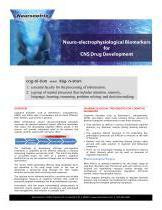
1: a mental faculty for the proces f ssing of inf formation. 2: a group of mental pr f rocesses th includes attention memory, hat s n, language, learning, reasoning, problem s , solving, an decision making. nd n O OVERVIEW C Cognitive disorders such as Alzheimer’s, schizophrenia, A ADHD, and others take a trem mendous toll on those affecte n ed, their families, and society in general. W While preventative and/or disease-modi ifying therapies r represent the greatest potential impact, effe g ective treatmen nts e c that reduce the devastating cognitive effects would, in the nterim, still pr rovide substan ntial relief to the patients an t nd in s support systems tasked with caring for them. . T The challenge of developing effective pro-cognitive e treatments is amplified by the inherent diff a ficulty in direct tly m measuring cogn nitive processin itself. This limits the ability ng to accurately assess the le evel of a pat tient’s cognitive d dysfunction or any pro-cognitiv changes due to a therapeut a ve e tic in ntervention. T The result? Eith potentially effective drug candidates don her n’t g get identified in the early stage trials, or the cost of a advancing a promising dru p ug through th he later stages b becomes extrem mely time-consu uming and expensive. T The solution to this dilemma would be a sens w sitive and reliab ble p physiological measure of cog m gnitive function that could be p practically applied throughout the drug devel lopment proces ss. PHARM MACOLOGICA TREATMEN AL NTS FOR COG GNITIVE DISOR RDERS Cogniti ive disorders such as Alz zheimer’s, schizophrenia, ADHD, and others, share many com mmon factors relevant to pharma companies en a ndeavoring to treat these diseases: They manifest as d y deficits in vario ous fundamenta cognitive al dom ains, e.g. atten ntion, sensory gating, workin memory, ng etc. The cognitive def ficits proximal to the unde erlying biosses are difficu to measure at the level ult path ological proces ehavior. of be Patie ents with the s same underlyin disease pro ng ocess often pres ent with wide variation in cognitive and behavioral ptoms. symp Ther are no mean re ningful imaging or biochemic markers g cal of t hese diseases which can b used as measures of be nitive impairme ent. cogn Pharm macological T Targets Most e efforts to deve elop treatments for the broad range of s cogniti ve disorders h ave focused on (and will continue to be n d al focused on) modul ating neurona activity through the mechan nisms of ne eurotransmitter regulation, hormonal r activity and/or neuro y, otrophic factors s. These targeted thera apies are intended to regulat neuronal te on mental cognitive processes e functio and normali ze the fundam underly ying the emerg ent behavioral symptoms. F Fortunately, wit the recent technological advancements in th a e electronic senso design, sign processing, and web-based or nal d data manageme ent, that solutio is available now. on n Neuronetrix 1044 E Chestnu ut St Louisville KY 40204 www.neuronet trix.com 502‐5 561‐9040
Open the catalog to page 1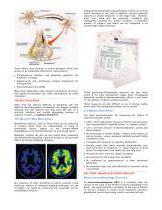
Standardized psychometric/psychological testing can provide useful measures at the level of behavior, and are generally required as pivotal endpoints in late stage trials. However, these tests often lack the sensitivity, reliability, and repeatability required for studies involving a reasonable number of subjects and which can be completed in an economically viable timeframe. These efforts have resulted in several therapies which have proven to be moderately effective for many patients: Cholinesterase inhibitors and glutamate regulators for Alzheimer’s disease. Dopaminergic and serotonergic receptor...
Open the catalog to page 2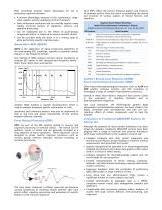
E EEGs recording provide un gs nique advantages for use in e evaluating cogn nitive disorders: A primary ph hysiologic meas sure of the syn nchronous, larg gescale synaptic activity under c rlying all brain functions. f Have millisec cond resolution and can thereby capture many rapidly occurring aspects of regulatory sensory, an y, nd cognitive processing. Can be mod dulated due to the effects of psychotrop o pic compounds and/or in response to various external stimul a li. Can be recor rded while the brain is in a resting state or e while perform ming specific co ognitive tasks. Q Quantitative...
Open the catalog to page 3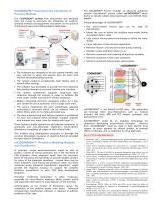
C COGNISION Overcom the Limit N™ mes tations of P Previous Met thods T The COGNISION™ System fr rom Neuronetrix was designed f from the outse to overcome the limitatio et ons of researc cho oriented methods and equipm ment and deliver on the promise o advanced neu of uro-electrophys siological techn niques. OGNISION™ Sy ystem includes an advanced predictive s The CO analytic classification system called reCOGNISIO c n ON™ which learns to classify subj ject data based upon user-def d fined metamodels s. Unique advantages of reCOGNISION™ e f ™: Any neuro-related d sification. class Allow the user...
Open the catalog to page 4All Neuronetrix catalogs and technical brochures
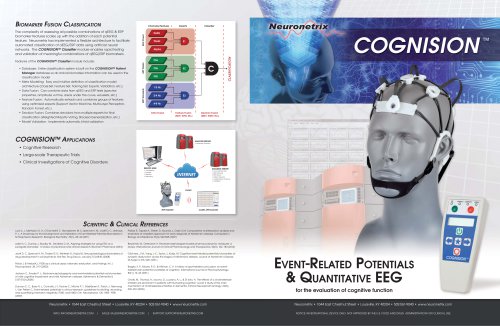 COGNISION
2 Pages
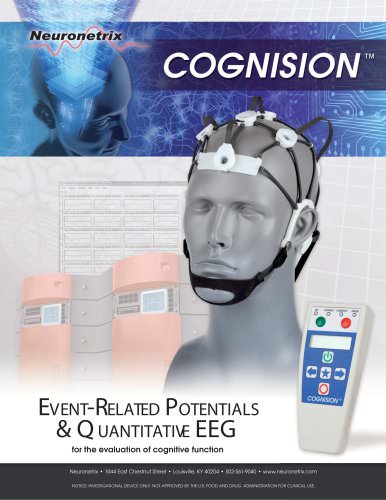 COGNISION? Product Brochure
4 Pages