
- Catalogs
- Nevro Corp.
- Neurostimulation System for Chronic Pain

Neurostimulation System for Chronic Pain

Neurostimulation System for Chronic Pain
The document provides an overview of the Nevro Spinal Cord Stimulation (SCS) System, a next-generation therapy for managing chronic intractable pain of the trunk and/or limbs. It highlights the system's benefits, usage indications, contraindications, and procedural details.
Indications and Contraindications
The Nevro SCS System is intended for patients with chronic pain conditions such as failed back surgery syndrome, intractable low back pain, and leg pain. It should not be used by individuals unable to operate the system or those who are poor surgical risks.
System Features and Benefits
The Nevro Senza™ system offers significant pain reduction without the uncomfortable buzzing sensation (paresthesia) associated with conventional SCS systems. It also improves sleep quality for patients.
Trial and Long-Term Therapy Phases
The therapy includes an evaluation period where candidates can test the system using a temporary external setup. If successful, a minor surgical procedure is performed to implant a rechargeable pulse generator for long-term use.
System Components
The system comprises leads, a rechargeable pulse generator, a patient remote control, and a mobile charger. The leads deliver pulses to the spinal cord, while the generator, placed under the skin, powers the system. The remote control allows patients to manage the therapy, and the mobile charger recharges the generator.
Chronic Pain Management
Chronic pain persists beyond the normal healing process and may not respond to conventional therapies. The Nevro SCS system offers an advanced solution for such cases, providing significant pain relief without paresthesia.
Background on Spinal Cord Stimulation
SCS systems have been used for over 30 years to treat chronic pain. The Nevro SCS system, introduced in 2011, is unique in its ability to provide pain relief without the buzzing sensation, particularly effective for severe low back pain.
FAQs
The document addresses common questions about the reversibility of the trial procedure, recovery time, variability in pain relief, associated risks, and travel considerations for patients with an SCS system.
Catalog excerpts
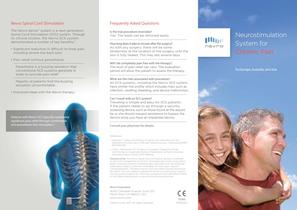
Nevro Spinal Cord Stimulation Frequently Asked Questions The Nevro Senza™ system is a next generation Spinal Cord Stimulation (SCS) system. Through its clinical studies, the Nevro SCS system demonstrated a number of key benefits.2 Is the trial procedure reversible? Yes. The leads can be removed easily. • Significant reduction in difficult-to-treat pain, including severe low back pain. • ain relief without paresthesia: P Paresthesia is a buzzing sensation that conventional SCS systems generate in order to provide pain relief. Majority of patients find the buzzing sensation uncomfortable. • mproved sleep with the Nevro therapy. I Patients with Nevro SCS typically experience significant pain relief through comfortable and paresthesia-free stimulation.2 How long does it take to recover after the surgery? As with any surgery, there will be some tenderness at the location of the surgery until the skin is fully healed. This may last several days. Will I be completely pain free with the therapy? The level of pain relief can vary. The evaluation period will allow the patient to assess the therapy. What are the risks associated with procedure? All SCS systems, including the Nevro SCS system, have similar risk profile which includes risks such as infection, swelling, bleeding, and device malfunction. Can I travel with an SCS system? Traveling is simple and easy for SCS patients. If the patient needs to go through a security screening device, such as those found at the airport, he or she should request assistance to bypass the device since you have an implanted device. Consult your physician for details. References: 1. ameron T. Safety and efficacy of spinal cord stimulation for the C treatment of chronic pain: A 20-year literature review. J Neurosurg 2004; 100:S254-S67. 2. met I, Van Buyten JP, Al-Kaisy A. European Prospective Study S with the Nevro Implantable System. Presentation at North American Neuromodulation Society 2010 Meeting. Indications of Use: The Nevro Spinal Cord Stimulation System is intended to aid in the management of chronic intractable pain of the trunk and/or limbs, including unilateral or bilateral pain associated with the following: Failed back surgery syndrome, Intractable low back pain, Leg pain. Contraindications: The Nevro Spinal Cord Stimulation System should not be used if: You are unable to operate the spinal cord stimulation system, You are a poor surgical risk. Warnings, precautions and side effects: Refer to the Patient Manual prior to use and consult your physician. Nevro Corporation 4040 Campbell Avenue, Suite 210 Menlo Park, CA 94025, USA www.nevro.com © Nevro Corp. 2011. All rights reserved. 0086 PB100103 Neurostimulation System for Chronic Pain For Europe, Australia, and Asia
Open the catalog to page 1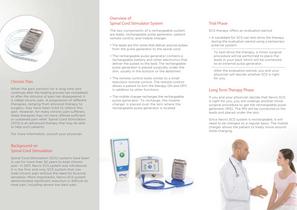
Overview of Spinal Cord Stimulator System The key components of a rechargeable system are leads, rechargeable pulse generator, patient remote control, and mobile charger. • he leads are thin wires that deliver precise pulses T from the pulse generator to the spinal cord. • he rechargeable pulse generator contains a T rechargeable battery and other electronics that deliver the pulses to the lead. The rechargeable pulse generator is placed surgically under the skin, usually in the buttock or the abdomen. Chronic Pain When the pain persists for a long time and continues after the healing process...
Open the catalog to page 2All Nevro Corp. catalogs and technical brochures
 HF10? SCS Therapy
4 Pages
