

CollaVET

CollaVET
Type I collagen is the most prevalent protein in the human body and is crucial for the structural integrity of bones, skin, tendons, and other tissues. It serves as an extracellular scaffold aiding in tissue repair and wound healing. Collagen implants are biocompatible and have been used clinically since the 1980s. The resorption rate of collagen implants can be adjusted based on the vascularity of the implantation site.
Manufacturing Process
The collagen used in CollaVET products is derived from bovine Achilles tendon, purified, and engineered into a porous matrix. This collagen is homologous across species, making it highly biocompatible.
Product Configurations and Uses
CollaVET offers Type I collagen in Foam, Sponge, and Fibrillar forms, each suitable for various medical applications:
- Localized Delivery: Targets drug delivery to specific sites, enhancing efficiency and reducing systemic side effects. Suitable for antibiotics, pain management, and other therapeutic agents.
- Wound Healing: Effective for treating full and partial thickness wounds, ulcers, burns, and canine lick granulomas.
- Hemostatic Agent: Designed to control bleeding using the intrinsic hemostatic properties of collagen fibers.
Wound Healing Phases
Collagen supports the natural wound healing process through four phases:
- Inflammatory Phase: Initiated by injury, involving clot formation and release of inflammatory factors.
- Proliferative Phase: Formation of a cellular matrix, new blood vessels, and collagen deposition to strengthen the wound.
- Remodeling Phase: Organization of collagen framework to enhance tissue strength.
- Epithelialization Phase: Formation of new skin cells to protect against environmental factors.
Conclusion
CollaVET provides a versatile and biocompatible solution for wound healing and drug delivery, leveraging the natural properties of Type I collagen to enhance medical outcomes.
Catalog excerpts
NEW GENERATION DEVICES Choice without compromise Building A Foundation For Healing
Open the catalog to page 1
Building a Foundation for Healing What is Type I Collagen? Collagen is the most abundant protein in the human body. Type I collagen is also the most common of the collagens in vertebrates. It comprises up to 90% of the skeletons of mammals and is found throughout the body. In addition to bones, it is found in skin, tendons, ligaments, cornea, intervertebral discs, dentine, arteries and granulation tissues. Type I collagen is the major collagen of tendon and bone and is essential for the tensile strength of bone. Collagen plays an integral role in the repair and replacement of both soft and hard...
Open the catalog to page 2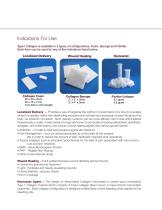
Indications For Use Type I Collagen is available in 3 types of configurations, Foam, Sponge and Fibrillar. Each form can be used for any of the indications listed below. Localized Delivery Collagen Foam 20 x 40 x 3mm 25 x 75 x 1mm 1cm diam x 2cm length Wound Healing Fibrillar Collagen 0.1 gram 0.2 gram Localized Delivery – Provides a way of targeting the optimum concentration of a drug to precisely where it is needed, rather than distributing excessive and sometimes unnecessary doses throughout the body via systemic circulation. Such delivery systems can be more efficient than those administered...
Open the catalog to page 3
4 Phases of Wound Healing Type I collagen fibers have intrinsic hemostatic properties to control bleeding2,4. Collagen implants and dressings are specifically used to support the natural process of wound healing by providing the scaffolding for wound healing. Inflammatory Phase – The Inflammatory CollaVETTM phase begins with the injury itself. When tissue Resorbable Wound Healing Implant is first wounded, blood comes in contact with collagen, triggering blood platelets to begin secreting inflammatory factors. The healing process begins with bleeding, immediate narrowing of the blood vessels,...
Open the catalog to page 4All NGD - New Generation Devices catalogs and technical brochures
 Double Pelvic Osteotomy
1 Page


