

Onyx9550

Onyx9550
The document explores the growth of home pulse oximetry over the last twenty years, emphasizing its significance in monitoring chronic conditions such as COPD and CHF. It highlights the importance of self-monitoring in patient care and discusses the decision-making process between using continuous versus spot-check devices.
University of Colorado Hospital – Integrated eHealth Home Program
From 2004 to 2009, the University of Colorado Hospital integrated pulse oximetry into its eHealth program for COPD patients. Over 650 patients participated, utilizing devices like the Onyx II 9550. The program resulted in improved oxygen delivery control, reduced anxiety, and better adherence to medical guidelines.
Features and Functions of Spot-Check Oximeters
Effective spot-check oximeters are characterized by their portability, ease of use, and reliability. The Onyx II 9550 is noted for its durability and accuracy across various patient conditions.
Benefits and Outcomes
Fingertip oximeters provided early warnings of health deterioration, enhanced exercise safety, and reduced anxiety. The program demonstrated improved oxygen saturation and exercise capacity, leading to a better quality of life and reduced healthcare costs.
Cautions
Despite their benefits, pulse oximeters have limitations, such as potential inaccuracies in heavy smokers or patients with specific conditions. They are not a replacement for invasive arterial blood gas analysis.
Conclusions
The document concludes that fingertip oximeters are effective for home use, facilitating early problem identification and intervention planning. The Onyx II 9550 was particularly successful across diverse patient populations.
References
The document references various studies and articles that support the use of home pulse oximetry and its benefits in managing chronic conditions.
Catalog excerpts

White Paper • May 2010 Pulse Oximetry at Home Patricia B. Koff, MEd, RRT, Affiliate Faculty Member, University of Colorado, Denver, Colorado Introduction The use of pulse oximetry at home has expanded over the past twenty years and is expected to be one of the major growth areas in home monitoring during the next decade.1 Initial use at home in the early 1990s focused on continuous monitoring with home mechanical ventilation and sleep studies.2-6 Intermittent spot-check use at home has become more common in recent years with conditions such as Chronic Obstructive Pulmonary Disease (COPD), Congestive Heart Failure (CHF) and others requiring longterm oxygen therapy. Self-monitoring enables patients to become more active participants in their health care. As the population ages and the incidence of pulmonary and cardiac diseases continue, home pulse oximetry can provide objective data for determining health status and the possible need for medical consultation or interventions. The use of spot-check devices can eliminate the “nuisance alarm” situations sometimes encountered with continuous use and are easy for a patient to use. If spot checks are sufficient, proven fingertip pulse oximeters such as Nonin’s Onyx® 9500, Onyx® II 9550 and GO2™ are useful in providing assurance and peace of mind to the patient and family. The first fingertip oximeter, Onyx 9500, was introduced in 1995 by Nonin Medical which revolutionized the portability and availability of pulse oximetry to both caregivers and individual patients. Fingertip pulse oximeters are portable, battery operated, and user friendly. However, other factors to consider when choosing a personal device are durability and accuracy. Quality fingertip pulse oximeters can yield solid results and provide an assessment of oxygen status and health stability in the homecare setting. With fingertip pulse oximeters being introduced to the market, patients and caregivers alike will have added questions on how to choose and use a fingertip pulse oximeter in the home environment. Throughout this paper, we will describe our experience in using fingertip pulse oximeters in the home environment, as well as the key features and functions to consider when choosing a quality fingertip pulse oximeter for home health use. The type of patient being monitored along with the complexity of the medical situation can help drive the decision to use a continuous, alarmed device or a simpler spot-check device. A patient in a more severe state, such as dependence on a ventilator or life-support system, is more likely to require continuous monitoring, while others will be sufficiently served with a spot-check device. Patricia Koff is an affiliate faculty member of the Division of Pulmonary Sciences and Critical Care Medicine at the University of Colorado. She has a Masters in Education from the University of Florida in Gainesville and is a registered respiratory therapist. She has been actively involved in COPD care for the past eight years— primarily in eHealth programs focused on remote monitoring and integrated care. She first became involved in the technology related area for healthcare in 2002 while working with the University of Barcelona pulmonologists. Since then, she has presented abstracts related to the topic at numerous pulmonary meetings and currently is developing papers related to the COPD eHealth Program and the 600 plus participants in both urban and rural settings in Colorado for potential publication.
Open the catalog to page 1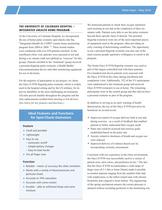
White Paper • May 2010 The University of Colorado Hospital – Integrated eHealth Home Program At the University of Colorado Hospital, we incorporated the use of home pulse oximetry spot-checks into the, “Integrated eHealth for COPD” remote home monitoring program from 2004 to 2009.7-11 Three formal studies were conducted with over 650 patients enrolled. At the enrollment clinic visit, patients were assessed at rest and during a six minute walk test (defined as “exercise” for this group). Patients enrolled in the “treatment” group received a personal fingertip pulse oximeter, a Health Buddy® telecommunication...
Open the catalog to page 2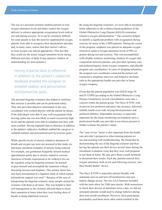
Pulse Oximetry at Home The use of a personal oximeter enabled patients to note oxygen saturation levels and better control the oxygen delivery to achieve appropriate oxygenation levels both at rest and during exercise. As it can be extremely difficult for some people to face the need for supplemental oxygen, patients were able to recognize their desaturation episodes and, in many cases, realize that their doctor’s advice to wear oxygen was indeed appropriate. (The fact that they could see the actual oxygen saturation levels during different activities of daily living opened a window of understanding...
Open the catalog to page 3
Pulse Oximetry at Home need for some to change batteries. For those units that did require battery changes, the changes were easily accomplished at home by the patient. At the completion of the program, mean oxygen saturation with exercise was improved. Patients’ ability to walk a greater distance in six minutes was also improved and dyspnea levels were reduced. All of these factors most likely contributed to the improved quality of life scores that were also obtained with the treatment group participants in the program. In addition, health care expenses were projected to be reduced.7 Cautions...
Open the catalog to page 4All Nonin catalogs and technical brochures
 Unmatched Pulse Oximetry
1 Page
 NoninConnect Elite 3240
4 Pages
 8204CA
4 Pages
 8000 series
2 Pages
 6000 C series
2 Pages


Archived catalogs
 SenSmart® 8006 Hybrid Sensor
2 Pages
 WristOx2 ® Model 3150 USB
2 Pages
 Narcotrend Compact-M
2 Pages
 9840/8500 Series
1 Page
 Onyx III 9591
2 Pages
 USB-Desaturation
1 Page
 Capnography-for-CPR.
2 Pages
 Nonin3230-3231
4 Pages
 PalmSAT 2500 Brochure
2 Pages
 Capnography Pain Management
2 Pages
 CapnographyEMSTransport
2 Pages
 RespSense
2 Pages
 Why Nonin Sensors
4 Pages
 PureSAT Advantage
2 Pages
 Product Catalog
21 Pages
 Avant 2120
2 Pages
 Model 7500 Series
2 Pages
 PureLight Sensors Brochure
2 Pages
 3150 Sleep Flyer
2 Pages
 LifeSense VET Brochure
2 Pages
 Nonin Onyx Brochure
6 Pages
 LifeSense®
2 Pages
 WristOx 3100 Brochure
2 Pages
 ipod Specifications
6 Pages
 WIDESCREEN Pulse Oximeter
2 Pages
 Vet Family Brochure
4 Pages
 System Story Brochure
2 Pages
 OEM Xpod Brochure
2 Pages
 Avant® 9600
2 Pages
 Onyx II, Model 9560 Brochure
3 Pages
 Avant® 9700
2 Pages
 Model 8500 Series
2 Pages
 Capnography Use in Homecare
2 Pages
 EQUANOX?, Model 7600
2 Pages
 Flexi-Form ® III 7000 Series
2 Pages
 Cloth 6000C Series
2 Pages
 Onyx Vantage 9590
2 Pages
 Dr Petty GO2 Brochure
13 Pages
 nVision
4 Pages
 2500A VET Spec Sheet
2 Pages
 PulseSense VET Brochure
2 Pages
 RespSense VET Brochure
2 Pages
 9847V Brochure
2 Pages
 Model 8500AV Brochure
2 Pages
 3150 Ambulatory Flyer
2 Pages
 LifeSense®
2 Pages
 WristOx2?
2 Pages
 9840 Series
2 Pages
 Model 7500
4 Pages
 SpO2 Disposable Sensors
4 Pages
 9500 Spec Sheet
2 Pages
 Onyx® II 9550
2 Pages
 Vet Family Brochure Old
4 Pages
 LifeSense® Old
2 Pages
 Product catalog
21 Pages
 System Story Brochure Old
4 Pages
 Avant® 9600
1 Page
 Onyx® II, Model 9560
4 Pages


- Analysis software
- Patient monitor
- Medical sensor
- Tablet computer software
- Tablet PC software
- SpO2 sensor
- Reporting software
- Medical pulse oximeter
- Windows software
- SpO2 patient monitor
- Portable patient monitor
- Online software
- Battery-powered pulse oximeter
- Dental software
- Clinical patient monitor
- Fingertip SpO2 sensor
- CO2 patient monitor
- Data management software