


- Company
- Products
- Catalogs
- News & Trends
- Exhibitions
GlassBONE™ Bioglass Bone Substitute

GlassBONE™ Bioglass Bone Substitute
NORAKER® is a French company specializing in the development of innovative medical implants for bone regeneration using bioactive glass technology. Their products, Glassbone® Granules and Glassbone® Putty, are synthetic bone substitutes made from bioactive glass, which is a bioresorbable ceramic composed of minerals naturally found in the human body, ensuring excellent biocompatibility.
Composition and Advantages
The bioactive glass used in Glassbone® products is classified as a Class A bone substitute, superior to inert materials like hydroxyapatites. It is composed of 45% SiO2, 24.5% Na2O, and 24.5% CaO, with 6% phosphorous. This composition allows for effective bone bonding and regeneration.
Mechanism of Action
1. Ionic Exchanges: Within 14 days, a biological mineral layer forms, similar to human bone.
2. Activation Phase: By 21 days, mineral concentration increases, promoting osteoblast differentiation and extracellular matrix formation.
3. Bone Regeneration: Over time, the substitute is replaced by functional bone tissue.
Clinical Results
1. Spinal Fusion: A study showed a 93% fusion rate using Glassbone® in spinal surgeries, comparable to autogenous bone grafts.
2. Gingivoperiostoplasty: Glassbone® granules effectively replaced autologous bone in cleft surgeries, showing good integration and low morbidity.
3. Mastoid Obliterations: Glassbone® was used successfully in ear surgeries, with no adverse effects observed.
Applications
Glassbone® products are used in orthopedic, spinal, CMF/ENT, and dental surgeries to fill and regenerate bone defects when autologous solutions are insufficient.
Product Specifications
Glassbone® Granules and Injectable Putty are available in various sizes and volumes to suit different surgical needs.
Conclusion
Glassbone® offers a reliable and effective alternative to traditional bone grafting methods, with proven clinical success and biocompatibility.
Catalog excerpts

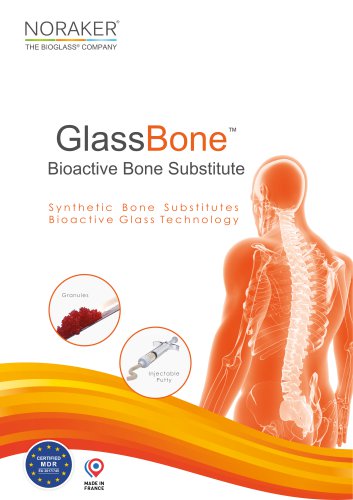
one Bioactive Bone Substitute Synthetic Bone Substitutes Bioactive Glass Technology
Open the catalog to page 1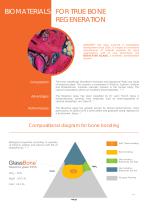
BIOMATERIALS FOR TRUE BONE REGENERATION NORAKER® has been involved in biomaterial development since 2005. It’s today an innovative manufacturer of medical implants for bone regeneration, with its core technology: the BIOACTIVE GLASS, a synthetic bioresorbable ceramic. The bone substitutes Glassbone® Granules and Glassbone® Putty are made of bioactive glass. This ceramic is composed of Silicium, Calcium, Sodium and Phosphorous, minerals naturally present in the human body. The natural composition allows an excellent biocompatibility. 1, 2, 3 The Bioactive glass has been classified by Dr Larry...
Open the catalog to page 2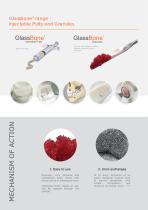
Glassbone® range : Injectable Putty and Granules Injectable Putty Granules To mix with patient’s blood, patient’s bone or saline solution Open & Press! Granules: very cohesive and hydrophylic when mixed with serum, blood or autologous bone. At 14 days: formation of an active biological mineral layer of calcium phosphate, with similar composition and structure as human bone. 1, 3, 5 Injectable Putty: Ready to use, can be injected through the syrin
Open the catalog to page 3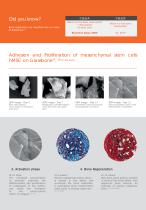
Bone substitutes are classified into an Index of Bioactivity. 8 Matrix for the bone colonization + Stimulation of stem cells Matrix for the bone colonization Adhesion and Proliferation of mesenchymal stem cells hMSC on Glassbone® . 10 (in vitro study) Stem cells adhesion ® on the surface of Glassbone (dark dots) Multiplication and differentiation of the stem cells (dark spider web) 3. Activation phase At 21 days: The increased concentration of minerals improves the differenciation and proliferation of osteoblasts in the defect; and starts the formation of the extra-cellular matrix of collagen....
Open the catalog to page 4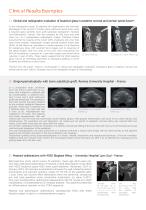
Clinical Results Examples 1: Clinical and radiographic evaluation of bioactive glass in posterior cervical and lumbar spinal fusion*. In this retrospective study, 30 patients with degenerative and traumatic pathologies of the cervical or lumbar spine underwent spinal fusion using a bioactive glass synthetic bone graft substitute (Glassbone®, Noraker, Lyon-Villeurbanne, France). Pain was assessed by VAS score and graft union by 1-to-1 postoperative radiographic images. Multilevel fusions accounted for the majority of the cohort (43% of patients with more than seven levels treated). Radiographic...
Open the catalog to page 5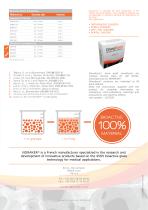
Glassbone® is intended for bone substitution to fill, rebuild, fuse bone defects, when autologous solutions are not applicable or sufficient, pending the regeneration of the bone. 9 Main indications : Bioactive Bone Substitutes References Granule size ORTHOPAEDIC SURGERY SPINAL SURGERY CMF / ENT SURGERY DENTAL SURGERY Glassbone® Injectable Putty GB-IP1.0 Tsigkou, O. et al. Biomaterials. 2009;30:3542-50 Oonishi, H. et al. J. Biomed. Mater Res. 2000;51:37-48. Jones, J.R. Acta Biomaterialia. 2013;9:4457-4486. Xynos, I.D. et al. Calcif Tissue Int. 2000;67:321-9. Hench, L.L. J. Mater Sci: Mater Med....
Open the catalog to page 6All NORAKER catalogs and technical brochures

Archived catalogs
 Sports Medicine
12 Pages