
- Catalogs
- NTA IMPLANT
- NTA Hybrid Catalog


NTA Hybrid Catalog

NTA Hybrid Catalog
Product Overview
This catalog details a range of hybrid dental implants designed to meet diverse clinical needs. Key features include implant stability and flexibility, with implants available in various dimensions and angulations. Flexible abutments enable 360° rotation and angulations of 0°, 15°, and 25°, facilitating adaptation to anatomical variations.
Implant Specifications
Implants are identified by codes reflecting platform size (PL), diameter (D), angulation (°), width (W), and height (H). Diameter options range from 3.2 mm to 7.0 mm, with lengths typically between 5.0 mm and 10 mm or more. Angulations of 0°, 15°, and 25° support versatile placement.
Abutments
Flexible abutments are a central component, allowing full 360° rotation for optimal prosthetic positioning. Multiple abutment types are cataloged, including standard, angled, and specialized versions tailored to different implant diameters and clinical scenarios. Coding mirrors that of implants, detailing dimensions and angulations.
Posts and Components
Posts are coded by platform size, diameter, and angulation, available in lengths and angles including 0°, 15°, 17°, 25°, and 30°. Additional accessory components such as cuff heights are also coded for straightforward identification, supporting diverse restorative requirements.
Coding System
A systematic coding scheme is employed across all components, using prefixes and numeric segments to denote platform size, diameter, angulation, width, and height. Suffixes indicate specific variations or subtypes. This structure ensures precise ordering and reduces selection errors.
Key Parameters and Limitations
- Implant diameters: 3.2 mm to 7.0 mm.
- Lengths: generally 5.0 mm to 10 mm.
- Angulations: 0°, 15°, 17°, 25°, and 30°, depending on component.
- Flexible abutments allow 360° rotation for prosthetic flexibility.
- Components are designed for compatibility within the hybrid implant system.
- The catalog does not include material specifications, tolerances, or procedural guidelines.
Best Practices and Recommendations
Although explicit procedural instructions are absent, the catalog emphasizes selecting components based on anatomical and prosthetic requirements. Utilizing the flexible abutment system is recommended to optimize implant stability and restoration alignment.
Summary of Data Tables
Extensive tables list implant and component codes alongside physical parameters such as thickness, angle, width, height, diameter, and length. These serve as a practical reference for clinicians and technicians to select appropriate products tailored to clinical indications.
Technical Specifications Summary
Product Codes and Dimensions
- Thickness (PL): 2.0 to 7.0 mm.
- Angles (D °): primarily 0°, 15°, and 25°.
- Width x Height (W x H): ranges from 4.0 x 6.5 mm up to 7.5 x 8.0 mm.
Product Code Groups
- H-series codes (e.g., H-340, H-350): specify thickness, angle, and dimensions with suffixes indicating variations.
- Post codes (e.g., H-TB203): denote post thickness and width.
- Diameter codes (e.g., HYB-0-3-02): specify diameter and length.
- Angle codes (e.g., HYB-0-10-01): indicate angle variations.
Parameters and Ranges
- Thickness: 2.0 mm to 7.0 mm.
- Angles: 0°, 15°, 25°.
- Width: 4.0 mm to 7.5 mm.
- Height: 5.0 mm to 8.0 mm.
- Diameter (cylindrical products): 2.0 mm to 5.0 mm; lengths 8.0 mm to 14 mm.
Product Identification and Coding System
- Prefixes (e.g., H-, HYB-, 80-) denote product family/type.
- Numeric segments specify dimensional and angular parameters.
- Suffixes indicate specific variations or subtypes.
Observations and Recommendations
- The catalog is a detailed reference for selecting implant components based on dimensional and angular needs.
- Careful matching of codes to clinical requirements is essential for compatibility.
- Thickness and angle are critical parameters influencing application.
- Diameter codes are key for cylindrical components, with length and diameter guiding selection.
Limitations
The document focuses exclusively on dimensional coding and product identification, lacking material data, tolerance specifications, and clinical application guidelines.
Catalog excerpts
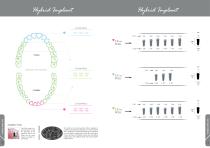
HYBRID IMPLANT HYBRID IMPLANT
Open the catalog to page 6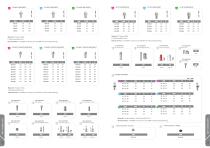
CODE SOAPC
Open the catalog to page 10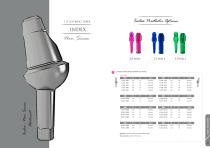
INDEX ABUTMENT INDEX ABUTMENT
Open the catalog to page 12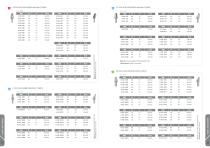
INDEX ABUTMENT INDEX ABUTMENT
Open the catalog to page 13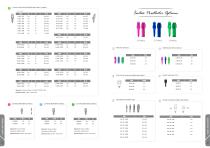
INDEX ABUTMENT
Open the catalog to page 14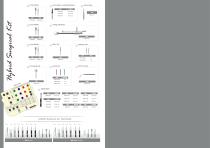
CODE CODE
Open the catalog to page 16All NTA IMPLANT catalogs and technical brochures
 GRAFT & MEMBRANE
16 Pages
 NTA Catalog
23 Pages
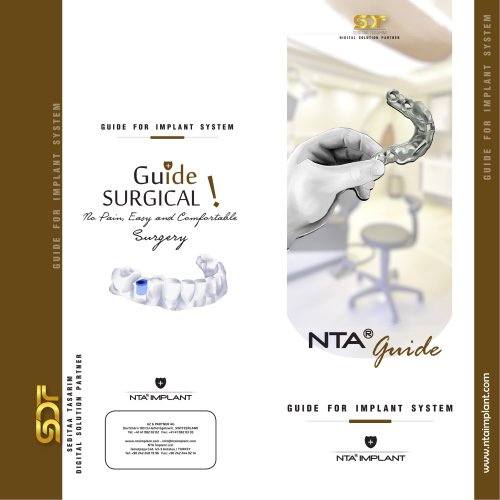 nta_guide_broschure
2 Pages

- Implant abutment
- Titanium implant abutment
- Straight implant abutment
- Dental surgery instrument kit
- Titanium dental implant
- Internal implant abutment
- Conical dental implant
- Angled implant abutment
- Straight dental implant
- Dental implant surgery instrument kit
- Hexagonal implant abutment
- Screw implant abutment
- Dental implant analog
- Internal hexagon implant abutment
- Straight dental implant analog
- 3D scanner
- Hexagonal dental implant
- Narrow dental implant
- Healing abutment