
- Catalogs
- NTA IMPLANT
- NTA Shorter + Shorter Plus Catalog


NTA Shorter + Shorter Plus Catalog

NTA Shorter + Shorter Plus Catalog
Summary of Technical Document on Shorter Implants and Components
1. Elemental Composition Analysis
The document provides elemental composition data for implants, specifically showing the presence of Phosphorus (P) and Calcium (Ca) with their respective spectral intensities, standard corrections, sigma values, and atomic percentages. For example, Phosphorus has an atomic percentage of approximately 33.7%, while Calcium is about 66.3%, indicating the material composition relevant for implant manufacturing.
2. Implant Dimensions and Codes
A comprehensive list of implant codes is provided, each associated with specific width (W) and height (H) dimensions. These codes cover a range of sizes, such as 3.0 x 9.0 mm, 4.5 x 11.0 mm, and up to 7.0 x 8.0 mm, allowing for selection based on clinical requirements. The implants are categorized under different series, including standard shorter implants and "Shorter Plus" implants, each with their own code sets.
3. Abutment Specifications
The document details various abutment codes with parameters including platform size (PL), diameter (D), angulation (°), and width x height (W x H). Angulations of 0°, 15°, and 25° are noted, providing options for different clinical angulations. Abutments are available in multiple sizes and configurations to accommodate diverse prosthetic needs.
4. Post and Cuff Components
Post components are listed with codes, diameters, and platform sizes, such as TB203 (2.0 mm diameter, 3.2 platform) and FD230 (2.0 mm diameter, 3.2 platform, 0° angulation). Cuff components are also specified with codes and angulations, offering options for soft tissue management around implants.
5. Surgical Kit Components
The document includes codes for surgical kit instruments and components, such as drills and posts, with detailed diameters and lengths. Angulation options for surgical tools are also provided (e.g., 0°, 15°), ensuring compatibility with implant placement protocols.
Critical Information and Best Practices
- Selection of implant size and abutment angulation should be based on clinical indications and anatomical constraints.
- Elemental composition data confirms the material quality and biocompatibility of implants.
- Comprehensive coding system facilitates precise ordering and inventory management.
- Availability of angled abutments and posts supports customized prosthetic solutions.
- Surgical kit components are standardized to match implant dimensions and ensure procedural accuracy.
This structured data supports clinicians and technicians in selecting appropriate implant components and accessories for dental implant procedures, ensuring compatibility, precision, and clinical success.
Catalog excerpts
SHORTER IMPLANT
Open the catalog to page 6
SHORTER IMPLANT
Open the catalog to page 8
SHORTER IMPLANT
Open the catalog to page 10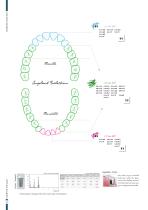
SHORTER IMPLANT
Open the catalog to page 12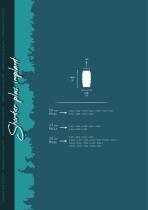
SHORTER IMPLANT
Open the catalog to page 14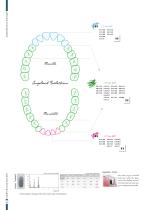
SHORTER PLUS IMPLANT 16
Open the catalog to page 16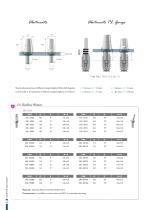
SHORTER ABUTMENT
Open the catalog to page 18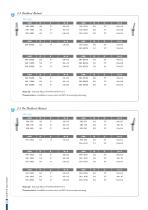
SHORTER ABUTMENT
Open the catalog to page 20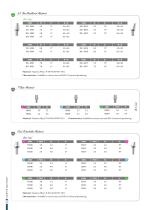
SHORTER ABUTMENT
Open the catalog to page 22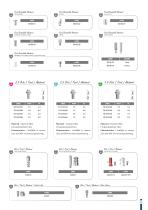
CODE CODE
Open the catalog to page 23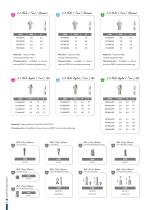
SHORTER ABUTMENT CODE CODE
Open the catalog to page 24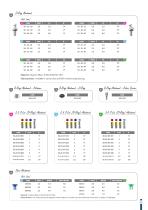
DISC HEIGHT
Open the catalog to page 25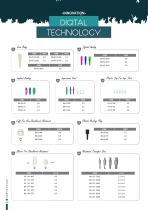
SHORTER IMPLANT
Open the catalog to page 26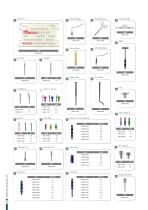
CODE CODE CODE
Open the catalog to page 28All NTA IMPLANT catalogs and technical brochures
 GRAFT & MEMBRANE
16 Pages
 NTA Hybrid Catalog
17 Pages
 NTA Catalog
23 Pages
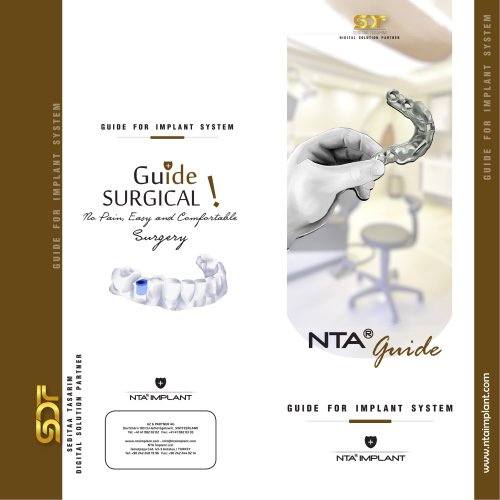 nta_guide_broschure
2 Pages
- Implant abutment
- Titanium implant abutment
- Straight implant abutment
- Dental surgery instrument kit
- Titanium dental implant
- Internal implant abutment
- Conical dental implant
- Angled implant abutment
- Straight dental implant
- Dental implant surgery instrument kit
- Hexagonal implant abutment
- Screw implant abutment
- Dental implant analog
- Internal hexagon implant abutment
- Straight dental implant analog
- 3D scanner
- Hexagonal dental implant
- Healing abutment
- Narrow dental implant