
- Catalogs
- Ovesco Endoscopy
- remOVE System


remOVE System
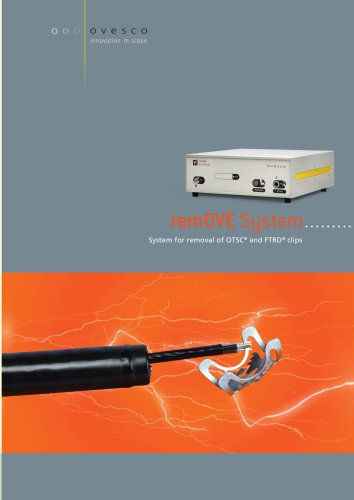
remOVE System
Catalog excerpts
System for removal of OTSC® and FTRD® clips
Open the catalog to page 1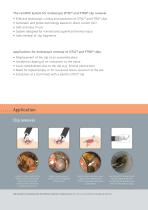
The remOVE System for endoscopic OTSC® and FTRD® clip removal • Effective endoscopic cutting and extraction of OTSC® and FTRD® clips • Generator and probe technology based on direct current (DC) • Safe and easy to use • System designed for minimal and superficial thermal injury • Safe retrieval of clip fragments Applications for endoscopic removal of OTSC® and FTRD® clips: • Misplacement of the clip at an unwanted place • Accidental clipping of an instrument to the tissue • Local complications due to the clip (e.g. luminal obstruction) • Need for repeat biopsy or for successive lesion resection...
Open the catalog to page 2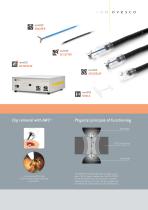
Clip removal with AWC® Physical principle of functioning Electrode S Clip removal with the help of the remOVE Grasper introduced by the AWC®. OTSC® material The remOVE DC Impulse generates a bipolar current pulse. This DC pulse is applied onto the OTSC®/FTRD ® clip via the remOVE DC Cutter resulting in localized melting and cutting of the clip. The clip is grasped with the remOVE DC Cutter preferably at the thinnest part
Open the catalog to page 3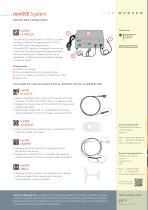
The remOVE DC Impulse (ref. no. 400.01) is a medical electrical device for fragmentation of OTSC® and FTRD ® clips in the digestive tract. The remOVE DC Impulse is designed to ensure that a direct current pulse can only be generated when sufficient contact with a segment of the clip is established. Sufficient contact is indicated through an acoustic signal. Components: A emOVE DC Impulse r B Foot-activated switch with connector cable C DC cord in order to connect the remOVE DC Cutter D ower cord P The remOVE DC Cutter Set consist of (ref. no. 400.02.01 (12); ref. no. 400.02.02 (14)) : • ipolar...
Open the catalog to page 4All Ovesco Endoscopy catalogs and technical brochures
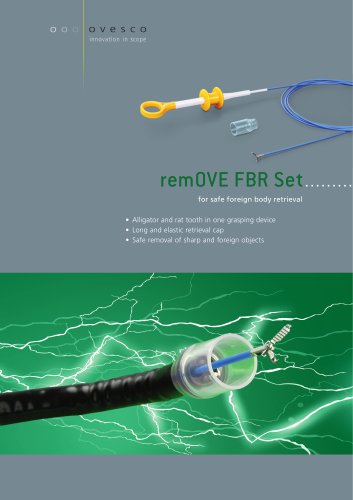 FBR Set
2 Pages
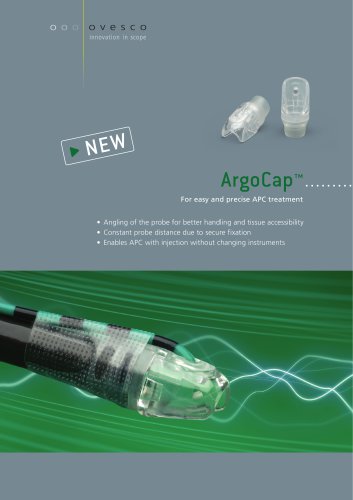 ArgoCap™
2 Pages
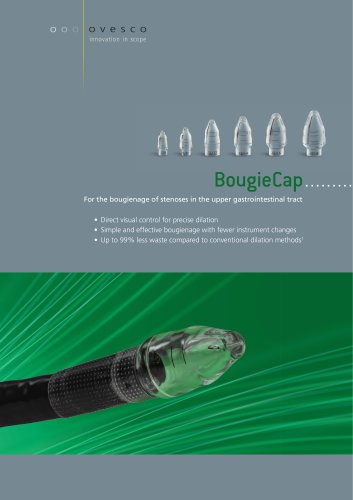 BougieCap
2 Pages
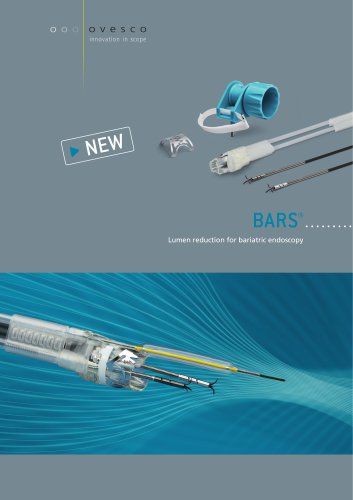 BARS®
BARS®4 Pages
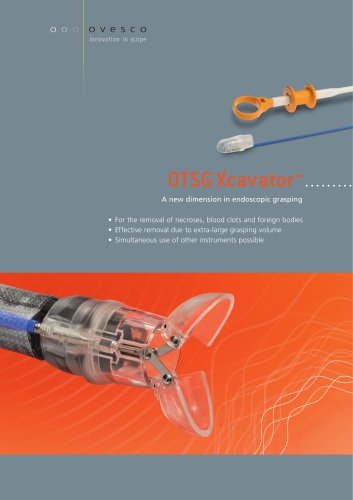 OTSG Xcavator®
2 Pages
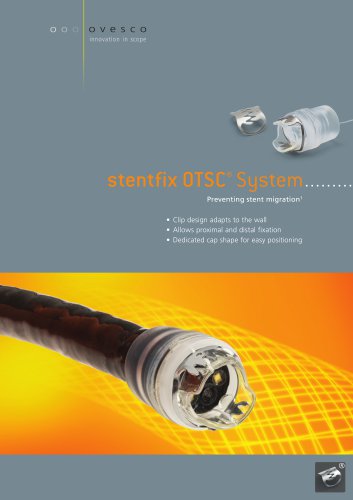 stentfix OTSC® System
2 Pages
 OTSC® Proctology
4 Pages
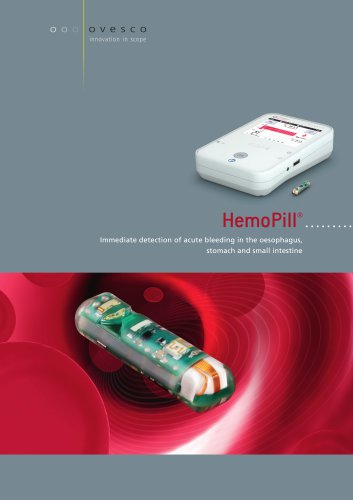 HemoPill®
4 Pages
 FTRD® System
6 Pages
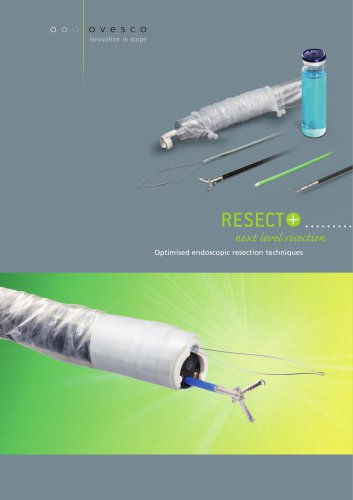 RESECT+
8 Pages
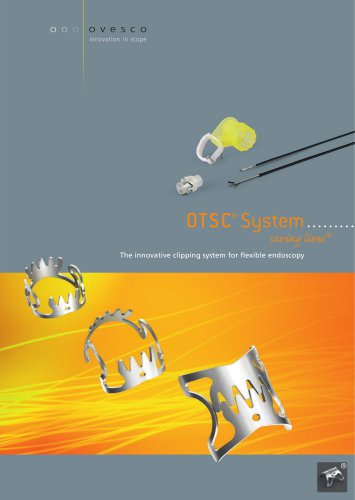 OTSC® System
6 Pages
- Surgery forceps
- Surgical system
- Cutting electrosurgical system
- HF electrode
- Endoscopy forceps
- Electrosurgical forceps
- Monitoring sensor
- Tissue grasping forceps
- Coagulation electrode
- Ablation forceps
- Laparoscopy forceps
- Biopsy forceps
- Toothed forceps
- Bipolar electrode
- Endoscopy electrode
- Cleaning brush
- Bipolar cutting electrosurgical unit
- Removing forceps
- Resection electrode