


Audéo S SMART High-tech Ceramic

Audéo S SMART High-tech Ceramic
Introduction
Hearing aid technology has evolved significantly, transitioning from analog to digital, incorporating frequency compression algorithms, and introducing binaural directional features. These advancements have improved hearing performance and aesthetics, yet there remains a need for enhanced comfort and durability in hearing aid housings. Phonak addresses this with high-tech ceramic housings, offering durability, comfort, and aesthetic appeal.
High-tech Ceramic Applications
High-tech ceramics are used across various industries due to their hardness, strength, biocompatibility, and aesthetic appeal. They are essential in medical technology, luxury goods, and aerospace. For example, the watch industry uses ceramics for their scratch resistance and comfort, while ceramics in dental restorations offer a natural look and durability.
High-tech Ceramic Hearing Aids
High-tech ceramic hearing aids meet user needs for aesthetics, durability, and comfort. These housings are scratch-resistant, chemically inert, and UV resistant, maintaining their appeal over time. They are also hygienic and comfortable due to their thermal conductivity and biocompatibility, reducing perspiration and being kind to the skin.
Materials and Processing Technologies
Ceramics are non-metallic, inorganic materials. High-tech ceramics like Zirconia are used for their biocompatibility, corrosion resistance, and mechanical strength. Yttria-stabilized Zirconia (YSZ) offers enhanced fracture toughness. The processing involves preparing raw materials, forming through injection molding, sintering, and polishing to achieve desired properties and aesthetics. A hydrophobic coating is applied to resist moisture.
Summary
Advancements in hearing aid technology have improved user experience through better performance and design. High-tech ceramics offer a combination of durability, resistance, and aesthetic appeal, making them ideal for hearing aid housings. Phonak's use of these materials represents a significant innovation in hearing aid technology.
Catalog excerpts

Phonak Insight High-tech Ceramic Innovation in hearing aid housing technology Hearing aid technology has undergone significant progress over the past decades. Major milestones were the transition from analog to digital hearing aids in the mid-nineties, frequency compression algorithms and lately binaural directional features that build on real-time full audio transmission between hearing instruments. At the same time, the design of hearing aid housings has advanced by making hearing aids smaller, less visible and more ergonomic and by offering more color choices, hence supporting a variety of hearing aid user lifestyles. Users have therefore been able to profit from better hearing performance as well as esthetics. Nevertheless, there was still room for improvement when it comes to the wearing comfort of hearing instruments and the long-lasting appeal of their With the introduction of high-tech ceramics for housings, Phonak leads the field in addressing the end-users' increasing demand for high-value, more durable, comfortable and cosmetically appealing hearing aids. High-tech ceramic applications today Advances in materials engineering and processing technologies have led to the use of high-tech ceramics in a variety of industries. Whereas in many applications high-tech ceramics are not necessarily visible nor particularly well- known to the consumer, today's exceedingly technological world clearly could not function without them anymore. Properties such as extreme hardness and high mechanical strength, outstanding biocompatibility and esthetic appeal, light weight as well as chemical inertness make high-tech ceramics indispensable for numerous applications. The fields of medical technology, luxury consumer goods and aerospace (to mention just a few) utilize the unique and manifold advantages of this branch of materials. The watch industry for example uses high-tech ceramics due to their scratch-proof quality and high wearing comfort. Watches made from high-tech ceramics look as good as new even after an extended period of wearing time. Ceramic tooth restorations provide a beautifully natural look and are highly wear resistant. Chefs and amateur cooks use ceramic knives for their light weight, long-lasting sharpness and their resistance against bacteria, kitchen acids and salts. This resistance also ensures the material stays rust-proof. High- tech ceramics even protect space shuttles against extreme friction heat at their re-entry into the atmosphere after a Straumann® CARES® abutment, Ceramic knives ceramic (on Straumann® Bone © 2010 by Kyocera Corporation Level Implant) High-tech ceramic hearing aids Appealing cosmetics, high durability and utmost wearing comfort are the key user needs that high-tech ceramic hearing aids meet. High-tech ceramic housings have a high- polished surface and their ^^^^^^^ deep color. The slightly greater weight compared PHONAK BffrBSi^M
Open the catalog to page 1
to polymer housings supports a high-value feel. The material's extreme hardness makes the housings serateh-resistant, and together with excellent chemical and biological inertness as well as UV resistance, high-tech ceramic allows this appeal to last for a long time. Lotions, sweat and other daily environmental influences will not alter it. The biological resistance also makes ceramic hearing instruments very Audeo S SMART High-tech Ceramic The material's tactility, the extent of its thermal conductivity and excellent biocompatibility give ceramic hearing instruments high wearing comfort. Additionally,...
Open the catalog to page 2
distribution in the mold and several other parameters play a crucial role in achieving the defined dimensions and mechanical properties of the product. During the subsequent sintering (firing) at temperatures beyond 1000°C/1832°F, a controlled process that lasts from several hours up to days, the ceramic particles grow together and a high theoretical density (i.e. low porosity) is achieved. The component accordingly undergoes a shrinkage of 20-30% during the sintering process. This shrinkage must be taken into consideration in advance when designing the injection mold and poses major challenges...
Open the catalog to page 3All Phonak catalogs and technical brochures
 Phonak Virto™ Paradise
16 Pages
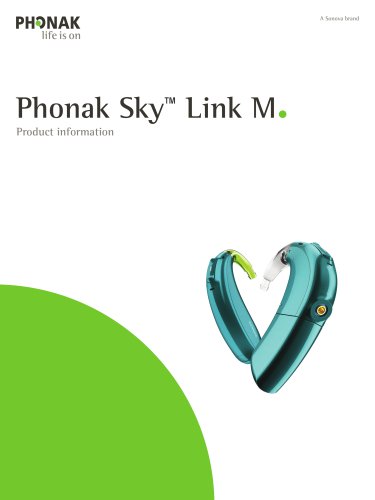 Phonak Sky™ Link M
4 Pages
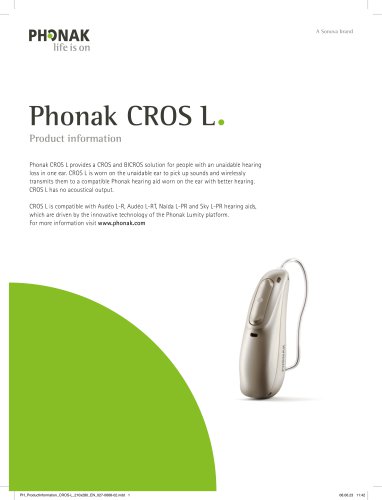 Phonak CROS L
4 Pages
 The art of invisibility
9 Pages
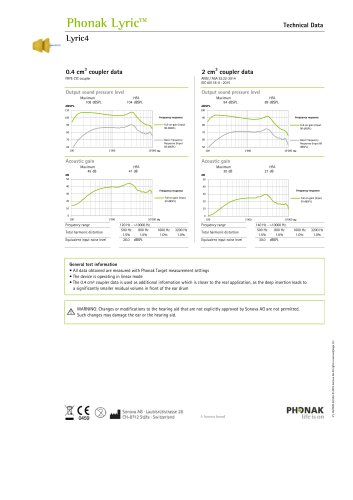 Phonak Lyric™
1 Page
Archived catalogs
 Naída Q
9 Pages
 Phonak AudéoTM B
6 Pages
 CROS
CROS2 Pages
 Audéo MINI
2 Pages
 Phonak AudéoTM Marvel
8 Pages
 Phonak Audéo M
2 Pages
 Phonak pediatric solutions
42 Pages
 Phonak Audéo M-312
2 Pages
 Phonak Mini Charger Case
1 Page
 Phonak Power Pack
1 Page
 Brochure Phonak Ambra
32 Pages
 Product Information Audéo S
6 Pages
 Brochure Audéo S
24 Pages
 Pamphlet Phonak Virto Q
9 Pages
 Pamphlet Phonak Bolero Q
9 Pages
 Sky Q - for Children
24 Pages
 Consumer Flyer Audéo S V
2 Pages
 Consumer Flyer M H2O
2 Pages
 Consumer Flyer Phonak nano
2 Pages
 Consumer Flyer Audéo S IX
2 Pages
 Phonak Audéo V
7 Pages
 Phonak Dalia
2 Pages
 Solana
6 Pages
 Naída S IX
2 Pages
 Consumer Flyer Phonak Ambra
2 Pages
 Naída S V
2 Pages
 Cassia
6 Pages
 Naída S III
2 Pages
 Nios S H2O
2 Pages
 MicroLink™ Freedom
2 Pages
 brochure phonak CROS II
9 Pages
 Phonak Sky V
3 Pages
 Phonak Sky V
8 Pages
 Phonak Audéo Q
9 Pages
 Product Information Lyric2
2 Pages
 Datasheet Phonak Bolero Q-P
2 Pages
 Datasheet Lyric2
2 Pages
 Datasheet Phonak Bolero Q-SP
2 Pages
 Phonak Bolero Q
6 Pages


- PHONAK BTE hearing aid
- PHONAK beige hearing aid
- PHONAK wireless hearing aid
- PHONAK black hearing aid
- Brown hearing aid
- Remote-controlled hearing aid
- PHONAK RIC hearing aid
- PHONAK gray hearing aid
- PHONAK rechargeable hearing aid
- PHONAK bluetooth® hearing aid
- PHONAK telecoil hearing aid
- CIC hearing aid
- Mini BTE hearing aid
- ITE hearing aid
- ITC hearing aid
- Blue hearing aid
- PHONAK waterproof hearing aid
- IIC hearing aid
- Pediatric hearing aid