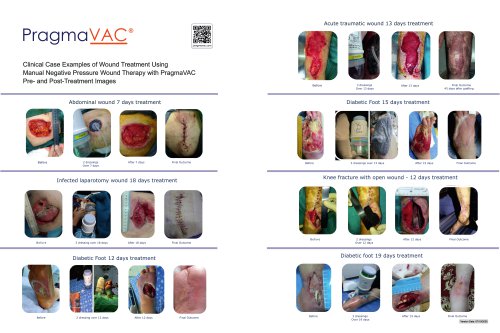
Wound Dressing Application Instuctions - EN
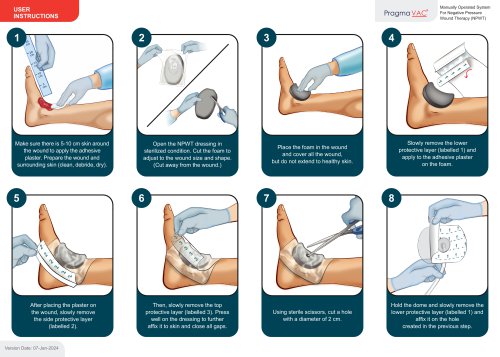
Wound Dressing Application Instuctions - EN
This document provides instructions for the manual operation of a Negative Pressure Wound Therapy (NPWT) system, updated as of January 7, 2024. The system is designed to aid in wound healing by applying negative pressure to the wound area.
Preparation
Ensure there is a 5-10 cm margin of healthy skin around the wound for adhesive application. Clean, debride, and dry the wound and surrounding skin thoroughly.
Application Procedure
1. Place the adhesive plaster over the wound.
2. Remove the side protective layer (labelled 2) slowly.
3. Remove the top protective layer (labelled 3) and press the dressing to secure it.
4. Cut a 2 cm diameter hole in the plaster using sterile scissors.
5. Open the NPWT dressing in a sterile environment and cut the foam to fit the wound size and shape, ensuring cuts are made away from the wound.
6. Remove the lower protective layer (labelled 1) and apply it to the adhesive plaster on the foam.
7. Place the foam in the wound, ensuring it covers the wound without extending onto healthy skin.
Dome and Device Connection
1. Affix the dome onto the plaster, aligning its holes with the plaster hole.
2. Remove the top protective layer (labelled 2) from the dome.
3. Apply another adhesive layer over the dome to prevent leaks.
4. Connect the PragmaVAC device to the wound tube and press the button until color strips disappear, indicating active negative pressure treatment.
Maintenance and Monitoring
1. Instruct the patient or caregiver to press the button whenever the red strip appears, typically every few hours.
2. Wrap the limb with gauze or bandage to protect the plaster.
3. If fluid accumulates in the canister, empty, wash, and reseal it tightly. Record the fluid quantity.
Recommendations
Regular monitoring and maintenance are crucial for effective therapy. Ensure all components are securely affixed and check for leaks regularly.
Catalog excerpts
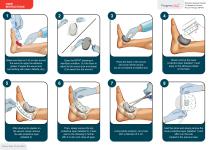
Manually Operated System For Negative Pressure Wound Therapy (NPWT) Make sure there is 5-10 cm skin around the wound to apply the adhesive plaster. Prepare the wound and surrounding skin (clean, debride, dry). Open the NPWT dressing in sterilized condition. Cut the foam to adjust to the wound size and shape. (Cut away from the wound.) Place the foam in the wound and cover all the wound, but do not extend to healthy skin. Slowly remove the lower protective layer (labelled 1) and apply to the adhesive plaster on the foam. After placing the plaster on the wound, slowly remove the side protective layer (labelled 2). Then, slowly remove the top protective layer (labelled 3). Press well on the dressing to further affix it to skin and close all gaps. Using sterile scissors, cut a hole with a diameter of 2 cm. Hold the dome and slowly remove the lower protective layer (labelled 1) and affix it on the hole created in the previous step.
Open the catalog to page 1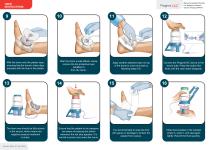
Manually Operated System For Negative Pressure Wound Therapy (NPWT) Affix the dome onto the plaster layer, ensuring that the dome’s holes align precisely with the hole in the plaster. The foam now should be fully shrunk in the wound, which means the negative pressure treatment is active. After the dome is well-affixed, slowly remove the top protective layer (labelled 2) from the dome. Ensure that the patient or his caregiver are aware of pressing the button whenever the red strip appears. It is normal to press once every few hours. Apply another adhesive layer on top of the dome to cover any...
Open the catalog to page 2All PragmaVAC catalogs and technical brochures
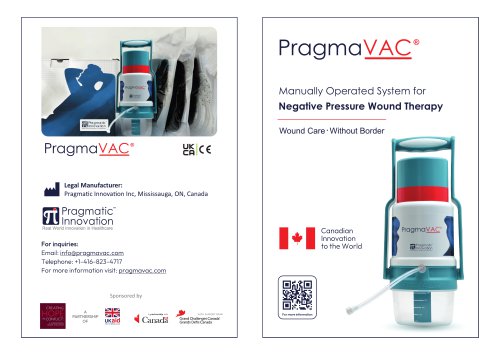 PragmaVAC® Flyer - English
2 Pages