

- Products
- Catalogs
- News & Trends
- Exhibitions
Precipart-Design-For-Manufacturability
Precipart-Design-For-Manufacturability
Introduction
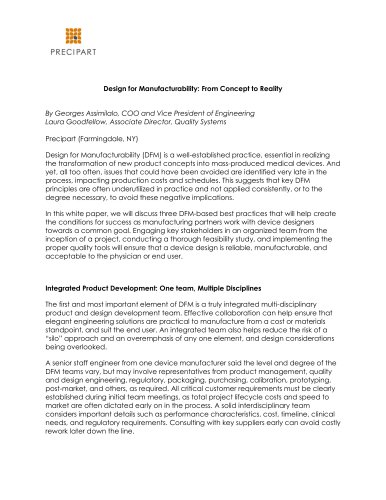
Design for Manufacturability (DFM) is crucial for transforming product concepts into mass-produced medical devices. However, issues often arise late in the process, affecting costs and schedules. This document outlines three DFM best practices to ensure successful collaboration between manufacturing partners and device designers.
Integrated Product Development
An integrated, multi-disciplinary team is essential for effective DFM. This team should include representatives from various departments such as product management, quality engineering, and regulatory affairs. Early collaboration with suppliers can prevent costly rework.
The Feasibility Study
A comprehensive feasibility study is vital for identifying potential design issues early. Key considerations include:
- Materials Selection: Biocompatibility and manufacturing challenges must be addressed. For example, titanium is biocompatible but difficult to mold.
- Manufacturing Processes: Weigh trade-offs between speed and cost. Injection molding may replace machining for volume production.
- Finishing Processes: The finish impacts durability and clinical performance. Consider sterilization needs and user acceptance.
- Application Considerations: User requirements vary; ergonomics and performance characteristics must be considered.
Using Established Quality Tools
Quality initiatives like Six Sigma and lean manufacturing are crucial for reducing variation and waste. Key tools include:
- Risk Management: Design of Experiment (DOE) and Failure Mode and Effect Analysis (FMEA) are essential for identifying and mitigating risks.
- Continuous Improvement: Even "frozen" processes can be improved through observation and documentation.
- Kaizen: Cross-disciplinary initiatives improve processes through on-the-floor presence and collaboration.
- Six Sigma: Focuses on minimizing variation and maximizing documentation.
- PPAP: Provides a benchmark for measuring process consistency.
Conclusion
A successful DFM plan ensures that a product can be produced efficiently and cost-effectively. Consistent application of DFM principles leads to successful mass production and timely market entry.
About the Authors
Georges Assimilalo is the COO and VP of Engineering at Precipart. Laura Goodfellow is the Associate Director of Quality Systems at Precipart.
About Precipart
Precipart is a global company specializing in high precision custom solutions for the Medical, Aerospace, and Industrial markets.
Catalog excerpts
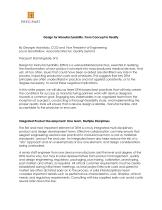
Design for Manufacturability: From Concept to Reality By Georges Assimilalo, COO and Vice President of Engineering Laura Goodfellow, Associate Director, Quality Systems Precipart (Farmingdale, NY) Design for Manufacturability (DFM) is a well-established practice, essential in realizing the transformation of new product concepts into mass-produced medical devices. And yet, all too often, issues that could have been avoided are identified very late in the process, impacting production costs and schedules. This suggests that key DFM principles are often underutilized in practice and not applied consistently, or to the degree necessary, to avoid these negative implications. In this white paper, we will discuss three DFM-based best practices that will help create the conditions for success as manufacturing partners work with device designers towards a common goal. Engaging key stakeholders in an organized team from the inception of a project, conducting a thorough feasibility study, and implementing the proper quality tools will ensure that a device design is reliable, manufacturable, and acceptable to the physician or end user. Integrated Product Development: One team, Multiple Disciplines The first and most important element of DFM is a truly integrated multi-disciplinary product and design development team. Effective collaboration can help ensure that elegant engineering solutions are practical to manufacture from a cost or materials standpoint, and suit the end user. An integrated team also helps reduce the risk of a “silo” approach and an overemphasis of any one element, and design considerations being overlooked. A senior staff engineer from one device manufacturer said the level and degree of the DFM teams vary, but may involve representatives from product management, quality and design engineering, regulatory, packaging, purchasing, calibration, prototyping, post-market, and others, as required. All critical customer requirements must be clearly established during initial team meetings, as total project lifecycle costs and speed to market are often dictated early on in the process. A solid interdisciplinary team considers important details such as performance characteristics, cost, timeline, clinical needs, and regulatory requirements. Consulting with key suppliers early can avoid costly rework later down the line
Open the catalog to page 1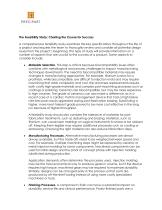
The Feasibility Study: Charting the Course for Success A comprehensive feasibility study examines the key specifications throughout the life of a project and requires the team to thoroughly review and consider all potential design issues from the project’s beginning. This type of study will provide information on a number of aspects that are crucial to the success of a product. Some aspects to consider include: • Materials Selection. This step is critical because biocompatibility issues often combine with metallurgical and process challenges to impact manufacturing techniques downstream. The...
Open the catalog to page 2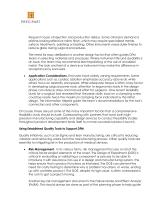
frequent cause of rejection and production delays. Some clinicians demand a pristine-looking reflective mirror finish, which may require specialized metals, surface treatments, polishing or blasting. Other instruments need duller finishes to reduce glare during surgical procedures. The need for easy sterilization is another design factor that often guides DFM teams in selecting materials and processes. Where instrument life and durability is an issue, the team may recommend electropolishing or the use of anodized metal. The look and feel of a device or instrument may make the difference in acceptance...
Open the catalog to page 3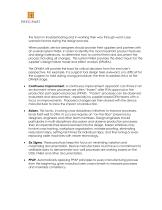
the team in troubleshooting and in working their way through worst-case scenario factors during the design process. When possible, device designers should provide their suppliers and partners with an overall system FMEA, in order to identify the most important product features and design tolerances, to determine how to control them and document the process including all changes. This system FMEA provides the direct inputs for the supplier’s design failure mode and effect analysis (DFMEA). The DFMEA will provide the basis for critical decisions from the end-user’s perspective. For example, if...
Open the catalog to page 4
A sound DFM plan recognizes that successfully and efficiently manufacturing a product depends on more than features, marketing appeal or even ergonomics. Ultimately, the best-designed product in the world will only be successful if it can be produced within the given parameters. Consistently applying DFM principles and best practices will allow for a successful product that may be mass-produced cost-effectively and brought to market with minimal delays. Georges Assimilalo is Chief Operating Officer and Vice President of Engineering at Precipart, where he has worked for 23 years managing the engineering...
Open the catalog to page 5All Precipart catalogs and technical brochures
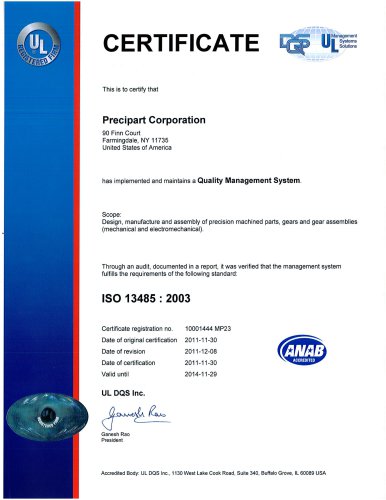 precipart_iso_13485
1 Page
 ISO 13485
2 Pages
 QM15_10017378 QM15_
2 Pages