Overview: The document provides comprehensive information on various orthotic products offered by Prim, a company based in Madrid, Spain. It covers specifications, features, and applications of orthoses designed for the spine, upper limb, lower limb, and daily use. The document also includes detailed descriptions of orthopedic braces, focusing on hyperextension braces and dorsolumbar back supports, as well as semi-rigid thoraco-lumbar and lumbosacral back
support belts.
Measurements: Specific measurements required for fitting orthoses are outlined, including neck circumference, spine height, waist and hip circumference, and arm and leg measurements. These measurements ensure proper fitting and effectiveness of the orthotic devices.
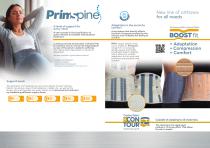
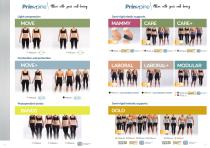
Spine Orthoses: Prim offers a range of spine orthoses designed to support and maintain physiological curves in patients with spinal decompensation or postural alterations. Key factors for effective spine support include lumbar compression, lumbar support, abdominal compression, and shoulder retropulsion.
Product Features: The orthoses are made from exclusive double-weave, breathable stretch materials that enhance adaptation, compression, and comfort. Innovative materials like thermoplastics and metals are used to customize support levels.
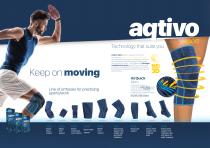
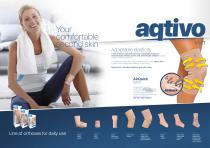
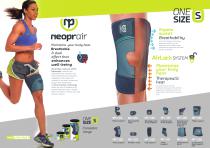
Sports and Daily Use Orthoses: The Aqtivo Sport line includes elastic supports for sports and work, providing compression and protection for muscles and joints. The Aqtivo Skin line offers seamless, breathable supports for daily use, enhancing comfort and well-being.
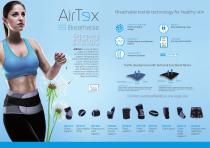
Technological Innovations: The document emphasizes the use of high-frequency technology, AirQuick fabric for breathability, and AirLock System for maintaining body heat while allowing the skin to breathe. These technologies aim to improve comfort and recovery.
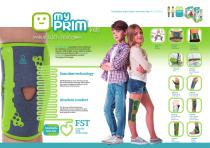
Paediatric Orthoses: The MYPRIM KIDS line is designed for children, featuring seamless technology to reduce skin chafing and enhance comfort. It includes various supports for recovery from muscle and joint injuries.
Indications and Applications: The document lists medical conditions that can benefit from these orthoses, such as low back pain, sacroiliac pain, osteoporosis, disc protrusion, and more. It also covers post-operative applications and degenerative processes.
Conclusion: Prim's range of orthoses is designed to cater to various needs, from sports and daily activities to specific medical conditions. The use of advanced materials and technologies ensures effective support, comfort, and adaptability for users.
Product Specifications: The document outlines several models of braces and corsets, such as the PRS630, PRS650, and SP500, each with specific features tailored to address conditions like low back pain, osteoporosis, and spinal disc herniation. The braces are made from materials like thermoplastic and duraluminium, offering a balance of rigidity and comfort.
Design and Features: The braces feature adjustable straps, breathable fabrics, and modular components that can be customized to fit the patient's anatomy. The document highlights the importance of proper fit and the ability to mold certain components using heat for a personalized fit.
Mechanism of Action: The braces work by providing support and limiting movement, which helps in correcting posture and stabilizing the spine. The SPINAIR model, for example, uses a dynamic system to encourage muscle strengthening and postural correction.
Clinical Assessment: Feedback from medical professionals indicates that the SPINAIR system is effective in covering a wide range of sizes and provides good posture correction. The ease of use and comfort are also noted as positive attributes.
Conclusion: The document emphasizes the versatility and effectiveness of the Primspine product line in treating various spinal conditions. The modular design allows for customization, making these braces suitable for a wide range of patients.
Specifications: The document outlines the dimensions and materials used in the construction of the braces. For instance, hyperextension braces are made from anodised duraluminium, which is 20% lighter than traditional models. They feature adjustable plates for a customized fit and are designed to maintain the spine in hyperextension, limiting various movements.
Procedures: The document describes the adjustment and fitting procedures for the braces, emphasizing the use of ergonomic-functional locking tensioners and single-tool adjustments. It also details the use of quick-clip buckles and micro-hook fasteners for ease of use.
Norms and Recommendations: The braces are recommended for conditions such as vertebral compression fractures, osteoporosis, and post-operative recovery. The document advises on the use of breathable, padded materials for comfort and the importance of anatomical adaptation.
Key Features: The braces include features like height-adjustable side plates, oscillating sternal plates, and ergonomic locking tensioners. They are designed to be lightweight, versatile, and easy to wash, with removable padding for hygiene.
Indications: The braces are indicated for various spinal conditions, including fractures, kyphosis, and chronic back pain. They are also used for rehabilitation and support in degenerative processes.
Conclusion: The document provides comprehensive information on the design, functionality, and medical applications of orthopedic braces, highlighting their adaptability and ease of use for patients with specific spinal conditions.
Thoraco-Lumbar Support Belts: The document provides detailed specifications and indications for various types of semi-rigid thoraco-lumbar and lumbosacral back support belts. These products are designed to offer stabilization and support for individuals with various back conditions.
Lumbosacral Back Supports: Semi-rigid belts with varying tensioner configurations and stays, designed for lower back pain, lumbosciatica, and related conditions. Made from breathable, inelastic fabric.
Key Features: Most belts are unisex and made from breathable, non-elastic fabric. They incorporate various tensioners and stays for optimal fit and stabilization. Designed to aid in conditions like back pain, lumbosciatica, discopathy, and post-operative recovery. Available in multiple sizes to accommodate different body circumferences.
Conclusion: These back support belts are engineered to provide targeted support and stabilization for a range of spinal conditions, with features that enhance comfort and adaptability for the user.
1. Semi-Rigid Lumbosacral Back Supports: Made from Lycra fabric with carbon fiber for enhanced support and elasticity. Features elastic tensioners for adjustable support, latex-free, and available in various sizes. Suitable for conditions like lumbosciatica, herniated discs, and postoperative recovery.
2. Low Semi-Rigid Lumbosacral Back Supports: Breathable, non-elastic fabric with steel stays for containment. Designed for short stature individuals, high containment level. Used for rehabilitation and degenerative disc processes.
3. Neoprene Lumbosacral Back Supports: 3 mm neoprene with AirLock System for breathability and warmth. Adjustable tensioning straps, steel stays for stability. Effective for mild lower back pain and muscular hypotonia.
4. Back Supports with Bands: Breathable stretch fabric with seamless design for comfort. Multiple bands for adjustable compression and support. Suitable for mild lower back pain, muscle strain, and postpartum recovery.
5. Maternity Back Support: Breathable, soft velour with boostFit fabric for adaptability. Designed to relieve pelvic heaviness and support the abdomen during pregnancy.
Key Technologies: Resistex® Carbon provides antistatic, thermoregulation, and UV protection. AirLock System ensures breathability while maintaining body heat.
Conclusion: The document outlines a comprehensive range of lumbosacral back supports tailored for various medical conditions, emphasizing material technology and ergonomic design to enhance user comfort and recovery.
1. Lumbar Support: Features include lumbar containment stays, lateral tensioners, and seamless technology for comfort and discretion. Indicated for mild to moderate lower back pain during pregnancy.
2. Shoulder Support: Orthosis made of breathable fabric with removable pads for comfort. Designed to maintain spine alignment and correct hyperkyphosis. Indicated for posture reminders and minor dorsal injuries.
3. Chest Protector: High support vest for post-cardiac surgery stabilization, allowing normal breathing and impact cushioning. Adjustable and made from breathable, washable materials. Recommended for use at least one month post-surgery.
4. Cervical Collars: Various types including SOMI, Philadelphia, and height-adjustable collars, each with specific features like tracheal openings, X-ray transparency, and adjustable heights. Indications include severe neck pain, cervical osteoarthritis, trauma, and postoperative immobilization.
5. Clavicle Braces: Designed for clavicle immobilization and posture correction, available for both adults and children. Made from breathable materials with padded supports to prevent discomfort.
6. Humerus Orthosis: Thermoformed bi-valve orthosis for diaphyseal humerus fractures and postoperative care. Features include adjustable straps and a Y-traction system for alignment and immobilization.
7. Shoulder Orthosis: Includes neoprene supports and abduction positioning orthoses for postoperative recovery and shoulder injuries. Features breathable materials, adjustable straps, and abductor cushions for comfort and support.
Conclusion: The document provides comprehensive information on orthopedic supports, detailing their construction, intended use, and sizing to aid in the selection of appropriate medical devices for various conditions.
Shoulder Braces: The document describes several shoulder braces designed for immobilization and postoperative recovery. Key features include adjustable straps, breathable materials, and options for different degrees of shoulder abduction and rotation. Indications for use include shoulder injuries, postoperative recovery, and specific conditions like rotator cuff repair.
Arm Slings: Various arm slings are detailed, including pediatric options. These slings are made from breathable materials and feature adjustable straps for comfort and support. They are indicated for fractures, dislocations, burns, infections, and postoperative recovery.
Elbow Supports: The document outlines different elbow supports, including elastic and neoprene options. These supports offer features like anatomical silicone pads, adjustable straps, and breathable fabrics. They are indicated for strains, sprains, and conditions like lateral epicondylitis.
Wrist Supports: Several wrist supports are described, including thumbless and neoprene options. These supports feature breathable materials, removable splints, and adjustable straps for stabilization and immobilization. Indications include carpal tunnel syndrome, tendinitis, and postoperative recovery.
Key Features and Technologies: The document highlights technologies such as "Friendly Skin Technology" for comfort, "AirLock System" for breathability, and "high-frequency" technology for seamless design. These features enhance the effectiveness and comfort of the orthopedic supports.
Specifications: Products are available in various sizes, typically ranging from Small (S) to Extra Large (XL), with specific circumference and length measurements provided for each size. Right and left versions are available for most products.
Product Characteristics: Most supports are made from breathable, elastic fabrics, often incorporating technologies like "AirLock System" for breathability and warmth. Many products include removable and moldable aluminum splints for added stabilization and immobilization of the wrist and thumb. Velcro® fasteners are commonly used for secure and adjustable fitting. Some products are designed specifically for children, featuring "Friendly Skin Technology" for comfort and fun designs.
Indications: Common indications include rhizarthrosis, fractures, Bennett’s dislocation, carpal tunnel syndrome, Guyon canal syndrome, de Quervain’s syndrome, tendinitis, tenosynovitis, ligament injuries, trauma, and postoperative recovery. Specific products are tailored for conditions like neurological injury, degenerative disease, and hand spasticity.
Additional Features: Some supports offer additional features like micro-massage effects, high-frequency technology, and seamless designs to enhance comfort and effectiveness. Products like the "Wrap-around neoprene wrist support" and "Elastic thumbless metacarpal wrist support" provide custom compression and are designed to prevent overloading and improve blood circulation.
Conclusion: The document provides comprehensive details on a range of wrist and thumb supports, highlighting their features, sizes, and specific medical indications. These supports are designed to offer comfort, stability, and effective treatment for various wrist and thumb conditions.
Functional Hand Orthosis: Made from 1 mm thick mouldable steel, covered with breathable fabric. Adjustable wrist strap for gradual stretching, thumb correction adjustment, night-time
splint use, includes spare cover, compatible with finger positioners 938 and 939. Indications include neurological injury, rheumatoid arthritis, adherence, carpal tunnel syndrome, radial deviation.
Functional Hand Orthosis for Children: Sizes: Child (5.5 - 6.3 cm), Youth (5 - 6.5 cm).
Wrist Orthosis: Made from "Kydex" material, limits wrist flexion, adjustable with hot air gun, Velcro fasteners, recommended bandage for sensitive skin. Indications include postoperative recovery, carpal tunnel syndrome, neurological injury, fracture, degenerative disease.
Thumb and Finger Splints: Various splints made from steel plates covered with polyethene foam, rubber anchors, rollers for support, dynamic and immobilising options. Indications include injuries, fractures, tendon injuries, arthritis, postoperative recovery, radial nerve injury.
Hip Abduction Orthosis: Made from polyethene, adjustable, padded for comfort, supports hip abduction, various models for different needs. Indications include cerebral palsy, hip dysplasia, congenital luxation, postoperative recovery, hip replacement surgery.
Hip Abduction Orthosis: Features flexion-extension control from 0º to 90º in 15º intervals, with optional abduction locking at 0º, 15º, and 30º. Latex-free and adaptable to different patient profiles. Indicated for postoperative recovery, hip replacement surgery, dislocation, fractures, and osteoporosis.
Thigh Supports: Elastic thigh support with "SkinTech3D" technology for selective compression, improving circulation and proprioception. Neoprene thigh support includes "AirLock System" for breathability and warmth. Indicated for quadricep muscle tears, strains, and post-injury recovery.
Patellar Straps: Made from breathable materials with non-slip silicone pads to relieve patellar tendon pressure. Adjustable for dynamic compression, suitable for Osgood-Schlatter disease, chondromalacia patella, and tendinitis.
Postoperative Knee Braces: ROM knee braces with adjustable flexion-extension control, suitable for postoperative immobilization and various knee injuries. Features include telescopic sidebars, non-slip pads, and tool-less adjustments.
Knee Immobilisers: Made from breathable materials with adjustable straps for secure fit and pressure distribution. Available in adult and pediatric sizes, indicated for postoperative recovery.
Genu Recurvatum Control Orthosis: Aluminium structure with velour straps to control knee hyperextension. Indicated for genu recurvatum.
Knee Braces with ROM: Features include polycentric joints for mediolateral stability and adjustable straps for secure fit. Indicated for osteoarthritis, ligament injuries, and postoperative treatment.
Knee Supports: Neoprene Knee Supports: Made from 3 mm-thick breathable neoprene, these supports incorporate the "AirLock System" for breathability and warmth. They feature patella pads, spiral side stays for joint stability, and non-slip silicone bands. Indications include bursitis, tendinitis, arthritis, and more.
Elastic Knee Supports: Utilizing "SkinTech3D" technology, these supports offer selective compression and improved blood circulation. They are seamless to prevent chafing and include anatomical silicone patella pads for pressure dispersion. Indications cover mild osteoarthritis, minor injuries, and postoperative recovery.
Paediatric Knee Supports: Designed for children, these supports use breathable, elastic, and padded fabric with "Friendly Skin Technology." They include removable patella pads and spiral side stays for stability. Indications include mild contusions and Osgood-Schlatter disease.
Calf Supports: Neoprene Calf Supports: Made from breathable neoprene with "AirLock System" technology, these supports offer warmth and pressure regulation through fastening bands. Indications include calf muscle tears and strains.
Elastic Calf Supports: Featuring "SkinTech3D" technology, these supports provide selective compression and moisture management. They are indicated for muscle tears, strains, and tibia protection.
Paediatric Correctional Orthoses: TIBAX: Designed for children under 3, this orthosis allows for precise rotational adjustments for foot correction. It is used for conditions like clubfoot and tibial rotation.
CLUBAX: A multidirectional correction orthosis for infants, adaptable to lower limb morphology. It is used for clubfoot and knee valgus.
Dennis Brown Fittings: These fittings correct posture or deformities in infants' feet and legs, used for conditions like clubfoot-varus and tibial rotation.
Drop-Foot Orthoses: Plastic Dropfoot Orthosis: Designed with a full foot template, this orthosis provides flexibility and limits plantar flexion. It is thermoformable for patient-specific adaptation and used for equinus of the foot due to neurological conditions.
Rancho Dropfoot Orthosis: Made from laminated thermoformed polypropylene, this orthosis offers rigidity and stability with flexibility for dorsal flexion. It is used for similar indications as the plastic version.
Rancho de los Amigos Dropfoot Orthosis: Made from laminated thermformed polypropylene, offering rigidity and stability with flexibility for dorsal flexion. Limits plantar flexion to 90º and includes a full foot template for stability. Thermoformable for patient-specific adaptation and includes a non-assembled fastening system.
Indications: Suitable for equinus due to neurological diseases, hemiplegia, neuromuscular injuries, and more. Not for varus or valgus hindfoot.
Sizes: Available in S to XXL with specific shoe size and base height measurements.
PSL800 Multi-positional Foot-Ankle Splint: Anti-rotation splint with adjustable plantar and dorsal flexion. Features double straps, protective pads, and a breathable padded lining.
Indications: Postoperative therapy requiring control of lower limb rotation and dorsal flexion.
Sizes: S to XL with specific shoe size and height measurements.
ATX11 Plantar Band: Accessory for ATX01 orthosis, made from soft, breathable velour fabric.
Indications: Flaccid equinus.
Sizes: S to L with specific shoe size measurements.
ATX01 Textile Drop-foot Orthosis: Dynamic orthosis supporting dorsal flexion, made from breathable velour fabric. Includes a supra-malleolar strap and non-slip support with adjustable traction.
Indications: Flaccid equinus.
Sizes: XS to L with specific circumference measurements.
CAM Walker Functional Orthosis: Allows load-bearing and mobility, speeds recovery, and is washable. Features include a rocker sole, adjustable Velcro straps, and a padded interior.
Indications: Ankle sprains, fractures, post-surgical stabilisation, and more.
Sizes: S to XL with specific shoe size and length measurements.
TOB100 Figure-of-eight Ankle Support: Provides mediolateral control with integrated splints and a figure-of-eight bandage.
Indications: Chronic ligament laxity, injury prevention, and postoperative rehabilitation.
Sizes: S to L with specific circumference measurements.
NA540 Bivalve Orthosis: Provides mediolateral stabilization for the tibiotarsal joint using highly-resistant anatomical polypropylene supports. Allows dorsal flexion while restricting mediolateral movements. Features integrated pads for better fit and Velcro® fasteners for easy adjustment.
Indications: Suitable for mild to moderate ankle sprains, tendinitis, postoperative recovery, and ankle joint instability.
NP114 Neoprene Ankle Support: Made from 3 mm-thick breathable neoprene with "AirLock System" technology. Includes removable side stabilizing stays and a figure-of-eight bandage for enhanced stabilization. Open heel design for comfort.
Indications: Used for postoperative recovery, ligament or bone fractures, osteoarthritis, and chronic instability.
T114 Figure-of-Eight Ankle Support: Made from 100% breathable fabric with high elasticity. Features a front opening with tibial fastenings and polyethene lateral stabilizers. Heel area is free for optimal movement.
Indications: Designed for mild to moderate ankle sprains and tendinitis.
Elastic Ankle Supports (P705, P706): Made from elastic fabric with "SkinTech3D" technology for selective compression. Features "AirQuick" fabric for breathability and integrated silicone pads for pressure distribution.
Indications: Suitable for mild sprains, trauma, contusions, joint effusion, chronic irritation, and postoperative recovery.
Postoperative Shoes (PS100, PS200): Designed to protect and position the foot during recovery. Made from breathable fabric with an open toe and non-slip sole. Features easy fastening systems for adaptability.
Indications: Used for postoperative recovery, especially for forefoot and toes, and for easing vascular problems.
Paediatric Supports: Made with "Friendly Skin Technology" for comfort. Includes lumbosacral back support, clavicle immobiliser, and armsling, all designed with bright colors and fun shapes.
Indications: Used for injuries, fractures, posture correction, and postoperative recovery in children.
Paediatric Orthotic Devices Overview: Paediatric Wrist Support: Made from breathable, elastic, and padded fabric with seamless "Friendly Skin Technology" for comfort. It wraps around the thumb and wrist with adjustable hook-and-loop fasteners. Indicated for tendinitis, sprains, mild joint injury, and sports injury prevention.
Thumb Immobilising Attachment: Used with MPK101 OS wrist support to immobilise the thumb. Made from similar materials with an inner mouldable aluminium splint. Indicated for conditions like rhizarthrosis, fractures, and carpal tunnel syndrome.
Stabilising Knee Support: Features breathable fabric, removable patella pad, and spiral side stays for knee joint stability. Indicated for mild contusion, patellofemoral injury, and Osgood-Schlatter disease.
Knee Immobiliser: Made from breathable material with steel stays for support. Indicated for pre and post knee surgery.
Ankle Support: Made from breathable fabric with fastening straps for mediolateral control. Indicated for mild to moderate ankle sprains and tendinitis.
Straight Soft Collar: Made from foam with a cotton cover, indicated for minor trauma and mild cervical osteoarthritis.
Rigid Philadelphia Collar: Made of polyethylene foam with tracheal opening, used in emergencies and for conditions like cervical osteoarthritis and whiplash syndrome.
Pavlik Harness: Designed for infants with sub-luxation and congenital hip dislocation, featuring adjustable straps and foot support boots.
Hyperextension Brace: Made of anodised duraluminium, it limits spine movements and is indicated for vertebral compression fractures and osteoporosis.
Functional Hand Orthosis: Made from mouldable steel and breathable fabric, used for neurological injuries and rheumatoid arthritis.
Finger Immobiliser: Made from mouldable aluminium, stabilises joints for injuries and arthritis.
Dennis Brown Splint: Made from polyethylene with padded edges, indicated for congenital hip luxation and dysplasia.
Frejka Splint: Infant orthosis with padded foam edges, used for hip dysplasia in early life.
STEADY SWASH: Provides maximum pelvic and thoracic support, indicated for cerebral palsy with scissor gait.
GO SWASH: Controls scissor gait with a rear aluminium frame, indicated for cerebral palsy and hip subluxation.
Paediatric Correctional Orthosis: Allows adjustment for correcting foot rotation, indicated for clubfoot and tibial rotation.
CLUBAX: Multidirectional correction orthosis for infants, indicated for clubfoot and knee valgus.
Specifications and Components: The document outlines various orthotic devices and foot care products designed for correcting foot deformities and providing comfort. Key components include multi-articulated boots for congenital deformities, toe separators, bunion protectors, and insoles with specific features for different foot conditions.
Indications and Usage: The products are indicated for conditions such as clubfoot, metatarsus varus, valgus foot, and other congenital or acquired foot deformities. They are designed to provide gradual correction, minimize muscle or neurological disorders, and offer comfort and protection.
Characteristics and Features: Each product is described with specific characteristics such as anti-chafing properties, shock absorption, and anatomical design. Many products are made from silicone for flexibility and comfort, and some include features like non-slip materials and extra-soft pads.
Sizes and Measurements: The document provides detailed size charts for various products, ensuring proper fit and effectiveness. Sizes range from small to large, with specific measurements for different foot dimensions.
Product Categories: The products are categorized into sections such as toes, forefoot, heel, and sole, each with specific items like toe caps, bunion correctors, insoles, and heel pads. Each category addresses different foot care needs and conditions.
Recommendations and Best Practices: Recommendations include using products as directed for specific conditions, avoiding walking with certain correctors, and ensuring proper fit for maximum effectiveness. The document emphasizes the importance of comfort and protection in foot care.
Orthopedic Devices and Aids Overview: Toe Separators: Designed for individuals with pronounced bunions and overlapping toes, these separators come in half-moon and hourglass shapes, available in sizes S, M, and L, and are bilateral.
Spinal Orthoses: Various models such as the Milwaukee and Lyons orthoses are detailed, each with specific components like neck rings, pelvic frames, and frames for kyphosis and scoliosis.
Hip and Knee Joints: A range of joints for orthoses, including free joints with hip abduction, stainless steel joints, and ROM joints that regulate flexion-extension and abduction.
Walking Aids: Includes extendable and folding walking sticks made from aluminum with various handle designs and patterns. They are adjustable to user height and have replaceable ferrules.
Crutches and Walkers: Features extendable crutches with forearm cuffs and foldable walkers made of lightweight aluminum, designed for stability and ease of use.
Bath Aids: Includes swivel bath chairs and bathtub transfer boards designed for patient hygiene and safety, featuring non-slip materials and adjustable components.
Product Overview: This document provides detailed specifications and characteristics of various healthcare and daily aid products, including bath stools, chairs, safety bars, cushions, and medical devices.
Bath Stools and Chairs: These products are designed to assist patients in washing safely while seated. They feature sturdy plastic seats with drainage holes for hygiene, non-slip leg tips, and height-adjustable frames. Some models include foam cushioning and removable back and armrests for added comfort.
Safety Bars and Grab Handles: These aids provide safety and independence for individuals with reduced mobility. They are easy to fit, often foldable, and include safety systems to prevent incorrect placement.
Cushions: Various cushions are available to prevent pressure sores for individuals with reduced mobility. They offer optimum pressure distribution, are ergonomically shaped, and come with non-slip, washable covers with antibacterial treatment.
Medical Devices: Includes products like clinical urine bottles, plaster cast covers, and kinesiology tape. These are designed for specific medical needs, such as incontinence management and injury protection.
Exercise and Therapy Equipment: Products like arm and leg exercise machines and cold/heat therapy gel bags are included to aid in rehabilitation and pain relief.
Medication Management: Includes pill cutters, crushers, and daily pillboxes designed to assist in medication administration and compliance.
Environmental and Health Monitoring: Devices such as ultrasonic humidifiers, blood pressure monitors, and thermometers are detailed, highlighting their features for improving air quality and monitoring health metrics.
Supportive Wear: Guidelines for measuring and selecting the correct bra size are provided, emphasizing the importance of proper fit for comfort and support.
Conclusion: The document serves as a comprehensive guide to various healthcare aids, emphasizing safety, comfort, and ease of use for individuals with specific health needs.
Prosthesis Sizing: The document provides guidance on selecting the appropriate prosthesis size using equivalence tables. For example, an EU 75 B cup corresponds to a size no. 6 prosthesis when using the Silk A Supreme model.
Bra Features and Fitting: PRIM bras are designed with essential features for a good fit, accommodating different breast profiles: angular, standard, and rounded. The document explains how each profile affects bra selection and fit, emphasizing the importance of matching the bra to the wearer's profile for optimal comfort and appearance.
Product Descriptions: Several bras are described, including their style, profile suitability, color options, and material composition. Key features such as adjustable straps, breathability, and post-surgery support are highlighted. Specific models like LIN Lina, MIRB Mirabelle Queen, and others are detailed with size ranges and unique attributes.
Display and Promotional Materials: The document outlines various display options for showcasing products, including floor stands, wall panels, and island displays. Each type of display is described with its features, such as perforated structures for adjustable hooks and trays, and compatibility with different product lines.
Additional Accessories: Information on additional accessories like trays, frames, and signs for display stands is provided, including references and compatibility details.
Contact Information: The document concludes with contact details for PRIM, including their address, phone numbers, and website.