
- Catalogs
- Randox Laboratories
- LT033 RIQAS Explained


- Products
- Catalogs
- News & Trends
- Exhibitions
LT033 RIQAS Explained

LT033 RIQAS Explained
RIQAS provides a comprehensive and cost-effective External Quality Assessment (EQA) solution that aids laboratories in meeting regulatory requirements and enhancing test accuracy. It features a large user base, high-quality samples, user-friendly reports, and cost-effective multi-analyte programs. Frequent reporting facilitates early error detection, and the scheme is highly accredited.
RIQAS is the largest international EQA scheme, with over 55,000 participants across 134 countries. It offers 36 programs and provides accreditation certificates for laboratory purposes. An independent advisory panel ensures professional conduct and confidentiality.
Reports are designed to be user-friendly, featuring a one-page-per-parameter format. They include statistical breakdowns, multi-instrument reports, and performance indicators such as SDI and %Deviation, allowing laboratories to compare performance across instruments and methods.
RIQAS.Net enables easy result submission and report retrieval, supporting multiple languages and ensuring data confidentiality. Reports are available in PDF format and can be accessed online.
Participation involves registering instruments, analyzing samples, submitting results, and receiving performance reports. End-of-cycle reports and certificates are provided for acceptable performance.
Performance data is presented concisely with charts for method comparison, performance trends, and concentration biases. Key performance indicators include SDI, Target Score, and %Deviation.
The document provides a guide on evaluating laboratory performance through various reports, focusing on serology, serum indices, bacterial identification, and antimicrobial susceptibility testing. It includes both qualitative and quantitative assessments, historical performance tracking, and guidelines for error correction.
This section presents laboratory performance in both qualitative and quantitative formats, including a histogram for visualizing lab results against overall data, a Levey-Jennings chart for historical performance, and a detailed summary of results compared to other labs.
The report assesses pre-analytical interferences such as haemolytic, icteric, and lipemic conditions, featuring performance metrics like SDI and %DEV, along with histograms and Levey-Jennings charts for performance monitoring.
This section evaluates lab performance in identifying bacterial samples, with scoring based on genus and species accuracy, including a bar chart of reported organisms and methods, and a historical performance chart.
The report details participant responses to antibiotics, with scoring based on sensitivity, resistance, and intermediate responses, including guideline analysis and a scoring summary.
The document outlines a step-by-step approach for evaluating and correcting poor performance, categorizing errors into clerical, systematic, and random, and providing corrective actions.
EQA focuses on identifying analytical errors during sample analysis, categorized into clerical, systematic, and random errors. Systematic errors lead to consistent inaccuracies, while random errors affect precision.
- Specimen Handling: Ensure samples are received in good condition and stored appropriately.
- Clerical Checks: Verify correct result entry, use of decimal points, and unit conversions.
- Registration and Comparison: Confirm correct registration of methods and instruments, and check for biases.
- Internal Quality Control (IQC): Assess %Deviation, shifts, trends, and random variations in IQC.
- Calibration: Review calibration dates and frequency.
- Instrument Maintenance: Ensure daily and special maintenance is performed and operators are trained.
- Reagents: Check preparation, storage, and stability of reagents.
- EQA Sample Analysis: Compare initial and re-run values, and check for reconstitution errors.
A flowchart is provided to help identify potential root causes for poor EQA performance, including verifying instrument registration, reviewing IQC results, and checking for transcription errors.
Various RIQAS programmes are outlined, each with specific parameters and subscription details, including programmes for ammonia/ethanol, anti-TSH receptor, blood gas, cardiac, cerebrospinal fluid, ESR, CO-oximetry, general clinical chemistry, cytokines, glycated haemoglobin, coagulation, haematology, human urine, immunoassay, immunosuppressant, lipid, serology, maternal screening, and specific proteins.
Catalog excerpts

RANDOX INTERNATIONAL QUALITY ASSESSMENT SCHEME
Open the catalog to page 1
RIQAS THE LARGEST INTERNATIONAL EQA SCHEME WITH OVER 55,000 LAB PARTICIPANTS
Open the catalog to page 2
RIQAS REPORTS WEB-BASED DATA TRANSFER STANDARD REPORT END-OF-CYCLE REPORT MULTI-INSTRUMENT REPORT URINE TOXICOLOGY REPORT URINALYSIS REPORT SEROLOGY REPORT SERUM INDICES REPORT BACTERIAL IDENTIFICATION REPORT RIQAS PROGRAMMES PARAMETER INDEX
Open the catalog to page 3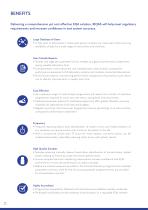
BENEFITS Delivering a comprehensive yet cost effective EQA solution, RIQAS will help meet regulatory requirements and increase confidence in test system accuracy. Large Database of Users • A high level of participation means peer group numbers are maximised whilst ensuring availability of data for a wide range of instruments and methods. User-friendly Reports • Simple, one page per parameter format, enables at-a-glance performance assessment, saving valuable laboratory time. • Complimentary multi-instrument and interlaboratory reports allow comparative performance assessment of all laboratory...
Open the catalog to page 4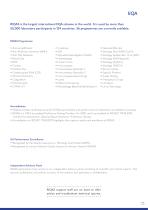
RIQAS Programmes • Ammonia/Ethanol • Anti-Mullerian Hormone (AMH) • Anti-TSH Receptor • Blood Gas • BNP • Cardiac • Cardiac Plus • Cerebrospinal Fluid (CSF) • Clinical Chemistry • Coagulation • CO-Oximetry • CYFRA 21-1 • Cytokines ESR Glycated Haemoglobin (HbA1c) • Haematology • Human Urine • Immunoassay • Immunoassay Speciality 1 • Immunoassay Speciality 2 • Immunosuppressant Drugs • Lipids • Maternal Screening Microbiology (Bacterial Identification) • Neonatal Bilirubin • Serology (Anti-SARS-CoV-2) • Serology Epstein Barr Virus (EBV) • Serology (HIV/Hepatitis) • Serology (Syphilis) • Serology...
Open the catalog to page 5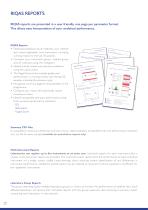
RIQAS REPORTS RIQAS reports are presented in a user-friendly, one page per parameter format. This allows easy interpretation of your analytical performance. RIQAS Reports • tatistical breakdown by all methods, your method S and, where applicable, your instrument, including running means for the last 10 samples. • ompare your instrument group, method group C and all methods using the histogram. • Identify trends, biases and precision problems using the visual charts. • The Target Score chart uniquely grades your performance in a moving window over the last 20 samples, including the previous cycle....
Open the catalog to page 6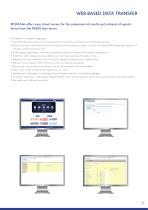
WEB-BASED DATA TRANSFER RIQAS.Net offers easy, direct access for the submission of results and retrieval of reports direct from the RIQAS host server. • Available in multiple languages. • Confidentiality and security is maintained through the use of password protected access. • Submit current, corrected and future results (normal policies apply), directly into the RIQAS database. Receipt of results is confirmed by e-mail. •Multi-lingual registration identifier provides simple identification of multiple registrations. • Additions and changes to assay details can be made quickly and easily online....
Open the catalog to page 7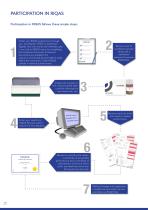
PARTICIPATION IN RIQAS Participation in RIQAS follows these simple steps: Order your RIQAS programmes through your local Randox Office or Distributor. Register the instruments and methods used in your lab on RIQAS.net or by completing the enrolment document. Enrolment documents are available from riqas.com and should be submitted 3 weeks before the cycle starts. Check RIQAS policies in method questionnaire. Analyse the sample on the recommended date, carefully following the instructions for use. Enter your results via RIQAS.Net and submit before the final deadline. Receive a set of numbered samples...
Open the catalog to page 8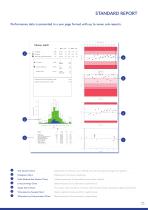
STANDARD REPORT Performance data is presented in a one page format with up to seven sub-reports. )NWEQUG OIFN #EEGRVCDNG NKOKVU FGTKXGF HTQO $KQNQIKECN 8CTKCVKQP #EEGRVCDNG NKOKVU QH RGTHQTOCPEG HQT 4+3#5 *GZQMKPCUG )NWEQUG QZKFCUG 1TVJQ 8KVTQU /KETQ5NKFG 5[UVGOU )NWEQUG FGJ[FTQIGPCUG )1&$GEMOCP OGVJQF 1VJGT &T[ %JGOKUVT[ #ICRRG )1&2#2 1Z[IGP GNGEVTQFG 8KVTQU &6&6 ++ Text Section Chart: Statistics for all methods, your method and instrument group (programme specific). Histogram Chart: Method and instrument comparison. Multi-Method Stat Section Chart: Enables assessment of the performance of each...
Open the catalog to page 9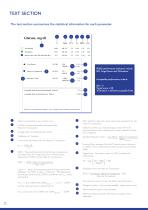
TEXT SECTION The text section summarises the statistical information for each parameter. /106*.; %.+0+%#. %*'/+564; )NWEQUG OIFN RIQAS performance indicators include SDI, Target Score and %Deviation. Acceptable performance criteria: 6&2# SDI < 2 Target score 50 %Deviation ≤ defined acceptable limits #EEGRVCDNG NKOKVU QH RGTHQTOCPEG HQT 4+3#5 #EEGRVCDNG NKOKVU FGTKXGF HTQO $KQNQIKECN 8CTKCVKQP Performance statement appears here if performance indicators exceed limits Number of returned results used to generate Mean for Comparison. After statistical reduction, some results are excluded from the...
Open the catalog to page 10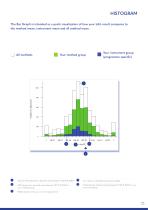
/GCP/GCP HQT %QORCTKUQP HQT %QORCTKUQP The Bar Graph is intended as a quick visualisation of how your lab’s result compares to the method mean, instrument mean and all method mean. Your instrument group (programme specific) Your method group #EEGRVCDNG NKOKVU NKOKVU QH RGTHQTOCPEG4+3#5 #EEGRVCDNG QH RGTHQTOCPEG HQT HQT 4+3#5 #EEGRVCDNG NKOKVU NKOKVU FGTKXGF $KQNQIKECN 8CTKCVKQP #EEGRVCDNG FGTKXGF HTQO HTQO $KQNQIKECN 8CTKCVKQP *GZQMKPCUG *GZQMKPCUG )NWEQUG QZKFCUG )NWEQUG QZKFCUG 1TVJQ 1TVJQ 8KVTQU /KETQ5NKFG 5[UVGOU 8KVTQU /KETQ5NKFG 5[UVGOU )NWEQUG FGJ[FTQIGPCUG )NWEQUG FGJ[FTQIGPCUG )1&$GEMOCP...
Open the catalog to page 11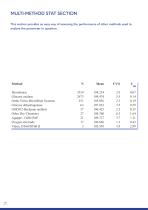
This section provides an easy way of assessing the performance of other methods used to analyse the parameter in question. Hexokinase Glucose oxidase Ortho Vitros MicroSlide Systems Glucose dehydrogenase GOD/02-Beckman method Other Dry Chemistry Agappe - GOD-PAP Oxygen electrode Vitros, DT60/DT60 II
Open the catalog to page 12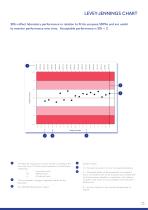
LEVEY-JENNINGS CHART SDIs reflect laboratory performance in relation to fit-for-purpose SDPAs and are useful to monitor performance over time. Acceptable performance is SDI < 2. N = No result returned in time for this registration\sample. C = Corrected results will be accepted for non-analytical errors. Corrected results will be accepted up to 4 weeks after the final submission deadline, on application, with evidence of analysis. Late results are only accepted if there has been a Randox error. This line indicates change in registration details for this a parameter. Sample number. The Mean for...
Open the catalog to page 13All Randox Laboratories catalogs and technical brochures
 LT735 Vivalytic Overview
32 Pages
 Acusera New Controls
8 Pages
 Acusera 24.7
24 Pages
 Acusera Third Party Controls
108 Pages
 Acusera SMART Controls
12 Pages
 Company Overview
40 Pages
 Reagents Brochure
64 Pages
 sdLDL-C
8 Pages
 RX SERIES ANALYSER OVERVIEW
24 Pages
 RX modena
20 Pages
 RX misano
20 Pages
 RX Daytona Plus
20 Pages
 Rx Imola
20 Pages
 RX Monaco
20 Pages
 2024 Product List
64 Pages
 LT107 Evidence Investigator
32 Pages
 VeraSTAT-V
16 Pages
 VERASTAT
16 Pages
 Endocrine Array
4 Pages
 Cerebral Arrays
4 Pages
 Thyroid Arrays
4 Pages
 Respiratory Multiplex Array
8 Pages
 LT253 Molecular Diagnostics
20 Pages
 LT367 FH Array Brochure
4 Pages
 The role of EQA in QC
8 Pages
 Basic QC Stastics
8 Pages
 Commutability Guide
4 Pages
 How to measure uncertainty
8 Pages
 ISO 15189 Educational Guide
8 Pages
 Troubleshooting QC Errors
8 Pages
 Qnostics
52 Pages
 Adiponectin LT519
28 Pages
 Specific Proteins
40 Pages
 Linearity sets
12 Pages
 Antioxidants
16 Pages
 Cardiology & Lipid Testing
28 Pages
 Diabetes Portfolio
28 Pages
 Total Bile Acids
4 Pages
 VIVALYTIC
30 Pages
 RANDOX DISCOVERY
36 Pages


Archived catalogs
 HbA1c
HbA1c2 Pages
 Which QC is the Right QC
8 Pages
 Custom Arrays for Biochip
12 Pages
 KRAS / BRAF / PIK3CA Array*
4 Pages
 LT241 Metabolic Array MAY15
8 Pages
 Cardiac Risk Multiplex Array
4 Pages
 How often is right for QC
6 Pages
 Tumour Marker Arrays
4 Pages
 Guide to running QC
1 Page
 Preparing QC
1 Page
 Point of Care Testing
12 Pages
 LT169 Cardiac Array
4 Pages
 ACUSERA
108 Pages
 Rx Daytona
16 Pages
 Evidence Evolution
28 Pages
 Evidence
16 Pages
 Evidence Investigator
20 Pages
 Molecular Testing
16 Pages
 STI Multiplex Array
8 Pages
 Metabolic Syndrome Arrays
8 Pages
 Fertility Array
4 Pages
 Evidence Investigator
16 Pages
 Evidence
16 Pages


- RANDOX test kit
- RANDOX solution reagent
- RANDOX molecular biology reagent
- Cassette rapid test
- RANDOX research reagent
- RANDOX laboratory reagent
- Infectious disease detection kit
- RANDOX diagnostic reagent
- RANDOX protein reagent
- RANDOX rapid virus test
- RANDOX molecular biology test kit
- RANDOX enzyme reagent
- Histology reagent
- Respiratory disease assay kit
- RANDOX rapid infectious disease test
- Cytology reagent
- Cassette detection kit
- RANDOX biochemistry reagent
- Clinical chemistry analyzer
- Real-time PCR assay kit