
- Catalogs
- Randox Laboratories
- Meeting ISO 15189 Requirements


- Products
- Catalogs
- News & Trends
- Exhibitions
Meeting ISO 15189 Requirements

Meeting ISO 15189 Requirements
This document provides guidance on meeting ISO 15189:2012 requirements for Measurement Uncertainty (MU) in clinical laboratories. It emphasizes the importance of determining MU for each measurement procedure and regularly reviewing these estimates.
Regulatory Requirements for MU
ISO 15189:2012 mandates that laboratories define performance requirements for MU and ensure that quality control (QC) systems closely mimic patient test systems. High-quality QC materials are essential for accurate MU estimation.
Measuring Uncertainty Using Quality Control Data
Key assumptions include the test system being under control, patient samples treated like QC, and removal of gross outliers. QC materials should have a commutable sample matrix and cover clinically relevant ranges.
Sources of Uncertainty
Uncertainty arises from various sources such as sample collection, reagent preparation, and instrument calibration. The Standard Deviation (SD) is used to encompass these uncertainties.
Data Collection
Optimal data collection involves using over 100 data points over at least six months. This approach increases the accuracy of the final uncertainty calculation.
Calculation of Uncertainty
Uncertainty is calculated using intra-assay and inter-assay precision. The formula involves calculating the Standard Error of the Mean (SEM) and SD, then applying a coverage factor to achieve a 95% confidence level.
Benefits of Calculating Uncertainty
Calculating MU provides evidence of measurement reliability, identifies potential sources of uncertainty, and aids in achieving standardized results.
Conclusion
Bias must be considered and minimized in MU calculations. Tools like Acusera 24•7 automate MU calculations, reducing time and labor while providing real-time peer group statistics.
Automatic Calculation of Uncertainty with Acusera 24•7
Acusera 24•7 offers automatic calculation of MU and other statistical analyses, facilitating efficient troubleshooting and trend identification in test systems.
Catalog excerpts

EDUCATIONAL GUIDE Meeting ISO 15189:2012 Requirements for MU in the Clinical Laboratory QUALITY CONTROL
Open the catalog to page 1
Meeting ISO 15189:2012 Requirements for Measurement Uncertainty in the Clinical Laboratory Measurement Uncertainty (MU) relates to the doubt that exists for the result of any measurement. For every measurement there is always a margin of doubt. In everyday speech, this might be expressed as ‘give or take’. Since there is always a margin of doubt for any measurement, the clinical lab needs to ascertain the width of the margin and the significance of the doubt. Two values are needed in order to quantify uncertainty; the width of the margin or interval, and the confidence level, which states how...
Open the catalog to page 2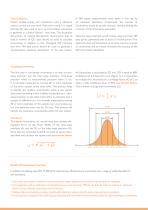
Data Collection Patient sample testing and comparison with a reference value is carried out over time. With this in mind, it is logical that the QC data used to carry out Uncertainty calculation is gathered in a similar fashion - over time. The Australian Association of Clinical Biochemists recommends that at least 6 months of QC data should be used to calculate Uncertainty. In addition to this, Westgard QC maintains that over 100 data points should be used to generate a representative Gaussian distribution of the test system. If 100 repeat measurements were taken in one day by an individual...
Open the catalog to page 3
Other Factors Affecting Uncertainty It is important to consider bias when calculating uncertainty. Bias must be measured and if it is significant removed or minimised. If bias is not removed the uncertainty of the bias correction must be calculated and included in the overall uncertainty measurement. To calculate the uncertainty of bias we must first determine uRef and uRep: uRef – Uncertainty value of the analyte assigned to the reference material/EQA. This can be obtained from the reference material or EQA report. uRep – Uncertainty value of the analyte in the reference material/EQA when measured...
Open the catalog to page 4All Randox Laboratories catalogs and technical brochures
 LT735 Vivalytic Overview
32 Pages
 Acusera New Controls
8 Pages
 Acusera 24.7
24 Pages
 Acusera Third Party Controls
108 Pages
 Acusera SMART Controls
12 Pages
 Company Overview
40 Pages
 Reagents Brochure
64 Pages
 sdLDL-C
8 Pages
 RX SERIES ANALYSER OVERVIEW
24 Pages
 RX modena
20 Pages
 RX misano
20 Pages
 RX Daytona Plus
20 Pages
 Rx Imola
20 Pages
 RX Monaco
20 Pages
 2024 Product List
64 Pages
 LT107 Evidence Investigator
32 Pages
 VeraSTAT-V
16 Pages
 LT033 RIQAS Explained
64 Pages
 VERASTAT
16 Pages
 Endocrine Array
4 Pages
 Cerebral Arrays
4 Pages
 Thyroid Arrays
4 Pages
 Respiratory Multiplex Array
8 Pages
 LT253 Molecular Diagnostics
20 Pages
 LT367 FH Array Brochure
4 Pages
 The role of EQA in QC
8 Pages
 Basic QC Stastics
8 Pages
 Commutability Guide
4 Pages
 How to measure uncertainty
8 Pages
 ISO 15189 Educational Guide
8 Pages
 Troubleshooting QC Errors
8 Pages
 Qnostics
52 Pages
 Adiponectin LT519
28 Pages
 Specific Proteins
40 Pages
 Linearity sets
12 Pages
 Antioxidants
16 Pages
 Cardiology & Lipid Testing
28 Pages
 Diabetes Portfolio
28 Pages
 Total Bile Acids
4 Pages
 VIVALYTIC
30 Pages
 RANDOX DISCOVERY
36 Pages


Archived catalogs
 HbA1c
HbA1c2 Pages
 Which QC is the Right QC
8 Pages
 Custom Arrays for Biochip
12 Pages
 KRAS / BRAF / PIK3CA Array*
4 Pages
 LT241 Metabolic Array MAY15
8 Pages
 Cardiac Risk Multiplex Array
4 Pages
 How often is right for QC
6 Pages
 Tumour Marker Arrays
4 Pages
 Guide to running QC
1 Page
 Preparing QC
1 Page
 Point of Care Testing
12 Pages
 LT169 Cardiac Array
4 Pages
 ACUSERA
108 Pages
 Rx Daytona
16 Pages
 Evidence Evolution
28 Pages
 Evidence
16 Pages
 Evidence Investigator
20 Pages
 Molecular Testing
16 Pages
 STI Multiplex Array
8 Pages
 Metabolic Syndrome Arrays
8 Pages
 Fertility Array
4 Pages
 Evidence Investigator
16 Pages
 Evidence
16 Pages


- RANDOX test kit
- RANDOX solution reagent
- RANDOX molecular biology reagent
- Cassette rapid test
- RANDOX research reagent
- RANDOX laboratory reagent
- Infectious disease detection kit
- RANDOX diagnostic reagent
- RANDOX protein reagent
- RANDOX rapid virus test
- RANDOX molecular biology test kit
- RANDOX enzyme reagent
- Histology reagent
- Respiratory disease assay kit
- RANDOX rapid infectious disease test
- Cytology reagent
- Cassette detection kit
- RANDOX biochemistry reagent
- Clinical chemistry analyzer
- Real-time PCR assay kit