
- Catalogs
- Randox Laboratories
- MRSA/SA – Emerging Therapeutic & Screening Approaches


- Products
- Catalogs
- News & Trends
- Exhibitions
MRSA/SA – Emerging Therapeutic & Screening Approaches

MRSA/SA – Emerging Therapeutic & Screening Approaches
Staphylococcus aureus is a gram-positive bacterium part of human flora, capable of causing severe diseases if it invades internal tissues or the bloodstream. Antimicrobial resistance (AMR) poses a global health threat, with Methicillin-Resistant Staphylococcus aureus (MRSA) being particularly concerning due to its resistance to β-lactam antibiotics.
Methicillin-Resistant Staphylococcus aureus (MRSA)
MRSA exhibits resistance to multiple antibiotics, including β-lactams, macrolides, tetracyclines, and fluoroquinolones. It spreads through direct contact or fomites and is classified into community-acquired (CA-MRSA) and hospital-acquired (HA-MRSA) infections. The high prevalence of MRSA necessitates rapid testing and prompt treatment.
Resistance Mechanisms
MRSA resistance stems from genetic mutations and horizontal gene transfer. The mecA gene encodes PBP-2a, reducing β-lactam affinity. Biofilm formation further enhances resistance to antimicrobial agents.
Current and Emerging Therapeutic Strategies
While vancomycin and daptomycin are current treatments for MRSA, resistance is developing. New therapies like antimicrobial peptides (AMPs) and silver nanoparticles (AgNPs) show promise. AMPs disrupt bacterial membranes, and AgNPs damage cellular components and induce reactive oxygen species.
Screening, Testing & Evaluation
Traditional MRSA detection methods are slow. Rapid PCR techniques, such as the Bosch Vivalytic MRSA/SA test, deliver results in under an hour, facilitating timely treatment. This automated system minimizes the need for extensive lab equipment.
Conclusion
Effective MRSA treatment and infection control rely on rapid, accurate detection. Emerging therapies and advanced screening methods offer promising solutions to combat MRSA and mitigate the impact of AMR.
Catalog excerpts
EDUCATIONAL GUIDE MRSA/SA – Emerging Therapeutic & Screening Approaches
Open the catalog to page 1
Introduction Staphylococcus aureus is a gram positive, commensal bacteria found in normal human flora on the skin and mucous membranes. The commensal nature of this organism results in colonisation of around half of the general population, rising to around 80% in populations of healthcare workers, hospitalised patients and the immunocompromised1. However, given the opportunity to colonise internal tissues or the bloodstream, S. aureus infection can cause serious disease. Skin conditions caused by S. aureus include impetigo, scalded skin syndrome, boils, and abscesses. Examples of more serious...
Open the catalog to page 2
Identification of drug-resistant strains of bacteria is crucial to allow for characterisation of the pathogen and correct treatment of the infection. Classical evaluation consists of a routine culture to verify a diagnosis based on presenting symptoms. However, this can be a time consuming and laborious process which may delay diagnosis and treatment of a potentially fatal infection1. Methicillin-Resistant Staphylococcus aureus Methicillin is of a class of antibiotics known as β-lactams which bind to the penicillin binding protein (PBP) of the bacteria. PBP is responsible for crosslinking between...
Open the catalog to page 3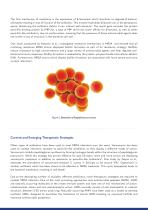
The first mechanism of resistance is the expression of β-lactamase which functions to degrade β-lactams, ultimately resulting in loss of function of the antibiotic. This enzyme hydrolyses β-lactam ions in the periplasmic space, denaturing the antibiotic before it can interact with bacteria3. The mecA gene encodes the protein penicillin-binding protein 2a (PBP-2a), a type of PBP which has lower affinity for β-lactams, as well as other penicillin-like antibiotics, due its conformation, meaning that the presence of these antimicrobial agents does not confer a loss of structure in the bacterial cell...
Open the catalog to page 4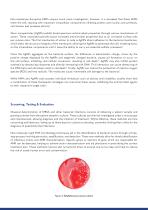
Non-membrane disruptive AMPs require much more investigation; however, it is accepted that these AMPs enter the cell, reacting with important intracellular components inhibiting protein and nucleic acid synthesis, cell division and protease activity3. Silver nanoparticles (AgNPs) exhibit broad spectrum antimicrobial properties through various mechanisms of action. These nanosized particles boast increased antimicrobial properties due to an increased surface area per volume ratio. The first mechanism of action to note is AgNPs direct adhesion to the bacterial membrane, which alters the structural...
Open the catalog to page 5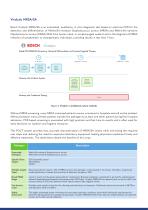
Vivalytic MRSA/SA Bosch Vivalytic MRSA/SA is an automated, qualitative, in vitro diagnostic test based on real-time PCR for the detection and differentiation of Methicillin-resistant Staphylococcus aureus (MRSA) and Methicillin-sensitive Staphylococcus aureus (MSSA) DNA from human nasal- or oropharyngeal swabs to aid in the diagnosis of MRSA infection of symptomatic or asymptomatic individuals, providing results in less than 1 hour. Rapid PCR MRSA/SA Screening - Bacterial Differentiation to Promote Targeted Therapy Patient presents with symptoms Specimen collected and sent for testing 4 - 36...
Open the catalog to page 6
Murray CJ, Ikuta KS, Sharara F, et al. Global Burden of Bacterial Antimicrobial Resistance in 2019: A Systematic Analysis. The Lancet. 2022;399(10325):629-655. doi:https://doi.org/10.1016/S0140-6736(21)02724-0 2. Nandhini P, Kumar P, Mickymaray S, Alothaim AS, Somasundaram J, Rajan M. Recent Developments in Methicillin-Resistant Staphylococcus aureus (MRSA) Treatment: A Review. Antibiotics. 2022;11(5):606. doi:https://doi.org/10.3390/antibiotics11050606 3. Masimen MAA, Harun NA, Maulidiani M, Ismail WIW. Overcoming Methicillin-Resistance Staphylococcus aureus (MRSA) Using Antimicrobial Peptides-Silver...
Open the catalog to page 7
Copyright © 2023 Randox Laboratories Ltd. All rights Reserved. VAT number: GB 151682708. Product availability may vary from country to country. Some products may be for Research Use Only. For more information on product application and availability, please contact your local Randox Representative.
Open the catalog to page 8All Randox Laboratories catalogs and technical brochures
 LT735 Vivalytic Overview
32 Pages
 Acusera New Controls
8 Pages
 Acusera 24.7
24 Pages
 Acusera Third Party Controls
108 Pages
 Acusera SMART Controls
12 Pages
 Company Overview
40 Pages
 Reagents Brochure
64 Pages
 sdLDL-C
8 Pages
 RX SERIES ANALYSER OVERVIEW
24 Pages
 RX modena
20 Pages
 RX misano
20 Pages
 RX Daytona Plus
20 Pages
 Rx Imola
20 Pages
 RX Monaco
20 Pages
 2024 Product List
64 Pages
 LT107 Evidence Investigator
32 Pages
 VeraSTAT-V
16 Pages
 LT033 RIQAS Explained
64 Pages
 VERASTAT
16 Pages
 Endocrine Array
4 Pages
 Cerebral Arrays
4 Pages
 Thyroid Arrays
4 Pages
 Respiratory Multiplex Array
8 Pages
 LT253 Molecular Diagnostics
20 Pages
 LT367 FH Array Brochure
4 Pages
 The role of EQA in QC
8 Pages
 Basic QC Stastics
8 Pages
 Commutability Guide
4 Pages
 How to measure uncertainty
8 Pages
 ISO 15189 Educational Guide
8 Pages
 Troubleshooting QC Errors
8 Pages
 Qnostics
52 Pages
 Adiponectin LT519
28 Pages
 Specific Proteins
40 Pages
 Linearity sets
12 Pages
 Antioxidants
16 Pages
 Cardiology & Lipid Testing
28 Pages
 Diabetes Portfolio
28 Pages
 Total Bile Acids
4 Pages
 VIVALYTIC
30 Pages
 RANDOX DISCOVERY
36 Pages


Archived catalogs
 HbA1c
HbA1c2 Pages
 Which QC is the Right QC
8 Pages
 Custom Arrays for Biochip
12 Pages
 KRAS / BRAF / PIK3CA Array*
4 Pages
 LT241 Metabolic Array MAY15
8 Pages
 Cardiac Risk Multiplex Array
4 Pages
 How often is right for QC
6 Pages
 Tumour Marker Arrays
4 Pages
 Guide to running QC
1 Page
 Preparing QC
1 Page
 Point of Care Testing
12 Pages
 LT169 Cardiac Array
4 Pages
 ACUSERA
108 Pages
 Rx Daytona
16 Pages
 Evidence Evolution
28 Pages
 Evidence
16 Pages
 Evidence Investigator
20 Pages
 Molecular Testing
16 Pages
 STI Multiplex Array
8 Pages
 Metabolic Syndrome Arrays
8 Pages
 Fertility Array
4 Pages
 Evidence Investigator
16 Pages
 Evidence
16 Pages


- RANDOX test kit
- RANDOX solution reagent
- RANDOX molecular biology reagent
- Cassette rapid test
- RANDOX research reagent
- RANDOX laboratory reagent
- Infectious disease detection kit
- RANDOX diagnostic reagent
- RANDOX protein reagent
- RANDOX rapid virus test
- RANDOX molecular biology test kit
- RANDOX enzyme reagent
- Histology reagent
- Respiratory disease assay kit
- RANDOX rapid infectious disease test
- Cytology reagent
- Cassette detection kit
- RANDOX biochemistry reagent
- Clinical chemistry analyzer
- Real-time PCR assay kit