
- Catalogs
- RCI Labscan Limited
- Product Catalog 2021

Product Catalog 2021

Product Catalog 2021
RCI Labscan Group, founded in 1991, is a prominent supplier of laboratory equipment and chemicals in the Asia Pacific. It comprises RCI Labscan Limited, EOS Scientific, and RCI Systems & Advanced Chemicals, serving industries like electronics, pharmaceuticals, and petrochemicals.
RCI Labscan Limited was established in 2008 from the merger of Labscan Asia Co., Ltd and Reagent Chemical Industry Co., Ltd. The company has invested in technology from the USA, Europe, and Asia, becoming a preferred OEM supplier for multinational companies.
RCI Labscan is committed to quality, service, and value, holding certifications like ISO 9001, OHSAS 18001, and ISO 14001, aiming for a zero-harm workplace.
Labeling complies with the Globally Harmonized System (GHS) for chemical classification. Packaging options include HDPE drums, metal drums, amber glass bottles, and plastic bottles, focusing on safety and environmental protection.
The catalog includes various product grades such as Pharma Grade, Analytical Grade, and RCI Premium Grade, tailored for applications like HPLC, GC, UV spectroscopy, and LC-MS, used in pharmaceuticals, healthcare, and electronics.
RCI Labscan offers specialized grades for electronic applications, including Semig, Electropure, Extropure, and VLSI, characterized by high purity and low metallic impurities.
The catalog provides a comprehensive index of products, detailing chemicals and their grades and applications, such as Acetic Acid, Acetone, and Ammonium Hydroxide.
The document details specifications for chemicals like Ethanol, Ethyl Acetate, n-Heptane, n-Hexane, Methanol, Nitric Acid, and Acetic Acid, available in grades like AR, RCI Premium, and HPLC, indicating purity and intended use.
Products are available in various packaging sizes, from small bottles to large drums, with specific product codes for easy identification and ordering.
Safety classifications follow the GHS, with hazard statements and precautionary measures for safe handling and storage.
Tables provide quick references for chemical properties and packaging options, such as Acetic Acid concentrations and impurity limits.
The document emphasizes purity and safety in chemical handling, providing comprehensive data on chemical composition, potential impurities, and safety measures.
Detailed specifications for Acetic Acid Glacial and Acetone, including grades like Electropure, Pharma, AR, RCI Premium, HPLC, Semig, and VLSI, meeting standards like ACS, Ph.Eur, BP, USP.
Assay by acidimetry ranges from 99.7% to 99.8% minimum, with controlled impurities and additional tests for specific grades.
Assay by GC is 99.5% to 99.8% minimum, with controlled impurities and specific limits for heavy metals.
Various packaging sizes are available, including amber glass and plastic containers.
Classified under specific UN numbers and packaging groups, with GHS hazard statements and precautionary measures.
The document outlines comprehensive specifications for high-purity chemical products, ensuring compliance with international standards.
Detailed specifications for chemicals like Ammonium Hydroxide, Ammonium Sulfate, Ammonium Persulfate, Ascorbic Acid, Borax, Boric Acid, Bromocresol Green, Buffer Solutions, and Butan-1-ol.
Each chemical has specific maximum allowable concentrations for impurities, ensuring compliance with A.C.S. specifications.
Ensure compliance with specified limits for impurities, monitor pH deviations in buffer solutions, and follow GHS guidelines for storage and handling.
Specifications for chemicals like Butan-1-ol, n-Butyl Acetate, Calcium Chloride Dihydrate, Calcium Hydroxide, Chlorobenzene, 1-Chlorobutane, and Chloroform, outlining purity, physical characteristics, and permissible impurities.
Assay by GC: Minimum 99.8% for HPLC and 99.9% for UV-IR, with specific limits on water content and impurities.
Assay by GC: Minimum 99.5%, with specific limits on water content and heavy metals.
Specific assays and impurity limits for each chemical.
Assay by GC: Minimum 99.5%, with specific limits on water content and heavy metals.
Assay by GC: Minimum 99.5%, with specific limits on water content and heavy metals.
Assay by GC: Minimum 99.8%, with specific limits on water content and UV transmission levels.
Various packaging sizes are available, including amber glass bottles and metal containers.
Specifications for chemicals like Cyclohexane, Cyclopentane, 1,2-Dichloroethane, and Dichloromethane, outlining purity, packaging, and safety classifications.
Minimum assay of 99.5% by GC, with specific tests for identity, color, water content, acidity, and residue on evaporation.
Available in 95% and 99% purity levels, with specific tests for water content, acidity, residue on evaporation, and aromatics.
Minimum assay of 99.8% by GC, with specific tests for water content, acidity, residue on evaporation, and metal impurities.
Minimum assay of 99.9% by GC, with specific tests for water content, acidity, residue on evaporation, and UV transmission levels.
All chemicals are tested for purity, water content, acidity, and residue on evaporation, with packaging options including amber glass and metal containers.
Specifications for chemicals like Dimethylacetamide, Dimethylformamide, Dimethylsulphoxide, and 1,4-Dioxan, describing physical properties, purity levels, and packaging options.
Minimum assay by GC is 99.8%, with specific limits on water content, acidity, and UV transmission.
Minimum assay by GC is 99.9%, with specific limits on water content, acidity, alkalinity, and heavy metals.
Minimum assay by GC is 99.9%, with specific limits on water content and UV transmission.
Minimum assay by GC is 99.8%, with specific limits on water content and peroxide content.
All products are filtered through a 0.2-micron filter to ensure purity and comply with international standards.
Specifications for chemicals like Ethanol, Ethyl Acetate, Ethylenediamine Tetraacetic Acid Disodium Salt Dihydrate, Ethylene Glycol, and Formaldehyde, describing purity, identity tests, appearance, and maximum allowable impurities.
Assay (by GC): Minimum 99.7% to 99.9%, with specific limits on water content and denaturants.
Assay (by GC): Minimum 99.8% to 99.9%, with specific limits on water content.
Assay: 99.0% - 101.0%, with specific limits on pH and heavy metals.
Assay (by GC): Minimum 99.5%, with specific limits on color.
Assay: 35.0% - 40.0%, with specific appearance requirements.
All products are tested for various impurities, with specific packaging options available.
Specifications for hydrochloric acid solutions, including data on normality, traceability, and compliance with safety standards.
Hydrochloric acid solutions range from 1.0N to 35% concentration, with specific parameters for assay percentage, appearance, color, residue after ignition, and maximum allowable impurities.
Available in various packaging options, including amber glass and plastic containers, with unique catalog numbers and codes.
Safety classifications and packaging groups are outlined according to international standards, with GHS hazard statements and precautionary measures.
Each hydrochloric acid solution is characterized by its formula weight, density, CAS number, UN number, EC number, and EC-Index number.
Solutions are traceable to NIST standards, ensuring high accuracy and reliability.
Available in 36% and 37% concentrations, with specific limits on impurities and packaging options.
49% concentration with strict limits on impurities and specific packaging options.
50% solution with specific limits on impurities and packaging options.
Minimum assay of 99.5%, with specific limits on impurities and packaging options.
Minimum assay of 95% by GC, with specific limits on water content and packaging options.
Specifications for methanol and methyl ethyl ketone, along with their packaging options, including purity levels, maximum allowable impurities, and physical properties.
Assay by GC is 99.9% minimum, with specific limits on impurities and physical properties.
Assay by GC is 99.5% minimum, with specific limits on impurities and physical properties.
Assay by GC is 98.5% minimum, with specific limits on physical properties.
Specifications for Methyl Orange and Methyl Red, including solubility tests and maximum moisture content.
Assay by GC is 99.5% minimum, with specific limits on impurities and packaging options.
The document outlines stringent quality control measures for chemical purity and packaging, ensuring compliance with industry standards.
Nitric Acid is available in various concentrations, with specific chemical and physical properties, packaging options, and safety classifications.
Includes UN No., EC No., Class, Packaging Group, GHS Hazard Statements, and Precautionary Statements.
Details for Nitric Acid concentrations, including assay, density, and boiling points.
Common impurities and specific limits for each concentration, ensuring compliance with safety and quality standards.
Available in Amber Glass and Plastic containers, with sizes ranging from 500 mL to 200 L.
Follow GHS guidelines for handling and storage, using appropriate PPE.
Specifications for Nitric Acid, n-Pentane, and Petroleum Ether, including purity, identity tests, and maximum impurities.
Available in concentrations of 90%, 95%, and 97% fuming, with specific impurity limits and physical properties.
Available in 95% and 99% purity, with specific impurity limits and UV transmission levels.
Boiling range specified, with specific impurity limits and packaging options.
All products are tested for identity using IR and pass specified tests, with safety and handling instructions provided.
Specifications for sulfuric acid and tetrachloroethylene, including chemical properties, packaging options, and compliance with safety standards.
Grades include AR, RCI Premium, Semig, Electropure, VLSI, Pharma, with specific purity and impurity limits.
Minimum assay by GC is 99.8%, with specific limits on water content, acidity, and impurities.
GHS Classification and regulatory compliance details for sulfuric acid and tetrachloroethylene.
Specifications for Tetrachloroethylene, Tetrahydrofuran, Toluene, and Trichloroacetic Acid, including purity, identity, and impurities.
Assay by GC: 99.9% min, with specific limits on water content and acidity.
Assay by GC: 99.8% min, with specific limits on water content, acidity, and peroxide content.
Assay by GC: 99.5% min, with specific limits on water content, acidity, and sulfur compounds.
Assay: 99.5% min, with specific limits on impurities.
Various packaging sizes are available for each chemical, including amber glass and metal containers.
Safety classifications and handling instructions are provided for each chemical.
Available in various package sizes, with specific limits on water content, acidity, and residue on evaporation.
Available in various package sizes, with specific limits on water content and UV transmission levels.
Available in plastic containers, with specific limits on impurities.
Available in plastic containers, with specific limits on impurities.
Deionized water is available in various package sizes, with specific limits on impurities.
Available in amber glass containers, with specific limits on impurities.
Available in amber glass and metal containers, with specific limits on impurities.
General instructions for handling, fire and explosion risks, storage guidelines, and disposal instructions.
Health risks and environmental hazards associated with chemical handling.
Instructions for safe storage and handling of chemicals.
Guidelines for avoiding inhalation and contact with chemicals, and instructions for safe disposal.
Various conversion factors for units of measurement.
Formulas for converting between Fahrenheit, Celsius, and Kelvin.
List of atomic weights for elements like Hydrogen, Helium, Lithium, and others.
Information on chemical elements and compounds, including atomic weights, isotopic compositions, synonyms, and chemical properties.
Details on atomic weights and isotopic composition, range of atomic weights, synonyms of chemical compounds, and chemical properties.
Information on elements with no stable nuclides, isotopic composition variations, synonyms for chemical compounds, and chemical properties.
The document serves as a comprehensive reference for chemical elements and compounds, providing essential data for scientific and industrial applications.
Lists chemicals with their CAS numbers, molecular weights, densities, boiling points, melting points, and flash points.
Outlines how different chemicals interact with various types of plastics, describing potential chemical attacks and physical changes.
Details terms and conditions for sales and delivery by RCI Labscan Limited, including pricing, delivery expectations, payment terms, warranties, and claims.
Catalog excerpts

Product Catalog
Open the catalog to page 1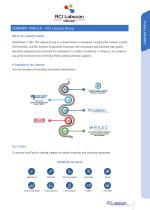
COMPANY PROFILE – RCI Labscan Group We’re an industry leader Established in 1991, RCI Labscan Group is a conglomerate of companies, including RCI Labscan Limited, EOS Scientific, and RCI Systems & Advanced Chemicals. We manufacture and distribute high-quality laboratory equipment and chemicals for businesses in a variety of industries. In doing so, our company has grown to become one of the Asia Pacific leading chemical suppliers. Over two decades of innovation and product development Our vision To become Asia Pacific’s leading supplier for quality chemicals and laboratory equipment Industries...
Open the catalog to page 3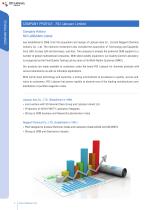
COMPANY PROFILE - RCI Labscan Limited Company History RCI LABSCAN Limited was established in 2008, from the acquisition and merger of Labscan Asia Co., Ltd and Reagent Chemical Industry Co., Ltd. The intensive investment also included the acquisition of Technology and Capability from USA, Europe (UK and Germany), and Asia. The company is already the preferred OEM supplier to a number of global multinational companies. With latest validity equipment, our Quality Control Laboratory is recognized as the Final Quality Testing Lab by some of its Multi-Nation Customer (MNC). Our products are made available...
Open the catalog to page 4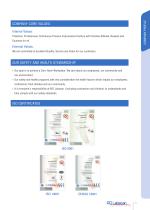
COMPANY CORE VALUES Internal Values: Proactive, Professional, Continuous Process Improvement Culture with Positive Attitude, Respect and Courtesy for all. External Values: We are committed to Excellent Quality, Service and Value for our customers. OUR SAFETY AND HEALTH STEWARDSHIP • Our goal is to achieve a Zero-Harm Workplace. We care about our employees, our community and our environment. • Our safety and health programs take into consideration the health factors which impact our employees, contractors, their families and our community. • It is everyone’s responsibility at RCI Labscan (including...
Open the catalog to page 5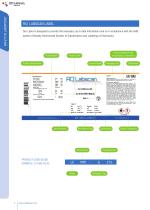
RCI LABSCAN LABEL Our Label is designed to provide the necessary up to date information and is in compliance with the GHS system (Globally Harmonized System of Classification and Labelling of Chemicals) Product Name Hazard Statement and Precautionary Information Product Code Product Specification Product Grade Batch Number Best Before Date Signal Word PRODUCT CODE GUIDE EXAMPLE: LC1005-G2.5L Packaging Size Packaging Size Hazard Pictograms
Open the catalog to page 6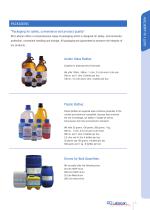
PACKAGING “Packaging for safety, convenience and product quality” RCI Labscan offers a comprehensive range of packaging which is designed for safety, environmental protection, convenient handling and storage. All packaging are guaranteed to preserve the integrity of our products. Amber Glass Bottles: Suitable for photosensitive Chemicals. We offer 100ml., 500ml., 1 Litre, 2.5 Litre and 4 Litre size 500 ml. and 1 Litre: 6 bottles per box 100 ml., 2.5 Litre and 4 Litre: 4 bottles per box Plastic Bottles: Plastic Bottles are supplied when chemical properties of the content and bottle are compatible,...
Open the catalog to page 7
PRODUCT DETAILS RCI Labscan products can be used either as general analytical reagents or as ingredients for specialized industrial formulation. RCI Labscan products are used in a wide range of industries: pharmaceuticals, healthcare, agribusiness, electronics, petroleum and gas, and in research by private organizations and public bodies such as universities. Applications include HPLC, GC, UV spectroscopy and LC-MS. Grade Description 1. Pharma Grade (BP) • Products that meet the requirement of British Pharmacopeia (BP), European Pharmacopoeia (EP), United States Pharmacopoeias (USP) and the National...
Open the catalog to page 8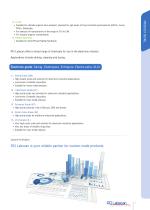
12. LV-GC • Suitable for ultimate organic trace analysis; checked for ppb levels of Poly-Aromatic Hydrocarbons (PAH’s), Furan, PCB’s, Pesticides. • For analysis of hydrocarbons in the range of C10 to C40. • For residual organic contaminants. 13. Peptide Synthesis • Suitable for Solid Phase Peptide Synthesis. RCI Labscan offers a broad range of chemicals for use in the electronic industry. Applications include etching, cleaning and drying. Electronic grade: Semig, Electropure, Extropure, Electro extra, VLSI 11. • • • 12. • • • 13. • 14. • 15. • • • Semig Grade (SM) High quality acids and solvents...
Open the catalog to page 9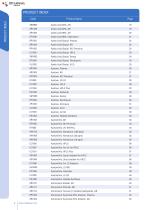
PRODUCT INDEX Code Product Name Acetic Acid 50%, AR Acetic Acid 60%, AR Acetic Acid 96%, AR Acetic Acid 96%, Electropure Acetic Acid Glacial, Pharma Acetic Acid Glacial, AR Acetic Acid Glacial, RCI Premium Acetic Acid Glacial, HPLC Acetic Acid Glacial, Semig Acetic Acid Glacial, Electropure Acetic Acid Glacial, VLSI Acetone, Pharma Acetone, AR Acetone, RCI Premium Acetone, UV-IR Acetone, HPLC Acetone, HPLC Plus Acetone, Pesticide Acetone, Semig Acetone, Electropure Acetone, Extropure Acetone, VLSI Acetone, LV-GC Acetone, Peptide Synthesis Acetonitrile, AR Acetonitrile, RCI Premium Acetonitrile,...
Open the catalog to page 10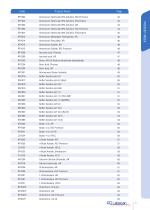
Product Name Ammonium Hydroxide 25% Solution, RCI Premium Ammonium Hydroxide 25% Solution, Electropure Ammonium Hydroxide 28% Solution, AR. Ammonium Hydroxide 28% Solution, RCI Premium Ammonium Hydroxide 28% Solution, Electropure Ammonium Molybdate Tetrahydrate, AR Ammonium Persulfate, AR Ammonium Sulfate, AR Ammonium Sulfate, RCI Premium Ascorbic acid, Pharma Ascorbic acid, AR Borax, AR (di-Sodium tetraborate decahydrate) Boric Acid, Pharma. Boric Acid, AR Bromocresol Green Indicator Buffer Solution pH 4.0 Buffer Solution pH 4.0 (Red) Buffer Solution pH 4.01 Buffer Solution pH 6.86 Buffer Solution...
Open the catalog to page 11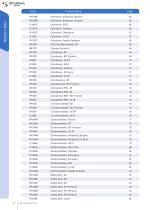
Product Name Chloroform, Anhydrous (50 ppm) Chloroform, Anhydrous (10 ppm) Chloroform, HPLC Chloroform, Pesticide Chloroform, Electropure Chloroform, LV-GC Chloroform, Peptide Synthesis Citric Acid Monohydrate, AR Cleaning Solution S Cyclohexane, AR Cyclohexane, RCI Premium Cyclohexane, UV-IR Cyclohexane, HPLC Cyclohexane, Pesticide Cyclohexane, Extropure Cyclohexane, LV-GC Cyclohexanone, AR Cyclohexanone, RCI Premium Cyclopentane 95%, AR Cyclopentane 99%, AR Cyclopentane 99%, RCI Premium Cyclopentane 99%, UV-IR 1,2-Dichloroethane, AR 1,2-Dichloroethane, RCI Premium 1,2-Dichloroethane, UV-IR...
Open the catalog to page 12All RCI Labscan Limited catalogs and technical brochures
 LABSOLV
24 Pages
 Pharmacopoeia Chemicals
28 Pages
 Propan-2-ol-80-E-DCC-020821
8 Pages
 Potassium-Chloride-E-010922
6 Pages
 Hydrochloric acid 37%
8 Pages


