


- Products
- Catalogs
- News & Trends
- Exhibitions
PG-Seq™ Rapid kit v2 assessment summary

PG-Seq™ Rapid kit v2 assessment summary
The PG-Seq™ Rapid kit v2 is designed to streamline workflows and enhance whole genome coverage, improving user experience and compatibility with downstream applications.
Methods
Various cell lines with specific karyotypes were used, sourced from Coriell Biorepository. Peripheral lymphocytes were isolated and prepared for analysis. Cell lysis, WGA PCR 1, and Indexing PCR 2 were performed according to the kit's manual. Samples were analyzed using LabChip® GX II Touch™ HT nucleic acid analyzer and sequenced on Illumina® instruments. Data was processed with PG-Find™ v3 software, adjusting the significance threshold for better CNV detection.
Results
Out of 100 samples, 98 passed quality control, with 95 showing expected karyotypes. Three samples showed correct karyotypes but with mosaic characteristics. The median copy number ratios for mosaic samples were above 2.63. The study confirmed accurate copy number and breakpoint detection.
Conclusions
The PG-Seq™ Rapid kit v2 effectively analyzes whole chromosome and sub-chromosomal copy number changes as small as 7 Mb. The kit demonstrated 100% amplification success and 98% quality control pass rate, with 97% accuracy in karyotype results. The study successfully multiplexed 48 samples per sequencing run, achieving 400,000-500,000 reads per sample.
Catalog excerpts

TECHNICAL NOTE PG-Seq™ Rapid kit v2 assessment summary. -\r Authors Kimberly Warren Revvity, Inc. For research use only. Not for use in diagnostic procedures. Introduction PG-Seq™ Rapid kit v2 was developed to offer a streamlined workflow and improved whole genome coverage to facilitate an improved user experience and allow compatibility for optional downstream applications. Methods Cell lines of the following karyotypes; 47,XX,+18 (GM00143), 47,XY,+15 (GM07189), 48,XXY,+21 (GM04965) and genomic DNA 48,XY,+2,+21 (GM03576), 47,XXX (NA04626), 46,XX,del(13) (pter>q14.1::q21.2>qter) (NA07312) and 47,XY,+der(21) t(3;21)(p24.1;q21) (NA09552) were purchased from Coriell Biorepository (USA). Peripheral lymphocytes from a male were also isolated from peripheral blood mononuclear cells and were designated 46,XY. Cells were washed in droplets of PBS and manually grouped together in 5-cell aliquots before being transferred to a PCR tube and stored at -20°C. Genomic DNA was quantified and serially diluted in 10mM Tris-HCl pH 8 to a final concentration of 30pg/pL Cell lysis, WGA PCR 1 and Indexing PCR 2 was performed using 5-cell samples and 30pg dilutions of genomic DNA, according to the instructions in the PG-Seq™ Rapid kit v2 user manual. Following Cell lysis and WGA PCR 1, the samples were visualized via LabChip® GX II Touch™ HT nucleic acid analyzer (figure 1) to determine WGA success. After Indexing PCR 2, samples underwent the clean-up and size selection protocol, either individually or as a pool of samples. Final library pools were analyzed for fragment size on the LabChip® GX II
Open the catalog to page 1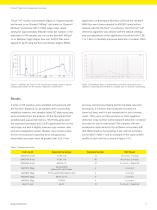
PG-Seq™ Rapid kit v2 assessment summary. Touch™ HT nucleic acid analyzer (figure 2). Sequencing was application on Basespace (Illumina, USA) and the resultant performed on an Illumina® MiSeq® instrument or Illumina® BAM files were down-sampled to 400,000 reads before MiniSeq® instrument with 1x75bp single index reads, analysis with the PG-Find™ v3 software. The PG-Find™ self- aiming for approximately 500,000 reads per sample or the reference algorithm was utilized with the default settings, equivalent of 48 samples per run on the Illumina® MiSeq® and one adjustment of the significance threshold...
Open the catalog to page 2
PG-Seq™ Rapid kit v2 assessment summary. Figure 6b: 30pg genomic DNA sample GM07312, 46,XX,del(13) (pter>q14.1::q21.2>qter), closer view of the 18Mb loss on chromosome 13 Figure 7b: 30pg genomic DNA sample NA09552 47,XY,+der(21) t(3;21) (p24.1;q21), closer view of the 31Mb gain on chromosome 3.
Open the catalog to page 3
PG-Seq™ Rapid kit v2 assessment summary. Figure 8: 30pg genomic DNA sample NA03576 48,XY,+2,+21 Conclusions The PG-Seq™ Rapid kit v2 offers analysis of whole chromosome and sub chromosomal copy number changes down to 7 Mb in size. The data presented in this study was generated with 5-cell aliquots and diluted genomic DNA extracted from cell lines with known karyotypes as a model of trophectoderm biopsy. The amplification is reliable, flexible, easy to use and in this study showed 100% amplification success and 98% of samples generating a result that passed quality control metrics. Correct results...
Open the catalog to page 4All Revvity catalogs and technical brochures
 Model 307 Sample Oxidizer
3 Pages




Archived catalogs
 chemagic 360 instrument
4 Pages
 chemagic Prepito® instrument
4 Pages


