
- Catalogs
- RIGEL Medical
- IEC 62353

- Products
- Catalogs
- News & Trends
- Exhibitions
IEC 62353

IEC 62353
This guide serves as a guideline for testing medical electrical equipment, emphasizing that it is not a replacement for the official IEC 62353 publication. It highlights the importance of accuracy and the responsibility of users to interpret the information correctly.
The guide introduces electrical safety concepts, definitions of medical electronic devices, and provides an overview of the IEC 62353 standard. It explains basic electrical principles such as Ohm's Law and the relationship between current, voltage, and resistance.
This section defines medical electronic equipment according to IEC 60601, which includes devices used for treatment, monitoring, or diagnosis. It also explains the classification of medical electronic systems and the importance of meeting IEC 60601 design requirements.
The guide provides an introduction to IEC 60601, which governs the design and approval of medical devices, and IEC 62353, which focuses on the testing of medical electrical equipment. It explains the significance of these standards in ensuring patient and operator safety.
Detailed procedures for visual inspection, earth bond testing, insulation resistance testing, and leakage measurements are outlined. The guide emphasizes the importance of record-keeping and provides pass/fail limits for IEC 62353.
This section discusses the human body's conductivity and the potential hazards of electrical currents. It explains the effects of different current levels on the body and the concept of macroshock and microshock.
The guide explains the symbols and markings required on medical equipment as per IEC 60601, ensuring clear identification and compliance with safety standards.
The guide concludes by reiterating the importance of adhering to IEC standards to maintain safety in medical environments.
Several appendices provide additional information, including pass/fail limits, collateral standards, test standards, patient environment considerations, and example documentation.
This document provides a practical guide to IEC 62353, focusing on the lifecycle and safety testing of medical electrical (ME) equipment. It compares IEC 62353 with IEC 60601, highlighting the importance of routine testing and safety standards.
The lifecycle of ME equipment includes several stages: design, type testing, end-of-line testing, acceptance, operator training, maintenance, repair, and decommissioning. Each stage ensures the equipment meets safety and performance standards.
During the design phase, products must comply with IEC 60601 standards. Type testing verifies hardware and software against design standards, allowing for CE marking and marketing in the European Economic Area.
IEC 60601 does not specify routine test requirements, leading to varied interpretations. IEC 62353 addresses this by providing a unified approach to routine testing, focusing on electrical safety and functionality.
IEC 60601 focuses on design and manufacturing safety, while IEC 62353 provides guidelines for routine and in-service testing. IEC 62353 emphasizes non-destructive testing and practical safety measures, such as leakage current tests.
IEC 62353 recommends testing intervals based on risk assessment, ranging from 6 to 36 months. It simplifies testing by removing pre-conditioning, elevated mains, and destructive testing, focusing on leakage testing.
Adopting IEC 62353 requires preparation and understanding of its benefits. It impacts manufacturers, medical service companies, and technical departments, providing a framework for safe and effective testing practices.
Visual inspection is a straightforward procedure to ensure that medical equipment (ME) conforms to manufacturer specifications and is free from external damage or contamination. Key inspection areas include housing/enclosure, contamination, cabling, fuse rating, marking and labeling, and integrity of mechanical parts.
Protective earth conductors provide a safe path for electrical leakage and fault currents, reducing the risk of electric shock and fire. For Class I equipment, the earth conductor resistance must be low to prevent hazardous voltage levels. Multiple earth bond tests are required for medical devices to validate connections. The IEC 62353 standard specifies a minimum test current of 200mA, with resistance measured in both polarities.
This test verifies the insulation between mains parts and earth or enclosure. A 500V DC is applied, and resistance is measured in megaohms. The test is quick and safe but may not reflect real insulation effectiveness in modern devices due to switch mode power supplies.
IEC 62353 defines two leakage current tests: Equipment Leakage Current and Applied Part Leakage Current. Methods for measuring leakage include Direct Leakage, Differential Leakage, and Alternative Method.
This document provides a practical guide to IEC 62353, focusing on leakage measurements and ensuring patient safety. It outlines different methods for measuring equipment and applied part leakage currents, emphasizing the importance of accurate and safe testing procedures.
The document describes Differential, Alternative, and Direct methods for measuring leakage currents, each with specific applications and limitations.
Equipment leakage current is the total leakage from the power supply to earth via applied parts and enclosures. IEC 62353 specifies three methods for measuring this: direct, differential, and alternative.
This test measures leakage from patient connections within an applied part to earth. It is applicable to floating type (BF & CF) applied parts.
Testing procedures must account for potential secondary earth connections, which can influence leakage measurements.
The guide underscores the importance of adhering to IEC 62353 standards for leakage measurements to ensure patient safety and equipment reliability.
The document details the typical connections for medical equipment and emphasizes the importance of understanding secondary earth paths.
The IEC 62353 standard is presented as a globally recognized approach to safety testing, offering significant time savings and a simplified method for analyzing results.
The document provides several recommendations for conducting safety tests, including ensuring operator training and verifying equipment safety.
The IEC 62353 standard offers a structured approach to electrical safety testing, with benefits such as uniformity in test procedures, time savings, and improved patient safety.
The appendices provide detailed pass/fail limits for various equipment classes and list specific IEC 60601 standards relevant to different types of medical equipment.
Catalog excerpts

Passionate about patient safety.
Open the catalog to page 1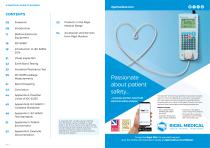
Passionate about patient safety. Products in the Rigel Medical Range Accessories and Services from Rigel Medical Medical Electronic Equipment Visual Inspection Earth Bond Testing Insulation Resistance Test Record Keeping Appendix A: Pass/Fail Limits of IEC 62353 Appendix B: IEC 60601-1 Collateral Standards Features include: Appendix C: IEC 60601 Test Standards • Automatic testing with data storage capabilities Appendix D: Patient Environment Appendix E: Example Documentation Passionate about patient safety... ...accurate and fast, hand-held electrical safety analyzer. The Rigel 288+ is the first...
Open the catalog to page 2
Passionate about patient safety. Rigel Medical: Keeping medical industries safe World-leading biomedical test and measurement equipment At Rigel Medical, we’ve been a pioneer of biomedical test and measurement instruments for more than four decades. Since launching the world’s first IEC 601 electrical safety analyser in the 1970s, our user focused developments continue to place us at the forefront of the industry. Our comprehensive suite of electrical safety analysers, performance analysers and vital signs simulators enable biomedical and clinical engineers to confirm their adherence to a series...
Open the catalog to page 3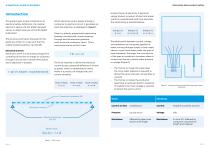
Passionate about patient safety. Introduction This guide covers a basic introduction to electrical safety, definitions of a medical electronic device, the IEC 60601 standard and an in depth overview of the IEC 62353 publication. The structure and topics discussed in this guide are written in a way such that the widest possible audience can benefit. Electrical Current Electrical current is a secondary energy form consisting of the flow of charge (in coulomb) through a circuit over a certain time period, and is depicted in ampere. When electrical current passes through a conductor or electrical...
Open the catalog to page 4
Passionate about patient safety. The Human Body A significant part of the human body is made up of water along with dissolved ions and minerals, which are capable of conducting electrical currents. Broadly speaking, the hazard of such electrical currents would depend on: ∙ ∙ ∙ ∙ ∙ Strength of the current Path of the current Total impedance for the current path Frequency of the current Duration of the current being applied Electrical currents can be extremely dangerous to the human body. The energy released by electrical current passing through human tissue can generate burns and excite or stimulate...
Open the catalog to page 5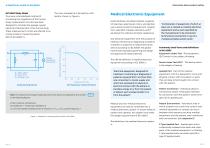
Passionate about patient safety. Heath facilities including hospitals, surgeries, GP practises, veterinarian clinics, and dentists use a variety of electrical equipment, ranging from, specialist medical, laboratory and IT equipment to ordinary domestic appliances. Voltage measuring instrumentb) Medical Electronic Equipment The main impedance is formed by a 1kΩ resistor, shown in Figure 4. IEC 60601 Body Model To ensure a standardised method of simulating the impedance of the human body, measurement circuits have been designed to simulate the average, typical electrical characteristics of the...
Open the catalog to page 6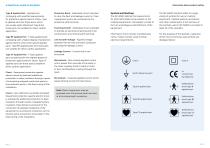
Passionate about patient safety. Type B Applied Part - Applied part complying with specified requirements for protection against electric shock. Type B applied parts are those parts, which are usually earth referenced. Type B are those parts not suitable for direct cardiac application. Type BF Applied Part - F-Type applied part complying with a higher degree of protection against electric shock than type B applied parts. Type BF applied parts are those parts not suitable for direct cardiac application. Type CF Applied Part - F-Type applied part complying with the highest degree of protection...
Open the catalog to page 7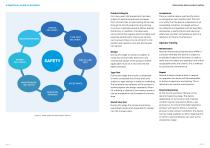
Passionate about patient safety. DESIGN (IEC 60601) TYPE TEST (IEC 60601) OPERATOR TRAINING Product Lifecycle For many years, ME equipment has been subject to extensive approval processes from clinical trials, to type testing all the way through to end of production line testing, to ensure it operates properly before leaving the factory. In addition, manufacturers recommend that regular electrical safety and essential performance checks are carried out to ensure there’s no risk of harm to the patient and operator once the device goes into service. Design During this stage a concept is subject...
Open the catalog to page 8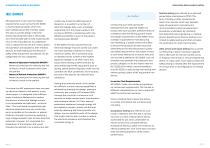
Passionate about patient safety. IEC 60601 ME equipment must meet the design requirements as set out by the IEC 60601 (a harmonised standard), which has been adopted by all IEC member states. This sets out all the design criteria for producing equipment that is electrically and mechanically safe, as well as placing the onus on the manufacturer to understand how to reduce the risk of harm when patient and operators are exposed to their medical devices. All tests relating to the electrical safety of ME equipment and devices can be categorised into two categories: ∙ Means of Operator Protection...
Open the catalog to page 9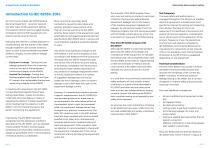
Passionate about patient safety. Introduction to IEC 62353: 2014 As its full name implies, IEC 62353 Medical Electrical Equipment - recurrent test and test after repair of ME equipment defines the requirements for electrical safety testing of medical electrical (ME) equipment and systems during routine intervals. Following the need for a unified approach to routine testing, the first edition of IEC 62353 brought together a set number of tests to allow its users to test the MOOP and MOPP dielectric integrity via two distinct leakage current tests: ∙ Equipment Leakage - Testing the total leakage...
Open the catalog to page 10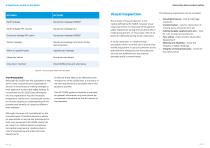
Passionate about patient safety. Earth leakage Equipment leakage DIR/DIF Earth leakage SFC neutral Enclosure leakage SFC earth Equipment leakage DIR/DIF Patient leakage Equipment leakage (enclosure probe disconnected) Mains on applied parts Applied part leakage Measured values Only direct method Visual Inspection The process of visual inspection is not clearly defined by IEC 60601, however visual inspections form a critical part of the general safety inspections during the functional life of medical equipment. In most cases, 70% of all faults are detected during visual inspections. The following...
Open the catalog to page 11All RIGEL Medical catalogs and technical brochures
 Med-eBase
2 Pages
 SafeTest 60
3 Pages
 CITREX H3
1 Page
 SafeTest 99
3 Pages
 FlowAnalyser PRO
4 Pages
 CITREX H5
2 Pages
 Guide to Infusion Pump Testing
19 Pages
 Guide to Electrosurgery
19 Pages
 IEC 60601
18 Pages
 Global Brochure
17 Pages
 CITREX
6 Pages
 PRODUCT RANGE 2017
12 Pages
 Printers and Scanners
6 Pages
 Rigel 62353+
5 Pages


Archived catalogs
 UniPulse 400
2 Pages
 VenTest 800 Series
8 Pages
 Rigel 288+
5 Pages
 PULS-R
2 Pages
 PRODUCT RANGE 2018
12 Pages
 PatSim200
2 Pages
 Rigel Multi-Flo Datasheet
6 Pages
 RIGEL
RIGEL20 Pages
 SP-SIM SpO2 Simulator
5 Pages
 BP-SiM NIBP Simulator
5 Pages
 M e d - e B a s e v 2 . 0
3 Pages
 Rigel Medical Brochure - USA
20 Pages
 Rigel Medical Brochure UK
20 Pages
 Uni-Pulse
6 Pages


- Analysis software
- Control software
- RIGEL MEDICAL laboratory tester
- Monitoring software
- Medical gas flow meter
- Hospital flow meter
- RIGEL MEDICAL medical device tester
- Shoulder bag
- RIGEL MEDICAL control tester
- Patient simulation unit
- Data management software
- Thermal printer
- IBP cable
- Measurement software
- Medical device bag
- Temperature testing system
- Recording software
- Portable simulation unit
- Medical device battery
- Monitoring simulator