
- Catalogs
- RISystem AG
- RatNail

- Company
- Products
- Catalogs
- News & Trends
- Exhibitions
RatNail
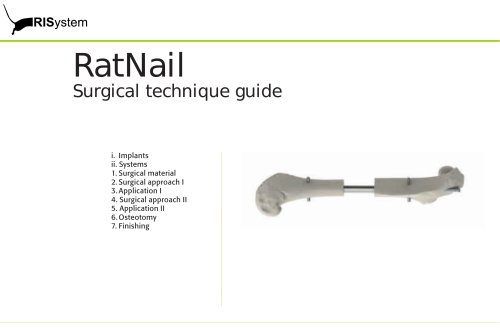
RatNail
The document is a surgical technique guide for the RatNail system, which is used for intramedullary fixation and stabilization of osteotomies in the femur. It supports osteotomy sizes from 0.25 to 6.00 mm and can also be used for fracture models.
Implants
The RatNail system consists of a locked intramedullary nail made from medical-grade stainless steel (316L). It is available in two sizes to accommodate different femoral lengths. The system includes a pin driver that shears off at the correct torque, allowing for easy removal. An aiming device with saw guide clips is also available for practical application.
Systems
The RatNail system can handle single cut osteotomies and large bone defects. It includes one RatNail and two locking pins.
Surgical Material
Specific instruments required include the RatNail aiming device and a saw guide. Additional instruments and consumables include hand drills, drill bits, a Gigly wire saw, sutures, and a reamer.
Surgical Approach I
The rat is positioned dorsally, and a longitudinal skin incision is made over the knee. The patella is laterally dislocated to expose the knee joint, and a drill hole is made in the intercondylar notch.
Application I
The medullary cavity is reamed, and the RatNail is inserted under continuous rotation until it is flush with the epicondyle.
Surgical Approach II
The rat is positioned prone, and an anterolateral approach is used. The femur is exposed, and the aiming device is mounted to the RatNail.
Application II
Interlocking of the RatNail is performed using a centering bit and drill bit. Two locking pins are applied to secure the RatNail.
Osteotomy
A saw guide is attached, and a defined gap is created using a Gigly saw. The shaft of the RatNail is disconnected by bending the aiming device.
Finishing
The wound is closed using vicryl and polyamide sutures. The medial ligament is reconstructed with vicryl suture.
Hazards and Legal Restrictions
The document emphasizes that the procedures described are hazardous and should only be performed by certified professionals. It also includes disclaimers regarding the accuracy of the information and the responsibility of the user to verify medical practices independently.
Catalog excerpts

Surgical technique guide i. Implants ii. Systems 1. Surgical material 2. Surgical approach I 3. Application I 4. Surgical approach II 5. Application II 6. Osteotomy 7. Finishing
Open the catalog to page 1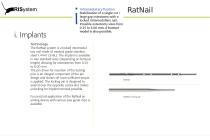
Intramedullary fixation Stabilization of a single cut / large gap osteotomy with a locked intramedullary nail. Possible osteotomy sizes from 0.25 to 6.00 mm. A fracture model is also possible. Technology The RatNail system is a locked intramedullary nail made of medical grade stainless steel 1.4441 (316L). The implant is available in two standard sizes (depending on femural length) allowing for osteotomies from 0.25 to 6.00 mm. The pin driver for insertion of the locking pins is an integral component of the pin design and shears off once sufficient torque is applied. The locking pin is designed...
Open the catalog to page 2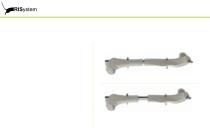
RatNail ii. Systems The RatNail system can cover single cut osteotomies up to large bone defects within the femur. RatNail with 0.25 mm osteotomy RatNail with 6.00 mm osteotomy
Open the catalog to page 3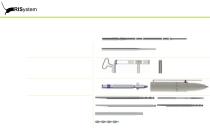
RatNail 1. Surgical material Implants: - 1x RatNail - 2x RatNail locking pins Implant specific instruments: - 1x RatNail aiming device - 1x Saw guide 0.44 mm RIS.322.110 RatNail aiming device XL Instruments: - 2x hand drills - 1x Accu Pen 6V+ Consumables: - 1x 0.71 mm Drill bit - 1x 0.44 mm Gigly wire saw, 0.50 m - 1x 1.00 mm Centering Bit - 1x 21 G needle, length > 45 mm - 1x Vicryl suture 3-0 - 1x Polyamid suture 3-0 - 1x Reamer 1.65 x 30.50 mm - 1x Drill Bit 2.00 mm
Open the catalog to page 4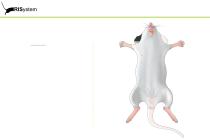
RatNail 2. Surgical approach I Positioning Rat in dorsal position.
Open the catalog to page 5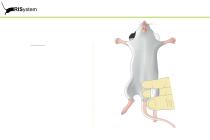
RatNail 2. Surgical approach I Positioning The knee is bent according to illustration.
Open the catalog to page 6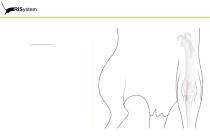
RatNail 2. Surgical approach I Anterior approach Longitudinal skin incision over the knee from the distal third of the thigh to the proximal third of the lower leg.
Open the catalog to page 7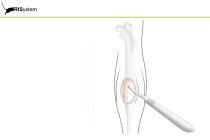
RatNail 2. Surgical approach I Longitudinal incision along the medial side of the patellar tendon.
Open the catalog to page 8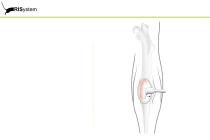
RatNail 2. Surgical approach I Lateral dislocation of the patella to expose the knee joint.
Open the catalog to page 9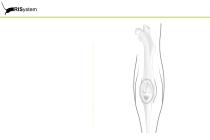
RatNail 2. Surgical approach I Position of the intercondylary entry point on the femur.
Open the catalog to page 10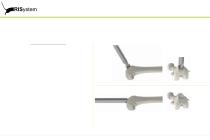
RatNail 3. Application I Opening of the epicondyle Use the 2.00 mm drill bit to drill a hole into the intercondylar notch. According to the illustration start drilling with a 45 ° offset to the axis of the femur and continuously decrease the angle to 0° offset (parallel with the bone axis). Make sure not to exceed 4.00 mm in depth for the drill hole ! Verify the orientation of the longitudinal axis and keep the drill bit right between the two condyles of the medullary cavity and parallel to the bone axis.
Open the catalog to page 11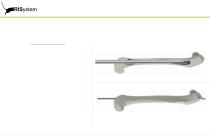
RatNail 3. Application I Proximal opening of femur Use the 1.65 mm reamer to ream the medullary cavity. Again make sure that the orientation is central to the medullary cavity and parallel to the bone axis ! Open the femur proximally with a 21G needle > 45 mm, to prepare the insertion of the threaded tip of the RatNail.
Open the catalog to page 12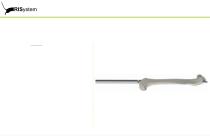
RatNail 3. Application I Insertion Insert the RatNail under continous rotation until the notch at the distal end of the RatNail is flush with the epycondyle. Make sure to apply smooth axial pressure during insertion.
Open the catalog to page 13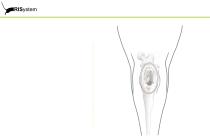
RatNail 3. Application I RatNail in situ.
Open the catalog to page 14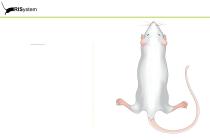
RatNail 4. Surgical approach II Positioning Rat in prone position.
Open the catalog to page 15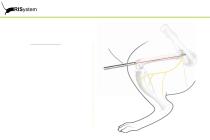
RatNail 4. Surgical approach II Anterolateral approach Longitudinal skin incision along the femur from the hip joint to the knee.
Open the catalog to page 16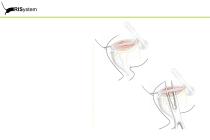
RatNail 4. Surgical approach II Small medial incision of the fascia lata and blunt preparation of the muscle below. M. vastus lateralis and M. biceps femoris are split and M. tensor fasciae latae is lifted to expose the full length of the femur preserving the sciatic nerve. Circular preparation of the femur at the area of the planed osteotomy.
Open the catalog to page 17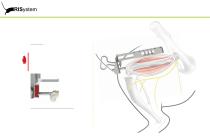
RatNail 5. Application II Assembly Mount the aiming device to the RatNail. Pay special attention to the final position of the aiming device. Make sure there is no gap between the RatNail adapter flanch and the inner surface of the aiming device (marked in red). Orientation of the aiming device Position the aiming device anterolaterally to the femur
Open the catalog to page 18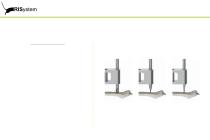
RatNail 5. Application II Interlocking of the RatNail Starting with the more proximal interlocking position use the 1.00 mm centering bit to prepare for drilling. Maintain the orientation of the aiming device and drill the first interlocking hole with the 0.71 mm bit. The countersinking as well as the drilling should be done by hand without the use of power tools ! Carefully apply the RatNail locking pin via the aiming device and bring it into its final position by turning it into the RatNail under continuos axial load. The locking pin drive shaft shears of as soon as the interlocking torque is...
Open the catalog to page 19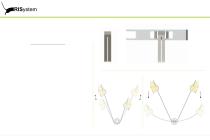
RatNail 6. Osteotomy Performing the osteotomy Attach the 0.44 mm saw guide on the lateral side of the aiming device and create a defined gap by using the Gigly saw (sufficient irrigation !) Start sawing by keeping your hands close together. With progressing saw depth increase hand distance to avoid high forces. To ensure circular cutting of the bone repeat the sawing procedure on both sides of the aiming device
Open the catalog to page 20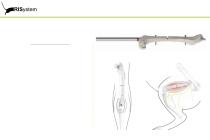
RatNail 6. Osteotomy Accomplishing the osteotomy Disconnect the shaft of the RatNail at the groove (marked red) by bending the aiming device carefully to the side while holding the leg.
Open the catalog to page 21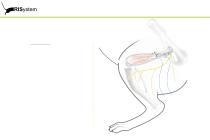
RatNail 7. Finishing Wound closure Lift the M. quadriceps gently over the femur to its original position. Use vicryl suture 3-0 to close the fascia lata and polyamid suture 3-0 for the skin.
Open the catalog to page 22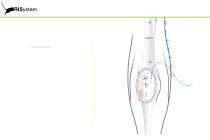
RatNail 7. Finishing Wound closure To reconstruct the medial ligament use vicryl suture 4-0 on the patellar tendon and the fascia lata.
Open the catalog to page 23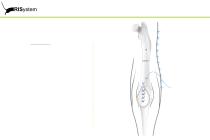
RatNail 7. Finishing Wound closure Skin suture with polyamid suture 3-0.
Open the catalog to page 24
RatNail Hazards and legal restrictions Scientific editor: Illustrations: Design and layout: In collaboration with: Hazards Katharina Schmidt-Bleek, Germany Agnes Ellinghaus, Germany Sandra Wissing, Switzerland Romano Matthys, Switzerland Julius Wolff Institut and Center for Musculoskeletal Surgery Charité-Universitätsmedizin Berlin, Germany Great care has been taken to maintain the accuracy of the information contained in this publication. However, the publisher, and/or the distributor, and/or the editors, and/or the authors cannot be held responsible for errors or any consequences arising from...
Open the catalog to page 25All RISystem AG catalogs and technical brochures
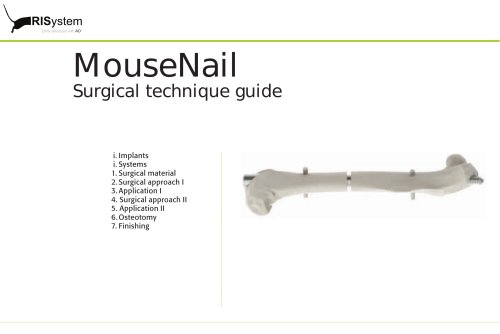 MouseNail
27 Pages
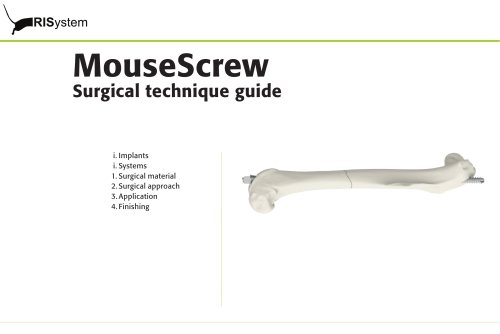 MouseScrew
16 Pages
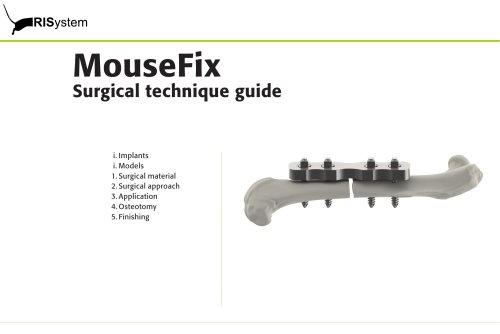 MouseFix
17 Pages
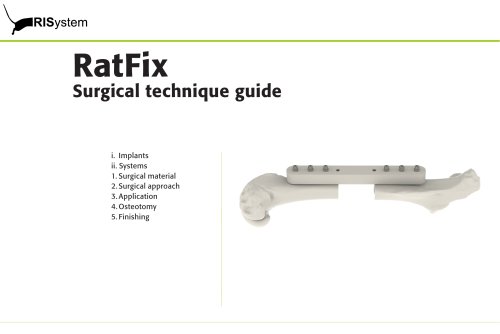 RatFix
15 Pages
- Veterinary instrument kit
- Compression veterinary orthopedic screw
- Veterinary bone plate
- Orthopedic surgery veterinary instrument kit
- Tibia veterinary bone plate
- Mice veterinary bone plate
- Rat veterinary bone plate
- Small animal veterinary instrument kit
- Veterinary intramedullary nail
- Femur veterinary intramedullary nail
- Femur veterinary bone plate
- Humerus veterinary bone plate
- Veterinary external fixator
- Femur veterinary external fixator