
- Catalogs
- Röchling Sustaplast SE & Co. KG
- Patient-Centric Pharmaceutical Packaging Design

Patient-Centric Pharmaceutical Packaging Design

Patient-Centric Pharmaceutical Packaging Design
The document addresses the demographic trend of an aging population and its impact on healthcare, focusing on medication adherence challenges among older adults due to physical and cognitive impairments.
Challenges of Medication Non-Adherence
Non-adherence to medication regimens is a major issue, resulting in increased healthcare costs and negative health outcomes. Contributing factors include polytherapy, motor and cognitive impairments, and the trend towards self-administration.
Patient-Centric Solutions
The document discusses ergonomic and smart packaging solutions aimed at enhancing medication adherence, such as user-friendly tablet containers and intelligent systems like Connect-e-Cap® that monitor intake and provide reminders.
Smartly-Designed Packaging
Röchling Medical, in partnership with Heidelberg University Hospital, has developed ergonomic packaging for patients with conditions like rheumatoid arthritis, designed to minimize effort and pain in opening containers.
Targeting Adherence Issues
Connect-e-Cap® includes features like reminders and storage condition monitoring to promote proper medication use, addressing various non-adherence causes.
Further Considerations
The document highlights the role of human-factor engineering in medical device design to reduce user errors and improve adherence, advocating for ongoing testing and stakeholder collaboration for patient-driven design.
Conclusion
The aging population requires a user-focused approach to pharmaceutical packaging design, with patient-centric solutions being essential for improving medication adherence and achieving optimal health outcomes.
Catalog excerpts

Rochling Medical Patient-Centric Pharmaceutical Packaging Design Rochling Medical
Open the catalog to page 1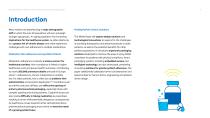
Röchling Medical | Patient-Centric Pharmaceutical Packaging Design Introduction Many nations are experiencing a major demographic Finding Patient-Centric Solutions shift in which the over-60 population will soon outweigh younger age groups 1. An aging population has increasing This White Paper will explore design solutions and implications for the healthcare system, as older adults are technological innovations to respond to the challenges at a greater risk of chronic disease and often experience in providing therapeutics and pharmaceuticals to older challenges with non-adherence to multiple...
Open the catalog to page 2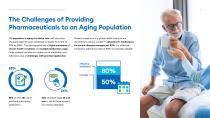
Röchling Medical | Patient-Centric Pharmaceutical Packaging Design The Challenges of Providing Pharmaceuticals to an Aging Population The population is aging at a faster rate, with the share Patient compliance is a global health care concern. of people aged 60 years predicted to double from 12% to According to various studies 9,10, adherence to medications 22% by 2050 6. This demographic has a higher prevalence of for chronic diseases averages just 50% - for effective chronic health conditions and multiple medication usage. treatment, adherence rates of 80% are typically needed 11. Older patients...
Open the catalog to page 3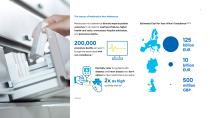
Röchling Medical | Patient-Centric Pharmaceutical Packaging Design The Impact of Medication Non-Adherence Medication non-adherence directly impacts patient Estimated Cost Per Year of Non-Compliance13,14,15 outcomes. It can lead to treatment failures, higher health care costs, unnecessary hospital admissions, and premature deaths. premature deaths per year in Europe are associated with non-compliance.* 10 Mortality rates for patients with diabetes and heart disease who don’t adhere to their medications are nearly
Open the catalog to page 4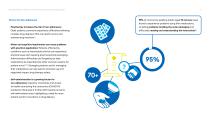
Röchling Medical | Patient-Centric Pharmaceutical Packaging Design 95% of community-dwelling adults aged 70 and over were found to experience problems using their medications, • Polytherapy increases the risk of non-adherence: including problems handling the outer packaging and Older patients commonly experience difficulties following difficulties reading and understanding the instructions19. complex drug regimens that can lead to errors and adverse drug reactions 16. • Motor and cognitive impairments can cause problems with practical application: Patients affected by conditions such as rheumatoid...
Open the catalog to page 5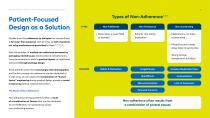
Röchling Medical | Patient-Centric Pharmaceutical Packaging Design Patient-Focused Design as a Solution Types of Non-Adherence TYPES • Prescription is never filled or initiated Studies show that adherence to therapies for chronic illness • Patients stop taking medication is far lower than expected, with as many as half of patients Non-Conforming • Medication is not taken as prescribed • Missed/incorrect doses, not using medications as prescribed to them 20,21,22,23,24. doses taken at wrong time With the problem of medical non-adherence worsened by • Wrong storage packaging-related issues, medical...
Open the catalog to page 6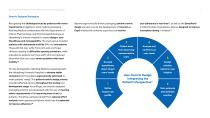
Röchling Medical | Patient-Centric Pharmaceutical Packaging Design Smartly-Designed Packaging Recognizing the challenges faced by patients with motor Beyond ergonomically-driven packaging, patient-centric user adherence in real-time 31, as well as the Sympfiny® impairments struggling to open medical packaging, design was also core to the development of Connect-e- multiparticulate drug delivery device, designed to improve Röchling Medical collaborated with the Department of Cap® interactive container caps that can monitor incomplete dosing in children 32. Clinical Pharmacology and Pharmacoepidemiology...
Open the catalog to page 7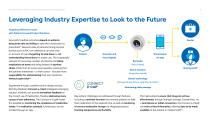
Röchling Medical | Patient-Centric Pharmaceutical Packaging Design Leveraging Industry Expertise to Look to the Future Targeting Adherence Issues with Patient-Focused Product Solutions Successful medical outcomes depend on patients being both able and willing to take their medication as prescribed 34. Beyond cases of patients facing physical barriers such as RA, non-adherence can also arise on account of users forgetting to take doses or not understanding instructions for proper use. This is especially visual signals relevant as increasing numbers of patients are taking (next intake) medications...
Open the catalog to page 8
Röchling Medical | Patient-Centric Pharmaceutical Packaging Design Further Considerations and Opportunities Beyond cases in which patient-driven design is based upon the needs of specific groups, such as elderly patients or children, human factor engineering can also be applied to promote the proper usage of medical devices in all contexts. The application of usability engineering and the implementation of human-focused design can help by reducing the need for user manuals and training, as well as lowering the risk of errors altogether 37. In the medical device field, however, there is an ongoing...
Open the catalog to page 9
Röchling Medical | Patient-Centric Pharmaceutical Packaging Design Conclusion The increasingly older demographic of medical patients In the face of these challenges, Röchling Medical has Looking to the future, human-focused design is crucial to and their corresponding requirements are driving the been incorporating “human factor” interests into its ensure high-level medical results in patients. Since this will pharmaceutical industry to take a user-driven approach to product design (or product development) processes In involve ongoing testing with patients, product design must packaging design....
Open the catalog to page 10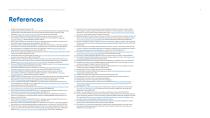
Rochling Medical | Patient-Centric Pharmaceutical Packaging Design 1 UN DESA: World Population Prospects. 2022. 2 CORDIS, European Commission: Medi-voice (A Low Cost, Environmentally, Friendly Smart Packaging Technology to Differentiate European SME Suppliers to Service the Needs of the Blind, Illiterate and Europe's Aging Population): https://cordis.europa.eu/project/id/17893 (Last accessed 28 July 2023). 2008. 3 Khan R, Socha-Dietrich K. Investing in medication adherence improves health outcomes and health system efficiency: Adherence to medicines for diabetes, hypertension, and hyperlipidaemia....
Open the catalog to page 11All Röchling Sustaplast SE & Co. KG catalogs and technical brochures
 Certifications & Approvals
2 Pages
 ISO 50001 Neuhaus
2 Pages
 Röchling Code of Conduct
26 Pages
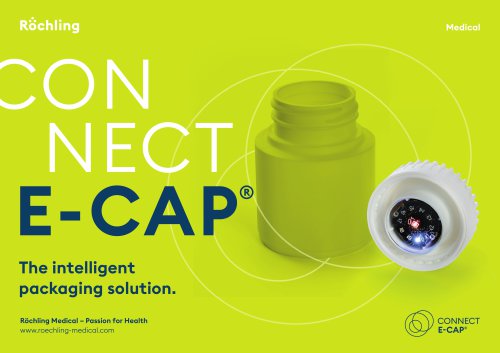 E-CAP®
4 Pages
- Syringe
- Cannula
- Medical sensor
- Sample container
- Monitoring sensor
- Surgical tubing
- Laboratory flask
- Intubation cannula
- Dental syringe
- Petri dish
- Feeding syringe
- Tracheotomy cannula
- Urine sample sample container
- Laboratory sample container
- Endoscopy tubing
- Oral syringe
- Tissue sample container
- Blood sample container
- Multilayer tubing
- Bone grafting syringe