
- Catalogs
- Rudolf Riester
- GA_ri-scope_L_RevD


GA_ri-scope_L_RevD

GA_ri-scope_L_RevD
The document provides detailed specifications and usage guidelines for the Riester diagnostic instrument set, specifically the ri-scope® L. It emphasizes compliance with Directive 93/42/EEC for medical devices and is intended for use by trained medical professionals. The device should be used in an appropriate electromagnetic environment to ensure proper operation.
The ri-scope® L is designed for specific electromagnetic environments, with guidelines for electromagnetic immunity and emissions, referencing standards like IEC 60601 and CISPR 11. It details the levels of electromagnetic disturbances the device can withstand and recommends protective distances from RF communication devices to prevent interference.
The document describes compatible battery handles, including Type C and Type AA, with instructions for battery insertion and removal. It emphasizes using Riester batteries and chargers for optimal performance and includes safety precautions like removing batteries if not used for extended periods.
Key precautions include following operating instructions, ensuring the device is double-earthed, and using only Riester accessories. Charging the handle is advised against if liquid or moisture ingress is suspected.
The document serves as a comprehensive guide for the proper use and maintenance of the ri-scope® L, ensuring safe and effective operation in medical settings. It highlights the importance of adhering to guidelines to prevent electromagnetic interference and maintain functionality.
Charge the ri-accu® battery only when light intensity weakens. Dispose of batteries as special waste.
Instructions for fitting instrument heads, switching on/off, and adjusting light intensity are provided. Automatic switch-off occurs after 180 seconds.
The otoscope is used for examining the auditory canal, while the ophthalmoscope is for eye examination. Both have specific features like specula fitting and lens adjustments.
Includes retinoscopes, dermatoscopes, nasal speculums, and more, each with specific purposes and features.
Instruments should be wiped with a moist cloth after disinfection. Components in contact with skin can be cleaned with alcohol. Instruments should not be immersed in liquids or subjected to automated reprocessing.
The ri-scope® L complies with CISPR 11 Group 1 and Class B emissions. Immunity tests ensure resilience to electrostatic discharge and electrical interference.
Details on using Riester battery handles and compatible batteries are provided, with specific instructions for insertion and charging.
The device should be operated within specified temperature and humidity ranges for optimal functionality.
Emphasizes the importance of using Riester accessories and following the manual carefully.
Includes specifications for bulbs and guidelines for proper disposal of batteries.
Reusable speculums can be sterilized, while single-use ones should not be reused. Guidelines for electromagnetic compatibility are provided.
Instructions for powering instrument heads and battery handle options are detailed, including compatibility and charging instructions.
Details on available diaphragms and filters for ophthalmoscopes, enhancing examination capabilities.
Guidelines for cleaning, disinfecting, and maintaining instruments are outlined, along with environmental conditions for use and storage.
Catalog excerpts

ri-scope® ri-scope® L ri-derma® Gebrauchsanweisung eisung nstrumente Diagnostische Instrumente Instructions ruments Diagnostic Instruments Mode d’ emploi agnostiques Instruments diagnostiques ara Instrucciones para el uso iagnósticos Instrumentos diagnósticos Инструкция по эксплуатации кие Диагностические прибор
Open the catalog to page 1
1. Wichtige Informationen zur Beachtung vor Inbetriebnahme 06 1. Important information to observe prior to initial use 15 2. Battery handles and initial use 15 11. Operation otoscope for veterinary medicine 19 12. Operation otoscope for human medicine 20 1. Informations importantes a lire attentivement avant la mise en service 23 2. Manches a piles et mise en service 23 11. Otoscope chirurgical pour la medecine veterinaire 28 12. Otoscope chirurgical pour la medecine humaine 28 1. Informacion importante a tener en cuenta antes de la puesta en servicio 32 2. Mangos...
Open the catalog to page 2
Indice pagina 1. Importanti avvertenze da rispettare prima dell’uso 2. Manico portabatterie e messa in funzione 3. Otoscopio ri-scope®L 4. Oftalmoscopio ri-scope®L 5. Retinoscopio Slit e Spot (a linea e punto) 6. Dermatoscopio 7. Portalampadina 8. Specolo nasale 9. Porta abbassalingua 10. Laringoscopio 11. Otoscopio operatorio per lanmedicina veterinaria 12. Otoscopio operatorio per la medicina umana 13. Sostituzione della lampadina 14. Avvertenze per la cura dello strumento 15. Ricambi e accessori 16. Manutenzione 17. Avvertenze 18. Requisiti CEM Garanzia Cодержание 1. Bажные указания перед...
Open the catalog to page 3
1.Wichtige Informationen zur Beachtung vor Inbetriebnahme Sie haben ein hochwertiges Riester DiagnostikBesteck erworben, welches entsprechend der Richtlinie93/42/EWG für Medizinprodukte hergestellt wurde und ständigen strengsten Qualitätskontrollen unterliegt. Die hervorragende Qualität wird Ihnen zuverlässige Diagnosen garantieren. In dieser Gebrauchsanweisung werden der Gebrauch der Riester Batteriegriffe der ri-scope® bzw. ri-derma® Instrumentenköpfe und deren Zubehör beschrieben. Bitte lesen Sie die Gebrauchsanweisung vor Inbetriebnahme sorgfältig durch, und bewahren Sie sie gut auf. Sollten...
Open the catalog to page 6
ACHTUNG: Bei Lithium Batterien (nur bei Batteriegriffe Typ C) benötigen Sie eine Reduzierhülse (Art. Nr.: 12652) + LDO-Regler (Art. Nr.: 12653) Griff C Bei Nachrüstung: Drehen sie den Griffdeckel am unteren Teil des Handgriffes ab. Bei Lithium Batterien wird die Reduzierhülse mit dem Ende, wo der Federspannring sitzt, zuerst in die Griffhülse eingesetzt, der LDO-Regler wird in Richtung des aufgedruckten Pfeiles eingesetzt. Die Lithium Batterien werden so eingesetzt, dass die Pluspole in Richtung Griffoberteil zeigen. Drehen sie den Griffdeckel wieder fest auf den Handgriff auf. Griff AA Bei Nachrüstung:...
Open the catalog to page 7
2.5 Ein- und Ausschalten Batteriegriffe Typ C und AA Schalten Sie das Instrument ein, indem Sie den SchaLtring am Griffoberteil in Richtung Uhrzeigersinn antippen. Um das Instrument auszuschalten drucken Sie den Ring entgegen dem Uhrzeigersinn bis sich das Gerat ausschaltet. 2.6. rheotronic® zur Regulierung der Lichtintensitat Anhand der rheotronic® ist es moglich die Lichtintensitat an den Batteriegrif-fen Typ C und AA einzustellen. Je nach dem, wie oft Sie den SchaLtring entgegen oder in Richtung Uhrzeigersinn antippen, ist die Lichintensitat schwacher oder starker. ACHTUNG: Bei jedem Einschalten...
Open the catalog to page 8
Halbmond, kleine/mittlere/große Kreisblende, Fixierstern und Slit. Ophthalmoskop L3 Halbmond, kleine/mittlere/große Kreisblende, Fixierstern, Slit und Karo. Blende zur Untersuchung bei trüben Linsen Kleiner Kreis: zur Reflexminderung bei kleinen Pupillen Mittlerer Kreis: zur Reflexminderung bei kleinen Pupillen Großer Kreis: zur topographischen Feststellung von Netzhautveränderungen zur Feststellung von zentraler oder exzentrischer Fixation 4.4 Filter Über das Filterrad können zu jeder Blende folgende Filter zugeschaltet werden: Ophthalmoskop L1 Rotfreifilter Ophthalmoskop L2 Rotfreifilter, Blaufilter...
Open the catalog to page 9
mittl. Lebensdauer 15h mittl. Lebensdauer 15h mittl.Lebensdauer 1 0000h 6. Dermatoskop 6.1. Zweckbestimmung Das in dieser Gebrauchsanweisung beschriebene Dermatoskop ri-derma® wird zur Fruherkennung von pigmentierten Hautveranderungen (malignen Me-lanomen] hergestellt. 6.2. Inbetriebnahme und Funktion Setzen Sie den gewunschten Instrumentenkopf so auf die Aufnahme am Grif-foberteil auf, dass die beiden Aussparungen des Unterteils des Instrumen-tenkopfes auf die beiden hervorstehenden Fuhrungsnocken des Batteriegriffes aufsitzen. Drucken Sie den Instrumentenkopf leicht auf den Batteriegriff und drehen...
Open the catalog to page 10
9.2. Inbetriebnahme und Funktion Setzen Sie den gewünschten Instrumentenkopf so auf die Aufnahme am Griffoberteil auf, dass die beiden Aussparungen des Unterteils des Instrumentenkopfes auf die beiden hervorstehenden Führungsnocken des Batteriegriffes aufsitzen. Drücken Sie den Instrumentenkopf leicht auf den Batteriegriff und drehen Sie den Griff in Richtung Uhrzeigersinn bis zum Anschlag. Das Abnehmen des Kopfes erfolgt durch Drehung entgegen dem Uhrzeigersinn. Führen Sie einen handelsüblichen Holz- oder Kunststoffspatel in die Öffnung unterhalb des Lichtaustrittes bis zum Anschlag ein. Nach...
Open the catalog to page 11
finger oder eines geeigneten Werkzeuges aus dem Instrumentenkopf. Setzen Sie die neue Lampe fest ein. Ophthalmoskope Nehmen Sie den Instrumentenkopf vom Batteriegriff ab. Die Lampe befindet sich unten im Instrumentenkopf. Entnehmen Sie die Lampe mittels Daumen und Zeigefinger oder eines geeigneten Werkzeuges dem Instrumentenkopf. Setzen Sie die neue Lampe fest ein. ACHTUNG: Der Stift der Lampe muss in die Führungsnut am Instrumentenkopf eingeführt werden. Operationsotokope Veterinär/Human Drehen Sie die Lampe aus der Fassung im Operationsotoskop und drehen Sie eine neue Lampe wieder fest ein. 14....
Open the catalog to page 12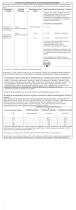
Leitlinien und Herstellerklärung – Elektromagnetische Störfestigkeit Das Model ri-scope® L ist für den Betrieb in der unten angegebenen elektromagnetischen Umgebung bestimmt. Der Kunde oder der Anwender des ri-scope® L sollte sicherstellen, dass es in einer solchen Umgebung benutzt wird. StörfestigkeitsIEC 60601 Übereinstimmungs- Elektromagnetische Umgebung - Leitlinien Prüfung Prüfpegel Pegel Tragbare und mobile Funkgeräte werden in keinem geringeren Abstand zum ri-scope® L einschließlich der Leitungen als dem empfohlenen Schutzabstand verwendet, der nach der für die Sendefrequenz geeigneten...
Open the catalog to page 14All Rudolf Riester catalogs and technical brochures
 RPT-100
1 Page
 ri-former®
4 Pages
 Telemedicine Cart
2 Pages
 RVS-100
4 Pages
 ri-sonic
6 Pages
Archived catalogs
 ri-champion® N
2 Pages
 ri-clip®
2 Pages
 BLOOD STASIS PRODUCTS
2 Pages
 Tuning Forks
4 Pages
 Percussion hammer
2 Pages
 RBP-100
4 Pages
 Binocular loupes
4 Pages
 ENT Endoscopes
12 Pages
 Medical_Lighting_e_RevL
8 Pages
 e-mega® Sphygmomanometer
2 Pages
 precisa® N shock-proof
2 Pages
 global de luxe® Wall model
2 Pages
 empire® N Sphygmomanometer
2 Pages
 spirotest
2 Pages
 Veterinae folder
4 Pages
 cardiophon 2.0, duplex ® 2.0
12 Pages
 ri- scope ® LED
28 Pages
 one piece cuffs
2 Pages
 ri-medic
2 Pages
 e-xam
e-xam2 Pages
 ri-thermo® N professional
2 Pages
 ri-gital®
2 Pages
 Laryngoscopes
16 Pages
 med-kit ®
4 Pages
 empire® desk design
2 Pages
 empire®N Standmodell
2 Pages
 All Pupil II
4 Pages
 ri-former®
8 Pages
 Pocket instruments
12 Pages
 e-scope®
6 Pages
 uni® / econom®
12 Pages
 sanaphon®
2 Pages
 big ben®
4 Pages
 sphygmotensiophone
2 Pages
 exacta®
2 Pages
 ri-san®
2 Pages
 minimus® II
2 Pages
 e-mega
2 Pages
 empire®N Anesthesia model
2 Pages
 nova-presameter® Stand model
2 Pages
 nova-presameter® Wall model
2 Pages
 Examination lamp Ri-Magic LED
12 Pages
 Cardiophon stethoscope
12 Pages
 Shockproof EN
2 Pages
 ri-thermo®N
2 Pages
 ENT endoscopes
12 Pages


- Thermometer
- Medical kit
- Blood pressure monitor
- Automatic blood pressure monitor
- Medical thermometer
- Patient monitor
- Endoscope
- SpO2 monitor
- Digital thermometer
- Medical pulse oximeter
- CMOS camera
- Blood pressure patient monitor
- Camera with USB port
- SpO2 patient monitor
- Fingertip pulse oximeter
- Surgical loupe
- Blood pressure monitor with adult cuff
- NIBP patient monitor
- Infrared thermometer
- Battery-powered pulse oximeter