
- Catalogs
- RWD Life Science
- RWD Methods to improve the success rate of MCAO model construction


- Company
- Products
- Catalogs
- News & Trends
- Exhibitions
RWD Methods to improve the success rate of MCAO model construction

RWD Methods to improve the success rate of MCAO model construction
This document provides a detailed procedure for constructing the Middle Cerebral Artery Occlusion (MCAO) model in rats, which is used to study cerebral ischemia. It also discusses methods to reduce mortality in animal models of cerebral ischemia.
Procedure for MCAO Model Construction
- Preparation: Anesthetize the rat and position it supine on the operating table. Shave and disinfect the surgical site.
- Incision and Exposure: Make an incision at the neck's middle, and use blunt dissection to expose the Common Carotid Artery (CCA), External Carotid Artery (ECA), and Internal Carotid Artery (ICA).
- Artery Separation: Separate the ICA and pterygopalatine artery. Ligate or clamp the pterygopalatine artery to ensure ICA is the only open branch of CCA.
- ECA Management: Block ECA branches using an electric coagulation pen, ligate and cut the distal ECA, and clamp CCA and ICA to prevent bleeding.
- Suture Insertion: Create a "V" shaped incision on the ECA and insert a pre-treated suture with a silicone head through the ECA into the MCA, reaching a depth of 17-18mm based on the rat's weight.
- Blood Flow Monitoring: Use a laser speckle imaging system to monitor cerebral cortex blood flow. A 70%-80% decrease indicates successful model establishment.
- Post-Surgery: Stitch the subcutaneous tissue and skin, and allow the rat to recover from anesthesia before returning it to the cage.
- Reperfusion: Pull out the suture to restore MCA blood flow by allowing blood from the CCA to reperfuse into the MCA.
- Control Group: Follow the same procedure without inserting the suture after vessel separation.
Mouse MCAO Model
The procedure is similar to the rat model, with adjustments to avoid the pterygopalatine artery during suture insertion. The suture should be inserted into the ICA to a depth of 10±0.5 mm.
Reducing Mortality in Cerebral Ischemia Models
- Ensure ischemia severity meets a certain threshold for inclusion, using criteria like perfusion decrease or neurological impairment.
- Monitor basic physiological parameters such as blood pressure, temperature, blood gases, and blood glucose.
- Maintain temperature within the normal physiological range.
- Use Doppler flow or perfusion imaging to monitor cerebral blood flow and document sustained occlusion and reperfusion.
Conclusion
The document outlines a meticulous procedure for MCAO model construction and emphasizes the importance of monitoring physiological parameters to ensure model success and reduce mortality.
Catalog excerpts
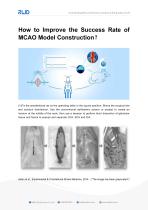
How to Improve the Success Rate of MCAO Model Construction? (1)Fix the anesthetized rat on the operating table in the supine position. Shave the surgical site and conduct disinfection. Use the conventional ophthalmic scissor or scalpel to create an incision at the middle of the neck, then use a tweezer to perform blunt dissection of glandular tissue and fascia to expose and separate CCA, ECA and ICA. Aslan et al., Experimental & Translational Stroke Medicine, 2014 (“The image has been grayscaled”
Open the catalog to page 1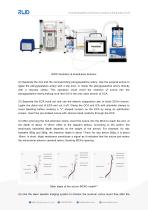
RWD Ventilator & Anesthesia Solution (2) Separate the ICA and the corresponding pterygopalatine artery. Use the surgical suture to ligate the pterygopalatine artery with a slip knot, or clamp the pterygopalatine artery directly with a vascular clamp. This operation could avoid the insertion of suture into the pterygopalatine artery,making sure that ICA is the only open branch of CCA. (3) Separate the ECA trunk out and use the electric coagulation pen to block ECA’s branch. Ligate the distal end of ECA and cut it off. Clamp the CCA and ICA with arteriolar clamps to avoid bleeding before creating...
Open the catalog to page 2
surgery. 70%~80% decreases of the blood flow indicate the successful establishment of the model. (6) Stitch the subcutaneous tissue and skin after ligation and disinfection. Put the rat back into the cage after it recovers from anesthesia. (7) Only by pulling out the suture to allow the silicone head to return to the ECA, the MCA’s blood flow can be restored, as blood flow from the CCA can be reperfusion into the MCA. (8) The control group model almost follows the same procedure, while the only difference is that the suture is not inserted after vessel separation, and subcutaneous tissue and...
Open the catalog to page 3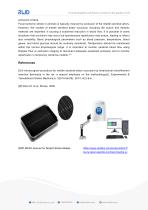
exclusion criteria. Focal ischemic stroke in animals is typically induced by occlusion of the middle cerebral artery. However, the models of middle cerebral artery occlusion including the suture and embolic methods are imperfect in causing a sustained reduction in blood flow. It is possible in some situations that occlusion may occur but spontaneous reperfusion may ensue, leading to infarct size variability. Basic physiological parameters such as blood pressure, temperature, blood gases, and blood glucose should be routinely monitored. Temperature should be maintained within the normal physiological...
Open the catalog to page 4Archived catalogs
 RWD Surgical Instruments
18 Pages
 RWD Infusion imager RFLSI Ⅲ
2 Pages
 RWD Rotating impactor 68099Ⅱ
2 Pages
 RWD Syringe Pump R462
1 Page
 Rotary Microtomes S710
2 Pages
 RWD Veterinary medical equipment
32 Pages
 RWD Microcentrifuge M1324R
2 Pages
 RWD Osmotic infusion Pump
2 Pages
 RWD Gradient Thermal Cycler
2 Pages
 2015 Product Catalogue
44 Pages
 PRODUCT CATALOGUE 2017
51 Pages



- Medical dolly
- Detection kit
- Logistics trolley
- RWD surgery forceps
- RWD grasping forceps
- Laboratory incubator
- Medical kit
- Microscopy
- Cannula
- Laboratory centrifuge
- Compound microscope
- Benchtop centrifuge
- Stainless steel forceps
- Patient monitor
- Laboratory microscope
- Dental treatment unit
- RWD straight forceps
- Cytology reagent
- Desktop microscope
- Blood centrifuge