
- Catalogs
- RWD Life Science
- RWD A Quick Introduction about the Research Technology of Molecular Biology PCR


- Company
- Products
- Catalogs
- News & Trends
- Exhibitions
RWD A Quick Introduction about the Research Technology of Molecular Biology PCR

RWD A Quick Introduction about the Research Technology of Molecular Biology PCR
Polymerase Chain Reaction (PCR) is a technique used to amplify specific DNA sequences, allowing detailed study from small samples. Invented by Kary Mullis in 1983, PCR has become a fundamental tool in molecular biology.
PCR Process Overview
- Initialization: Required for certain DNA polymerases, involves heating to 94–98°C for activation.
- Denaturation: Heats the DNA to 94–98°C to separate strands.
- Annealing: Temperature is lowered to 50–65°C to allow primers to bind to single-stranded DNA. The temperature must be optimized for specificity.
- Extension/Elongation: DNA polymerase synthesizes new DNA strands at 72°C, doubling the DNA with each cycle.
- Final Elongation: Optional step at 70–74°C to ensure complete strand synthesis.
- Final Hold: Cools the reaction for storage.
Gradient PCR
Gradient PCR allows setting multiple annealing temperatures in a single run to optimize conditions for different DNA fragments, enhancing amplification efficiency.
M2-96G PCR Gradient Thermal Cycler Features
- 12 gradient temperatures for precise control.
- 7-inch HD touch screen for easy operation.
- Multifunctional design with constant temperature incubation.
- Personalized account management and folder system.
This equipment is applicable in various scientific fields for molecular cloning, gene expression analysis, and more.
Catalog excerpts
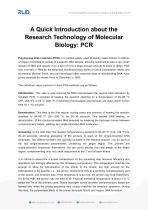
A Quick Introduction about the Research Technology of Molecular Biology: PCR Polymerase chain reaction (PCR) is a method widely used to rapidly make millions to billions of copies (complete or partial) of a specific DNA sample, allowing scientists to take a very small sample of DNA and amplify it (or a part of it) to a large enough amount to study in detail. PCR was invented in 1983 by the American biochemist Kary Mullis at Cetus Corporation; Mullis and biochemist Michael Smith, who had developed other essential ways of manipulating DNA, were jointly awarded the Nobel Prize in Chemistry in 1993. The individual steps common to most PCR methods are as follows: Initialization: This step is only required for DNA polymerases that require heat activation by hot-start PCR. It consists of heating the reaction chamber to a temperature of 94–96 °C (201–205 °F), or 98 °C (208 °F) if extremely thermostable polymerases are used, which is then held for 1–10 minutes. Denaturation: This step is the first regular cycling event and consists of heating the reaction chamber to 94–98 °C (201–208 °F) for 20–30 seconds. This causes DNA melting, or denaturation, of the double-stranded DNA template by breaking the hydrogen bonds between complementary bases, yielding two single-stranded DNA molecules. Annealing: In the next step, the reaction temperature is lowered to 50–65 °C (122–149 °F) for 20–40 seconds, allowing annealing of the primers to each of the single-stranded DNA templates. Two different primers are typically included in the reaction mixture: one for each of the two single-stranded complements containing the target region. The primers are single-stranded sequences themselves, but are much shorter than the length of the target region, complementing only very short sequences at the 3′ end of each strand. It is critical to determine a proper temperature for the annealing step because efficiency and specificity are strongly affected by the annealing temperature. This temperature must be low enough to allow for hybridization of the primer to the strand, but high enough for the hybridization to be specific, i.e., the primer should bind only to a perfectly complementary part of the strand, and nowhere else. If the temperature is too low, the primer may bind imperfectly. If it is too high, the primer may not bind at all. A typical annealing temperature is about 3–5 °C below the Tm of the primers used. Stable hydrogen bonds between complementary bases are formed only when the primer sequence very closely matches the template sequence. During this step, the polymerase binds to the primer-template hybrid an
Open the catalog to page 1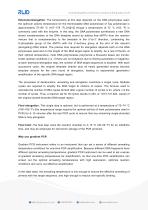
Extension/elongation: The temperature at this step depends on the DNA polymerase used; the optimum activity temperature for the thermostable DNA polymerase of Taq polymerase is approximately 75–80 °C (167–176 °F),[14][15] though a temperature of 72 °C (162 °F) is commonly used with this enzyme. In this step, the DNA polymerase synthesizes a new DNA strand complementary to the DNA template strand by adding free dNTPs from the reaction mixture that is complementary to the template in the 5′-to-3′ direction, condensing the 5′-phosphate group of the dNTPs with the 3′-hydroxy group at the end of the...
Open the catalog to page 2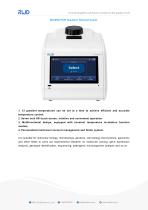
M2-96G PCR Gradient Thermal Cycler 1. 12 gradient temperatures can be set at a time to achieve efficient and accurate temperature control. 2. Seven inch HD touch screen, intuitive and convenient operation. 3. Multifunctional design, equipped with constant temperature incubation function module. 4. Personalized multi-level account management and folder system. It is suitable for molecular biology, microbiology, genetics, cell biology, food science, agronomy and other fields to carry out experimental research on molecular cloning, gene expression analysis, genotype identification, sequencing, pathogenic...
Open the catalog to page 3Archived catalogs
 RWD Surgical Instruments
18 Pages
 RWD Infusion imager RFLSI Ⅲ
2 Pages
 RWD Rotating impactor 68099Ⅱ
2 Pages
 RWD Syringe Pump R462
1 Page
 Rotary Microtomes S710
2 Pages
 RWD Veterinary medical equipment
32 Pages
 RWD Microcentrifuge M1324R
2 Pages
 RWD Osmotic infusion Pump
2 Pages
 RWD Gradient Thermal Cycler
2 Pages
 2015 Product Catalogue
44 Pages
 PRODUCT CATALOGUE 2017
51 Pages



- Medical dolly
- Detection kit
- Logistics trolley
- RWD surgery forceps
- RWD grasping forceps
- Laboratory incubator
- Medical kit
- Microscopy
- Cannula
- Laboratory centrifuge
- Compound microscope
- Benchtop centrifuge
- Stainless steel forceps
- Patient monitor
- Laboratory microscope
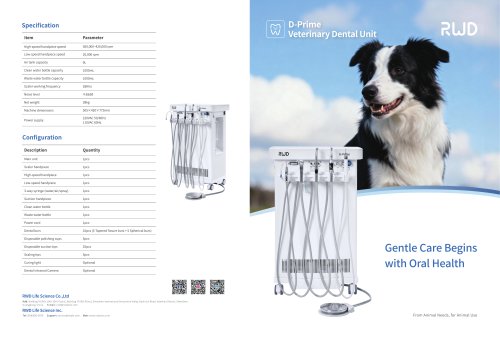
- Dental treatment unit
- RWD straight forceps
- Cytology reagent
- Desktop microscope
- Blood centrifuge