

Celebration catalogue

Celebration catalogue
- Blood Collection and Diagnostic Products: Includes venous and capillary blood collection systems, prepared tubes, and containers for urine, faeces, and sputum.
- Laboratory Products: Features reagent and centrifuge tubes, PCR products, and cell culture systems.
- Medical Products/Hospital Supplies: Covers urine drainage systems, infusion/transfusion systems, and anaesthesia products.
- Transfusion: Includes blood mixing and weighing equipment, sealing and stripping tools, and transport and storage solutions.
- Laboratory/Medical Instruments: Offers laboratory automation, analysers, and electrophoresis equipment.
- Minivette® POCT: For precise collection and dispensing of small capillary blood samples.
- V-Monovette® Urine: A vacuum system for enclosed urine transfer.
- Forensic Swab: Designed for DNA trace collection at crime scenes.
- Capillary Blood Gas Analytics: Offers plastic blood gas capillaries for small sample volumes.
- Neonatal Needle: Ensures minimal blood loss with optimal handling.
The document outlines various blood collection systems, including the S-Monovette® and S-Sedivette® systems, which are designed for safe and efficient blood collection and sedimentation. The S-Monovette® system is recommended for ESR (Erythrocyte Sedimentation Rate) using the Westergren method, while the S-Sedivette® system offers a modified method that avoids the need for sedimentation pipettes, enhancing hygiene and safety.
Calcium-balanced Lithium Heparin is used as an anticoagulant for blood gas analysis, particularly for measuring ionized calcium or magnesium. The document specifies the dosage and provides product details for the Blood Gas Monovette® available in 1 and 2 ml options.
The S-Monovette® for metal analysis is designed for trace element determination, with specified maximum blank values for elements like Ti, Pb, Mn, and others. The document also introduces the S-Monovette® ThromboExact for preventing pseudothrombocytopenia and the S-Monovette® Homocysteine Z-Gel for stabilizing homocysteine levels post-collection.
The S-Monovette® Hirudin is highlighted for its use in platelet function diagnostics, offering an alternative to citrate or heparin by directly inhibiting thrombin. The S-Monovette® PFA 100 is tailored for precise thrombocyte function analysis with a special buffered citrate.
The document details various safety needles, adapters, and disposal systems like the Multi-Safe and Rigi-Box® disposal boxes, emphasizing user safety and compliance with UN certification standards. The Safety-Tray system is also described for organizing blood collection accessories efficiently.
Additional accessories include inserts for small serum/plasma yields and carrier tubes for S-Monovette® samples, designed for safe sample identification and centrifugation.
- Materials: Tubes are made from PP, PS, and HD-PE, offering different levels of transparency and chemical resistance.
- Cap Types: Includes screw caps, push caps, and archiving caps, available in various colors and materials such as low-density polyethylene (LD-PE) and HD-PE.
- Volume and Dimensions: Tubes range from 2.5 ml to 120 ml, with specific length and diameter measurements provided for each type.
- Graduation and Writing Space: Some tubes come with printed graduations and writing spaces for easy labeling.
- Temperature Resistance: Certain tubes are autoclavable at 121°C and cold-resistant down to -80°C.
- Compatibility: Tubes are compatible with various laboratory instruments and racks, including those from Pharmacia/LKB and bioMérieux.
- Transparent Adhesive Tape (Order No. 95.1993): Designed for PCR and sample storage, offering strong adhesion and anti-evaporation protection. It is easily removable due to firm end tabs.
- Highly Transparent qPCR Tape (Order No. 95.1999): Suitable for quantitative PCR, featuring a pressure-sensitive adhesive that minimizes evaporation and is easy to handle due to low initial stickiness.
- Optically Transparent Foil (Order No. 95.1994): Made from polyolefin film, suitable for PCR and sample storage down to -70°C, removable without residue.
- Aluminium Foil (Order No. 95.1995): Heat-resistant and pierceable, ideal for sample storage and resistant to solvents.
- Pierceable Adhesive Tape (Order No. 95.1992): Designed for DNA sequencers and autosamplers, featuring perforated openings for easy sampling.
- Biosphere® Pipette Tips with Filter: These tips serve as an aerosol barrier, preventing contamination during pipetting. They are certified for purity and are available in various volumes.
- Quality Tips with and without Filter: Available in a range of volumes and packaging options, these tips are compatible with various pipette brands and models.
- Bottle Top Filters: Available in different volumes (250 ml, 500 ml) and membrane pore sizes (0.1 μm, 0.22 μm, 0.45 μm). They are designed for storage vessels with a maximum outer diameter of 45 mm.
- Filtropur S and L Systems: These are sterile filtration systems for aqueous solutions, featuring PES membranes for low protein binding and high throughput rates. They are individually wrapped and non-pyrogenic.
- TC Tubes: Made from clear polystyrene, suitable for culturing small cell populations and storage. They come with a red screw cap for open or closed environments.
- Centrifuge Tubes: Made from polypropylene, sterile, non-pyrogenic, with conical bases and attached red screw caps.
- Standard Cuvettes: Made from polystyrene and acrylic, suitable for UV and visual range measurements. They are available in various sizes and packaging options.
- UV Micro Cuvettes: Designed for photometric analysis of nucleic acids and proteins, compatible with various photometers, and available in certified DNA-/RNase-/protein-free options.
- Rack Dimensions: Double block racks are available in two configurations: connected at front ends (418 x 109 x 45 mm) and without handles (209 x 218 x 45 mm).
- Disposal Bags: Sarstedt disposal bags are made from 50 μm thick polypropylene, suitable for autoclaving at temperatures from 121°C to 134°C. They are available in various sizes and colors, with options for "Bio Hazard" print.
- Urine Drainage Systems: Includes UD 3plus and UD 3 TUR-BAG systems, featuring universal holders, ventilated bags, and single-handed drainage taps. The UD 3 TUR-BAG is designed for bladder irrigation with a capacity of 4 liters.
- Urine Measuring System: The UM 500 system includes a 500 ml measuring chamber with bacteria-tight ventilation and anti-reflux valves, ensuring hygienic safety and precise measurement.
- Urine and Secretion Bags: Available with anti-reflux valves and universal step connectors, these bags come in various volumes and are suitable for different medical applications.
- Incontinence Management: Features comfort urine leg bags with anti-reflux valves and easy-to-use base relief valves, available in different capacities and tube lengths.
- Infusion Systems: The Air G system includes a large PVC-free drip chamber and precision-V-roll clamp, with options for precision drop control.
- Pressure Infusion Cuffs: Available in "Comfort" and "Classic" series, these cuffs are designed for arterial pressure measurement and pressure transfusion, with variable fit and latex-free options.
- Transfusion Devices: TRANSMED systems include integrated cascade filters for effective particle separation, suitable for pressure transfusion of blood products.
- Autoclaving Disposal Bags: Ensure bags are open during autoclaving for complete steam sterilization.
- Urine Drainage System Usage: Use universal holders for safe attachment to beds and ensure proper ventilation for hygienic safety.
- Infusion System Handling: Utilize the precision drop control for consistent drip rates and ensure sterile handling of all components.
- Disposal Bags: Available in various sizes, with packaging ranging from 50 to 1,000 pieces per case.
- Urine Drainage Systems: Packaging varies from 15 to 25 pieces per case, depending on the product type.
- Infusion Accessories: Includes a range of connectors, stoppers, and valve manifolds, with packaging from 50 to 200 pieces per case.
- TRANSFLOW and TRANSFLOW-N: Both are designed for transferring one to three blood units, featuring integrated fine filters with a pore size of 40 μm, made from polyester and nylon respectively.
- Transfusion Set 200 μm: Suitable for transferring generally no more than one blood unit, with a 200 μm pore size filter.
- TRANSMED 10 Ped: Designed for pediatric use, featuring a cascade filter system for effective separation of particles larger than 10 μm, and is PVC-free.
- HAEM-o-TRANS Units: These systems are designed for autologous direct retransfusion, featuring a closed low-pressure system to maintain functional erythrocytes and prevent retrograde infections. They include various connectors, suction bellows, and blood collection bags.
- REGANESTH® Spinal Needles: Available in various sizes with pencil-point tips for minimal perforation, featuring a magnifying viewing chamber for quick liquor identification.
- Tuohy Needles and Epidural Catheter Sets: Designed for easier handling with large wings and available with Luer or Non-Luer connectors to prevent wrong route administration.
- Plexus Anaesthesia: Includes unipolar atraumatic plexus needles and catheters with mandrin for optimal gliding, featuring a flat filter with a 96-hour lifetime.
- SAHARA-III and SAHARA-TSC: These devices provide dry tempering for fast thawing and heating of plasma, blood components, and stem cell preparations, preventing contamination risks associated with water baths.
- SAHARA inline: A flow tempering system for inline warming of blood components and infusions, featuring efficient heat transfer and user-friendly design.
The SAHARA-THERMOBOX is designed for warming and storing infusions in plastic containers and glass bottles, as well as linen goods. It features two drawers and uses an active heating element to warm the interior and contents via the drawer bottom. The device offers different tempering modes: warming infusions to 37-41°C and linen goods to 42-70°C. It includes a temperature control mode that can be reset with a separate switch. The device is noted for its high holding capacity, energy efficiency, and ease of use.
Syringe labelling is crucial to avoid medication errors in hospitals. The ISO 26825 standard addresses this by classifying drugs into classes with unique color codes to prevent mix-ups. SARSTEDT AG & Co. provides a range of labels compatible with this standard, available in various packaging options. These labels are designed to be used with specific dispensers and help distinguish drugs from antagonists using diagonal stripes.
This section includes practical supplies for hospital routines, such as navel clamps for safe umbilical cord closure, and various tube holders and fixing clamps. Each product is listed with its order number and packaging details.
The document details various devices and accessories for blood mixing, weighing, sealing, and storage. Key products include the TOPSWING and TRANSWAAG PRO, which offer innovative mixing motions, data management, and modular designs. The document also describes segmentation systems and tube sealers for blood bag tubing, highlighting features like RF sealing technology and compact design.
ThermoScan and TRANS Control systems are outlined for temperature-controlled transport of blood products. These systems ensure adherence to prescribed transport temperatures and include features like data logging and insulation to protect contents from temperature impacts.
Incubators and agitators for platelet storage are described, featuring high-grade steel casing, insulated interiors, and control units for temperature and agitator movement. These devices are equipped with alarm systems and interfaces for data management.
Two models of platelet incubators are described: TI-2 and TI-3. Both maintain a temperature of +22°C with a tolerance of +/- 1/2°C. The TI-2 model accommodates 4 agitators TA 2 or 2 agitators TA 1, while the TI-3 model accommodates 6 agitators TA 2 or 3 agitators TA 1. The TI-2 has dimensions of 1,042 x 1,403 x 648 mm and weighs 156 kg, whereas the TI-3 is larger at 1,042 x 1,913 x 648 mm and weighs 210 kg. Both models require a power supply of 230 VAC 50-60 Hz/705 VA.
Record charts for round chart recorders are available in two sizes: 120 mm diameter for 0 to 30°C and 150 mm diameter for +50 to -5°C. Felt tip pens for these recorders are also available. Additional accessories include mobile blood donation seats and tables, headrest covers, and RadTag® blood irradiation indicators for gamma and X-ray irradiation.
Blood bags for autologous transfusion are available in 3-fold and 4-fold configurations, with various capacities and features. Containers for erythrocyte concentrates and boxes for FFP are also listed, with specific dimensions and packaging details.
The document details various laboratory instruments for sample preparation, including decappers, recappers, and centrifuges. The Decapper DC 1200 and Recapper RC 1200 are highlighted for their high throughput and compatibility with various tube sizes. The PVS 1625 system is noted for its modular configuration and compatibility with most racks or carrier styles.
Centrifuges LC 6 and LC 6plus are described, both featuring swing-out rotors for better sample stability. The LC 6plus also accommodates urine samples. The document contrasts centrifugation with swing-out rotors versus fixed-angle rotors, emphasizing the benefits of the former.
The document describes various centrifuges suitable for medical laboratories and research. The LC 24 and LC 24 E models are highlighted for their high-speed operation and ability to store user programs. They can accommodate up to 24 tubes per cycle, providing optimal serum and plasma quality. The MC 6 model is ideal for quick spin-downs and microfiltration, featuring a fixed angle rotor for micro tubes.
Pipetting Aids:
The M-Sarpette® is a manual pipettor with ergonomic design, while the Automatic-Sarpette® offers two speeds and a free dispensing mode, powered by an eco-friendly battery. Both models include essential accessories like membrane filters and adapters.
Mixers:
The document details various mixers, including the Universal Rocking Mixer SM 1 and the Sarmix® M 2000, which offer variable speed and are suitable for hematology and research. The Sarmix® GM 1 provides 3-dimensional motion for thorough mixing.
ESR Analyzers:
The Sediplus® series, including models S 100, S 200, and S 2000, are designed for ESR measurement with digital readouts and interfaces for LIS/printer connections. They can handle multiple samples simultaneously and are extendable with additional modules.
Electrophoresis Equipment:
The document outlines equipment for serum protein electrophoresis, including power packs, chambers, and various accessories. The ES 2000 Plus system automates protein electrophoresis with comprehensive software and ready-to-use reagents.
Thin-Layer Chromatography:
Instrumentation for thin-layer chromatography is provided, including thermoplates, atomisers, and UV analysis equipment, essential for analyzing mixed substances, particularly plant-origin drugs.
Catalog excerpts

Celebration Catalogue Blood Collection and Diagnostic Products
Open the catalog to page 1
SARSTEDT International Your partner in medicine and science worldwide SARSTEDT AG & Co. P.O. Box 12 20 · D-51582 Nümbrecht Phone +49 2293 3050 · Fax +49 2293 305- 122 [email protected] · www.sarstedt.com
Open the catalog to page 2
From a One-Man Operation to a World-Wide Enterprise with 2,500 Employees Company Founder Walter Sarstedt 50 years of Sarstedt That means 50 years of hard work and trusted cooperation with customers and employees. From the beginning we have made every effort to satisfy the expectations of our customers. This cannot be achieved by personal commitment alone but can only be accomplished with motivated and dedicated employees. Our success is based on strong product development, on the depth of our high quality production in the domestic market as well as abroad and our own world-wide distribution...
Open the catalog to page 3
Production facilities Principal production site with registered office in Numbrecht, Germany Additional production sites Adelaide, Australia Newton, USA Marnay, France Hemer, North Rhine Westphalia Wiehl, North Rhine Westphalia Rheinbach, North Rhine Westphalia Brand-Erbisdorf, Saxonia Klingenthal, Saxonia (Germany) (Germany) (Germany) (Germany)
Open the catalog to page 4
Headline Innenteil 20pt Index Blood Collection and Diagnostic Products Venous Blood Collection Capillary Blood Collection Prepared Tubes Urine and Faeces Range Sputum Containers Miscellaneous Tests Laboratory Products pp. 52-147 Reagent and Centrifuge Tubes Micro Tubes PCR, Liquid Handling, Bacteriology Cell and Tissue Culture, CryoPure Storage System Cuvettes, Special Vials, Microtest Plates General Laboratory Products Medical Products / Hospital Supplies Urine Drainage Systems Infusion/Transfusion Systems Anaesthesia Thawing and Heating Syringe Labelling Miscellaneous pp. 170-181 Blood Mixing...
Open the catalog to page 5
New Products 16pt Headline Innenteil Neonatal Needle The new Neonatal Needle combines optimal handling and ow characteristics ensuring minimal blood loss. Minivette® POCT The Minivette® POCT enables precise collection and direct dispensing of small capillary blood samples and is therefore the optimal collection system for point-of-care-tests. Capillary Blood Gas Analytics Plastic blood gas capillaries are available in a range of sizes and volumes for small samples volumes and optimal instrument compatibility. V-Monovette® Urine The vacuum system for enclosed urine transfer ensures convenient...
Open the catalog to page 6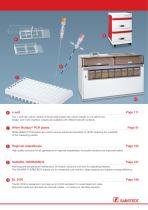
The x-well cell culture systems include slide-based cell culture vessels in a small format. Single- and multi-chamber vessels are available with different growth surfaces. 7 White Multiply® PCR plates White Multiply® PCR plates are used to ensure enhanced sensitivity of qPCR reducing the variability of the measuring results. Regional Anaesthesia High quality products for all applications in regional anaesthesia. Innovative solutions for improved safety. Warming and temperature maintenance of infusion solutions and linen for operating theatres. The SAHARA-THERMOBOX stands out for enhanced user...
Open the catalog to page 7
Blood Collection and Diagnostic Products
Open the catalog to page 8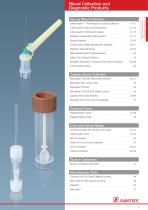
Diagnostic Products Venous Blood Collection S-Monovette® - The Revolution in Blood Collection 10-11 2 " S-Monovette® Sizes and Preparations 12-13 go. S-Monovette® Ordering Information 14-15 o§ S-Monovette® Safety-Needles and Adapters 20-21 Rigi-Box® Disposal Boxes 22-23 Multi-Safe/SaniSafe® Disposal Boxes 24 Safety-Tray Transport System 25 Seraplas® Separators, Accessories for Blood Collection 26-28 Multivette® 600, Carrier Tube 32 Capillary Blood Gas Analytics 35-36 Minivette® POCT, End-to-End Capillaries 37 Prepared Micro Tubes 37-38 Prepared Blood Tubes 39 Urine Monovette® and Conical Urine...
Open the catalog to page 9
Blood Collection and Diagnostic Products S-Monovette® – The Revolution in Blood Collection Aspiration technique Vacuum technique Open system Enclosed system Aspiration technique and vacuum technique in an enclosed system One system – 2 techniques The S-Monovette® combines the advantages of both systems ✓ Suitable for all vein conditions Optimal sample quality
Open the catalog to page 10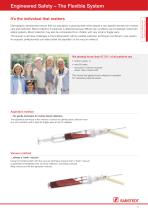
It’s the individual that matters Demographic development shows that our population is growing older which places a very specic demand on medical care and treatment. Blood collection in particular is affected because difcult vein conditions are increasingly noted with elderly patients. Blood collection may also be complicated from children with very small or fragile veins. The answer to all these challenges is the S-Monovette® with its variable collection techniques combined in one system. As required, phlebotomists can select either the aspiration or the vacuum method. We already know that 47.3%*...
Open the catalog to page 11
Low penetration force due to perfect bevel and superior glide ensure the reliability and safety crucial to an innovative Blood Collection and Diagnostic Products blood collection system. GLVWDQFH >PP@ The S-Monovette® is ready-to-use without any need to assemble a needleholder. The optimal bevel and superior glide of the needle in combination with a at puncturing angle ensure safe puncturing for enhanced patient comfort. The deeper recessed membrane reliably prevents direct contact with the puncture site on the membrane. The result is even greater protection against infection and safe use of...
Open the catalog to page 12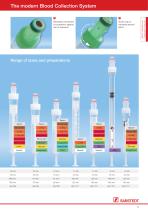
The modern Blood Collection System 3 Recessed membrane for protection against risk of exposure Screw cap to minimise aerosol effect Blood Collection and Diagnostic Products Range of sizes and preparations Serum Serum Citrate Buffer*
Open the catalog to page 13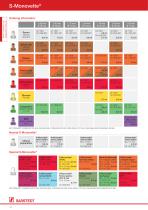
S-Monovette® Blood Collection and Diagnostic Products Clotting Activator Clotting Activator Potassium EDTA ESR Sodium Citrate 1 in 5 Each S-Monovette® is indicated with the colour code shown above. S-Monovettes with order number ending in .001 have a coloured paper label corresponding to the table. Neutral S-Monovette® S-Monovette® without preparation without additive without additive without additive without additive Special S-Monovette® S-Monovette® EDTA K2-Gel 92 x 16 mm; 9.0 ml 02.1333.001 90 x 13 mm; 4.9 ml 04.1932.001 S-Monovette® for trace metals 92 x 15 mm 7.5 ml S-Monovette® Homocysteine...
Open the catalog to page 14All Sarstedt catalogs and technical brochures
 Tempus1800® Fero
12 Pages
 Catalogue 2023
338 Pages
 lumox® multiwell
2 Pages
 GS 312
2 Pages
 SARMIX® GM1
2 Pages
 TRANS Control Transport box
2 Pages
 HCTS2000 MK2
3 Pages
 SMC 6 and SMC 6 plus
3 Pages
 Multi-Safe vario 2000
4 Pages
 Medicine Cup
2 Pages
 Incubator & Agitator
3 Pages
 MegaBlock®
2 Pages
 Urine Analysis
16 Pages
 Urine Measuring System A06 W
4 Pages
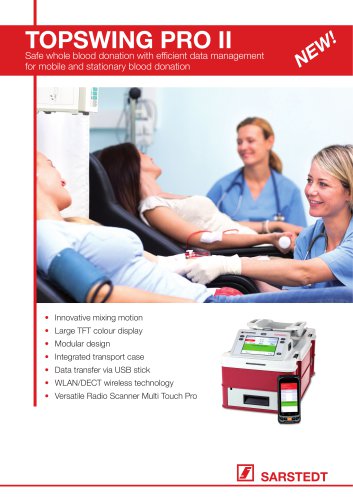 TOPSWING
4 Pages
 Blood Gas Analytics
3 Pages
 Blood Collection Systems
19 Pages
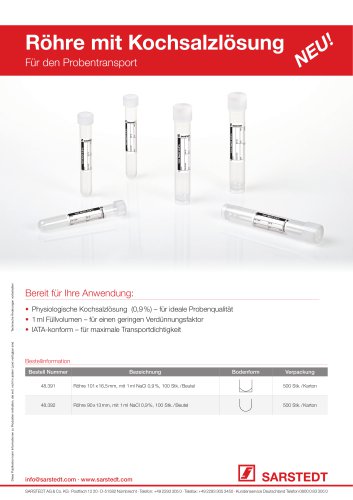 Tube with saline solution
2 Pages
 Lumox® x-well Technology
5 Pages
 Gas Sampler
7 Pages
 Transfusion devices
2 Pages
 SAHARA-TSC
3 Pages
 TRANSWAAG Pro
4 Pages
 ELISA Plates
3 Pages
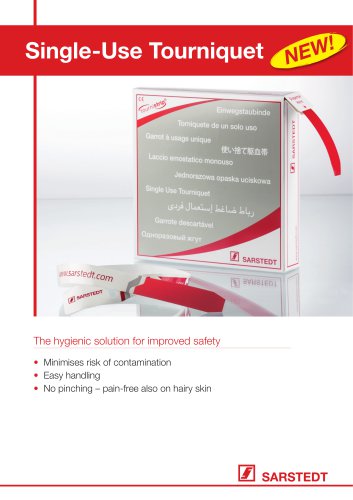 Single-Use Tourniquet
2 Pages
 Microvette® APT
8 Pages
 S-Monovette® POC Collect Kit
3 Pages
 HCTS 2000 MK2
3 Pages
 Systematic Workflow
17 Pages
 PBM
PBM3 Pages
 Screw Cap Micro Tubes
16 Pages
 REGANESTH® unoplex
2 Pages
 Micro Tubes
16 Pages
 Tourniquet application
3 Pages
 Freezing tubes
3 Pages
 IVARO Tube Handler
9 Pages
 IsoFreeze® Rack
1 Page
 PCR & Molecular biology
21 Pages
 White Multiply®-µStrips
2 Pages
 Low Profile PCR items
1 Page
 NGS Library Preparation
2 Pages
 Growth Surface References
20 Pages
 Growth surfaces for cells
3 Pages
 Automatic-Sarpette®
2 Pages
 Micro-Needle
2 Pages
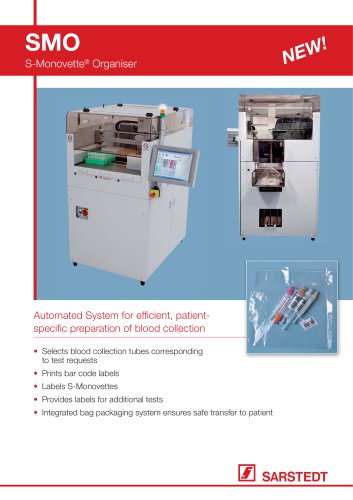 SMO S-Monovette® Organiser
2 Pages
 S-Monovette® Hirudin 1.6 ml
2 Pages
 SML-2 S-Monovette® Labeler
2 Pages
 SML-3 S-Monovette® Labeler
2 Pages
 IsoFreeze® PCR-Racks
1 Page
 Conversion of box packaging
2 Pages
 PBM PatientBloodManagement
4 Pages
 CATALOGUE GÉNÉRAL
109 Pages
 THE SARSTEDT GROUP
9 Pages
 White Multiply
2 Pages
 REGANESTH
2 Pages
 BL 1200
2 Pages
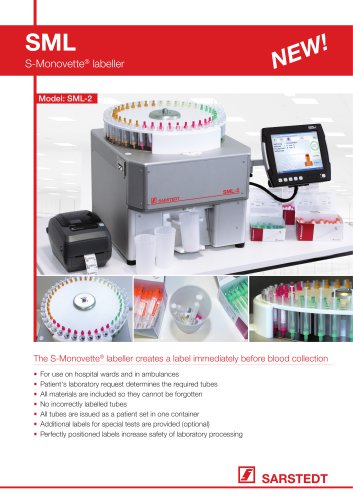 SML
SML2 Pages
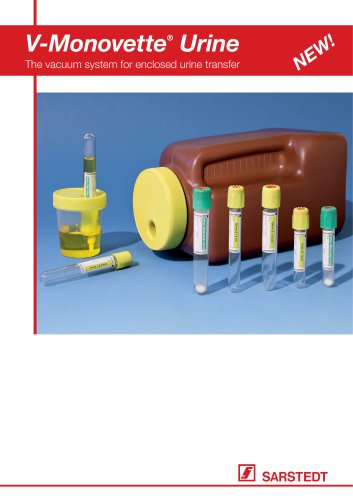 V-Monovette urine
2 Pages
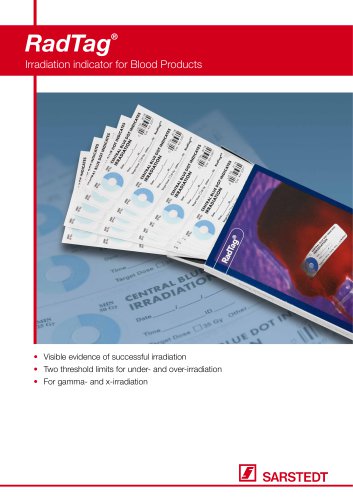 RadTag
2 Pages
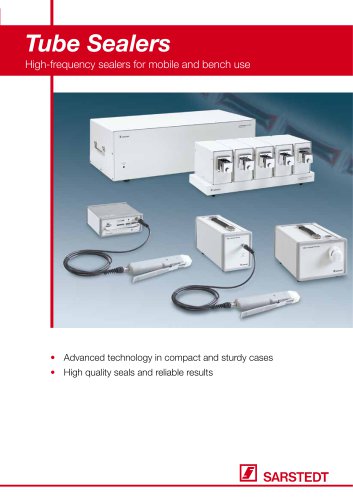 Tube Sealers
4 Pages
 Catheter quiver/Tube Holder
2 Pages
 Transfusion systems
3 Pages
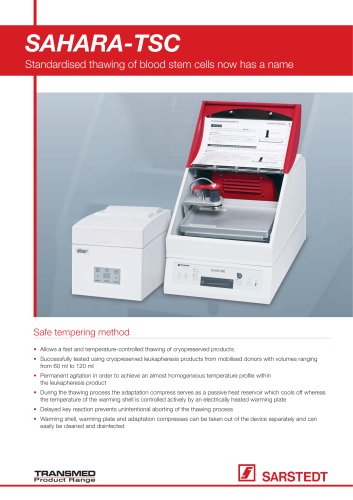 SAHARA-TSC
4 Pages
 HAEM-o-TRANS
3 Pages
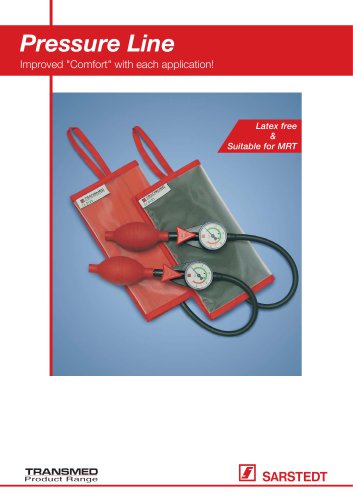 Pressure Line
4 Pages
 SAHARA-III
4 Pages
 Single use tourniquets
2 Pages
 Minivette® POCT
2 Pages
 2011 Systematic Workflow
32 Pages
 Sediplus
6 Pages
 Neutral Pipette Tips
1 Page
 Microbiology
12 Pages
 flexiPERM®/quadriPERM®
2 Pages
 miniPERM®
4 Pages
 Cell and Tissue Culture
20 Pages
 Sample Handling
4 Pages
 Micro Tubes
4 Pages
 Liquid Handling
40 Pages
 Screw Cap Micro Tubes
8 Pages
 Multi-Safe Disposal Box
16 Pages
 Safety-Needle
52 Pages
 S-Monovette® GlucoEXACT
40 Pages
 Multi-Safe Disposal Box
12 Pages
 Multiply® PCR Plates
7 Pages
 UriSet 24
1 Page
 Urine Containers
1 Page
 Sediplus® S 100
1 Page
 S-Sedivette®
1 Page





Archived catalogs
 Forensic Swab
220 Pages