- Catalogs
- Scotmas Group
- HEALTHCARE CASE STUDIES


HEALTHCARE CASE STUDIES
HEALTHCARE CASE STUDIES
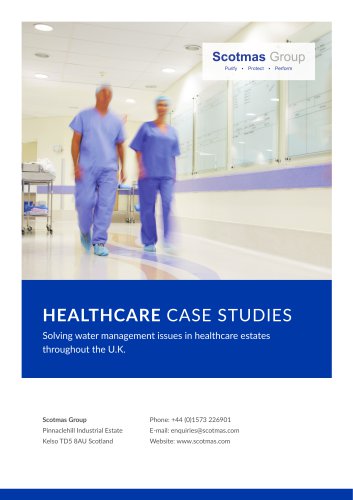
This document presents case studies on solving water management issues in healthcare estates across the UK, focusing on the implementation of water treatment solutions by Scotmas Group.
Problem: Pathogenic bacteria causing Hospital Acquired Infections (HAI) led to ward closures and a critical incident.
Options: Stock tank disinfection or installation of a long-term water treatment system.
Solution: Chlorine Dioxide (ClO2) was chosen for its effectiveness and ease of use. Rapid installation of dosing systems and ongoing support ensured the elimination of harmful bacteria.
Results: The risk was managed, and the hospital estate's water infrastructure was effectively controlled, contributing to public health safety.
Problem: Inconsistent performance of ClO2 systems led to safety risks, especially in wards with vulnerable patients.
Options: Replace ClO2 systems, continue with additional testing, or investigate advanced dosing systems.
Solution: New Scotmas Bravo WA ClO2 generators were installed, improving disinfection purity and eliminating harmful by-products. Monitoring systems were enhanced for better control.
Results: The trust estate was managed to high standards, significantly reducing patient risk.
Problem: Persistent bacterial growth in sites with low water consumption.
Options: Thermal disinfection, super chlorination, or small in situ water treatment equipment.
Solution: Scotmas Alpha WA ClO2 generators were installed on multiple sites, providing continuous dosing without shutdowns.
Results: Significant cost savings and effective risk management, ensuring safe care for elderly residents.
Catalog excerpts
Scotmas Group HEALTHCARE CASE STUDIES Solving water management issues in healthcare estates throughout the U.K. Scotmas Group Pinnaclehill Industrial Estate Kelso TD5 8AU Scotland Phone: +44 (0)1573 226901 E-mail: [email protected] Website: www.scotmas.com
Open the catalog to page 1
©t_jt© QEUH HOSPITAL QUEEN ELIZABETH UNIVERSITY HOSPITAL NHS Greater Glasgow and Clyde The Problem: Rare pathogenic bacteria causing Hospital Acquired Infections (HAI) had forced ward closures in high-risk clinical areas in a newly built hospital estate, culminating in a high profile critical incident. THE OPTIONS 1. Stock tank disinfection and cleaning would resolve the immediate issue, but the Trust needed a long term solution to stop bacteria from recolonising the water system. 2. Install a water treatment system, solving the short and long term issue. Hydrogen Peroxide, Copper Silver Ionization...
Open the catalog to page 2
The Problem: A Trust had been using ClO2 for several years as part of its Legionella Management Strategy, however microbial sampling revealed inconsistent performance of ClO2 generation systems, leading to a lack of residual ClO2 and high levels of disinfection by products (DBP) in the water. The incumbent suppliers were a generalist water treatment company, not ClO2 experts with inhouse knowledge and expertise. Non-conformances were regularly flagged to the Water Safety Group. Most importantly, significant patient safety risk was noted, especially in wards treating vulnerable or immunosuppressed...
Open the catalog to page 3
The Problem: The Trust were struggling with persistent growth of Pseudomonas and other bacteria in sites with variable, often low, water consumption. The size and number of sites affected, and their relatively low water usage, didn't justify large scale capital investment. Manual chemical dosing would have been inaccurate, expensive, potentially unsafe to handle and difficult to control. 1. Thermal disinfection of water supplies. This is an effective treatment but potentially dangerous in care environments where elderly residents could access very high temperature water. 2. Super chlorination...
Open the catalog to page 4All Scotmas Group catalogs and technical brochures
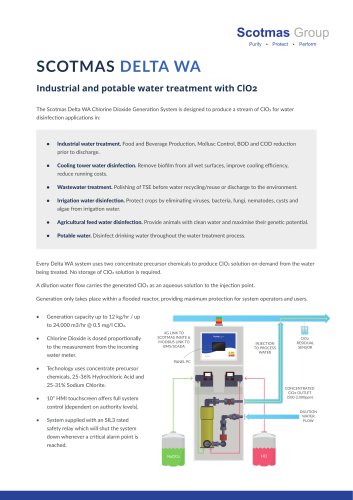 SCOTMAS DELTA WA
2 Pages
 BRAVO ULTRA-PURE
2 Pages
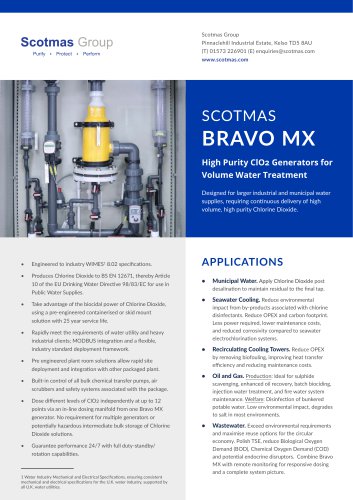 SCOTMAS BRAVO MX
2 Pages
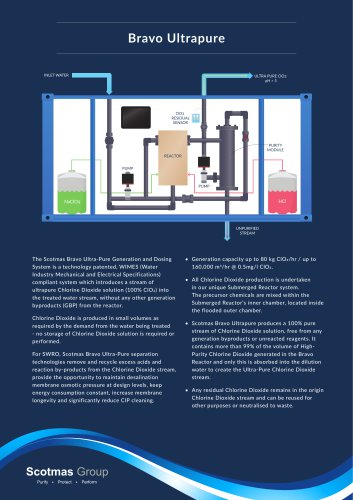 Bravo Ultrapure
2 Pages
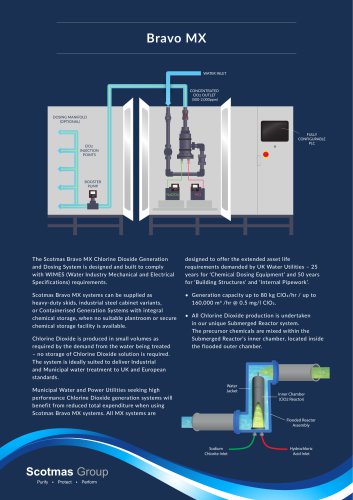 Bravo MX
2 Pages
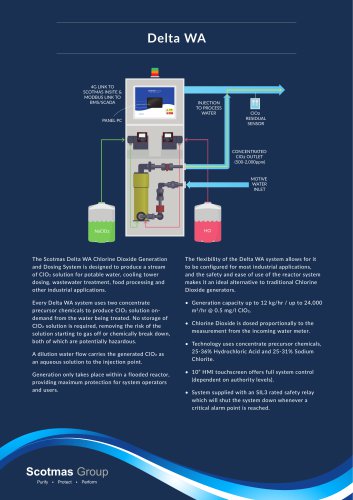 Delta WA
2 Pages
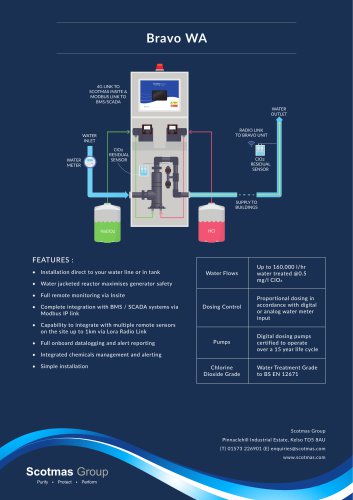 Bravo WA
1 Page
 Bravo Agriculture
1 Page
 Alpha R In Tank
1 Page
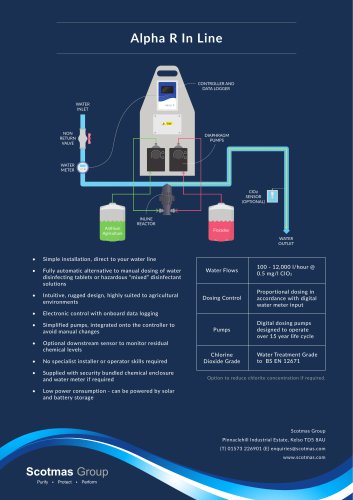 Alpha R In Line
1 Page
 CIDOX ® +
2 Pages
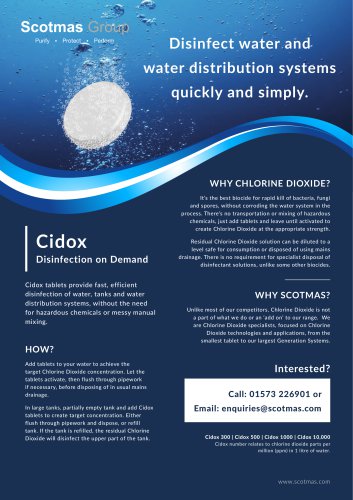 Cidox
Cidox1 Page
 Floradox
1 Page