Journal of Clinical Imaging Science
Journal of Clinical Imaging Science
The document discusses the assessment of low rectal anastomosis integrity following low anterior resection (LAR) surgery, typically due to colon cancer. Traditional methods using a single balloon catheter have limitations, especially during CT examinations, due to difficulties in maintaining a seal without manual pressure. The need for a catheter design that can maintain an effective rectal seal without hands-on manipulation is highlighted.
Technical Innovation
A novel dual balloon rectal catheter, originally designed for pediatric intussusception reduction, is introduced for assessing low rectal anastomoses. This catheter aims to optimize colon distension, minimize improper catheter placement, and reduce the risk of iatrogenic anastomosis disruption.
Methods and Clinical Results
The dual balloon catheter was adopted at the Medical University of South Carolina for postoperative assessment of anastomotic leaks. The catheter's design allows for better positioning and sealing compared to the traditional single balloon catheter. Instructions for its use include careful insertion, inflation of the distal balloon, and securing with the proximal balloon. The catheter has shown improved diagnostic quality in CT examinations.
Results and Discussion
While some technical errors were encountered, such as incorrect initial insertion depth, the dual balloon catheter generally maintained a diagnostic-quality seal. The catheter's conical proximal balloon often suffices to maintain the seal, even with suboptimal technique. The institution has integrated the dual balloon catheter into its protocol for LAR assessments, noting its potential for other radiological applications.
Conclusion
The dual balloon catheter offers advantages over single balloon catheters, including improved accuracy in placement, reduced need for manual securing, and consistent high-quality colon insufflation. Its routine use is recommended for evaluating low rectal anastomoses.
References
The document cites various studies and articles supporting the use of CT and the challenges of traditional catheter methods in assessing anastomotic leaks.
Catalog excerpts
Journal of Clinical Imaging Science Technical Innovation Gastrointestinal Imaging A novel dual balloon rectal catheter for use in the postoperative assessment of low rectal anastomoses following low anterior resection Megan Mercer1, Madison Kocher1, Nick Shaheen1, Brian P Flemming1, Jeffrey Waltz1 Department of Radiology, Medical University of South Carolina, Charleston, South Carolina, United States. *Corresponding author: Madison Kocher, Department of Radiology, Medical University of South Carolina, Charleston, South Carolina, United States. [email protected] Received : 10 December 2021 Accepted : 22 February 2022 Published : 26 April 2022 DOI 10.25259/JCIS_220_2021 Quick Response Code: Following low anterior resection (LAR) of the colon, an image-guided assessment of the anastomosis for leak is typically performed using an enema via a rectal catheter, whether by CT or fluoroscopy. However, there is potential for poor assessment due to inappropriate catheter positioning as well as potential risk that the anastomosis becomes compromised by the balloon inflation. This article discusses the adaptation of a novel double-balloon catheter (originally designed by a member of our institution for use in pediatric intussusception reduction) for assessment of low rectal anastomoses. The goal of this technical note is to demonstrate our experience with this catheter, primarily through example cases, and explain its potential for optimizing colon distension, minimizing improper catheter placement, and potentially reducing the risk of iatrogenic anastomosis disruption. Keywords: Low anterior resection, Computed tomography, Rectal anastomosis, Rectal contrast, Rectal catheter INTRODUCTION The integrity of the low rectal anastomosis following low anterior resection (LAR) surgery (often due to colon cancer) can be assessed by fluoroscopy or CT using rectal contrast material administration via enema.[1] This assessment requires the insertion of a rectal catheter to introduce the contrast material. Traditionally, a single balloon catheter (commonly a Foley catheter) is used and reverse pressure is applied by the operator to achieve a seal and prevent leakage of the contrast material. While this can be achieved manually during fluoroscopy examinations, it is more difficult to maintain during CT examinations, as the user must release their physical hold on the catheter to obtain the images. Adhesive tape can be used in lieu of manual pressure with varying degrees of success in our personal experience. As such, there is a clinical need for a catheter design that can maintain an effective rectal seal without “hands-on” manipulation, especially for rectal contrast used for CT. Postoperative imaging following colorectal surgery for anastomotic disruption is nearly ubiquitous. Accurate, early identification of colonic anastomotic leak is correlated to improved patient outcomes[2] and leak is associated with up to 50% serious morbidity without effective treatment.[3] In fact, low anterior colorectal resection has the highest rate of anastomotic leak among colorectal surgeries.[4] Whether by CT or fluoroscopy, the integrity of a low anterior anastomosis can be difficult to assess, primarily as the requisite balloon is in close proximity to the anastomosis.[2] Although This is an open-access article distributed under the terms of the Creative Commons Attribution-Non Commercial-Share Alike 4.0 License, which allows others to remix, transform, and build upon the work non-commercially, as long as the author is credited and the new creations are licensed under the identical terms. © 2022 Published by Scientific Scholar on behalf of Journal of Clinical Imaging Science Journal of Clinical Imaging Science 2022 • 12(18)
Open the catalog to page 1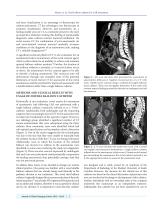
Mercer, et al.: Dual balloon catheter for LAR assessment real-time visualization is an advantage of fluoroscopy for catheter placement, CT has advantages over fluoroscopy in anatomic visualization. However, peri-anastomotic air, a finding readily seen on CT, is commonly present in the early postoperative abdomen making this finding of questionable diagnostic value without contrast material installation. On rectal enema CT, the combination of peri-anastomotic air and extra-luminal contrast material markedly increases confidence in the diagnosis of an anastomotic leak, making CT a valuable imaging...
Open the catalog to page 2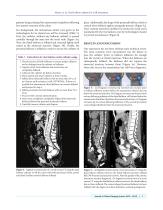
Mercer, et al.: Dual balloon catheter for LAR assessment patients being evaluated for anastomosis breakdown following low anterior resection of the colon. For background, the instructions which were given to the technologists for its clinical use will be reviewed [Table 1]. First, the catheter, without any balloons inflated, is passed carefully through the anus into the rectal vault [Figure 3a]. Next, the distal balloon is inflated and retracted lightly until seated at the anorectal junction [Figure 3b]. Finally, the proximal balloon is inflated in order to secure the catheter in Table 1: Instructions...
Open the catalog to page 3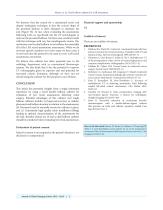
Mercer, et al.: Dual balloon catheter for LAR assessment We theorize that the reason for a maintained rectal seal despite inadequate technique is that the conical shape of the proximal balloon is often adequate to maintain the seal [Figure 5b]. In fact, when evaluating the anastomosis following LAR, we specifically ask the CT technologists to only use the proximal balloon. We have seen excellent results with the technique with very few nondiagnostic exams. Our institution uses the dual balloon rectal catheter for essentially all of the LAR rectal anastomosis assessments. While we do not have...
Open the catalog to page 4All SealCath catalogs and technical brochures
 Cephus Catheter
1 Page
 Rectal Seal
2 Pages
 SealCath Cephus Catheter™
2 Pages