- Catalogs
- Sekisui Diagnostics LLC
- ACETAMINOPHEN L3K® ASSAY

- Products
- Catalogs
- News & Trends
- Exhibitions
ACETAMINOPHEN L3K® ASSAY
ACETAMINOPHEN L3K® ASSAY
Catalog excerpts
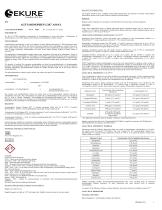
REAGENT DETERIORATION The reagents should be clear. Turbidity would indicate deterioration. The presence of crystals would indicate deterioration; product with crystals should be replaced with fresh product. ACETAMINOPHEN L3K® ASSAY Reagents must be disposed of in accordance with all Federal, Provincial, State, and local regulations. * See additional information under the heading “Limitations/ Interfering Substances”. Substance Tested CATALOGUE NUMBER: 506-30 SIZE: R1: 3 x 10 mL, R2: 6 x 10 mL For the IN VITRO quantitative measurement of acetaminophen in serum and plasma. Measurement of acetaminophen is used in the diagnosis and treatment of acetaminophen overdose toxicity. TEST SUMMARY Acetaminophen (paracetamol) is used as an analgesic in many different formulations(1). While therapeutic doses rarely cause adverse side effects, the effect of long term treatment with acetaminophen is unclear. Cases have been reported where chronic excessive use of acetaminophen has led to hepatotoxicity and nephrotoxicity.(2,3) In cases of acute overdosage, acetaminophen can cause severe hepatic damage leading to hepatic failure if untreated/4'5'65 The management of acetaminophen overdose requires early recognition of the drug in the bloodstream. Toxicity is generally reported at concentrations over 200 gg/mL (1324 gmol/L). N-acetylcysteine has been used as an antidote in conjunction with intensive support care. Early diagnosis of acetaminophen-induced hepatotoxicity is important since initiation of therapy within 8 hours of ingestion lessens the potential for hepatic injury, and decreases the mortality rate.(7) The majority of methods for measuring acetaminophen are based on spectrophotometric or chromatographic principles. Chromatographic methods are specific for the parent compound, however, they are not well suited to emergency laboratories. Spectrophotometric methods are simpler and more rapid, but do not always offer the desired specificity. This spectrophotometric method is rapid, reliable, convenient, and specific for acetaminophen. TEST PRINCIPLE Acyl Amidohydrolase The enzyme, acyl amidohydrolase, cleaves the amide bond of the acetaminophen molecule, leaving p-aminophenol and acetate. The p-aminophenol is reacted with 2,5-dimethylphenol in the presence of manganese ions to form a colored compound, 4-(4-iminophenol)-2,5-dimethylcyclohexadiene-1-one. The increased absorbance at 605 nm due to the formation of 4-(4-iminophenol)-2,5-dimethylcyclohexadiene-1-one is directly proportional to the concentration of acetaminophen in the sample. Acetaminophen Enzyme Reagent (R1): A solution containing buffer (pH 8.6 at 25°C), 0.3 mmol/L MnCl2X4H2O, 2 0.9 KU/L Acyl Amidohydrolase (microbial), 50 mg/L sodium azide. Acetaminophen Color Reagent (R2): A solution containing 0.1 mol/L sodium carbonate buffer (pH 11.5 at 25°C), 61 mmol/L 2,5-dimethylphenol, stabilizer, preservative. Acetaminophen Calibrator: 1 x 5 mL of a solution containing buffer (pH 5.2 at 25°C), 151 gg/mL (1000 gmol/L) acetaminophen, preservatives. Internal reference standards are created for Acetaminophen using a USP grade reference Acetaminophen material (not less than 98% and not more than 102% of paracetamol on an anhydrous basis). Acetaminophen calibrator is manufactured gravimetrically and tested against these internal reference standards. Contains: Sodium Hydroxide H314 - Causes severe skin burns and eye damage. Prevention - P260 - Do not breathe vapor/spray. P264 - Wash thoroughly after handling. P280 - Wear protective gloves/protective clothing/eye protection/ face protection. Response - P301 + P330 + P331 - IF SWALLOWED; rinse mouth. Do NOT induce vomiting. P303 + P361 + P353 - IF ON SKIN (or hair): Remove/Take off immediately all contaminated clothing. Rinse skin with water/shower. P363 - Wash contaminated clothing before reuse. P305 + P351 + P338 - IF IN EYES: Rinse cautiously with water for several minutes. Remove contact lenses, if present and easy to do. Continue rinsing. P310 - Immediately call a POISON CENTRE or doctor/physician. Storage - P405 - Store locked up. Disposal - P501 - Dispose of contents/container in accordance with local/regional/national/international regulations. See Safety Data Sheet for additional information. REAGENT PREPARATION, STORAGE AND STABILITY Supplied reagents are stable at 2-8°C until expiry date. Stability claims are based on real time studies. Fresh, clear, unhemolysed serum or lithium heparinized plasma. Separated samples may be stored for up to 14 days at 4 to 8°C prior to being tested. If testing will be delayed more than 14 days, separated samples may be stored frozen at < -20°C for up to 45 days.(8) LIMITATIONS/ INTERFERING SUBSTANCES (CLSI EP7)(9) Interferences from hemolysis, icterus and lipemia were evaluated for this acetaminophen method on a Roche/Hitachi® 717 using a significance criterion of > 10% variance from control. Hemoglobin concentration greater than 200 mg/dL (31 gmol/L) showed a positive bias of up to 45% at acetaminophen concentration of 14.0 gg/mL (93 gmol/L). Hemoglobin produces significant interference in this method; therefore hemolyzed samples should not be used. Intralipid concentration greater than 200 mg/dL showed a positive bias of up to 38% at acetaminophen concentration of 15.3 gg/mL (101 gmol/L). Lipemic samples should not be used. Conjugated bilirubin concentration of up to 2 mg/dL (23.7 gmol/L) did not interfere in samples with acetaminophen concentrations of 16.3 gg/mL (108 gmol/L). Unconjugated bilirubin concentration of up to 2 mg/dL (34.2 gmol/L) did not interfere in samples with acetaminophen concentrations of 16.3 gg/mL (108 gmol/L). NOTE: Significantly reduced acetaminophen recovery has been demonstrated in situations where testing for acetaminophen toxicity has been performed on hyperbilirubinemic samples at acetaminophen levels in the range of 15.1 mg/L (100 gmol/L). This interference is not detected at acetaminophen levels in the range of 45.3 mg/L (300 gmol/L) or higher. It is recommended that laboratories review the Rumack-Matthews Nomogram for patient ingestion status, treatment and monitoring protocols to determine the extent of the interference. ANALYTICAL SPECIFICITY (CLSI EP7)(9) Cross Contamination studies have not been performed on automated instruments. Certain reagent/instrument combinations used in sequence with this assay may interfere with reagent performance and test results. The existence of, or effects of, any potential cross contamination issues are unknown. Interferences from icterus, lipemia, hemolysis, ascorbic acid and N-acetylcysteine were evaluated for this acetaminophen method on the Roche/Hitachi® 717 analyzer using a significance criterion of >10% or ±1.25 gg/mL (8 gmol/L) variance from control, whichever is greater. Plasma data is expected to be similar. Samples containing elevated levels of Immunoglobulin M (IgM) or samples from patients with Waldenstrom’s Macroglobulinemia may produce unreliable results. ANALYTICAL SPECIFICITY TO DRUGS Interferences from the following therapeutic drugs were tested at acetaminophen concentrations of 5.0 gg/mL (33 gmol/L) and 30.0 gg/mL (199 gmol/L) and were evaluated for this Acetaminophen method on a Roche/Hitachi® 717 analyzer using a significance criterion of >10% or ±1.25 gg/mL (8 gmol/L) variance from control, whichever is greater. Samples containing NAPQ1 (N-Acetyl-4-benzoquinoneimine) may cause elevated levels of measured acetaminophen. Samples containing >20 mg/L metamizole may cause elevated levels of measured acetaminophen. A summary of the influence of drugs on clinical laboratory tests may be found by consulting Young, D.S.(10) ANALYTICAL PROCEDURE MATERIAL PROVIDED Sekisui Diagnostics’ Acetaminophen reagents and calibrator.
Open the catalog to page 1