
- Catalogs
- Shenzhen XFT Medical Limited
- XFT-2001D G4 Foot Drop Stystem


- Company
- Products
- Catalogs
- News & Trends
- Exhibitions
XFT-2001D G4 Foot Drop Stystem

XFT-2001D G4 Foot Drop Stystem
- Training Mode: Designed for patients unable to perform active training, this mode facilitates muscle recovery, prevents atrophy, improves ankle mobility, and enhances blood circulation through cyclic operation.
- Gait Mode: This mode stimulates leg muscles during walking to restore neurological motor function, promoting a normal gait and reinforcing motor pathways in the brain.
Catalog excerpts
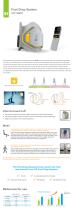
Foot Drop System XFT-2001D Foot Drop System adopts advanced MEMS sensor technology and intelligent algorithms, precisely controlling the time and duration of electrical stimulation by tracking the swing angle and pace of patients' legs. Then it delivers electrical pulses to the common peroneal nerve as well as the tibialis anterior and other muscles to make the movement of dorsiexion and eversion. Those mild electrical pulses stimulate patients' leg muscles, making them lift the aected feet at an appropriate phases while walking and therefore enabling patients to walk more steadily, naturally and safely. Built-in gyroscope and accelerometer Stimulation on Common peroneal nerve Normal Foot Electrical Stimulation Drop Foot Stim Unit and Cu Advanced ergonomic design makes the electrode t the leg muscles. Ultra-thin design makes the device can be covered by trousers perfectly. Magnetic clasp for one-handed operation. Mode Training Mode is for patients who are unable to do active training, transitioning from passive training to walking training. You can choose this mode for muscle training when sitting or lying. The purpose of this mode is to accelerate muscle recovery, retard atrophy of the injured leg, improve the ankle's range of motion, and enhance local blood circulation as well. The training mode will operate cyclically according to the preset program. Gait Mode can stimulate leg muscles while walking, restoring neurological motor function. This mode helps you walk in normal gait, and stimulates leg muscles while walking. Repeated training will leave traces in the cerebral cortex, meanwhile, the message will be transmitted to the central nervous system to restore cerebrum neurological motor function. One therapist can manage many patients and guide them to do independent rehabilitation training whether they need passive training or active training. The following diseases that cause foot drop may benefit from G3 Foot Drop System: Stroke Traumatic Brain Injury Incomplete Spinal Cord Injury Hemiplegia Multiple Sclerosis Reference for use Research analysis Wearing time Interval time Walking speed Walking span Walking symmetry
Open the catalog to page 1All Shenzhen XFT Medical Limited catalogs and technical brochures
 XFT-D0006 AED Cabinet
1 Page
 XFT-E0002 Airway Model
1 Page
 XFT-120NB AED Trainer
1 Page
 XFT-120N AED Trainer
1 Page
 XFT-120GA AED Trainer
1 Page
 XFT-120G AED Trainer
1 Page
 XFT-120C AED Trainer
1 Page
 XFT-D0009 AED Trainer
1 Page
 XFT-120C+ AED Trainer
1 Page


- Patient monitor
- Electric stimulator
- Medical device cabinet
- TENS physiotherapy
- Intensive care patient monitor
- External defibrillator
- Rehabilitation system
- Automatic external defibrillator
- Semi-automatic external defibrillator
- Robotic rehabilitation system
- Defibrillator cabinet
- Body massager
- Hand mobility rehabilitation system
- Rehabilitation system with interactive workout
- Public space external defibrillator
- Hand-held body massager
- Pelvic floor stimulator
- Training external defibrillator
- Pelvic muscle probe
- Wearable patient monitor