
- Catalogs
- Shenzhen XFT Medical Limited
- XFT-2003E H1 Hand Rehab System


- Company
- Products
- Catalogs
- News & Trends
- Exhibitions
XFT-2003E H1 Hand Rehab System

XFT-2003E H1 Hand Rehab System
The XFT-2003E Hand Rehab System is designed to detect and monitor EMG muscle activity signals in patients, delivering electrical stimulation pulses based on signal strength to stimulate muscle contraction. It offers multiple training modes and interactive gaming applications to enhance patient engagement and customization in rehabilitation.
sEMG is a bioelectrical signal used to identify movement intentions and evaluate muscle function status. It plays a crucial role in improving hand function, maintaining range of motion, reducing muscle spasms, preventing muscle atrophy, reeducating muscles, and increasing blood circulation.
The device features a wearable design with an adjustable wristband and stainless-steel electrodes for precise positioning. It is made from non-consumable materials and integrates electrodes for biofeedback, displaying maximum, minimum, and average sEMG values for objective and quantifiable monitoring.
The system allows for customizable treatments tailored to various clinical needs. Patients can control games by contracting specific muscles, making rehabilitation training enjoyable while activating brain cells, improving recognition, and strengthening muscles. It also enhances endurance, coordination, and balance.
The training process involves the cerebral cortex forming engrams to restore motor function, collecting sEMG signals, delivering proper stimulation, and executing commands through the hand, all initiated by brain commands.
The XFT-2003E includes features such as integrated electrodes, biofeedback capabilities, and multimedia biofeedback training to support effective rehabilitation.
Catalog excerpts
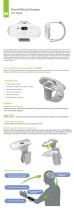
Hand Rehab System XFT-2003E detects and monitors the EMG muscle activity signal of a patient and delivers an electrical stimulation pulses according to EMG signal strength to stimulate the patient in order to achieve a muscle contraction. With multiple training modes and interactive gaming applications, patients can actively participate in the rehabilitation process and receive treatment with greater enjoyment and customization. The device is also equipped with an evaluation function to establish baseline data and thres hold levels as well as track rehabilitation progress to help medical professionals customize evidence-based, objective and effective rehabilitation treatment programs for each patient. Surface Electromyography (sEMG) sEMG is one type of bioelectrical signal produced by the human body. It can be used to identify the movement intention and evaluate the function status of muscles. Intended Use Improve hand function Increase or maintain hand range of motion Reduce muscle spasms Retard muscle atrophy Reeducate muscles Increase blood circulation Features Integrated Electrodes Wearable design, adjustable wristband, stainless-steel electrode, precise positioning, non-consumable material. Biofeedback sEMG monitor, display of maximum/minimum/average value, objective and quantifiable. Treatment Prescription Customizable treatments for various clinical needs. Multimedia Biofeedback Training Patients control the game by contracting certain muscles, and enjoying the fun in rehabilitation training. The training activates brain cells, improves recognition and strengthens muscles, and it also exercises muscles in the aspect of endurance, coordination, and balance. Working Principle 1. Brain-sends out commands 5. Cerebral Cortex-forms engram and restores motor function 4. Hand-executes the commands 3. H1-delivers proper stimulation
Open the catalog to page 1All Shenzhen XFT Medical Limited catalogs and technical brochures
 XFT-D0006 AED Cabinet
1 Page
 XFT-E0002 Airway Model
1 Page
 XFT-120NB AED Trainer
1 Page
 XFT-120N AED Trainer
1 Page
 XFT-120GA AED Trainer
1 Page
 XFT-120G AED Trainer
1 Page
 XFT-120C AED Trainer
1 Page
 XFT-D0009 AED Trainer
1 Page
 XFT-120C+ AED Trainer
1 Page


- Patient monitor
- Electric stimulator
- Medical device cabinet
- TENS physiotherapy
- Intensive care patient monitor
- External defibrillator
- Rehabilitation system
- Automatic external defibrillator
- Semi-automatic external defibrillator
- Robotic rehabilitation system
- Defibrillator cabinet
- Body massager
- Hand mobility rehabilitation system
- Rehabilitation system with interactive workout
- Public space external defibrillator
- Hand-held body massager
- Pelvic floor stimulator
- Training external defibrillator
- Pelvic muscle probe
- Wearable patient monitor