
- Catalogs
- Shenzhen Yhlo Biotech Co., Ltd.
- Reagent-SARS-CoV-2 (CLIA)


Reagent-SARS-CoV-2 (CLIA)

Reagent-SARS-CoV-2 (CLIA)
SARS-CoV-2, a positive-sense single-stranded RNA virus, triggers the production of specific antibodies in humans. Initially, IgM antibodies are produced, followed by IgG antibodies, which are secreted in larger quantities as the immune response matures.
Detection of SARS-CoV-2 involves identifying IgM and IgG antibodies. IgM levels rise quickly after infection but decline over time, whereas IgG levels increase steadily and remain high. In a study, all patients showed IgG positivity after 20 days, with some also showing IgM positivity.
The guidance includes antibody testing as part of the confirmation criteria for COVID-19 diagnosis. Criteria include positive RT-PCR results, high homology of the virus genome to SARS-CoV-2, and specific antibody presence or changes.
Experts suggest that antibody detection can support diagnosis when nucleic acid tests yield false negatives. The presence of specific antibodies can confirm infection, especially when combined with CT scan results.
Serological surveys are recommended for outbreak investigation and retrospective assessment. In cases of negative NAAT results but strong epidemiological links, paired serum samples can aid diagnosis once validated serology tests are available.
Various combinations of IgM and IgG results provide insights into infection status. For instance, IgM (+) / IgG (-) suggests acute infection, while IgM (-) / IgG (+) may indicate past infection. Re-testing is recommended to confirm results and monitor changes in antibody levels.
Catalog excerpts
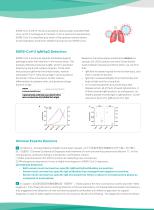
SARS-CoV-2 (2019-nCoV) is a positive-sense single-stranded RNA virus, and it is contagious in humans. From a taxonomic perspective, SARS-CoV-2 is classied as a strain of the species named severe acute respiratory syndrome-related Coronavirus (or SARSr CoV). SARS-CoV-2 IgM/IgG Detection SARS-CoV-2 produces specic antibodies against pathogens after rst infection in the human body. The earliest antibody produced is IgM, which is secreted directly by the B-cell surface receptor. The B cells that produce IgM enter the lymph nodes, receive stimulation from T cells and antigen-carrying cells at the...
Open the catalog to page 2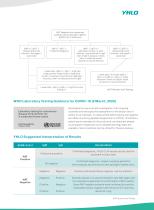
NAT Negative but suspected patients should test IgG / IgM for SARS-CoV-2 Detection IgM (+) / IgG (-): Suspected acute infection, test again 1 week later IgM (-) / IgG (+): IgG false positive, or past infection, pay attention to IgG titer, if IgG increases 4 times later, it might be recent infection or acute infection 1 week later: IgM (+) / IgG (-), might be false positive, keep monitor treatment results, if a patient is positive for IgM after recovery, then it is false positive for IgM 1 week later: IgM (+) /IgG (+), might be acute infection IgM (+) / IgG (+): Suspected acute infection, test...
Open the catalog to page 3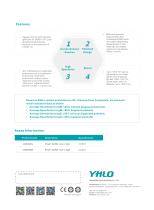
Anti-interference to Legionella pneumococcal, mycoplasma pneumonia, chlamydia pneumonia, adenoviruses, respiratory syncytial viruses, influenza A, influenza B and para-flu viruses 1,2 and 3, etc. Comprehensive Solution High Specificity With strong social responsibility and professional R&D team, we made independent development of raw materials and stable supply for new assays within 1 month. Up to 1200 T/H can be achieved by our iFlash series CLIA analyzers (iFLash 1800: 180 T/H; iFlash 3000: 300 T/H, iModule: up to 1200 T/H). Based on 2000+ sample evaluations in 20+ Chinese Class A hospitals,...
Open the catalog to page 4All Shenzhen Yhlo Biotech Co., Ltd. catalogs and technical brochures
 POCT-Gline-2019-nCoV NAb
2 Pages
 iFlash-2019-nCoV NAb
4 Pages
 iFlash-2019-nCoV Antigen
2 Pages
 POCT-GLINE-2019-nCoV Antigen
2 Pages
 POCT-GLINE-2019-nCoV IgM/gG
2 Pages
 UNICELL-2019-nCoV Ag
2 Pages
 PCT Assay
1 Page
 AMH-Reagent
4 Pages
 EBV-Reagent
3 Pages
 Inhinbin B-Reagent
2 Pages
 PSEP-Reagent
2 Pages
 TORCH-Reagent
3 Pages
 UNION Test Panels
2 Pages
 iStar 500
1 Page
 POCT-UNICELL
2 Pages
 LIA-Tenfly Blot
2 Pages
 LIA-Tenfly Auto
2 Pages
 LIA-Line Immunoassay
2 Pages
 ESR-VISION
4 Pages
 CLIA-iFlash 3000
8 Pages
 UNION Immune Analyzer
2 Pages
 CLIA-iFlash 1800
6 Pages



- Detection kit
- Solvent reagent
- Blood detection kit
- Serum detection kit
- Immunoassay detection kit
- Rapid chromatographic immunoassay test
- Plasma detection kit
- Blood rapid screening test
- Cassette rapid test
- Immunoassay rapid diagnostic test
- Research reagent
- Laboratory reagent
- Infectious disease detection kit
- Diagnostic reagent
- Rapid serum test
- Protein reagent
- Rapid plasma test
- Rapid virus test
- Rapid whole blood test
- Histology reagent