
- Catalogs
- Shimadzu Europa Analytical Instruments
- Application Handbook


- Products
- Catalogs
- News & Trends
- Exhibitions
Application Handbook

Application Handbook
This document provides a comprehensive analysis of Total Organic Carbon (TOC) determination in various water and solid samples. It covers methodologies, equipment configurations, and challenges associated with TOC measurement in different environments, including surface water, groundwater, seawater, and solid samples.
TOC in Water Samples
Surface and Groundwater: TOC concentrations vary significantly depending on the water source, with clean spring water having 1-2 mg/L and polluted waters exceeding 50 mg/L. The TOC-L series analyzers are equipped to handle particle-containing waters and can automatically dilute samples that exceed calibration ranges.
Seawater: The high salinity of seawater poses challenges during TOC analysis due to salt crystallization, which can clog systems. The TOC-L series includes a high-salt sample kit to mitigate these issues, allowing up to 2500 injections without maintenance.
TOC in Solid Samples
The document describes the suspension method for TOC determination in solid samples, which involves suspending the sample in an acidic solution to break down carbonates. This method allows for automated analysis and parallel measurement of solid and liquid samples.
TOC in Particle-Containing Samples
The cellulose test, as per DIN EN 1484, is used to evaluate the TOC measurement system's suitability for samples with solid matter. The TOC-L series demonstrates high particle tolerance, maintaining accuracy and precision within specified standards.
Equipment and Configuration
The recommended configurations for various TOC analyses include the TOC-L CPN analyzer, ASI-L autosampler with stirrer option, and external Sparge-Kit. These configurations support both TOC and Total Nitrogen (TN) measurements, enhancing the system's versatility.
Conclusion
TOC determination is crucial for assessing organic contamination in environmental samples. The TOC-L series offers robust solutions for diverse sample types, ensuring reliable and efficient analysis while minimizing maintenance requirements.
The document discusses the importance of Total Organic Carbon (TOC) determination in various contexts, including soil analysis, landfill management, and the pharmaceutical industry. TOC is a critical parameter for assessing contamination and ensuring the suitability of materials for specific applications.
TOC Determination in Soils
TOC determination in soils is essential for evaluating their stability and suitability for applications like road construction. The document outlines methods for measuring TOC in soils, sediments, and sludges using a solid sample module. The process involves combusting a dried sample at high temperatures and measuring the resulting CO2.
Calibration and Detection
Calibration is performed using known carbon content samples, such as glucose. The detection limit for TOC in soil samples is 0.1 mg C, allowing for precise measurements even at low concentrations.
Microbial Biomass in Soils
The fumigation-extraction method is used to determine microbial biomass in soils, which is crucial for understanding soil fertility and biodegradability. This involves treating soil samples with chloroform to kill microorganisms and measuring the dissolved organic carbon (DOC) in the extracts.
TOC in the Pharmaceutical Industry
TOC analysis is vital in the pharmaceutical industry for ensuring the purity of water and cleaning validation. The document describes TOC determination methods in ultrapure water and cleaning processes, highlighting the importance of complying with Pharmacopoeia standards.
Oxidation Techniques
Two main oxidation techniques are used for TOC analysis: catalytic combustion and wet chemical oxidation. Each method has its advantages, such as high oxidation potential or high sensitivity, making them suitable for different applications.
Cleaning Validation
In pharmaceutical manufacturing, cleaning validation ensures that equipment is free from contaminants. TOC analysis is used to evaluate the effectiveness of cleaning processes, particularly in Clean in Place (CIP) systems.
Conclusion
The document emphasizes the importance of TOC determination across various sectors, providing detailed methodologies and recommendations for equipment and procedures to ensure accurate and reliable measurements.
The document discusses the use of Total Organic Carbon (TOC) analysis in cleaning validation, particularly in pharmaceutical and biopharmaceutical industries. TOC analysis is crucial for ensuring that no residues remain on production equipment surfaces after cleaning.
TOC Analysis Techniques
1. Shimadzu TOC Series: The TOC-L series is highlighted for its modular design, which simplifies the analysis of final rinse and swab samples. It employs catalytic oxidation at 680°C and includes an integrated sample preparation module.
2. Wet-Chemical Oxidation: The TOC-VWP analyzer uses sodium persulfate and UV oxidation at 80°C, suitable for users preferring wet-chemical methods.
Cleaning Validation
Cleaning validation ensures the effectiveness of cleaning processes. It requires sensitive analytical methods to detect residues, with limits typically set at 10 ppm or 1/1000 of the therapeutic dose.
Cleaning Methods
1. Clean Out of Place (COP): Involves disassembling the production system for individual cleaning, allowing visual inspection but is labor-intensive.
2. Sampling and Analysis: Swab methods are used for sampling visible residues, which can be analyzed using TOC analysis.
TOC Determination in Ultra Pure Water
TOC analysis is crucial for monitoring water quality in various industries. The European Pharmacopoeia (EP) guidelines require TOC systems to differentiate between inorganic and organic carbon, with a detection limit of at least 0.05 mg/L.
System Suitability Test
The system suitability test involves preparing standard and control solutions and measuring their TOC content. Acceptable recovery rates range from 85% to 115%.
Software and Compliance
The TOC-Control L and V software facilitate system suitability tests and compliance with regulatory standards. They offer user access controls and audit trails to ensure data integrity.
Conclusion
TOC determination is a critical component of quality control in pharmaceutical production, ensuring that cleaning processes are effective and that ultra pure water meets stringent quality standards.
The document discusses the use of Shimadzu's Total Organic Carbon (TOC) systems for determining organic contamination in various chemical solutions. It highlights the importance of TOC analysis in the chemical industry for quality control and environmental protection.
TOC Systems and Methods
Shimadzu offers two TOC systems: TOC-VWP/WS, which uses wet-chemical oxidation, and TOC-LCPH, which uses catalytic combustion. These systems are suitable for a wide range of applications, from ultrapure water to highly polluted waters. The combustion method is advantageous for samples with particulate matter, while wet-chemical oxidation offers high sensitivity for low concentration measurements.
Recommended Analyzers
For high sensitivity, the TOC-L CPH with a high sensitive catalyst and ASI-L (40ml) is recommended. For the TOC-VWP, the ASI-V (40ml) is suggested.
TOC Determination in Chemical Solutions
The document details TOC determination in various chemical solutions, including hydrochloric acid, nitric acid, sulfuric acid, and brine solutions. Each section outlines the challenges and recommended configurations for accurate TOC measurement.
- Hydrochloric Acid: The TOC-L series offers gas washers to protect against acid fumes. Calibration is performed with automatic dilution, and long-term stability is ensured with a relative standard deviation of 3.4%.
- Nitric Acid: The TOC-L system uses scrubbers to handle matrix interferences from nitrogen oxides. Calibration is done in the range of 0.5 mg/L to 10 mg/L.
- Sulfuric Acid: High concentrations require SO2 scrubbers to prevent misinterpretation of CO2. The high-salt kit is used for direct measurement.
- Brine Solutions: The high-salt kit is essential for handling the salt load, which can cause crystallization in the combustion system.
Conclusion
Shimadzu's TOC systems are versatile and can be adapted for various analytical tasks in the chemical industry. The modular design allows for customization to meet specific measurement needs, ensuring accurate and reliable TOC analysis across different chemical matrices.
- Sample Preparation: A 30% sodium chloride solution is diluted 1:1 with ultrapure water and sulfuric acid to achieve a pH < 7.
- Analysis: TOC-LCPH with a high-salt kit is used, calibrated from 0.5 mg/L to 10 mg/L.
- Results: Duplicate determinations showed consistent TOC values with good reproducibility.
- Sample Preparation: A 50% solution is diluted 1:10 with ultrapure water and sulfuric acid to a pH < 2.
- Analysis: NPOC method recommended due to CO2 absorption issues.
- Results: TOC values met the purity criteria of < 10 mg/L.
- Sample Preparation: Similar dilution and acidification process as sodium hydroxide.
- Analysis: High inorganic carbon content requires NPOC method.
- Results: Consistent TOC values with noted challenges in handling high carbonate content.
- Sample Preparation: 40% solution diluted 1:10 with ultrapure water and sulfuric acid.
- Interferences: Nitrous oxide formation can interfere with CO2 detection; a B-type scrubber is used to mitigate this.
- Results: Reliable TOC measurements achieved.
- Sample Preparation: 5 g of each salt diluted in 50 mL ultrapure water with sulfuric acid.
- Interferences: Nitrous gases require careful handling under a hood.
- Results: Effective TOC determination with high-salt kit.
- Method: Wet-chemical UV oxidation at 80°C using sodium persulfate and UV light.
- Reason: Catalytic combustion is unsuitable due to damage to equipment.
- Results: Effective conversion of organic compounds to CO2 for detection.
- Reagent Preparation: Automated preparation minimizes contamination and blank values.
- Calibration: Instrument calibrated for TOC range of 0.1 – 1 mg/L.
- Procedure: 85% phosphoric acid diluted 1:5 to 17% for analysis using NPOC method. No acidification needed.
- Results: TOC concentration of 0.61 mg/L with a relative standard deviation of 1.8%.
- Recommended Equipment: TOC-VWP/WS and OCT-1 autosampler.
- Procedure: 4% hydrofluoric acid diluted 1:10, measured using TOC-LCPH. NPOC determined by combustion oxidation.
- Calibration: Range of 0.25 mg/L – 5.0 mg/L.
- Results: NPOC values for different samples: HF1 (2.42 mg/L), HF2 (3.09 mg/L), HF3 (4.38 mg/L).
- Safety: Protective measures required due to HF's corrosive nature.
- Recommended Equipment: TOC-LCPH/CPN and OCT-L.
- Versatility: TOC analysis applicable in environmental, pharmaceutical, and chemical industries.
- Customization: Shimadzu offers modular TOC analyzers for specific tasks.
- Method: Direct or difference method for biomass determination.
- Procedure: Calibration with dry mass allows determination of biomass content.
- Recommended Equipment: TOC-L CPH with ASI-L and Sparge-Kit.
- Procedure: ODM determination using TOC suspension method.
- Results: NPOC values for liquid manure samples provided.
- Simultaneous TNb Determination: Allows measurement of total bound nitrogen.
The TOC suspension method is highlighted as an effective technique for analyzing organic content in liquid manure. It also allows for the co-determination of nitrogen content, providing additional valuable information. The recommended configuration includes the TOC-L CPN with a TNM-L Module and ASI-L with a stirrer option.
The document describes an innovative method using a TOC analyzer to measure CO2 content in beer. This method is advantageous due to its automation capability, speed, accuracy, and specificity. The process involves adding NaOH to preserve CO2 and using a CO2-selective detector for measurement.
The TOC-LCPH analyzer is used to measure TOC in mineral water, following calibration with potassium hydrogen phthalate solutions. The results show low TOC values, indicating good water quality. The method ensures accurate and reproducible measurements.
The TOC-L Series analyzer tracks microalgae growth by measuring TOC in culture suspensions. This method provides insights into the carbon balance and physiological state of microalgae, aiding in biomass fuel research.
Similar to monitoring growth, the TOC-LCPH analyzer characterizes microalgae by measuring TOC in suspended cultures. This application helps understand changes in cell material and carbon balance over time.
This document discusses the use of Total Organic Carbon (TOC) analysis in various applications, particularly focusing on microalgae research and cleaning validation in production systems. It highlights the capabilities of the Shimadzu TOC-L Series Total Organic Carbon Analyzer.
Microalgae Research
The document presents findings on carbon uptake and release in different microalgae cultures, emphasizing the variability based on microalgae type and culture duration. It suggests using a TOC analyzer for screening microalgae and investigating culture conditions, particularly for those forming calcium carbonate shells.
TOC Analyzer Applications
The Shimadzu TOC-L Series can measure total carbon and nitrogen content in water, including dissolved and suspended quantities. It is suitable for understanding physiological states and material changes in microalgae cultures, as well as carbon and nitrogen balance.
Cleaning Validation in Production Systems
The document outlines the importance of cleaning validation in production systems, especially in industries like pharmaceuticals and food. It describes the use of TOC as a parameter for cleaning validation, offering advantages over single substance analysis due to its speed and flexibility.
Sampling Methods
Two sampling methods are discussed: the swab method, which is accurate but time-consuming, and the final-rinse method, which is faster. A combination of both methods is recommended for comprehensive cleaning validation.
Measurement Parameters
Details on measurement parameters such as NPOC, acid addition, sparge time, and injection volume are provided. The document also mentions the recommended analyzers and configurations for effective TOC analysis.
TOC Determination Methods
The document explains different methods for TOC determination according to EN 1484, including the difference method, addition method, and direct method. It highlights the limitations and considerations for each method.
Conclusion
The document concludes with a discussion on the importance of calibration and the role of POC in various applications, emphasizing the flexibility and robustness of Shimadzu's TOC systems.
This document provides a comprehensive overview of the procedures and specifications for Total Organic Carbon (TOC) and Total Nitrogen (TN) analysis using the TOC-L series analyzers. It covers various aspects such as calibration, sample preparation, and specific configurations for different sample types.
POC Calibration and Analysis
IC standard solutions are used for POC calibration, where inorganic substances are converted to CO2 and detected using an NDIR detector. The efficiency of the LiOH trap is crucial and should be tested daily using an IC control solution. An example measurement with toluene in ultrapure water is provided, demonstrating the POC method.
Total Nitrogen (TNb) Determination
The document explains the importance of measuring total bound nitrogen (TNb) due to the environmental impact of nitrogen compounds. TNb includes ammonium, nitrite, nitrate, and organic compounds, excluding dissolved or gaseous nitrogen. The EN 12260 standard describes the determination process, which involves combustion and chemiluminescence detection.
Simultaneous TOC/TN Determination
The TNM-L module allows simultaneous TNb and TOC measurement, optimizing laboratory space and efficiency. The process involves injecting the sample onto a catalyst, converting carbon to CO2 and nitrogen to NO, and measuring these using NDIR and chemiluminescence detectors.
Handling High-Salt Samples
High-salt samples pose challenges due to salt crystallization affecting the catalyst. A special kit with a unique combustion tube and catalyst beads is recommended. Sample preparation involves acidification with sulfuric acid, which extends the catalyst's life. An endurance test with a brine solution demonstrates the kit's effectiveness.
Small Sample Volumes
For limited sample availability, a kit for small sample volumes is available, allowing for manual injection and analysis with minimal sample amounts. Specifications include a measurement range up to 2,000 mg/L for TC and IC, and up to 200 mg/L for TN.
Manual Injection Kit
This kit enables the analysis of very small liquid and gas samples. It includes two injection blocks for easy installation and conversion, allowing for precise measurement with minimal sample volume.
Calibration with Automatic Dilution
The ISP module facilitates calibration with automatic dilution, creating calibration curves with equidistant concentration intervals. This feature reduces user time and allows for a wide measuring range.
Blank Value Consideration
In TOC trace analysis, understanding the blank value is crucial, especially at low concentrations. The document outlines the components of the blank value and its impact on calibration and measurement accuracy.
The document discusses the concept of zero offset in calibration curves, where the absolute term is set to zero, and blank values are considered in sample analysis. It highlights that ultrapure water used for standard preparation includes a blank value, whereas the actual TOC concentration in a sample does not.
Instrument Blank Value
Instrument blank values can arise from leaks or deposits within the instrument. A 'blank check' procedure involves circulating ultrapure water to determine this value, which also aids in cleaning and catalyst break-in.
Reagents and Environmental Contaminations
Reagents can absorb organic carbon from the environment, affecting blank values. Environmental sources, including human activity and laboratory conditions, contribute to organic carbon contamination.
TOC Measurement Principle
The TOC measurement involves oxidizing organic carbon to CO2, which is detected by an NDIR detector. High temperatures were traditionally used, but Shimadzu's method employs catalytic oxidation at 680°C, reducing maintenance issues and ensuring complete oxidation.
Recovery Rates and Measurement Parameters
The document provides recovery rates for various compounds using the 680°C combustion technique, showing high accuracy. Measurement parameters include system specifications and calibration methods.
Wet Chemical UV-Oxidation
This method uses UV irradiation and persulfate oxidation to convert carbon compounds to CO2. It allows for higher injection volumes, leading to greater sensitivity and precision in low ppb range measurements.
TOC Determination with Solid Module
The document describes the use of a solid sample module for TOC determination in solids, allowing for separate TC and IC measurements. The system integrates with TOC software for automatic calculations.
Silanisation for Surfactant Analysis
To prevent interaction with glass surfaces during surfactant analysis, a silanisation process is recommended for syringes, ensuring accurate TOC measurements.
Calibration involves using known compounds to establish a reference for measuring carbon content. For Total Carbon (TC) calibration, glucose is used due to its 40% carbon content. Sodium hydrogen carbonate is used for Inorganic Carbon (IC) calibration. The results from these calibrations are used to create calibration graphs.
Example Analysis
A real solid sample, Bauxite, was analyzed with results showing TC at 1.30% and IC at 0.94%, leading to a Total Organic Carbon (TOC) result of 0.36%. Recommended analyzers include TOC-L or TOC-V with SSM-5000A configuration.
Wastewater Analysis
TOC analysis is crucial for evaluating organic pollutants in wastewater, offering advantages over traditional methods like BOD (Biochemical Oxygen Demand) and COD (Chemical Oxygen Demand). TOC provides a direct measure of organic carbon content, making it less susceptible to matrix effects and suitable for continuous monitoring.
Comparison of Parameters
BOD measures oxygen needed for biological decomposition, while COD measures oxygen needed for chemical oxidation. TOD (Total Oxygen Demand) measures oxygen required for high-temperature combustion. TOC is a direct measure of organic carbon, often used in environmental regulations.
Correlation Between COD and TOC
Efforts are underway to correlate COD and TOC values, as COD is traditionally used in regulations. Examples show varying correlation factors depending on the compound, with factors ranging from 2.5 to 4. The European Union uses a factor of 3 for conversion.
Analytical Quality Assurance
Control samples are used to ensure analytical quality, with software enabling automatic recalibration if tolerance limits are exceeded. Control cards document trends and system performance over time.
Manual Injection for TOC Analysis
The manual injection kit allows for TOC analysis in gases or liquids with small sample volumes. Calibration using manual injection involves injecting known volumes of a calibration substance, such as potassium hydrogen phthalate, to establish a measurement range.
The document outlines the limits of detection and quantification for Total Organic Carbon (TOC) analysis, following DIN 32645 standards. The limit of detection is 0.772 mg/L, and the limit of quantification is 2.968 mg/L. A control sample with a TOC content of 15 mg/L showed a recovery rate of 97.4%. For measurements below 1 mg/L, increasing the injection volume to 20 µL is recommended, achieving a detection limit of 0.249 mg/L and a determination limit of 0.911 mg/L.
TOC process analysis is crucial for monitoring organic pollution levels in various industries, including wastewater treatment, paper, and chemical industries. The TOC-4200 analyzer is highlighted for its versatility and ability to provide continuous, reliable data. It features catalytic combustion at 680 °C and can be customized for specific measurement tasks.
- Wastewater Treatment: Continuous TOC/TN determination is essential for monitoring and optimizing treatment processes. The TOC-4200 can handle high salt loads and offers a self-calibration option.
- Paper Industry: The TOC-4200 is used for analyzing highly fibrous wastewater, with mechanisms to prevent clogging and ensure accurate measurements.
- Chemical Industry: The analyzer is designed to handle high salt loads, with a special salt kit to prevent system clogging.
Effective sample preparation is critical, with various systems available for the TOC-4200 series. Remote control capabilities allow for starting, calibrating, and monitoring the analyzer from a control station, with options for web-based access.
The document recommends using the TOC-4200 with specific configurations, such as a multi-stream suspended solids sampling unit and an acid rinse option, to enhance performance and reliability in diverse applications.
The TOC-4200 analyzer is designed for measuring Total Organic Carbon (TOC) in various water samples, including wastewater and ultra-pure water. It uses catalytic combustion at 680°C and offers three analysis methods: differential, addition, and direct. The device supports automatic dilution, allowing analyses up to 20,000 mg/L, and can be extended to measure total bound nitrogen (TN). It features self-calibration, multiple status and alarm signals, and Modbus communication for remote access.
Procedures and Maintenance:
The TOC-4200 is equipped with a kit for salt-containing samples and an automatic dilution function. It supports automatic maintenance and calibration tasks, such as calibration every 48 hours and catalyst regeneration twice a week. Sampling is conducted in counterflow mode with backflushing to prevent clogging. The system can operate independently with minimal maintenance due to its robust design.
Results and Performance:
During a three-month test, the TOC-4200 performed approximately 27,000 measurements without requiring catalyst exchange or maintenance. The calibration gradients remained stable, and no software or component failures occurred. The analyzer successfully passed the endurance test, demonstrating reliability and efficiency.
Applications and Recommendations:
The TOC-4200 is suitable for various applications, including monitoring condensate in chemical and petrochemical industries, continuous TOC determination at airports, and high-sensitivity measurements in ultra-pure water. It is recommended for use with a high-sensitivity measurement option and a multi-stream unit for suspended samples.
Sampling and Measurement Techniques:
For homogeneous samples like condensates, no extra preparation is needed. The TOC-4200 uses the NPOC method, where inorganic carbon is removed before analysis. The system is calibrated using a 2-point calibration curve, and typical measuring values are around 0.2 mg/L. The analyzer can handle multiple sample streams and provides continuous monitoring with automatic dilution and self-calibration features.
Conclusion:
The TOC-4200 is a versatile and reliable analyzer for TOC determination in various industrial applications. Its automatic functions and robust design make it ideal for continuous monitoring, especially in environments with fluctuating organic loads, such as airports during winter.
The document discusses the Total Organic Carbon (TOC) measurement capabilities of the TOC-4200 analyzer, which can handle concentrations up to 55,000 mg/L. It highlights the application of TOC determination in high-concentration glycol solutions, particularly in airport de-icing agents. Two glycol solutions with concentrations of 45,250 mg/L and 55,340 mg/L were tested, showing recoveries close to 100% and relative standard deviations (RSD) of 1.48% and 1.68%, respectively.
The TOC-4200 features an "Auto Re-measurement" function that adjusts the injection volume and dilution factor automatically if the measurement value exceeds the calibrated range, ensuring accurate results even for high-concentration samples.
The document recommends the TOC-4200 for its ability to monitor up to six sample streams with varying concentration levels, making it suitable for industrial processes and wastewater treatment plants.
In wastewater treatment plants, TOC serves as an indicator of organic pollution. The document describes the use of the TOC-4200 in monitoring diverse sample streams, with TOC concentrations at the inlet often exceeding 1,000 mg/L and effluent water typically below 50 mg/L.
The Integrated Sample Pretreatment (ISP) module in the TOC-4200 includes an 8-port valve and syringe pump, allowing for automated sample pretreatment and dilution, reducing cross-contamination and maintenance costs.
The document emphasizes the importance of proper sampling methods to avoid carryover effects. A practical test demonstrated the TOC-4200's ability to handle significant concentration and matrix differences between sample streams without carryover, thanks to its inert construction and automated rinsing function.
The TOC-4200 is recommended for its robust performance in handling high-concentration samples and diverse matrices, making it a reliable choice for industrial and environmental applications.
Catalog excerpts

SHIMADZU Excellence in Science Application Handbook
Open the catalog to page 1
Content 1. Environmental Analysis 1.1. TOC determination in drinking water 1.2. TOC determination in wastewater 1.3. TOC determination in surface water and groundwater 1.4. TOC determination in seawater 1.5. TOC determination in solid samples using the suspension method 1.6. TOC determination in particle-containing samples – cellulose test according EN 1484 1.7. Determination of particulate organic after filtration (glass fiber suspension) 1.8. TOC determination in solids 1.9. Determination of microbial biomass in soils – TOC in soil science 2. Pharmaceutical Industry 2.1. TOC determination in...
Open the catalog to page 2
SHIMADZU Excellence in Science
Open the catalog to page 3
1. Environmental analysis 1.1. TOC determination in drinking water 1.2. TOC determination in wastewater 1.3. TOC determination in surface water and groundwater 1.4. TOC determination in seawater 1.5. TOC determination in solid samples using the suspension method 1.6. TOC determination in particle-containing samples – cellulose test according EN 1484 1.7. Determination of particulate organic after filtration (glass fiber suspension) 1.8. TOC determination in solids 1.9. Determination of microbial biomass in soils – TOC in soil science A clean environment is the basis for a healthy life. Whether...
Open the catalog to page 4
SHIMADZUExcellence in Science Application News Sum parameter - Total Organic Carbon Drinking water is one of the main important and life-sustaining food stuffs and is essential to the survival of all known organism. It is a crucial component for metabolic processes and serves as solvent for many bodily solutes. Water for human consumption must be free from pathogens, pleasant to drink and pure. Continuous monitoring is carried out according to European Drinking Water Regulation to ensure the greatest possible security ■ European Drinking Water Directive The Directive is intended to protect human health...
Open the catalog to page 5
Application News The organic fraction is only 1% of the total carbons. A TOC determination via the difference method (TOC = TC - IC) will not be appropriate in this case, as the calculated TOC value is prone to large statistical errors. Example: TC = 100 mg/l (RSD = 2%) ± 2 mg/l (98 - 102 mg/l) IC = 98 mg/l (RSD = 2%) ± 1,96 mg/l (96,04 - 99,96mg/l) Based on error propagation the total error is ± 3,96 mg/l TOC (calc.) = 2 mg/l ± 3,96mg/l (- 1,96 - 5,96 mg/l) The total error is bigger than the TOC-result, negative results are possible. According to European Standardization EN 1484 (instructions...
Open the catalog to page 6
SHIMADZUExcellence in ScienceApplication News Sum parameter Total Organic Carbon TOC - Determination in wastewater NO. SCA-130-102 Wastewater is water that has been contaminated by use. In terms of its composition, wastewater is not homogeneous but as diverse as its possible sources. According to the German Water Resources Act (Wasserhaushaltsgesetz, WHG) wastewater is defined as follows: “Wastewater is 1) water whose properties have been changed by domestic, commercial, agricultural or other use and the water (sewage) discharged with it during dry weather conditions as well as 2) the run-off...
Open the catalog to page 7
Application News A TOC-Lcpn was used for the analysis. To ensure efficient use of the instrument for large sample quantities, the fully automated dilution function and the additional high-salt sample kit were applied. With a dedicated function, samples could be diluted up to a factor of 1:50. For the phenol-containing wastewater, the sample was diluted by a factor of 1:10. The high-salt sample kit increases the lifetime of the catalyst for high salt loads. To test long-term stability, more than 300 injections of the saline wastewater were compared. The graph shows the stability of measurement...
Open the catalog to page 8
SHIMADZUExcellence in Science Application News NO. SCA-130-103 Sum parameter Total Organic Carbon The German Water Resources Act (Wasserhaushaltsgesetz, WHG) serves the purpose of “sustainable water management to protect waters as a component of the ecological balance, as a basis of human existence, as a habitat for animals and plants as well as a usable good”. The various water types are defined in this act. ■ Definitions according to WHG Groundwater is defined as “water that is below the surface of the ground in the saturation zone and in direct contact with the ground or subsoil”. Surface...
Open the catalog to page 9
■ TOC-L To prepare the sample accordingly, the ISP module of the TOC-L automatically acidifies the sample and strips the CO2 originating from the TIC. The excellent particle tolerance of the analyzers enables analysis of particle- automatic dilution function, multi-point calibrations can be generated from a single standard. In the investigation of unknown surface waters or groundwater, one of the samples may exceed the calibration range. In this case, the TOC Control-L software offers an option for automatic dilution to bring the sample back within the calibration range....
Open the catalog to page 10
SHIMADZU Excellence in Science Sum parameter - Total Organic Carbon Application NewsTOC - Determination in seawater NO. SCA-130-104 TOC is an important indicator of the degree of organic contamination. TOC determination is used extensively to detect and study environmental and seawater pollution. In recent years, increased attention is being paid to the measurement of the nitrogen compounds (TN = Total Nitrogen) responsible for eutrophication. ■ Seawater samples Seawater has an average salinity of 3.5% mass fraction. The total salinity fluctuates depending on each ocean. The Baltic Sea has a...
Open the catalog to page 11
■ Kit for high-salt samples The TOC-L series features a kit for high-salt samples, which significantly increases instrument availability. Using this kit in a seawater application, it was possible to carry out 2500 injections without maintenance (injection volume of 40 pL). The kit consists of a combustion tube with a special geometry and a unique catalyst mixture. Tab. Melting point of different salts ■ Simultaneous TN determination using the TNM-L Based on the similar oxidation process, the TNb determination can be carried out simultaneously with the TOC measurement. For this application, the...
Open the catalog to page 12All Shimadzu Europa Analytical Instruments catalogs and technical brochures
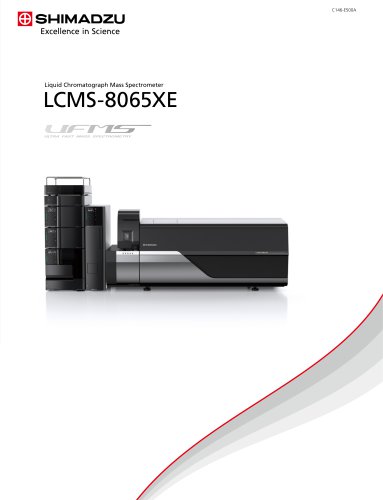 LCMS-8065XE
12 Pages
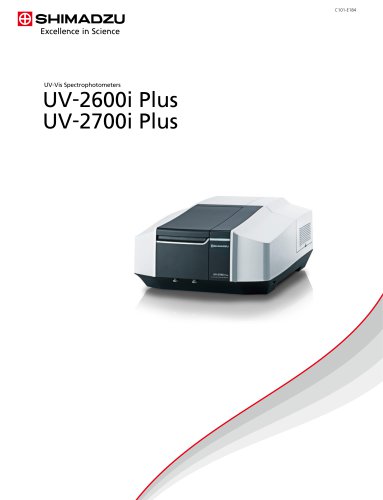 UV-2600i Plus UV-2700i Plus
20 Pages
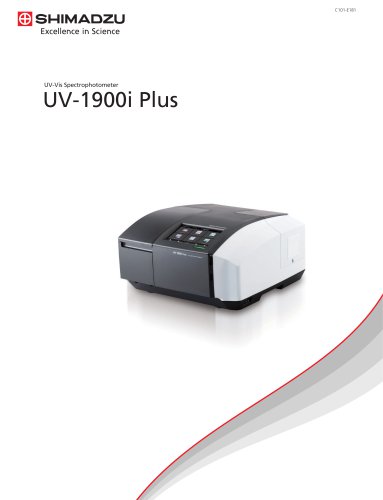 UV-1900i Plus
16 Pages
 LCMS-8060NX
12 Pages
 ATX/ATY Series
4 Pages
Archived catalogs
 TOC process analysis
16 Pages
 5. TOC in daily practice
33 Pages
 TOC process analysis
18 Pages
 LC / HPLC / UHPLC
108 Pages
 TOC-L
TOC-L2 Pages
 Tracera
8 Pages
 TX/TXB/TW Series
8 Pages
 Catalog BL-Series
2 Pages
 Catalog EL
2 Pages
 Catalog ELB - Series
2 Pages
 Catalog BW-K/BX-K Series
2 Pages
 MALDI-7090
8 Pages
 New issue Shimadzu News 1/2015
32 Pages
 MOC-120H
4 Pages
 GCMS-QP2010
6 Pages
 MOC 63u
6 Pages
 Catalog UW-Series
6 Pages
 TOC-L Series
2 Pages
 Edman Sequencer PPSQ-31A/33A
8 Pages
 LC 2010
3 Pages
 AXIMA Resonance
6 Pages
 AXIMA Performance
2 Pages
 AXIMA Assurance
2 Pages
 AXIMA Confidence
2 Pages
 LCMS-IT-TOF
2 Pages
 LCMS-2020
14 Pages
 LCMS-8030
14 Pages
 Prominence nano
8 Pages
 Chemical industry
22 Pages
 ICPMS-2030 Series
16 Pages
 Pharmaceutical industry
14 Pages
 FTIR TALK LETTER
8 Pages


- Analysis software
- Control software
- Laboratory testing system
- Laboratory balance
- Electronic laboratory balance
- Benchtop laboratory balance
- Laboratory software
- SHIMADZU spectrometer
- Control analyser
- Data management software
- Measurement software
- Laboratory balance with digital display
- Spectrophotometer
- SHIMADZU benchtop spectrometer
- SHIMADZU chromatography system
- Flow testing system
- Benchtop spectrophotometer
- Calibration analyser
- Security software
- Electrophoresis system