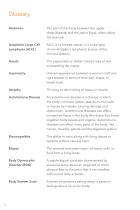
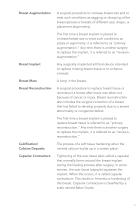
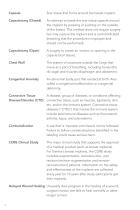
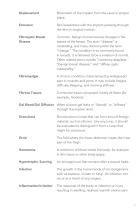
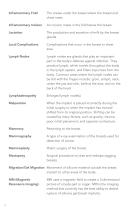
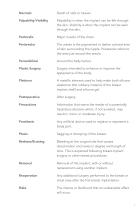
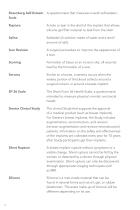
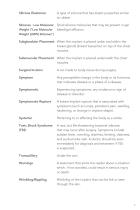
Glossary: The brochure starts with a glossary defining key terms related to breast augmentation and implants, such as 'Anaplastic Large Cell Lymphoma', 'Capsular Contracture', and 'Silent Rupture'. These definitions provide foundational knowledge for understanding the subsequent sections.
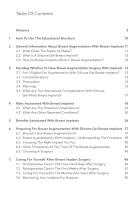
1. How To Use This Educational Brochure: This section explains the brochure's purpose, which is to educate patients about breast augmentation with Sientra Silicone Gel Breast Implants. It highlights a clinical study sponsored by Sientra involving 1,788 patients to gather data on the implants' safety and effectiveness.
2. General Information About Breast Augmentation With Breast Implants: This section provides an overview of breast augmentation, explaining the anatomy of the breast, the nature of
silicone gel implants, and their role in augmentation procedures.
3. Deciding Whether To Have Breast Augmentation Surgery With Implants: This part discusses eligibility criteria, contraindications, precautions, and warnings associated with silicone gel breast implants. It also outlines alternative options to implantation.
4. Risks Associated With Breast Implants: Detailed information on potential complications and other reported conditions related to breast implants is provided, emphasizing the importance of understanding these risks before proceeding with surgery.
5. Benefits Associated With Breast Implants: This section highlights the positive outcomes and enhancements that breast implants can offer to patients.
6. Preparing For Breast Augmentation With Silicone Gel Breast Implants: Guidance on deciding to undergo augmentation, understanding the procedure, choosing the right implant, and selecting a qualified surgeon is offered.
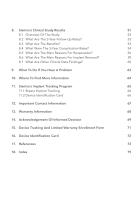
7. Caring For Yourself After Breast Implant Surgery: Postoperative care instructions are provided, covering the immediate hours, first weeks, and long-term care after surgery. It also includes monitoring for implant rupture.
8. Sientra’s Clinical Study Results: An overview of the clinical study results, including follow-up rates, benefits, complication rates, reasons for reoperation, and implant removal, is presented.
9. What To Do If You Have A Problem: This section advises on steps to take if issues arise post-surgery.
10. Where To Find More Information: Resources for additional information on breast augmentation and implants are listed.
11. Sientra’s Implant Tracking Program: Details on the tracking program and device identification card are provided to ensure patient safety and implant monitoring.
12. Important Contact Information: Contact details for further inquiries and support are included.
13. Warranty Information: Information on the warranty provided with the implants is outlined.
14. Acknowledgement Of Informed Decision: This section emphasizes the importance of making an informed decision regarding breast augmentation.
15-17. Device Tracking And Limited Warranty Enrollment Form, Device Identification Card, References: These sections include forms and references for patient use and further reading.
Introduction: This document provides comprehensive information about breast augmentation with silicone gel breast implants, including the decision-making process, eligibility, contraindications, precautions, and potential risks associated with the surgery.
General Information About Breast Augmentation: The breast's shape is determined by glandular and fatty tissues, with the pectoralis major muscle located beneath. Silicone gel breast implants are designed to mimic the natural breast in shape, weight, and feel, and are available in various shapes and sizes.
Deciding on Breast Augmentation Surgery: Eligibility for silicone gel breast implants includes women over 22 years old for primary augmentation and those needing revision-augmentation. Contraindications include active infections, untreated breast cancer, and pregnancy. Precautions should be taken for individuals with autoimmune diseases, weakened immune systems, or mental health disorders.
Risks and Warnings: Breast implants are not lifetime devices and may require additional surgeries. Potential complications include changes in breast appearance, interference with breastfeeding, and difficulties in mammography. Silent ruptures may occur, necessitating regular MRI screenings.
Alternatives to Silicone Gel Implants: Alternatives include no surgery, padded bras, breast lift surgery, or saline-filled implants.
Risks Associated with Breast Implants: Tables in the document outline potential risks and their likelihood, including reoperation, implant removal, capsular contracture, and implant rupture. The document emphasizes understanding these risks before proceeding with surgery.
Potential Complications of Breast Implants: Implant removal may be necessary due to asymmetry or undesirable cosmetic results. Changes in nipple sensitivity, infection, seroma, capsular contracture, rupture, reoperation, implant removal, pain, changes in nipple and breast sensation, cosmetic changes, breast-feeding issues, implant extrusion, necrosis, and delayed wound healing are discussed.
Clinical Study Findings: The study reports a 20% risk of complications for primary augmentation and 26% for revision-augmentation patients within 3 years. Detailed results are available in Section 8 of the study.
Healing and Complications: Healing times vary per patient, and factors like infection, radiation, chemotherapy, smoking, steroids, and extreme temperatures can delay healing. Consult your surgeon for expected healing times and report any delays.
Breast Atrophy/Chest Wall Deformity: Implants may cause breast tissue thinning, making implants visible or palpable. This can occur with or without implants and may require additional surgery.
Calcium Deposits: Hard calcium lumps can form in the breast, potentially mistaken for cancer. They may require biopsy or removal if painful.
Enlarged Lymph Nodes: Lymphadenopathy can occur with implants, especially in the armpit. Painful nodes may need surgical removal.
Other Reported Conditions: Sientra continues to study long-term effects of implants. Some women report health issues believed to be related to implants, but no proven connection exists. Potential risks include autoimmune diseases, cancer, and neurological problems.
Cancer Risks: No evidence links silicone gel implants to increased cancer risk, including breast, brain, lympho-hematopoietic, and reproductive system cancers. Some studies suggest implants may interfere with cancer detection.
Connective Tissue Disease (CTD) and Immune Disorders: No increased risk of CTDs or autoimmune disorders with implants. Some women report symptoms not fitting defined diseases.
Effects on Children: No evidence suggests implants harm children born to mothers with implants. Studies show no increased risk of birth defects or low birth weight.
Suicide: Higher suicide rates reported in women with implants, possibly linked to pre-existing psychiatric conditions rather than implants themselves.
Neurological Issues: Some women report neurological symptoms, but no reliable evidence links these to implants.
Gel Bleed: Small amounts of silicone and platinum may bleed through implant shells, but evidence suggests no significant clinical consequences.
Benefits of Breast Implants: Women choose implants for augmentation or reconstruction, with ongoing studies to assess long-term benefits and risks.
Introduction: Breast augmentation surgery is a personal decision for women seeking to enhance the size and proportion of their breasts. Revision-augmentation surgery is also an option for those looking to improve the results of a previous augmentation. Studies, including Sientra’s Clinical Study, indicate high satisfaction levels among women who undergo these procedures, with many feeling more feminine and attractive.
Preparing for Breast Augmentation: Deciding on breast augmentation involves weighing benefits and risks. Factors to consider include medical condition, lifestyle, emotional state, and desired breast size and shape. Consultation with doctors, family, and support groups is recommended.
Understanding the Procedure: The surgical procedure involves several choices, including the surgical setting, type of anesthesia, incision sites, and implant placement. Common incision sites are inframammary, periareolar, and transaxillary. Implant placement can be subglandular or submuscular, each with its pros and cons.
Choosing the Right Implant: Sientra offers implants in various shapes, profiles, and sizes. The choice depends on body type, desired outcome, and surgeon’s recommendations. Considerations include implant size, shape, and surface texture.
Additional Procedures: Other cosmetic procedures, such as mastopexy, may be recommended to achieve desired results, especially in cases of sagging or excess skin.
Choosing a Surgeon: Important questions to consider when selecting a surgeon include their licensing, certification, experience, and complication rates.
Postoperative Care: Post-surgery care varies by individual and includes following specific instructions from the surgeon. Initial recovery involves managing anesthesia effects and wound care. Long-term care includes monitoring for complications and regular mammograms.
Conclusion: Breast augmentation is a significant decision requiring careful consideration of various factors and thorough consultation with medical professionals.
Mammogram Recommendations: Women should have a mammogram every 1 to 2 years starting at age 40, or as advised by a doctor. For those with breast implants, it is crucial to inform the mammography office and find a mammographer experienced with implants. A diagnostic mammogram may be more appropriate than a screening mammogram. Carry your Device Identification Card to appointments.
Self-Exams and Doctor Visits: Regular self-breast exams are recommended monthly after menstruation. Doctors can assist in distinguishing between implant and breast tissue. Regular exams by a doctor are also important, especially if capsular contracture is present. Any changes should prompt a visit to the doctor, who may recommend a mammogram or MRI.
Protecting Implants: Inform all healthcare practitioners about your implants to prevent accidental damage. Avoid strong or repeated pressure on the breasts.
Immediate Doctor Consultation: Contact your doctor immediately if you notice signs of infection, lumps, changes in nipple skin, discharge, changes in implant position or shape, or breast injury.
Physical Limitations: Post-surgery, normal activities can resume, but avoid pressure or trauma to the breasts. Consult your doctor about any activity restrictions.
Monitoring for Rupture: Rupture is rare but can occur. Symptoms include lumps, changes in breast size or shape, pain, and numbness. Silent ruptures may occur without symptoms, detectable only by MRI. Regular MRIs are recommended starting three years post-surgery and every two years thereafter.
Actions for Suspected Rupture: If rupture is suspected, contact your doctor for an exam. An MRI is the best diagnostic tool. If confirmed, removal of the implant is recommended, with or without replacement.
Sientra’s Clinical Study Results: A 10-year study on Sientra Silicone Gel Breast Implants assessed safety and effectiveness. The study involved 1,788 patients across various augmentation and reconstruction categories. Safety was measured by complication rates, and effectiveness by changes in bra size and patient satisfaction.
3-Year Follow-Up and Benefits: 80% of augmentation and 79% of revision-augmentation patients were seen at the 3-year follow-up. Most patients reported satisfaction with increased bra size and improved self-esteem, though some experienced unchanged or slightly decreased quality of life.
3-Year Complication Rates: The most common complication was reoperation, occurring in 13% of primary augmentation and 20% of revision-augmentation patients. Other complications included capsular contracture, implant removal, and nipple sensation changes.
Reasons for Reoperation: Common reasons included capsular contracture, patient request for size/style change, and implant malposition.
Reoperation and Implant Removal: The document discusses the reasons for reoperation and implant removal in breast augmentation patients over a three-year period. The most common reasons for reoperation include patient requests for size/style changes and capsular contracture, each accounting for 15.5% of cases. Other reasons include implant malposition, wrinkling/rippling, and asymmetry. For implant removal, the primary reason was also patient requests for size/style changes, with a significant percentage of implants being replaced after removal.
Clinical Data Findings: The study evaluated long-term health effects such as rupture, cancer, connective tissue disease (CTD), lactation, and reproduction complications. The rupture rate was 3% for primary augmentation patients and 0.4% for revision-augmentation patients. Cancer occurrences were low, with a 0.2% risk rate for breast cancer in primary augmentation patients. CTD diagnoses were rare, with fibromyalgia and rheumatoid arthritis each having a 0.1% risk rate. Lactation complications were reported by 8% of primary augmentation patients and 5% of revision-augmentation patients.
Problem Reporting and Information Access: Patients are advised to report any implant issues to their doctor and can also report to Sientra or the FDA. The document provides instructions for reporting problems through the FDA's MedWatch program. Additional information about Sientra's implants can be found on their website and through the FDA's resources.
Implant Tracking and Warranty: Sientra has an implant tracking program to maintain contact information and implant details. Participation in this program is mandatory for warranty activation. The warranty covers shell leakage or breakage resulting in implant rupture, offering limited replacement and financial reimbursement.
Informed Decision Acknowledgement: The document emphasizes the importance of understanding the benefits and risks associated with silicone gel breast implants. It acknowledges that not all risks are fully identified or quantified and that new information may emerge over time.
Patient Acknowledgement and Consent: The document outlines the patient's informed consent for silicone gel-filled breast implant surgery. It includes a checklist where the patient confirms understanding of the procedure, alternatives, and the necessity of participating in Sientra's Device Tracking program to activate the warranty. The patient must be at least 22 years old.
Device Tracking and Warranty Enrollment: To activate the warranty, patients must complete the Device Tracking Form, providing details such as the product name, reason for surgery, and implantation date. The form must be submitted via email or fax.
Device Identification Card: This section instructs the surgeon to provide the patient with a Device Identification Card, which includes implant details like reference and serial numbers. This card is essential for warranty activation.
References: The document lists numerous studies and articles related to silicone breast implants, covering topics such as implant rupture, health risks, cancer incidence, and mortality rates among women with implants. These references provide a comprehensive overview of the research conducted on the safety and health implications of breast implants.



 Sientra Patient Planning Guide
 Patient Educational Brochure
 The Sientra Choice
 Product catalog
 HSC+ Sizers
 Quick Facts
 Patient Label Reconstruction
 Medgel Accessories
 Facial Implants
 Pectoral Implants
 Gluteal Implants
 Calf Implants
 Additional Tissue Expanders


